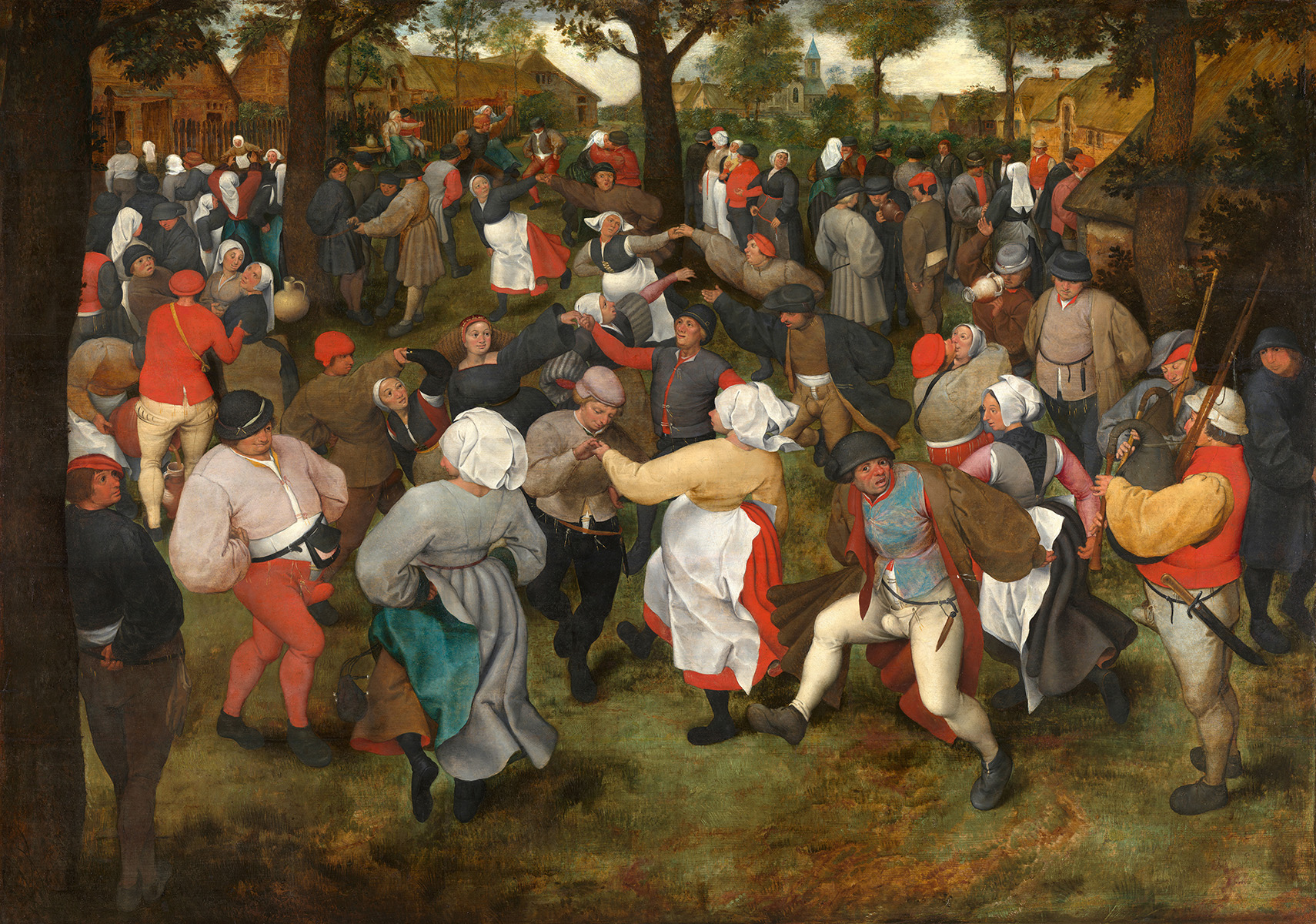
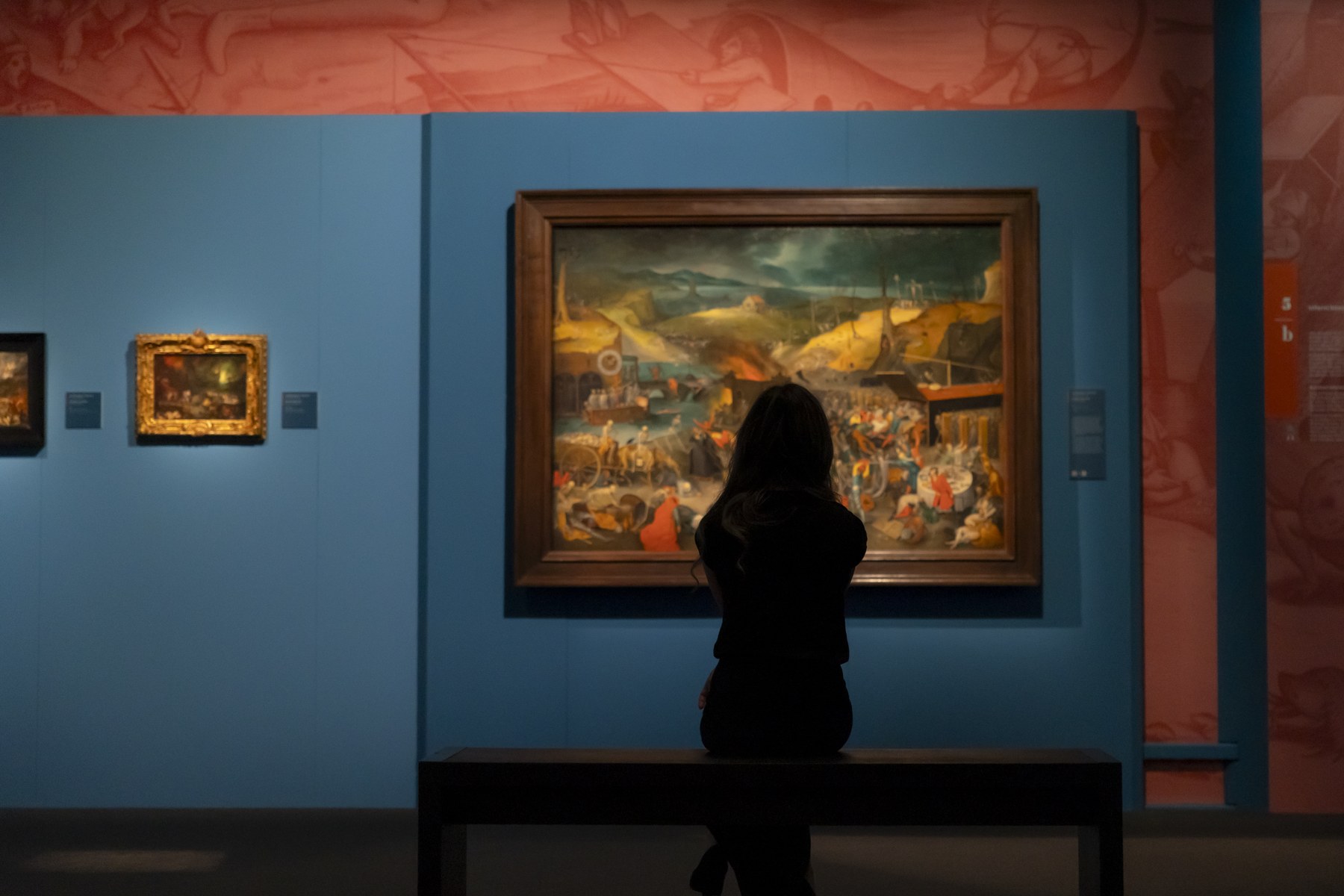
For a long time the Wedding Dance in Antwerp was taken for Pieter Bruegel the Elder's own hand (Fig. 1). Then a second version, signed and dated 1566, turned up in 1930 and went to Detroit. The Antwerp panel has been generally considered a copy since, and dendrochronology during its 2017 to 2018 restoration confirmed it. The figures and colours are so faithful that the copyist must have seen the original, probably from inside Bruegel's own circle, before his sons had begun to paint. The picture now hangs at Palazzo Reale in Milan, in I Brueghel. Le origini dei generi pittorici in Europa, a show of more than 80 paintings, drawings and prints (Fig. 6). It runs to 31 January 2027, a project by Bernard Aikema curated by Carlotta Striolo.
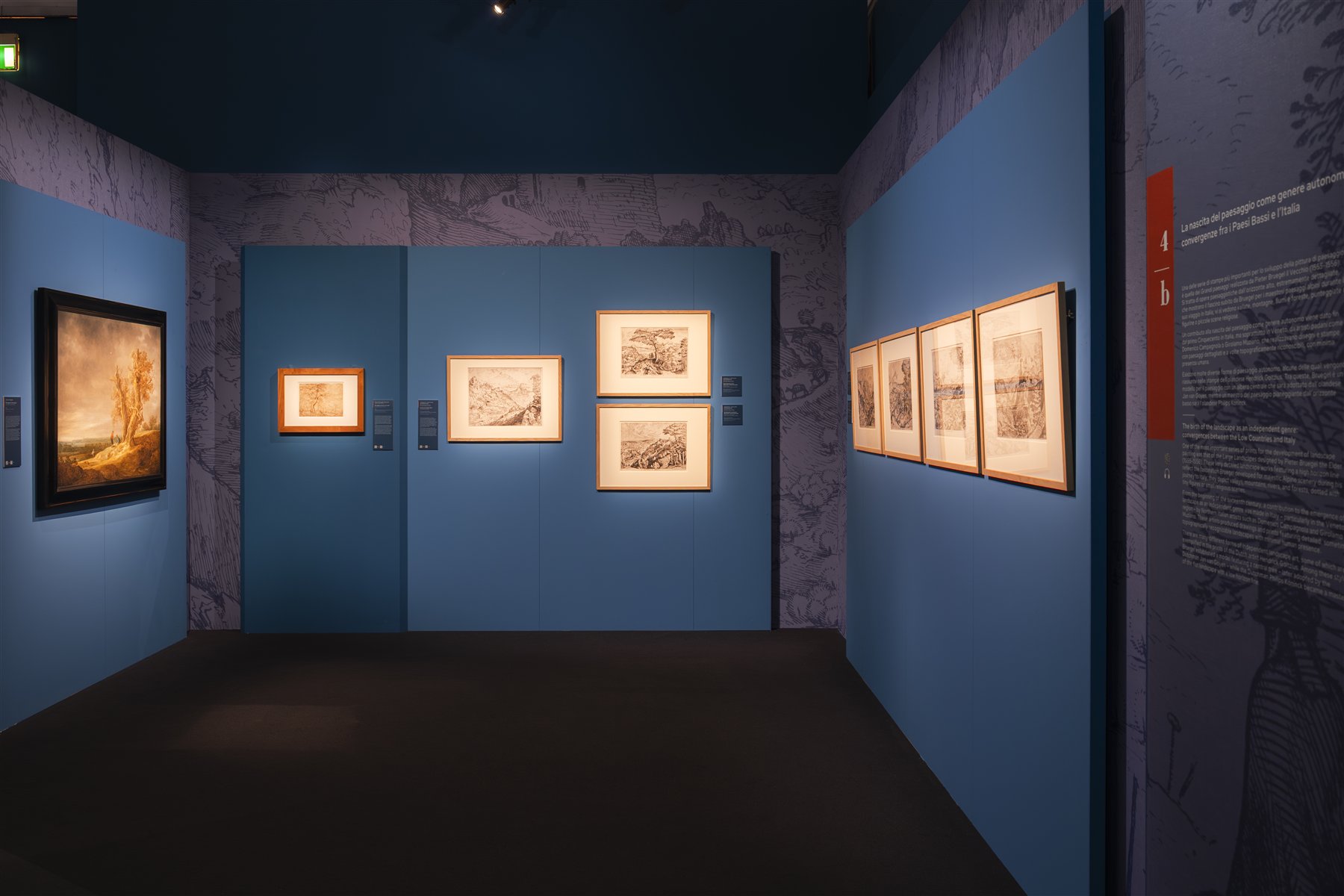
That copy is the whole show in miniature. The press text speaks of a "brand Brueghel", in English, inside its Italian. The idea is simple: in the early 1600s the market for pictures widened, no longer tied to church and court and, above all in Holland, reaching a "bourgeois" public. Painters answered by specialising. They chose a niche, a subject buyers wanted, and painted it again and again. The genres we now treat as categories of art (winter landscape, peasant feast, still life, battle) started out, on this reading, as things people kept buying (Fig. 8).
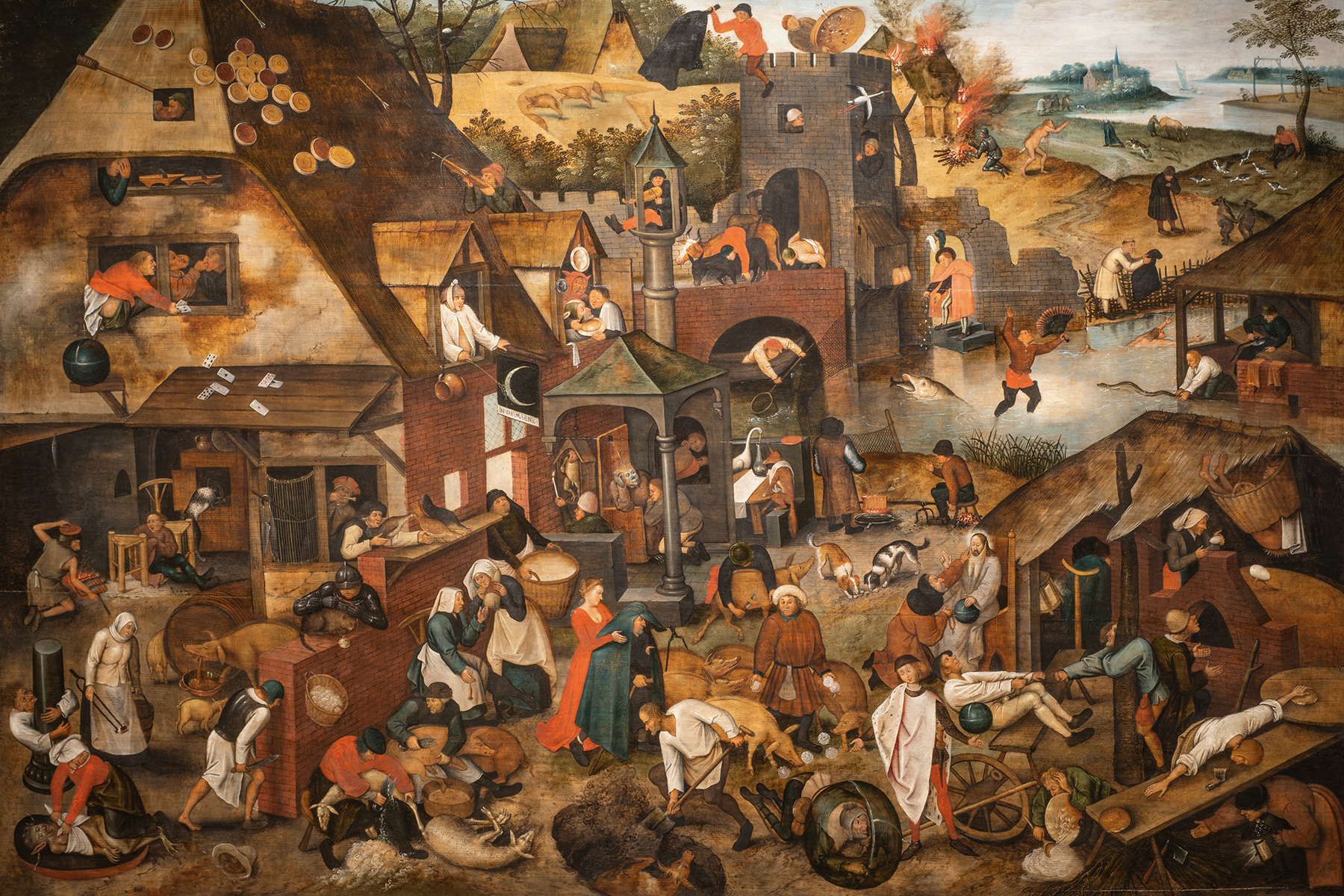
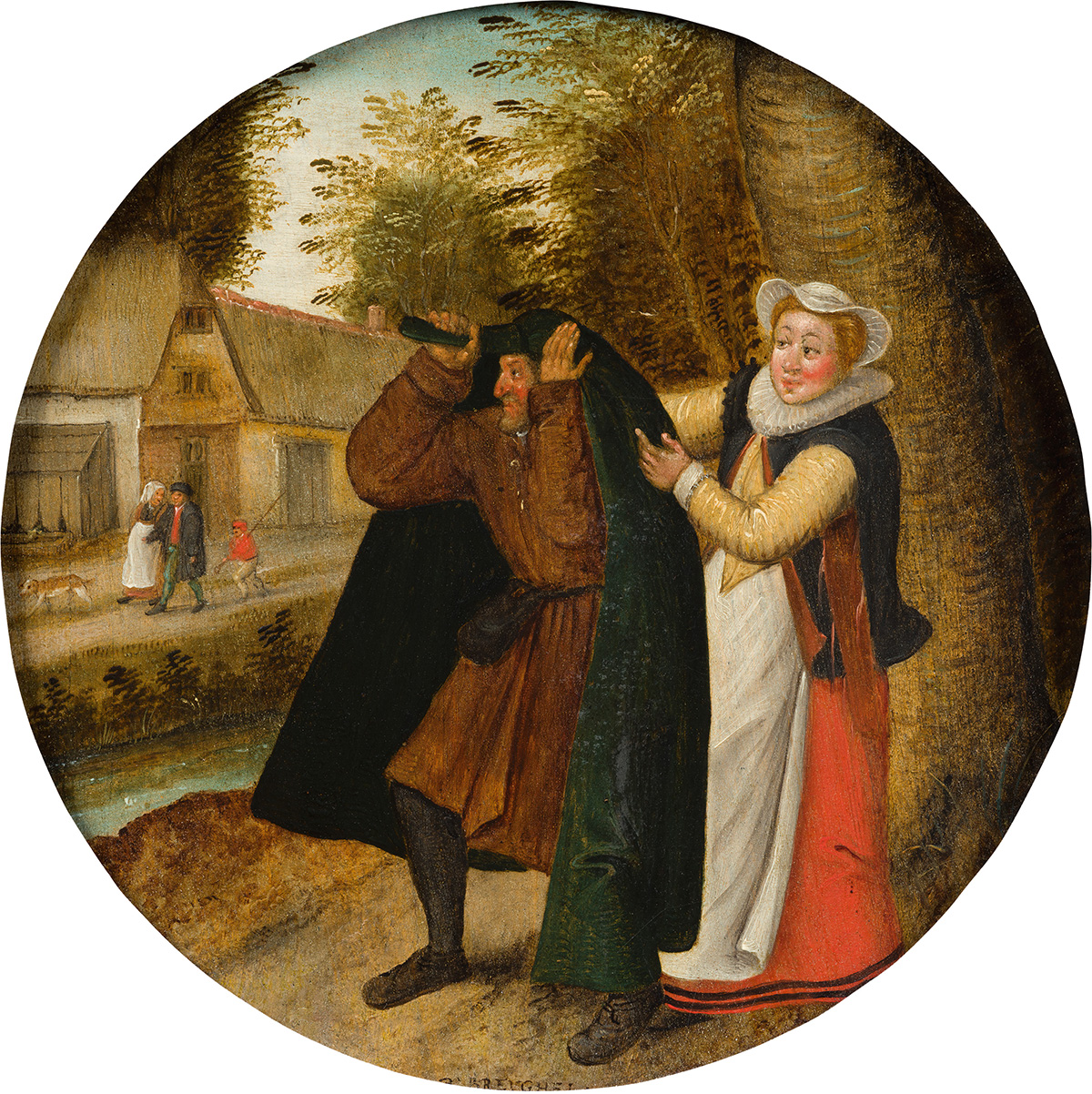
Pieter Brueghel the Younger, the eldest son, ran the line. The exhibition credits him with choosing his father's most saleable models and reproducing them in many variants, through a workshop of skilled copyists. His Proverbs of 1606 to 1607, lent from Lier, rebuilds an invention of his father's from 1559 (Fig. 2). It packs more than a hundred Flemish sayings into one village. Beside it hang single sayings cut down to roundels under 19 cm across, such as The Blue Cloak Proverb (Fig. 3). Same goods, sold whole or by the slice. One winter landscape with a bird trap, after his father's panel in Brussels, left his workshop in at least 123 versions, by the catalogue's count. Aikema still warns against calling him a mere copyist of a father he never knew.
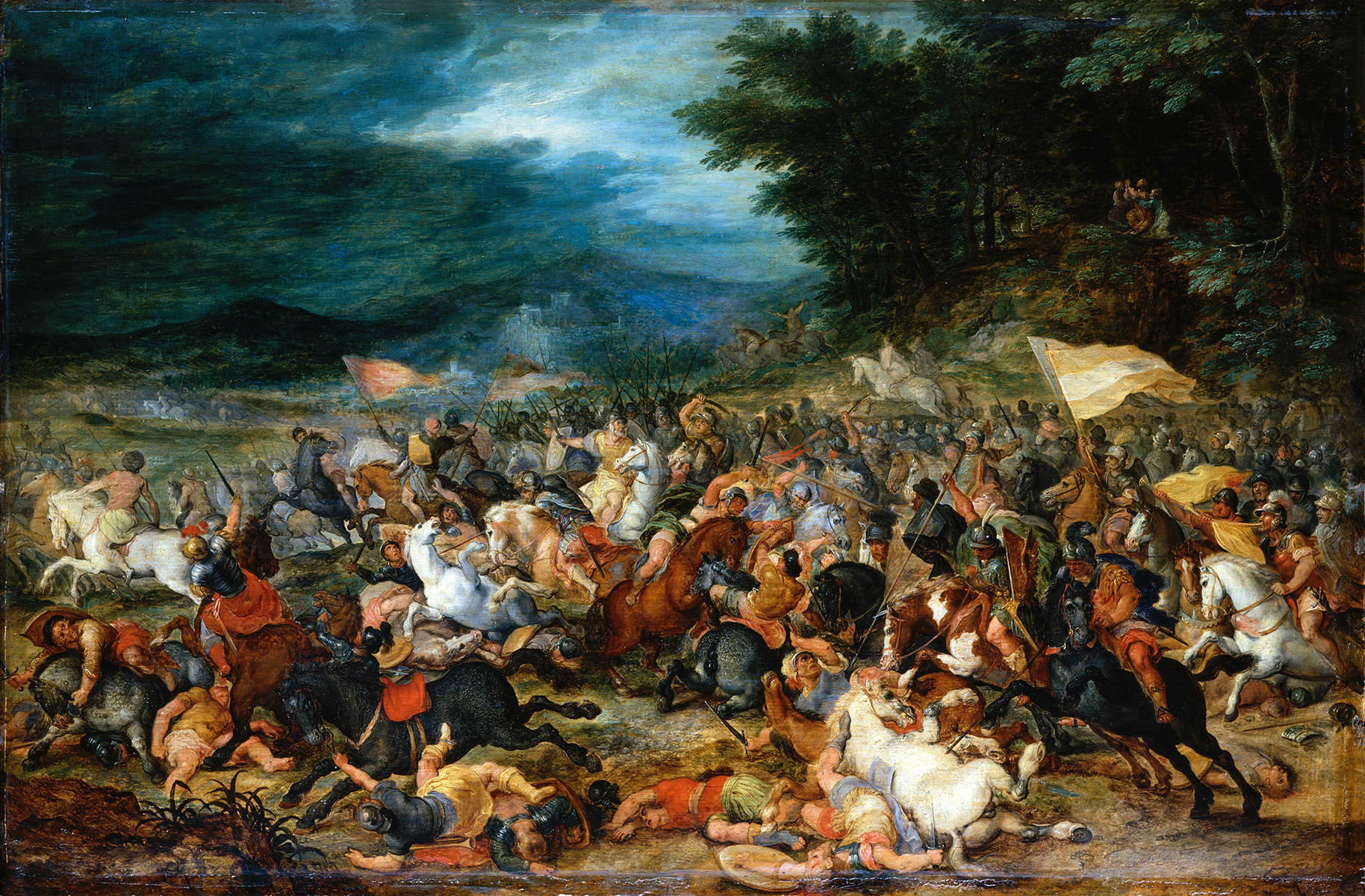
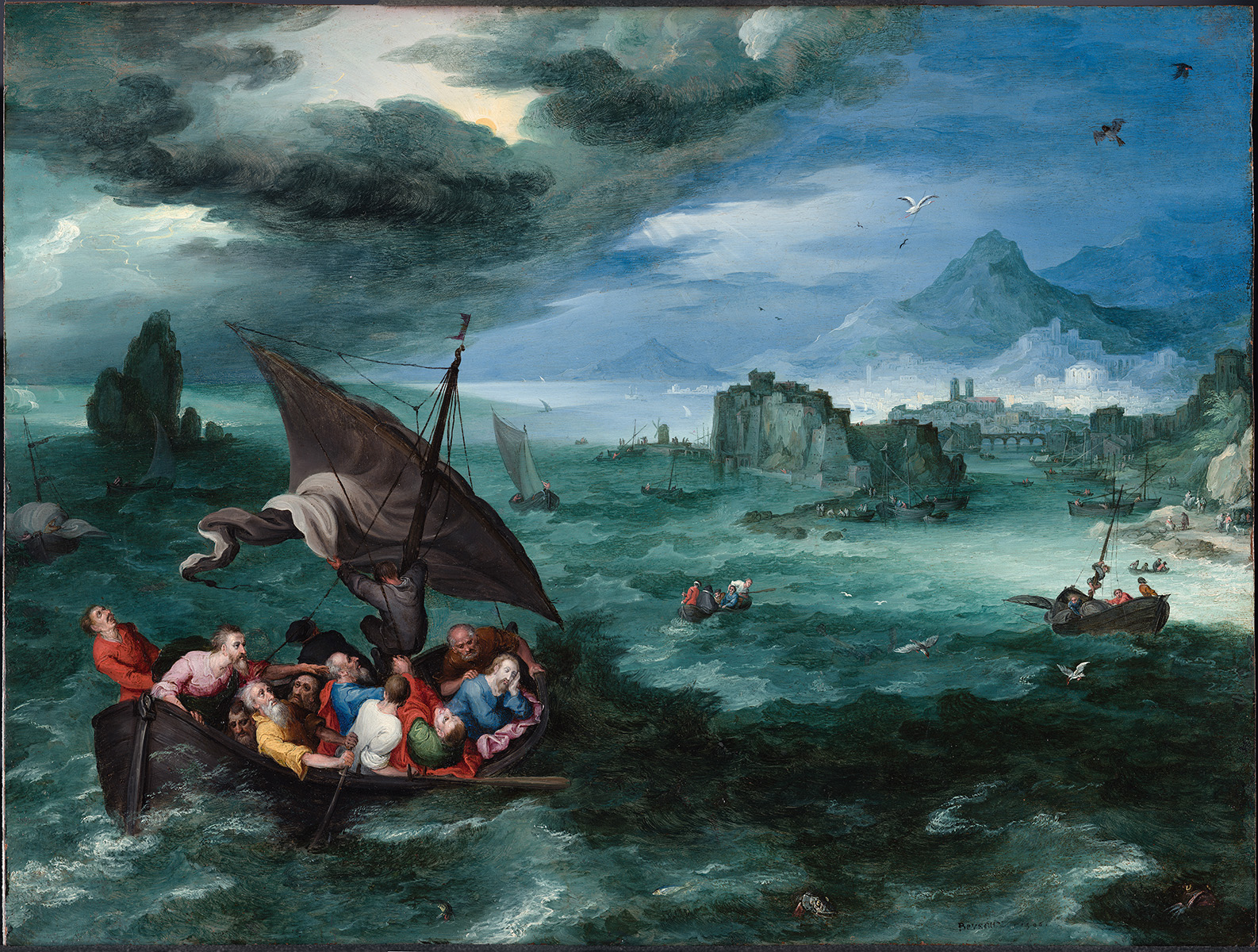
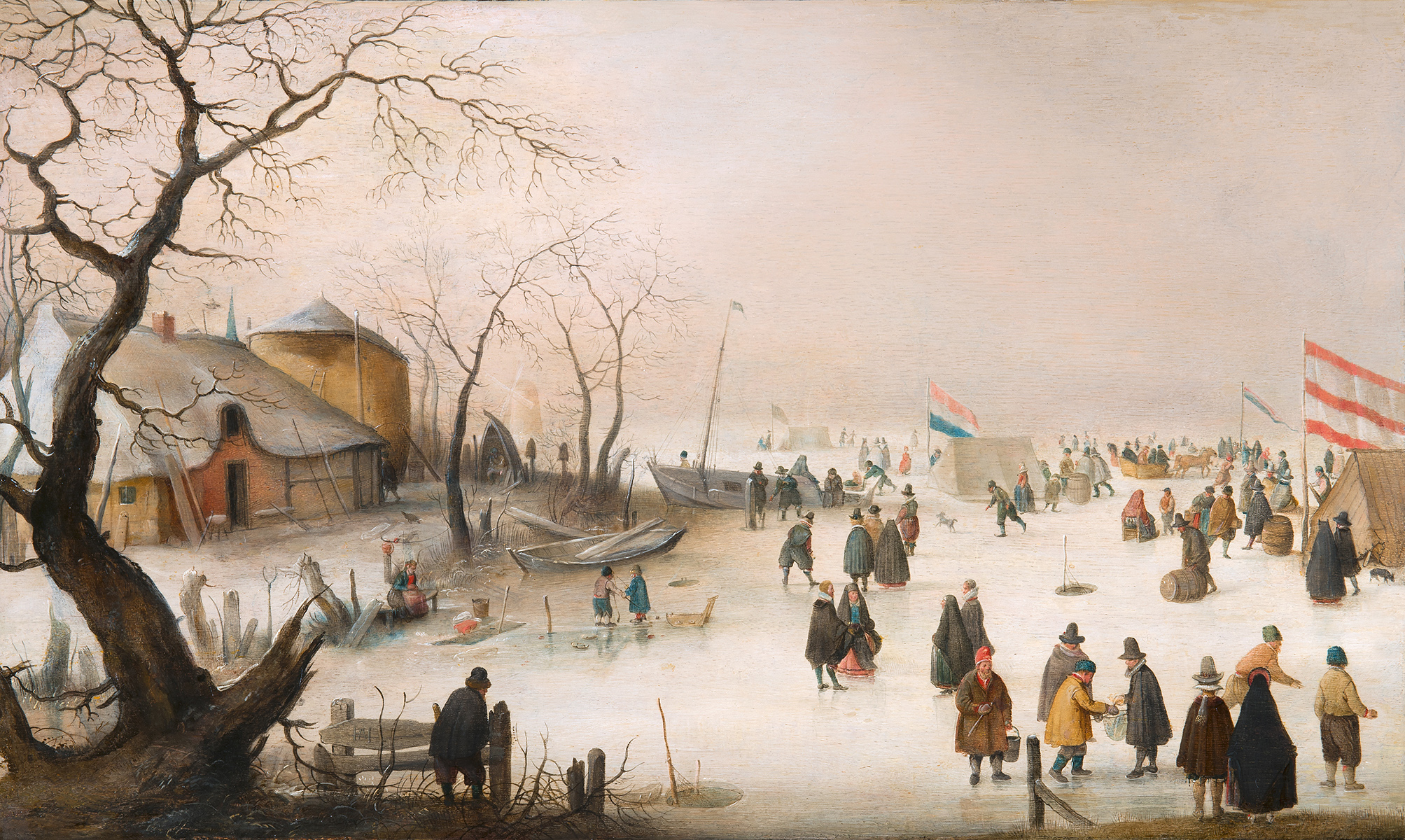
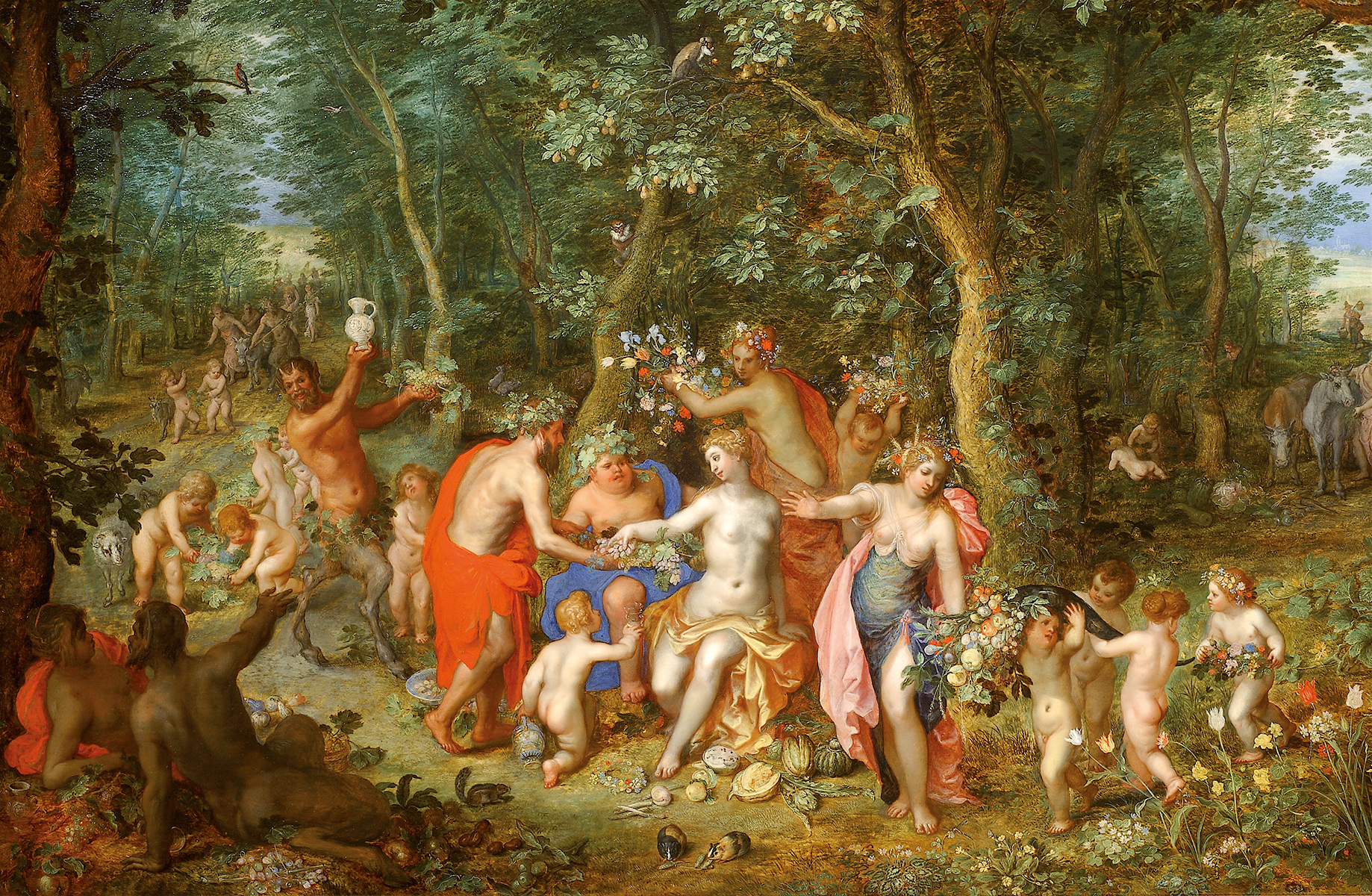
His younger brother Jan took the brand abroad. The cardinal and archbishop Federico Borromeo brought him to Milan in 1595, and Jan lived in the archbishop's palace. Works made for Borromeo, among them Flowers in a Vase, are still in the Pinacoteca Ambrosiana, and that painting is one of the show's key loans. With Paul Bril and Hans Rottenhammer he developed the cabinet picture: small, precious paintings on copper that won over collectors across Europe. Christ in the Storm on the Sea of Galilee, 1596, is oil on copper, 26.6 by 35 cm (Fig. 4). From 1606 he was court painter in Brussels to the Archdukes Albert and Isabella, and in 1617 and 1618 he painted the Five Senses with Rubens: Jan painting the rooms, Rubens the figures. He worked the same way with Hendrick van Balen, who painted the figures in an Allegory of Abundance (Fig. 9). The later rooms show the formulas taken up by others, from Roelandt Savery and Paul Bril to Hendrick Avercamp's skaters (Fig. 5) and Adriaen van Ostade's peasants. The press text calls such landscapes, peasant scenes and still lifes unthinkable without the family's example.
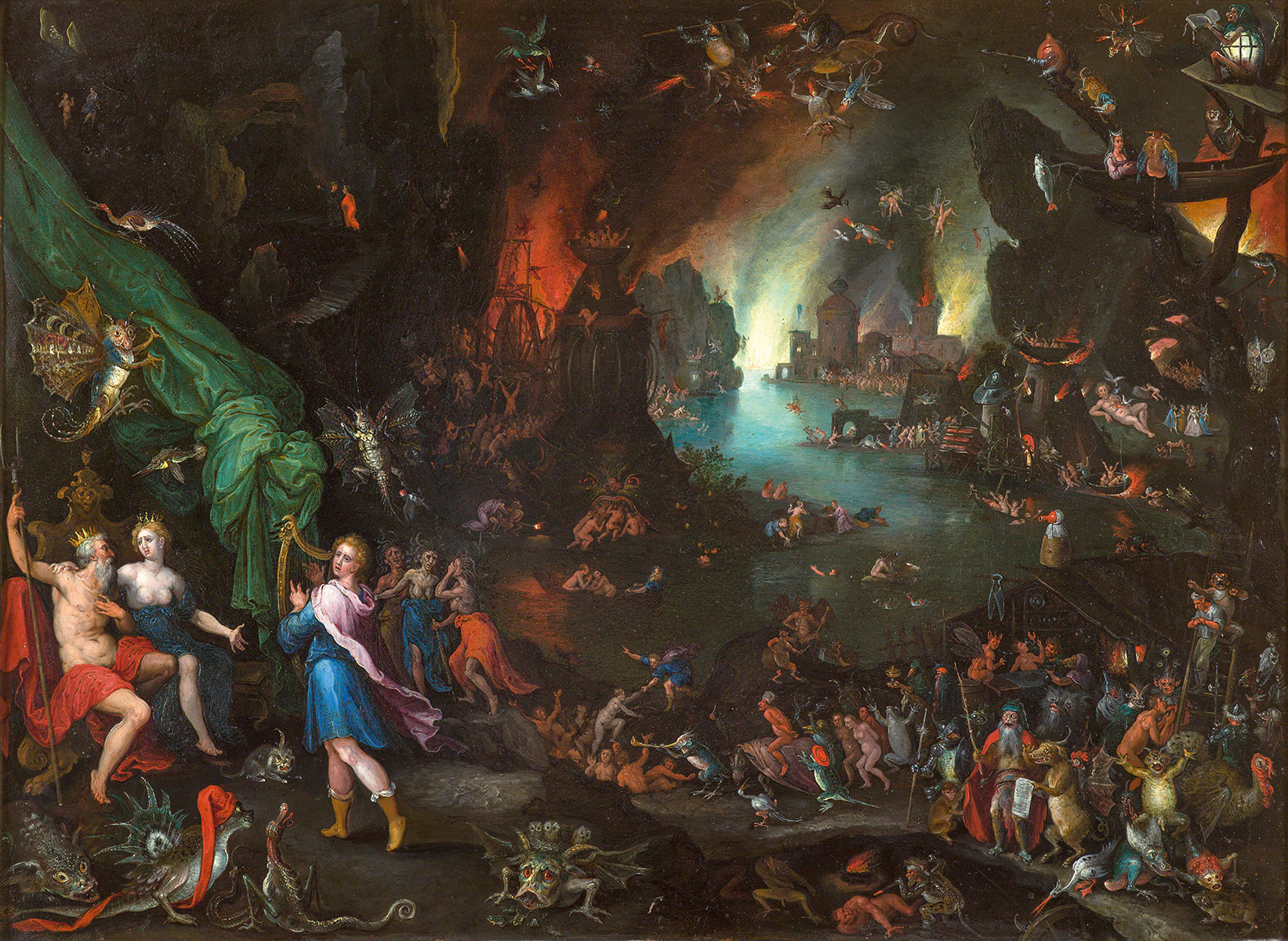
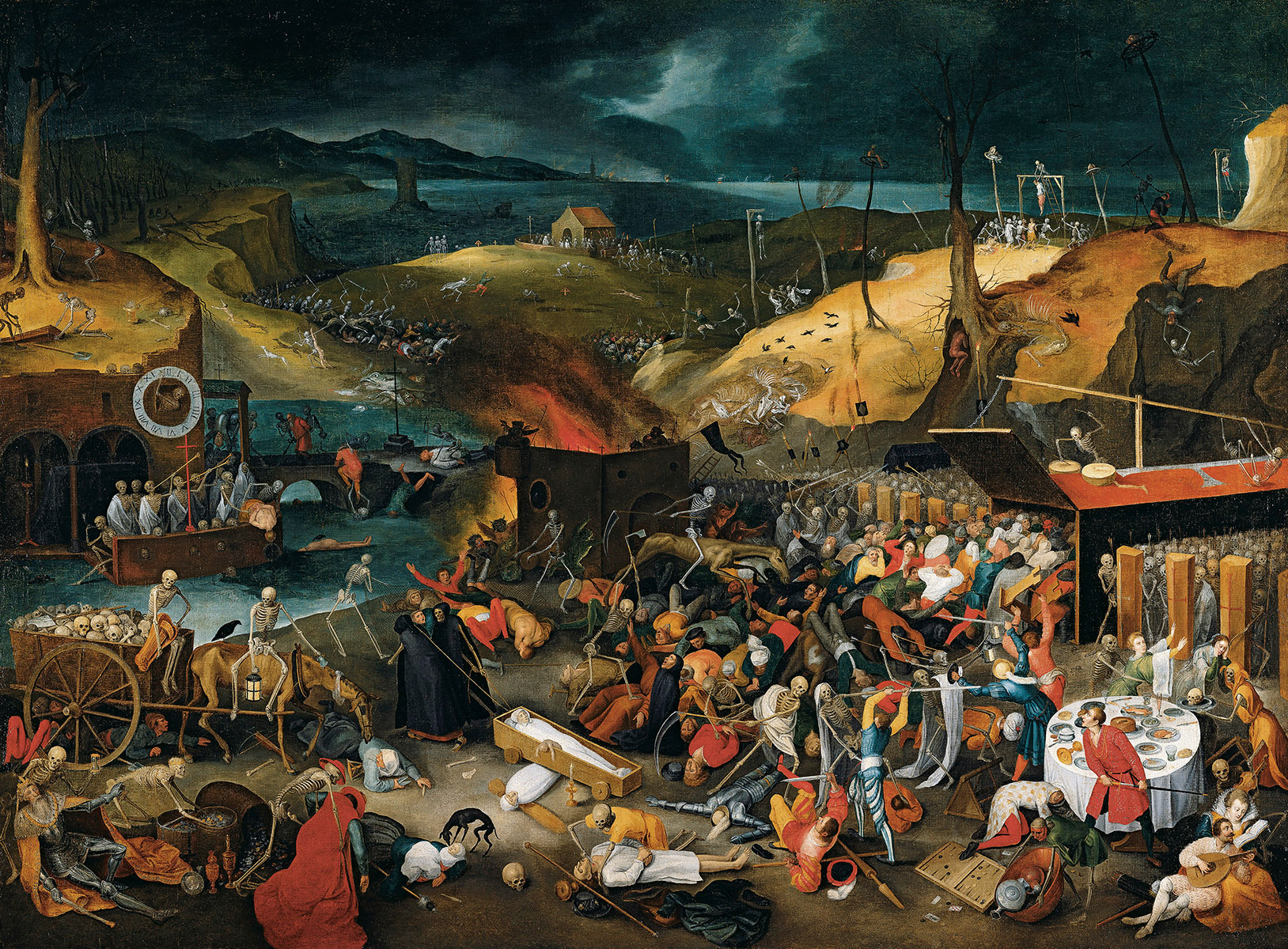
My own favourite is one of the darkest. Jan Brueghel the Elder's Orpheus with a Harp Playing to Pluto and Persephone in the Underworld, about 1594, is oil on copper, barely 34 cm wide (Fig. 10). Orpheus stands in blue before the king and queen of the dead, playing to free Eurydice. Behind him the underworld burns: a city in flames across a pale river, a boat crowded with souls, and creatures that are part toad, part fish, part bird crawling out of the dark. The exhibition calls these Boschian monsters, demons and fires one of Jan's specialities. Hell ran in the family. Jan Brueghel the Younger's Triumph of Death, 1620, takes one of his grandfather's most pitiless inventions, now in the Prado, and sends legions of skeletons down the hills onto the living (Figs 11 and 12). Even the dark was a line the family could sell.
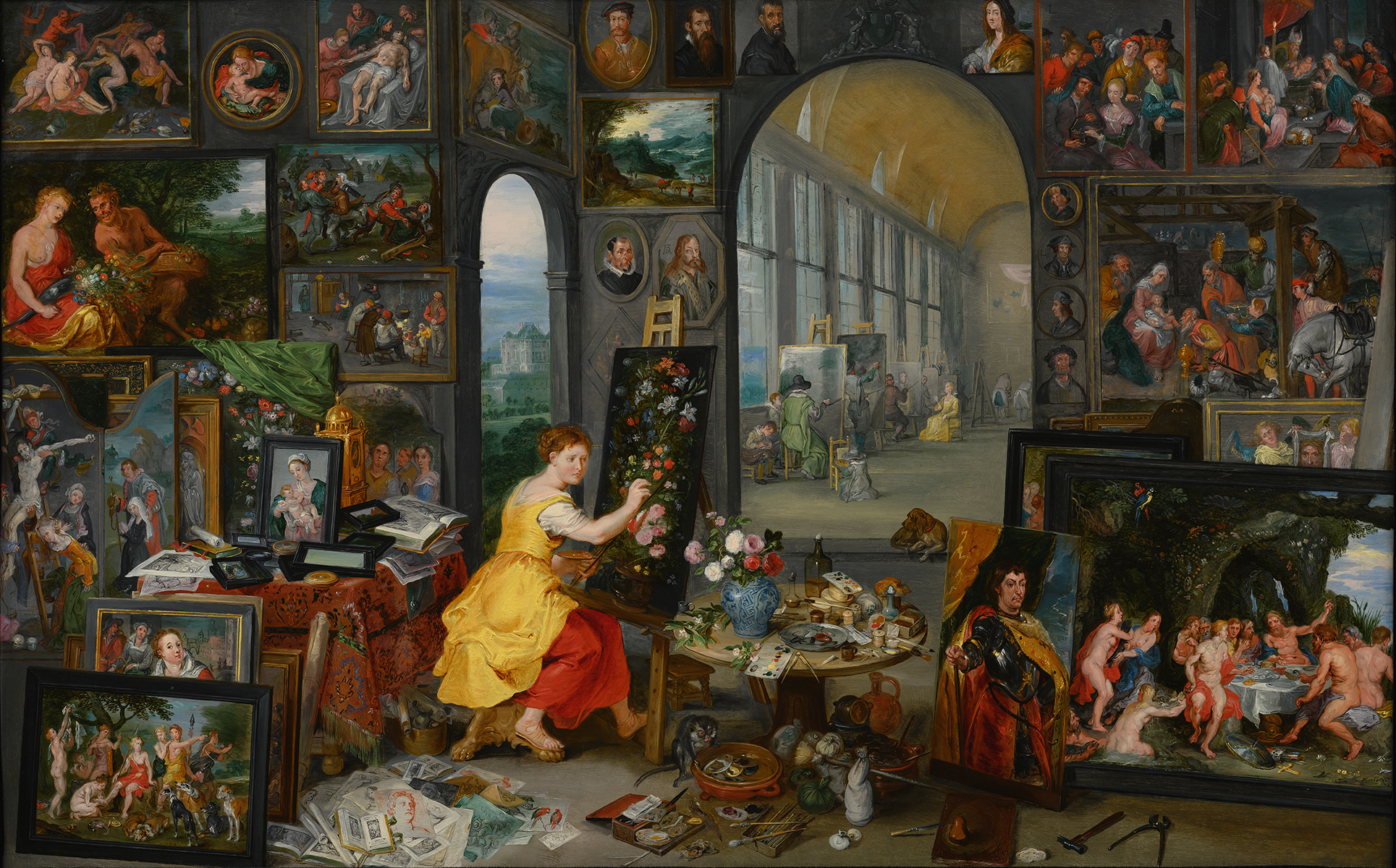
The family knew what it was selling. In Jan Brueghel the Younger's Allegory of Painting, about 1625 to 1630, Painting sits at an easel in a gallery crowded with pictures, while a workshop paints in the hall behind her (Fig. 7). On the walls his grandfather keeps company with Raphael, Dürer and Michelangelo. The exhibition reads it as a statement of belonging and prestige.
What this means to 000
We read this show as a warning about ourselves. Did we choose our taste, or were we sold it again? What it shows is taste shaped by demand, four hundred years before anyone scrolled: a formula sold, so it was repeated, and the repetition hardened into a name. Aikema's catalogue essay is careful to separate the two senses of "genre": a category of subject, and the nineteenth century's "genre painting" of daily life. Read through this show, the category is what is left after the sale. The feed works the same way, and 000 exists to choose against that loop. The Wedding Dance still holds up as a painting, but it is also a product, and the show is honest enough to hang it as both. We just want to know which one we are looking at.
I Brueghel. Le origini dei generi pittorici in Europa is at Palazzo Reale, Piazza del Duomo 12, Milan, until 31 January 2027. It is open Tuesday to Sunday, until 22:30 on Thursdays, and closed on Mondays. Go if you can. Before you go, pick one thing you own because it kept being shown to you, and find what it copied. Then stand in front of the copies long enough to ask who chose them, and whether you would have.
Responses.
Received. Thank you.