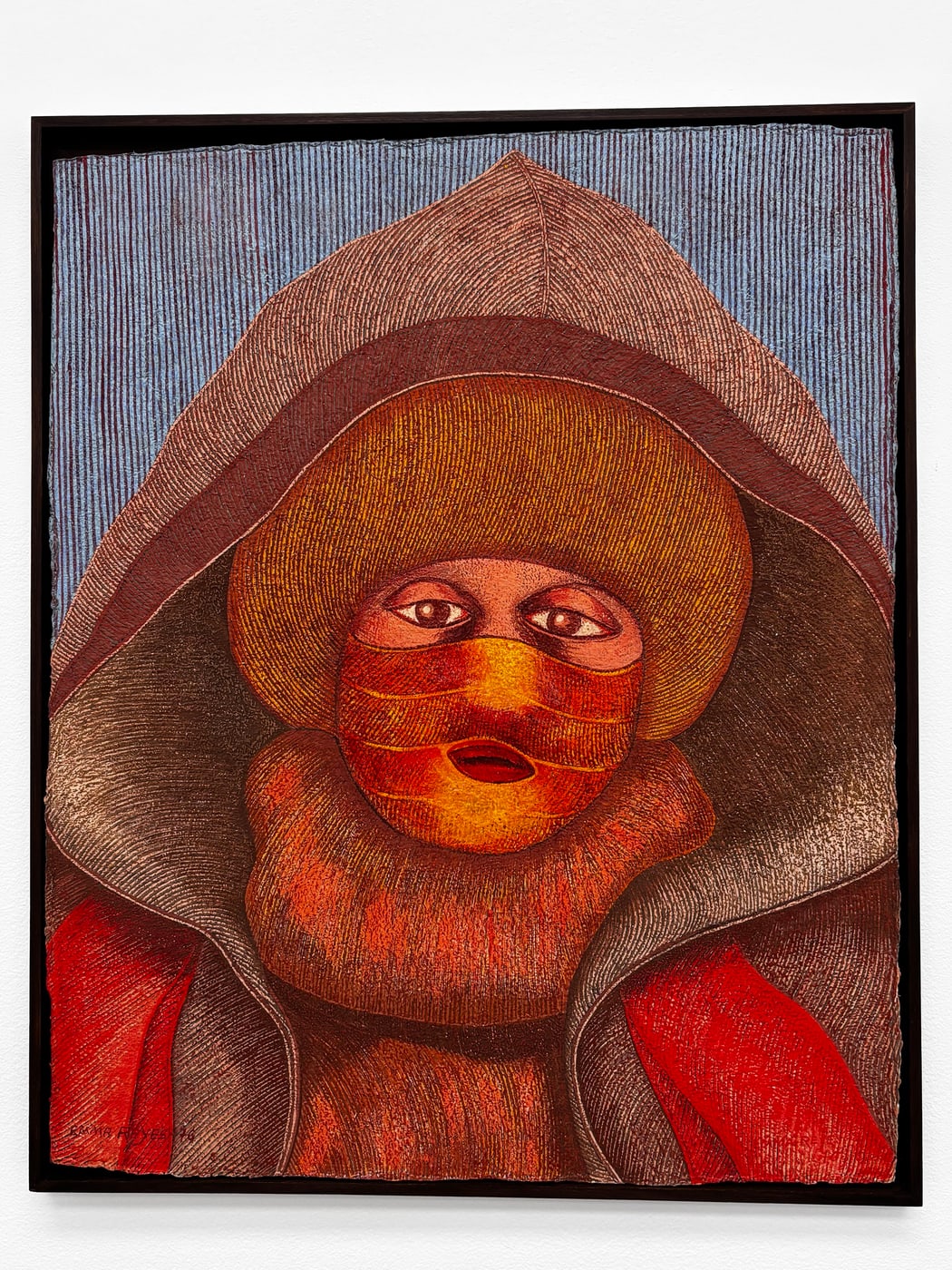
The first thing I photographed was a hooded face (Figs 1 and 2). Red coat, brown hood, lower face wrapped in orange bands, mouth open. It looks out of the canvas. Behind it is a field of fine blue and white lines, which White Cube's text calls hatched chambray blue. The picture is dated 1976 and sits in a series called Imaginary Portraits, invented figures drawn from memory. This was Emma Reyes's first solo show in the UK, at White Cube Mason's Yard (Fig. 10), from 4 September to 3 October. I went in September.
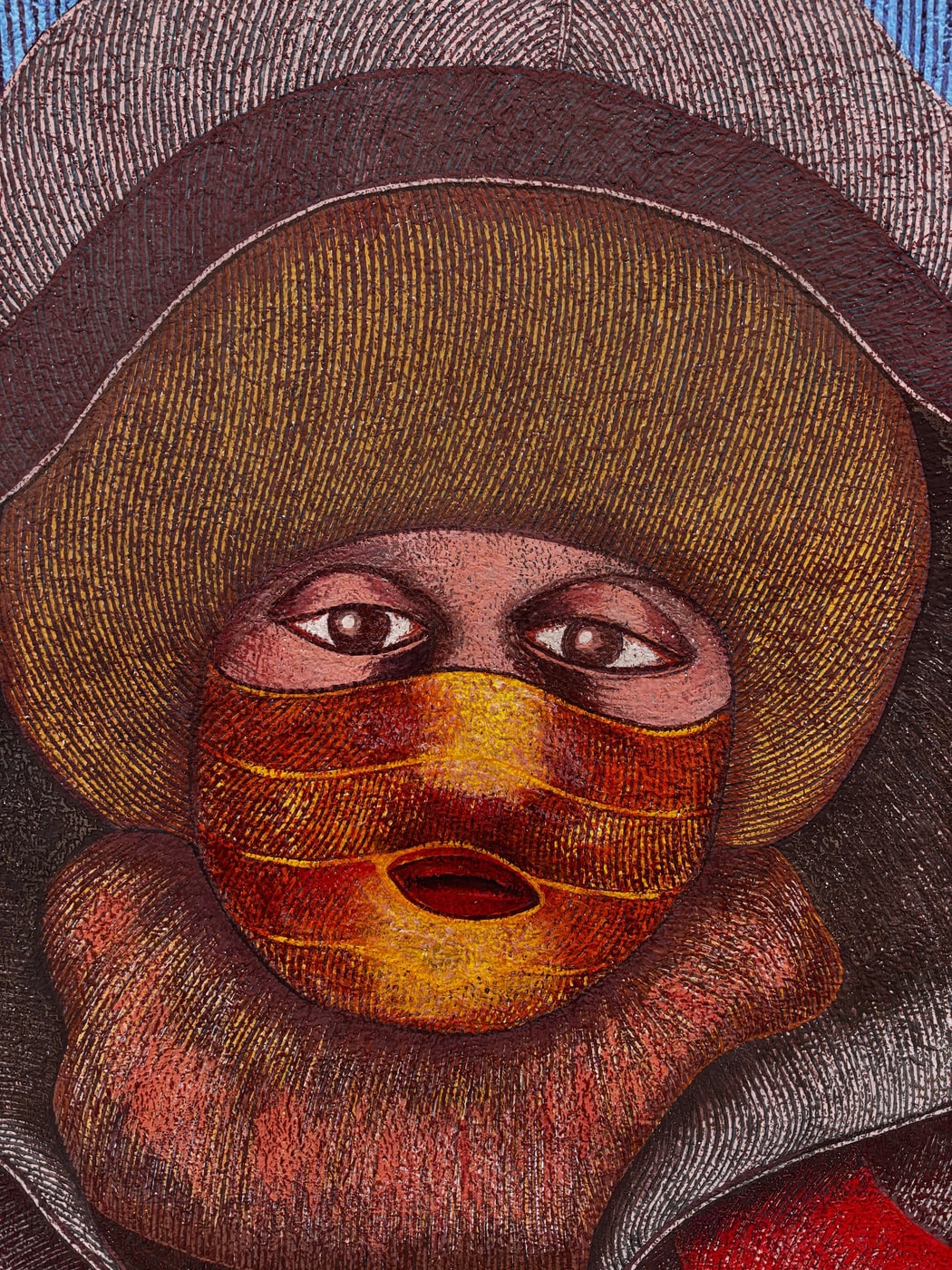
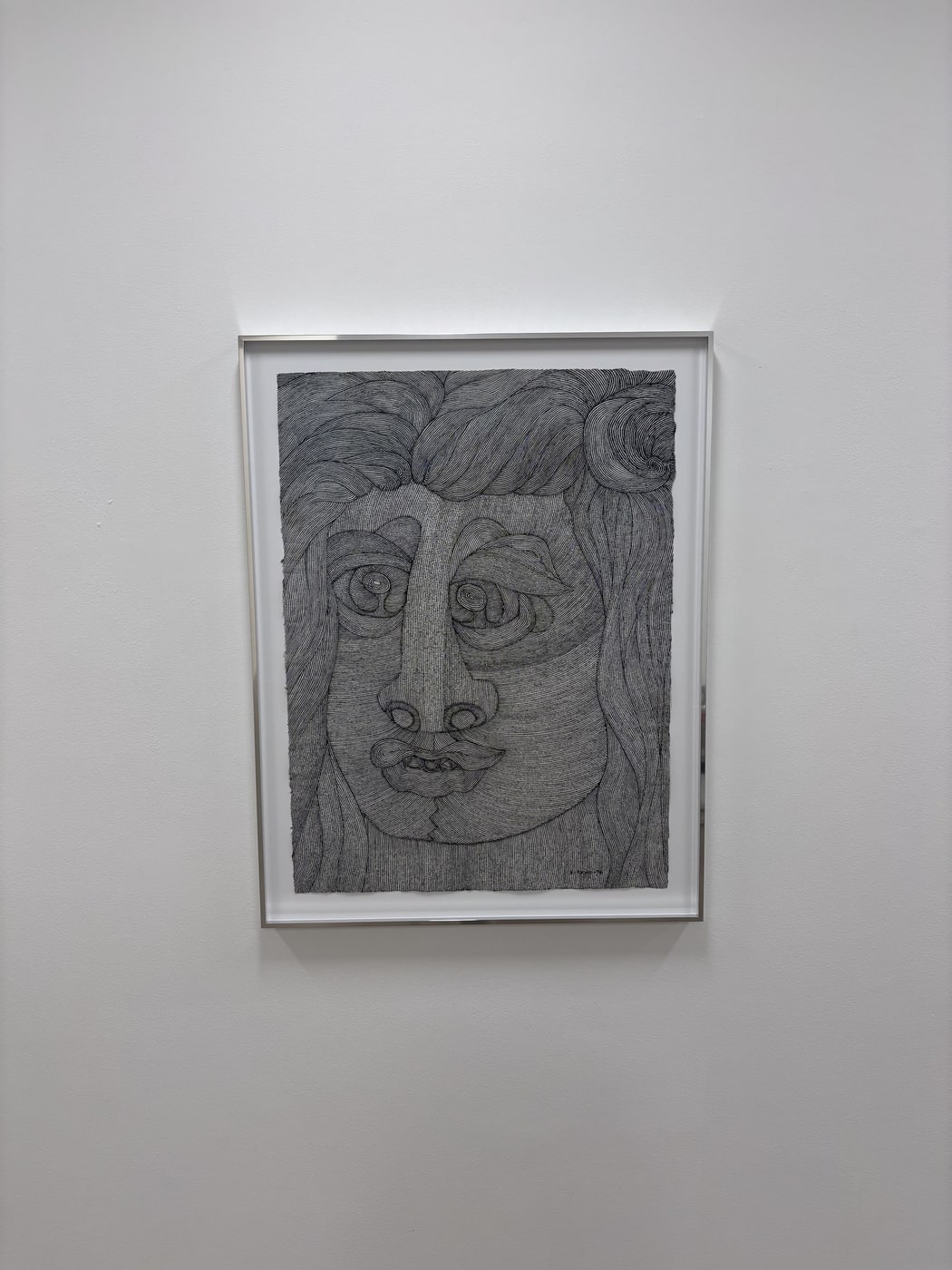
I start with the line. Reyes learned embroidery at the convent that took her in, and White Cube traces both her use of line and her sensitivity back to that. Up close the paint behaves like thread. The hatching on the hooded face runs in tight, even rows (Fig. 2), and the orange bands sit stroke beside stroke, like stitches. Two untitled works on paper from the same years were made with scoring and ink. I photographed a framed drawing in grey, a long-haired face under a mesh of fine lines (Fig. 3). It looks like one of them. I have no label, so I can't say. She made no preparatory drawings. Each line found its way into the next.
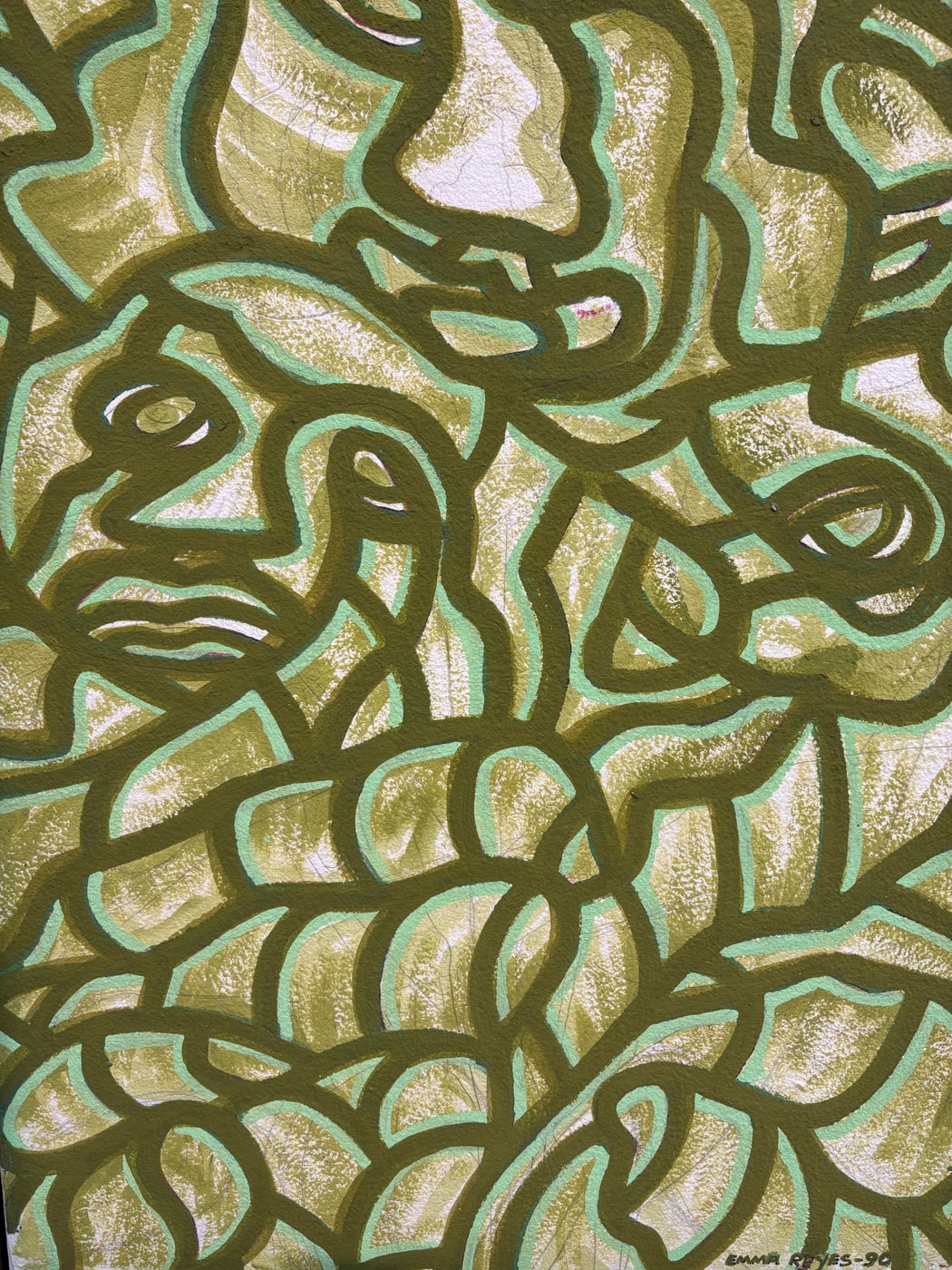
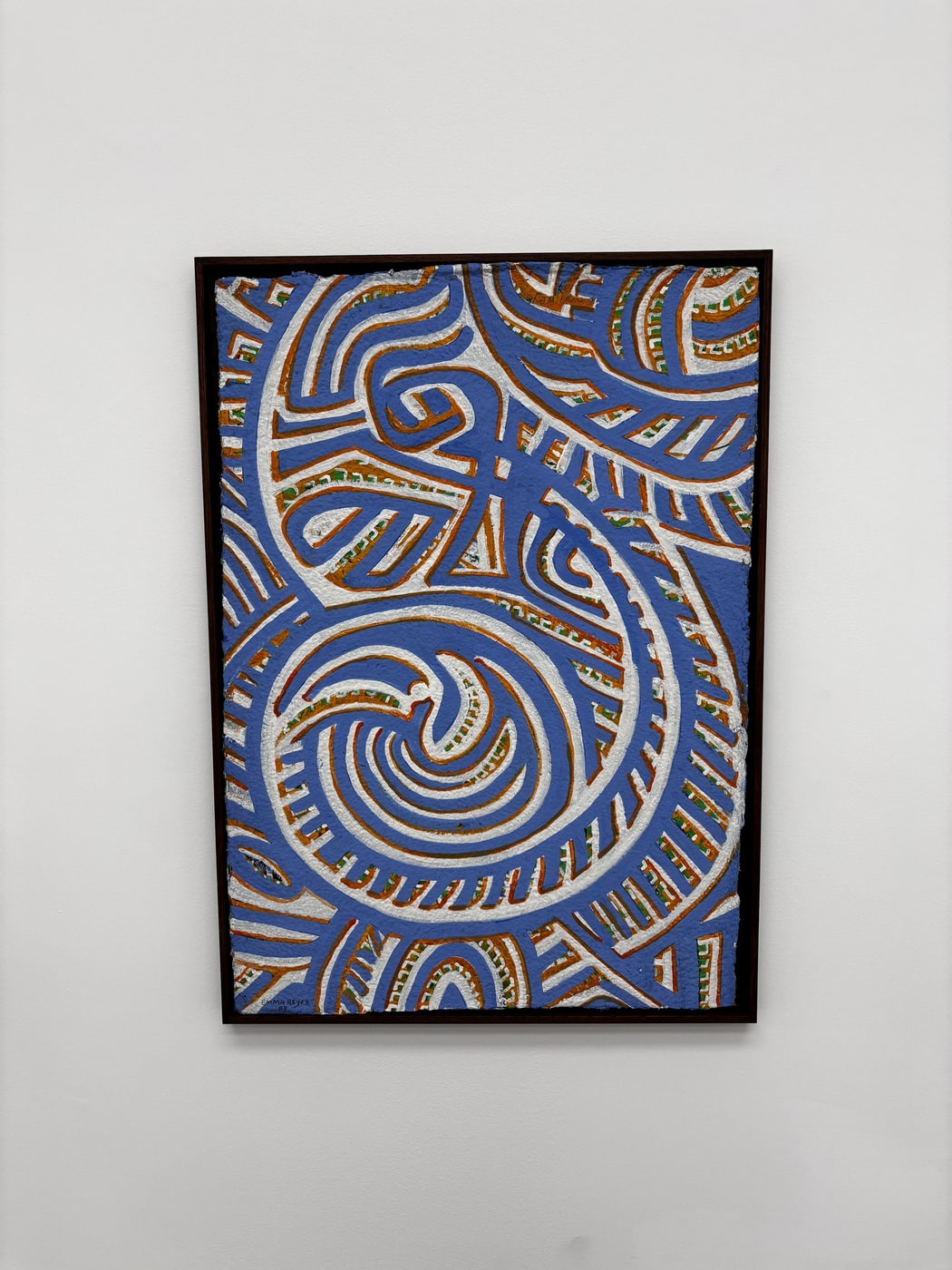
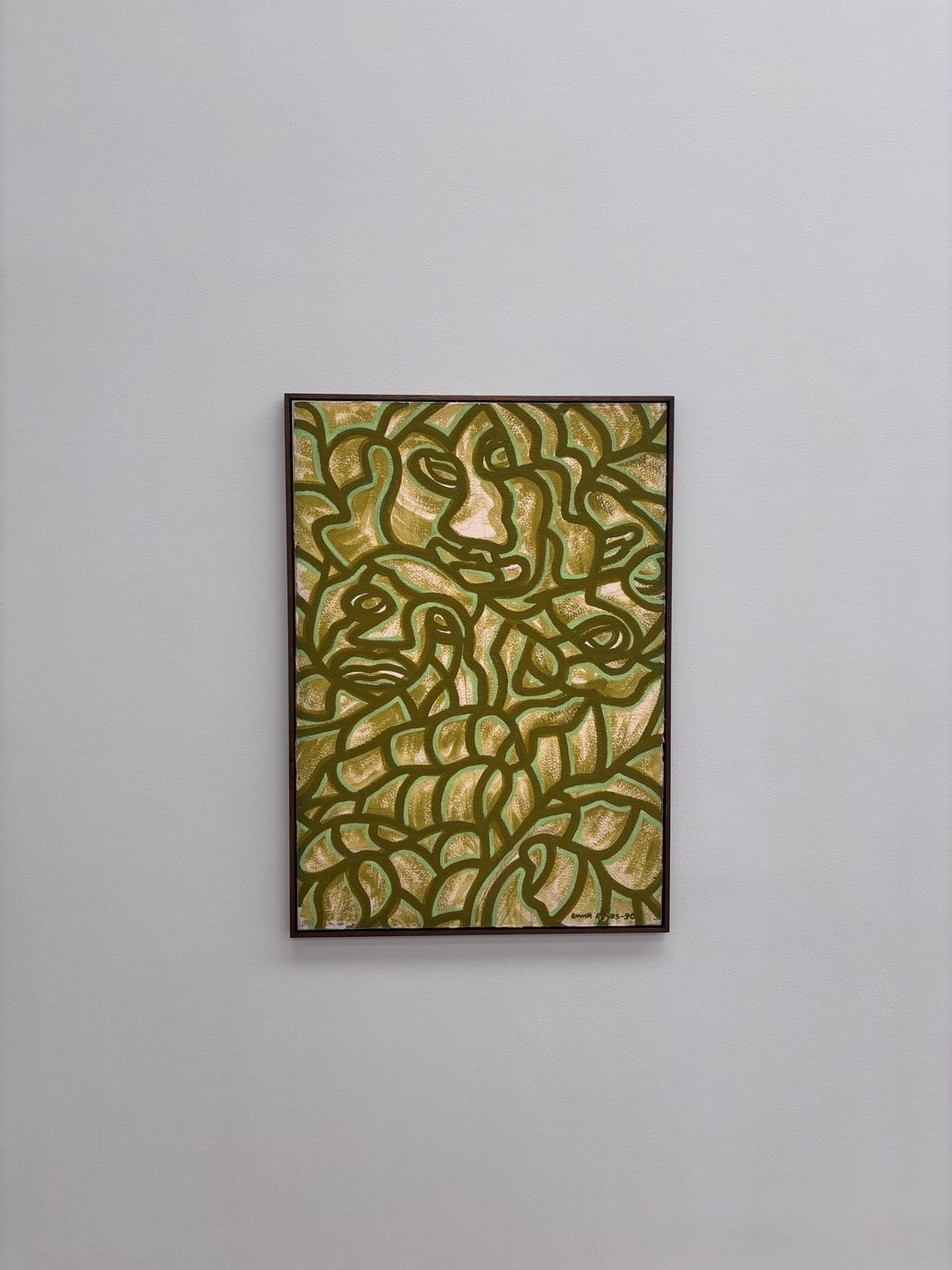
Masks came later, from 1990 in Bordeaux until her death in 2003. White Cube reads them as studies of transformation and shifting identity. The faces I photographed will not stay inside their outlines. In one, signed and dated 90, thick olive lines interlock until an eye or a nose or a mouth turns up in every gap, and the whole thing starts to look like a web (Figs 4 and 5; the signature is in Fig. 5). In another the line is a white ridge standing up off a blue ground (Fig. 6). It coils into a spiral.
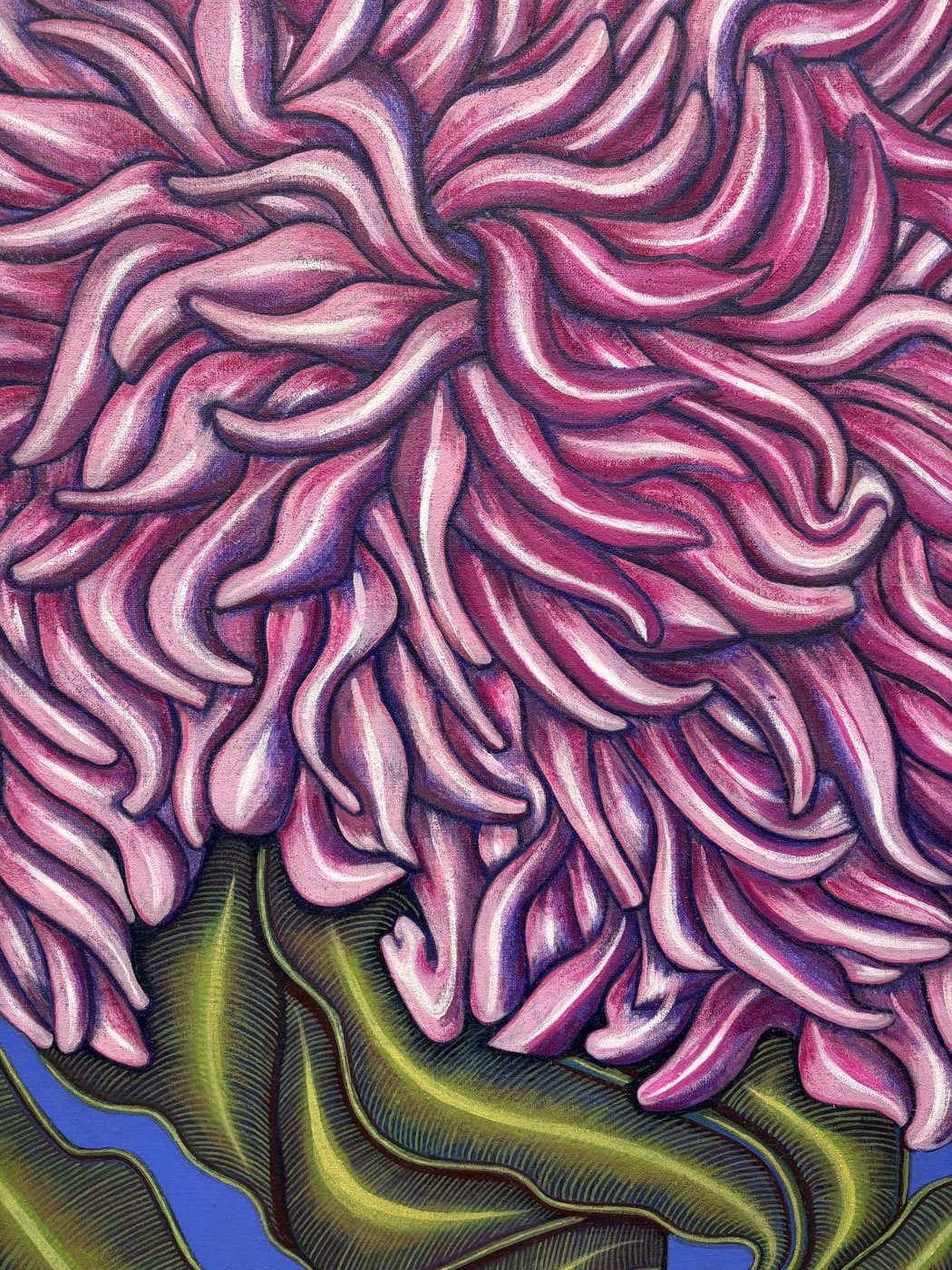
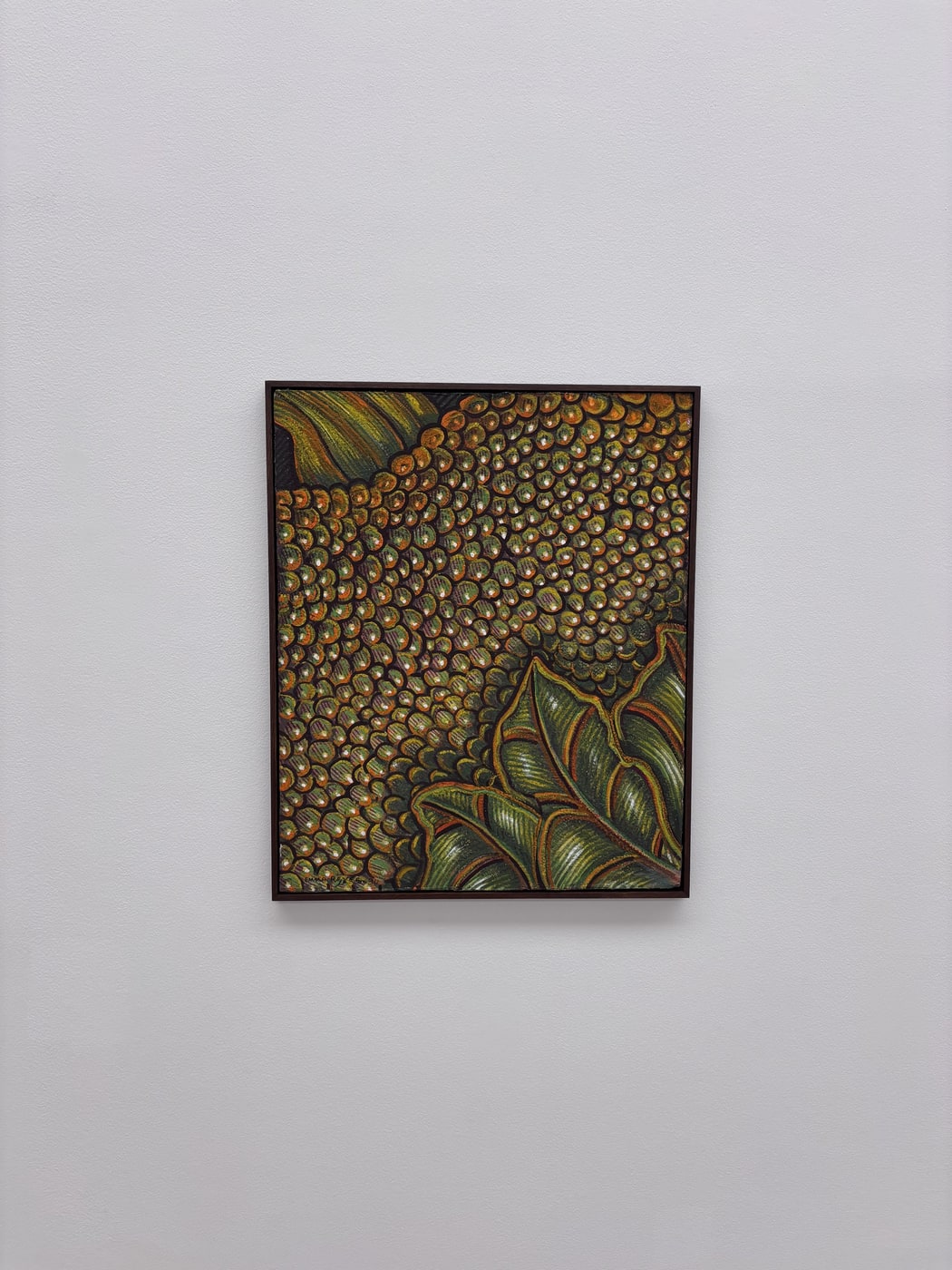
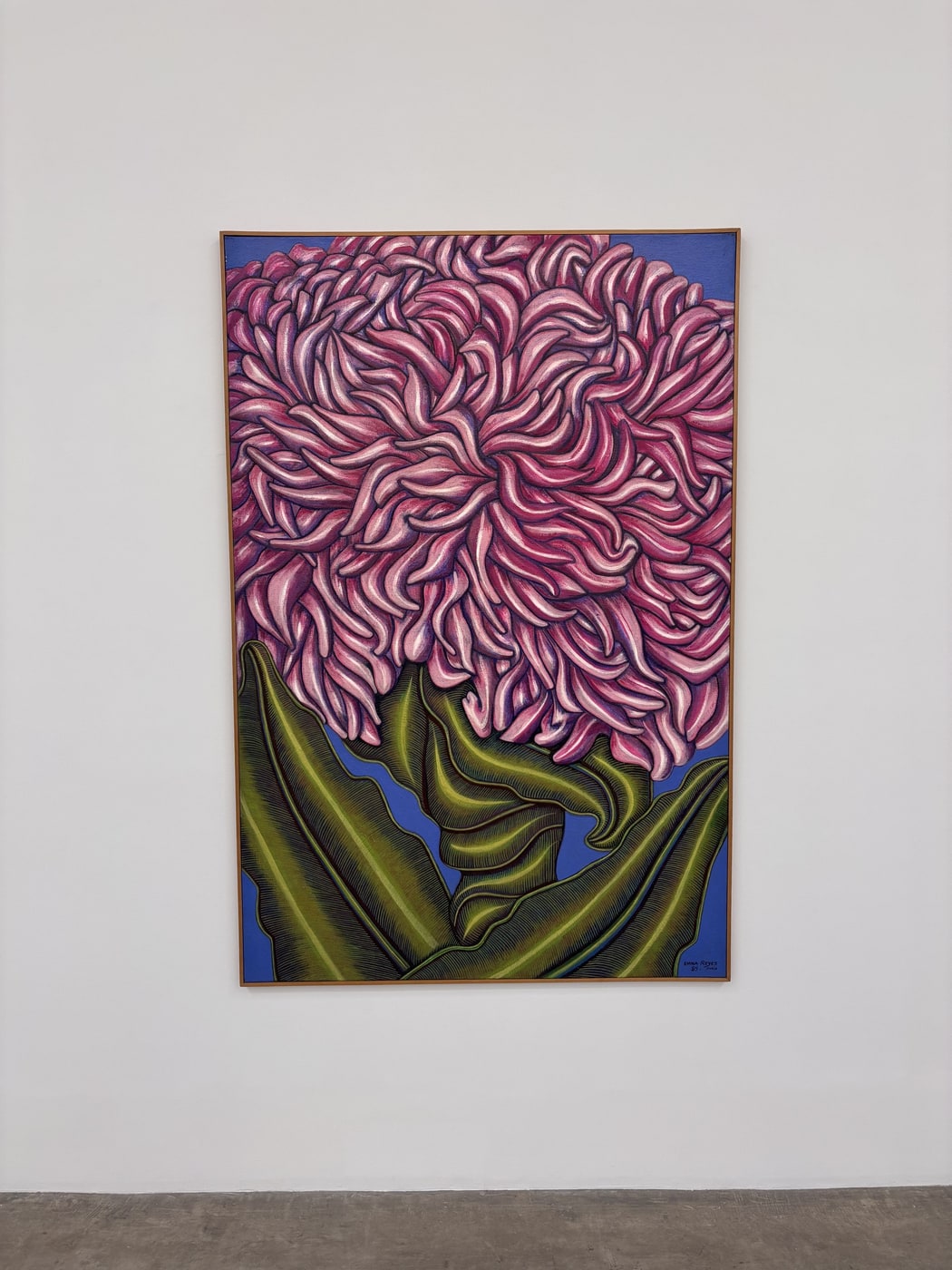
Then the flowers, fruits and vegetables, which use the same line on something else. A pink bloom on a blue ground is drawn petal by petal in curling strokes, white and violet and pink, and it fills the top half of the canvas (Figs 7 and 8). Folded green leaves hang beneath. In a smaller picture a fruit has a skin of tight round bumps, each with its own highlight (Fig. 9). White Cube says the fruits and vegetables of 1989 and 1990 are freed from the status of still life, a term Reyes firmly resisted, and that the detail could only come from what she called an intimacy with the object.
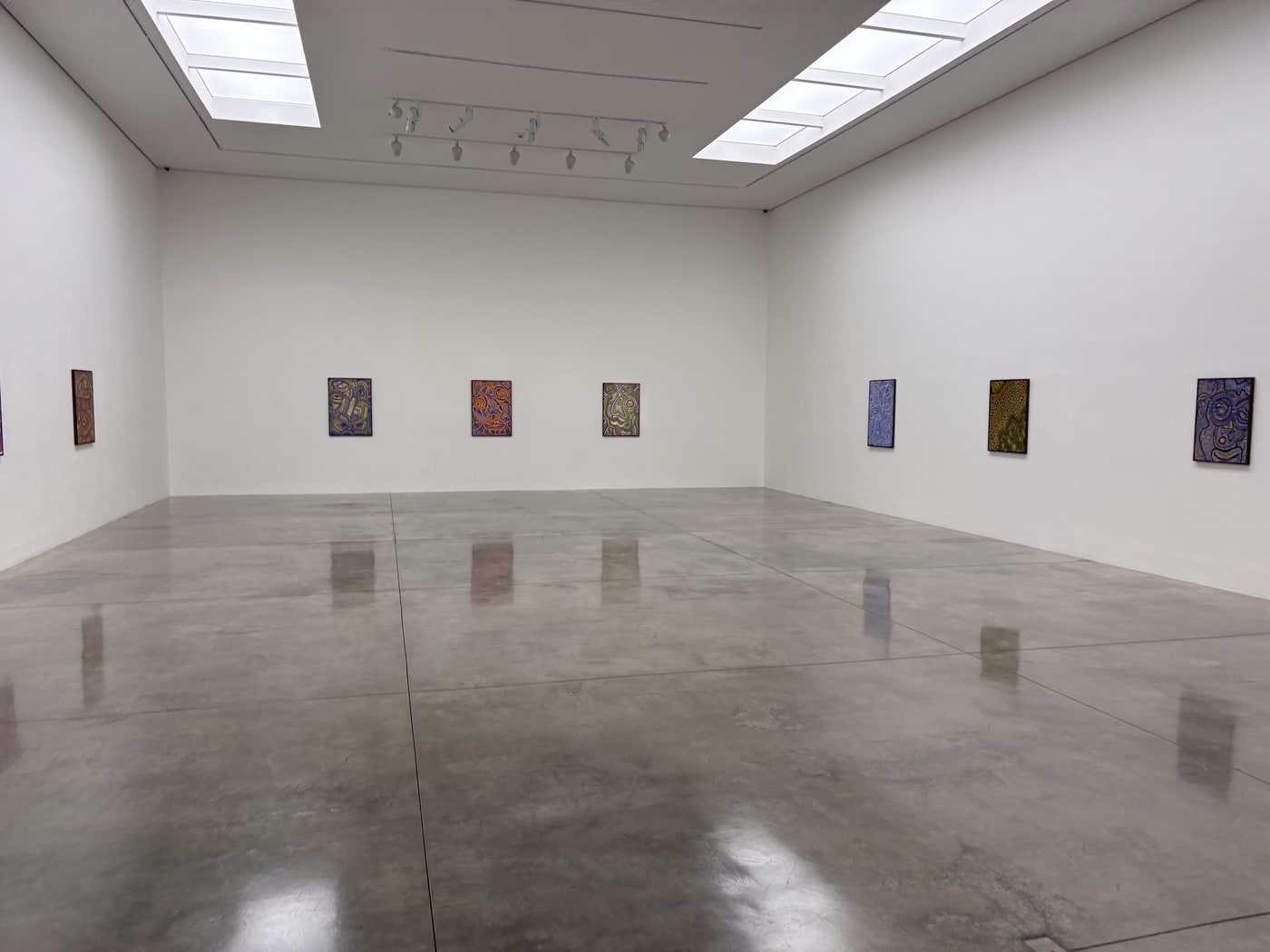
The gallery's argument is that a face and a vegetable get the same attention, and that the human is set level with the world around it. Reyes was born in Bogotá in 1919 and left the convent at about eighteen. Her painting began in Buenos Aires with a chance encounter with an exhibition: by her own account, the first time she had seen a painting at all. She went on to study under André Lhote in Paris from 1947, assist Diego Rivera in Mexico City, and split her later years between Bordeaux and Périgueux. A 2017 Guardian review quotes her on how she worked: "I do not paint my pictures, I write them." The show closed on 3 October and I found no sign of a tour.
Responses.
Received. Thank you.