Cinema
The visual lens.
C'mon C'mon
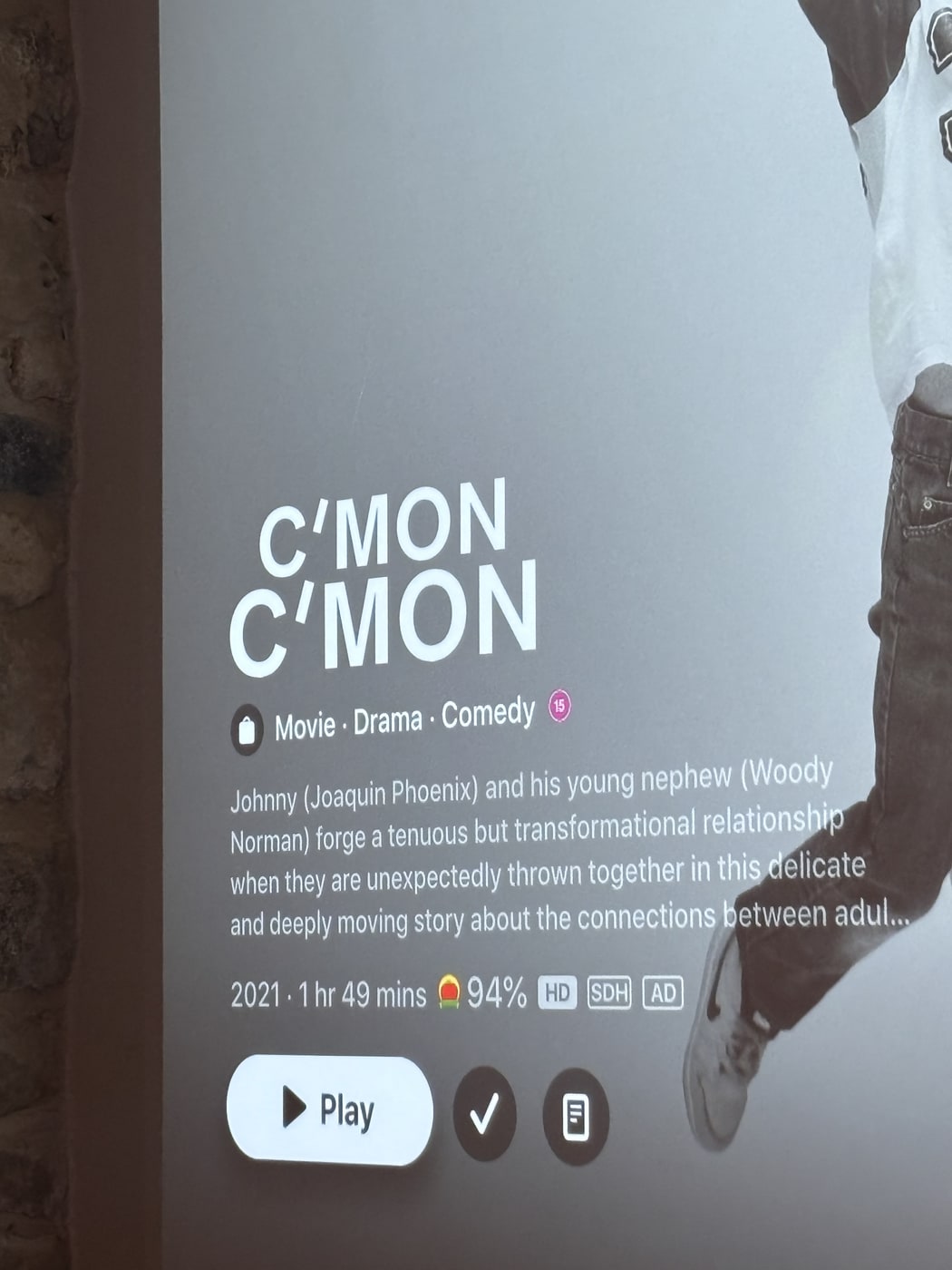
Joaquin Phoenix plays Johnny, a radio journalist whose job is to interview children about their lives and about the future. When his sister has to care for Jesse's father, who is unwell, Johnny takes in her son. Woody Norman plays Jesse. The work takes them across the United States, with Los Angeles, New York and New Orleans among the stops.
It is shot in black and white by Robbie Ryan, and the choice does something odd. Mills has described the film as feeling like a documentary and like a fable at the same time, and the monochrome serves both. Parks, airports and restaurants look observed rather than staged, while Ryan's shots of cities set against nature, which he went out at weekends to capture, give the film the weight of something told a long time ago.
Jesse is the anchor for the entire movie. He is wild, imaginative and impossible to manage, and he tests the patience of everyone around him. Yet he is also the one fixed point. The cities change, the interviews change, Johnny's own life is unsettled. Jesse is what the film keeps returning to, and what everything else is measured against. I know him. I have never liked being managed either.
That is where the energy, the tempo and the chaos come from. Jesse supplies the energy and the chaos. The film lets all of it in and still keeps its own tempo, unhurried, what Time Out calls its "meandering slice-of-life narrative". The chaos never speeds the film up. It makes the quiet stretches mean more.
The film does not try to fix him, or change him. Johnny's work is listening, and the film listens too. That is also why it feels so relatable and so down to earth. There is no spectacle in it, only people's lives, and you recognise your own in them. Most of what we watch keeps us moving. This keeps you still.
Got a film for this week?
Noted. Thank you. Read past thoughts on Conversations.
Tony
Before he was anyone, Anthony Bourdain was a young man washing dishes in Provincetown. Matt Johnson's film stays in that summer, the one that became a chapter of Kitchen Confidential, and does not leave it.
Rosemary's Baby
Roman Polanski's Rosemary's Baby (1968), adapted from Ira Levin's novel, follows Rosemary and Guy Woodhouse as they move into the Bramford, a New York apartment building with a dark history involving witchcraft and even cannibalism, despite warnings from their friend Hutch about it. Guy, an ambitious actor currently struggling to find success, quickly strikes up a friendship with their elderly neighbours, Minnie and Roman Castevet, who constantly intrude on the couple's daily life. Rosemary remains wary, especially after meeting another resident, Terry. Terry disappears soon after; suicide is suspected, though Rosemary strongly doubts this explanation.
No community picks yet. Suggest a film above.