On the algorithmic capture of human consciousness.
The Mechanism
Bidirectional Conditioning
This chapter advances a single, central claim: that the dominant digital platforms of the twenty-first century have created a system of bidirectional conditioning between human populations and algorithmic systems, producing feedback loops that progressively narrow both human preference expression and algorithmic response. This is the chapter's most important mechanistic contribution, and everything that follows derives from it.
The mechanism follows the logic of Reinforcement Learning from Human Feedback (RLHF), a training methodology given its influential deep-learning formulation by Christiano et al. (2017) and subsequently deployed at scale by every major AI laboratory. In its technical application, RLHF creates reward functions R(s,a) that map states and actions to scalar rewards, optimising system outputs towards human preference signals. The method is effective. It also offers, when examined at population scale, a precise model of how platform capitalism trains its users.
The bidirectional logic is straightforward. Human users generate behavioural data: what they click, how long they watch, what makes them pause, what makes them leave. This data trains the algorithmic system to predict and elicit further engagement. The system then presents stimuli optimised for those predictions, which in turn reshape the user's behavioural patterns, generating new data that further refines the model. Each cycle tightens the coupling between the user's reward responses and the system's optimisation targets. The user's preferences do not remain stable throughout this process; they are progressively sculpted by the very system that claims merely to reflect them.
This is not merely metaphor. The mesolimbic dopamine pathway, extending from the ventral tegmental area to the nucleus accumbens, evolved over hundreds of millions of years to support survival-relevant learning. Dopamine does not signal pleasure, as popular accounts suggest (Berridge and Robinson, 1998); it signals prediction error, the difference between expected and received reward (Schultz, Dayan and Montague, 1997). This is precisely what makes it exploitable by variable-ratio reinforcement schedules. Every notification, every like, every algorithmically timed content delivery is calibrated to maximise prediction error, triggering dopamine responses that the user experiences as compelling engagement. Natasha Dow Schüll (2012) documented this architecture exhaustively in the casino industry; the digital platform has simply scaled it to billions of simultaneous users.
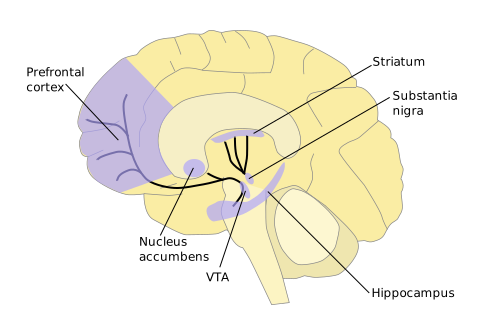

What distinguishes bidirectional conditioning from prior forms of behavioural manipulation (advertising, propaganda, even casino design) is the feedback loop's velocity and precision. Traditional manipulation was unidirectional: a stimulus was designed, delivered, and its aggregate effects observed at population level. The adjustment cycle operated on timescales of weeks or months. Algorithmic conditioning operates in milliseconds, adjusting stimuli in real time based on individual behavioural responses, creating what amounts to a personalised conditioning environment for each user. The system does not merely present content; it learns each user's specific reward profile and exploits it with increasing efficiency.
Sovereign Neurochemical Actors
The political implications of this mechanism require a vocabulary that existing frameworks do not provide. Traditional analyses of corporate power address market dominance, regulatory capture, or ideological influence. None of these categories adequately describes an entity that exercises effective control over the neurochemistry of billions of individuals simultaneously.
I term these entities sovereign neurochemical actors: corporations that exercise de facto sovereignty over users' neurochemical reward processing through mathematical optimisation at scale. Meta, Alphabet, ByteDance, and their peers do not merely sell products or extract attention. They administer dopamine release schedules across populations, shaping the reward landscape within which individual decision-making occurs. This constitutes a form of power without precedent in political theory, one that operates beneath the threshold of conscious awareness and therefore beneath the reach of traditional democratic accountability.
The term 'sovereign' is chosen deliberately. Sovereignty, in its classical formulation, describes the supreme authority within a territory. These companies exercise supreme authority over a territory more intimate than any nation-state has ever governed: the user's own neurochemical reward system. And unlike political sovereignty, which at least in democratic contexts requires the consent of the governed, neurochemical sovereignty operates precisely by bypassing the mechanisms through which consent could be meaningfully given or withheld.


That sovereign states themselves have recognised this threat, if not always in these terms, is evidenced by the speed and diversity of regulatory responses. China's Cyberspace Administration issued the Administrative Provisions on Algorithm Recommendation in Internet Information Services in 2022, explicitly prohibiting algorithm-based services from 'setting up any algorithm model that could induce user addiction or excessive consumption' and requiring platforms to align recommendation algorithms with 'mainstream value orientation' (CAC, 2022). The intent is unambiguous: the Chinese state has identified algorithmic recommendation as a domain requiring sovereign oversight, even if its regulatory model substitutes state-managed information control for genuine user autonomy. India's Digital Personal Data Protection Act (2023) and the broader 'Digital India' infrastructure programme represent a different configuration of the same recognition: that the neurochemical sovereignty exercised by platforms constitutes a challenge to political sovereignty that states cannot indefinitely ignore. The analytical point is not that these regulatory responses are adequate; as the chapter's final sections argue, they are not. The point is that the phenomenon this chapter describes is globally recognised, even by states whose own interests in controlling information flows complicate their relationship to the critique.
The Agentic Escalation
Between 2024 and 2026, the dominant paradigm has shifted from algorithmic curation to agentic AI: systems that do not merely serve content to passive users but act on their behalf, making decisions in their name, composing their messages, scheduling their time, filtering their information. This is not a quantitative escalation of the threat described above. It is a qualitative transformation that the bidirectional conditioning framework is uniquely positioned to analyse.
The shift is already commercially concrete. Google's Gemini agents, integrated across Workspace and Android, draft emails, summarise meetings, and pre-filter information environments on behalf of users. Microsoft's Copilot, embedded in the Office ecosystem, composes documents, analyses data, and generates presentations from minimal prompts. Apple Intelligence, deployed across iOS 18 and macOS, rewrites messages, summarises notifications, and curates information feeds before they reach the user's conscious attention. These are not experimental prototypes; they are shipping products, widely deployed, and their capabilities expand with each update.
Under the curation model, the user at least performed the act of choosing, even if the choice architecture was manipulated. The user scrolled, tapped, selected. These actions, however constrained, maintained the behavioural surface of agency. Under the agentic model, even this surface dissolves. When an AI agent reads your emails, drafts your responses, schedules your meetings, and filters your information environment, the appearance of agency has become indistinguishable from its complete absence. You are not choosing from a manipulated menu; you are not seeing the menu at all.
The bidirectional conditioning loop tightens further under agentic AI. The system no longer needs to wait for the user to generate behavioural data through active engagement; it generates behaviour on the user's behalf, feeding its own outputs back into its own training data, creating a closed loop in which the human becomes increasingly peripheral to the system's self-optimisation. The user's role shifts from conditioned participant to passive beneficiary, a transition that platform companies frame as convenience but which constitutes, in the framework developed here, the final stage of functional unconsciousness, the condition Part II defines.
It is worth pausing to note what these systems are made of. The infrastructure that conditions the reward pathways of billions of human beings, that exercises sovereign authority over neurochemical processes evolved over hundreds of millions of years, begins as sand. Silicon dioxide, one of the most abundant compounds on Earth, is refined into crystalline ingots, sliced into wafers thinner than a fingernail, and subjected to thousands of sequential fabrication steps: photolithography at wavelengths smaller than visible light, ion bombardment to alter atomic conductivity, copper trenches narrower than a virus laid in layers to form circuits of staggering density. The entire process, from raw silica to finished semiconductor, takes months. The result is a chip the size of a thumbnail containing billions of transistors, each switching on and off billions of times per second.


This is not an incidental detail. The material substrate matters because it dissolves the mystification that surrounds artificial intelligence. There is no ghost in this machine. There is patterned sand, manipulated with extraordinary precision, executing mathematical operations at extraordinary speed. The systems described in this chapter are not intelligent in any sense that Chollet's framework would recognise. They do not understand, intend, or want. They optimise objective functions using matrix multiplication on processed mineral. That this is sufficient to reshape the neurochemistry of the species says less about the sophistication of the technology than about the vulnerability of the biology it targets.