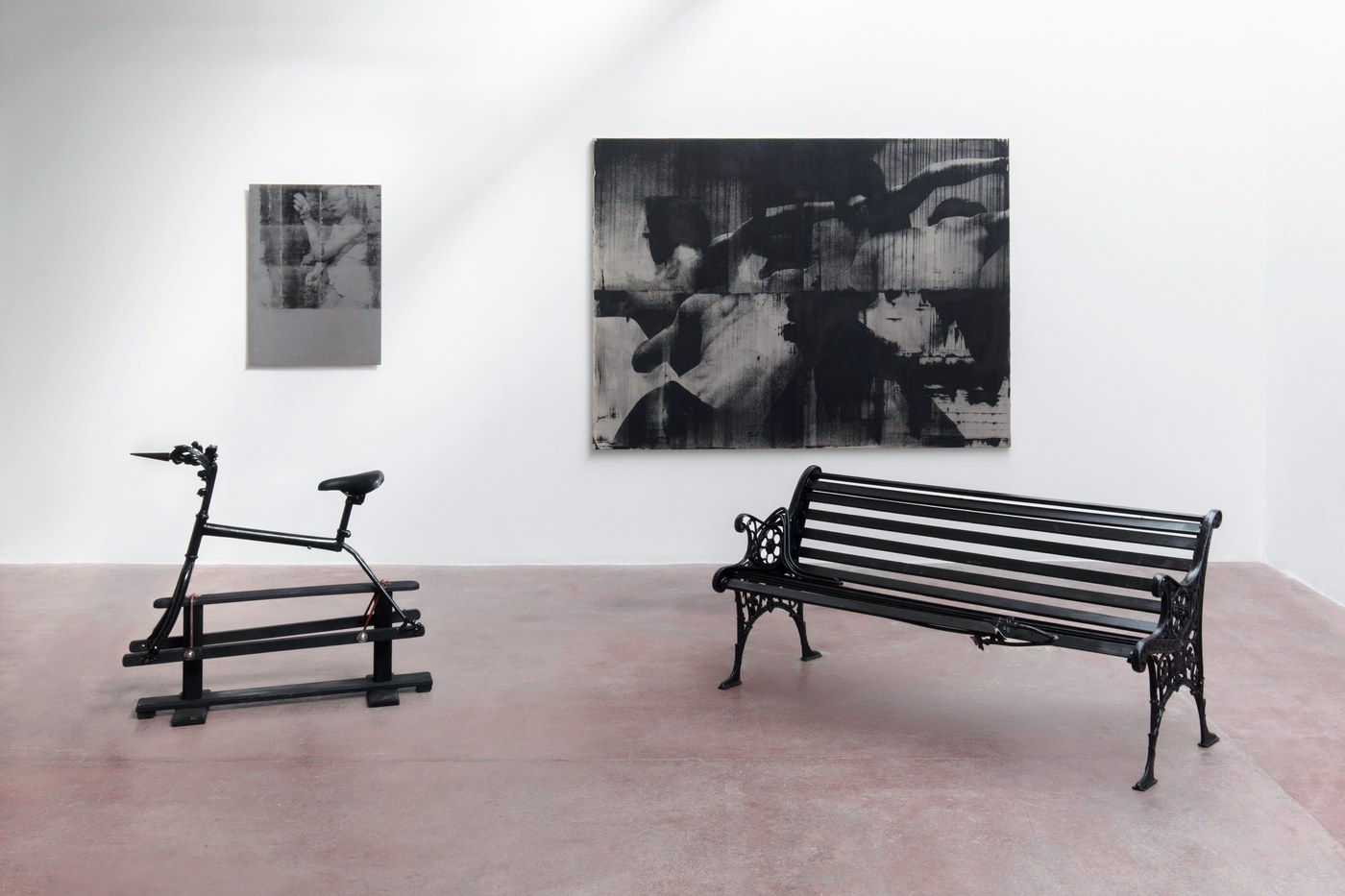
A trio show by Benjamin George Moss, Charlie Soffe and Ben Barbetta Thompson takes the divine and grounds it in the materials of the city.
A leap of faith is usually imagined as weightless: a jump into the unknown. The phrase is popularly traced to Søren Kierkegaard, an early existentialist philosopher and devout Christian. For him, faith was never about comfort. It was a decision made in fear and trembling, at the point where reason gives out. Linnéa Ruiz Mutikainen, writing for the show, imagines a gentler version: a higher power as “a comforting mediator we submit to.” Leap of Faith, the trio show Benjamin George Moss, Charlie Soffe and Ben Barbetta Thompson curated themselves at Greatorex, London, in October, brings it down to earth. Faith here is welded, burnt, pressed and cast. It reads almost as a process that walks the fine line between comfort and edge. The works feature a fence that blackens the hands that climb it, portraits muzzled by time, a bench armed with railing spears. In their own way, all the works leap: timber into pigment, a family portrait into a measure of time, a shopfront into a skeleton of steel.
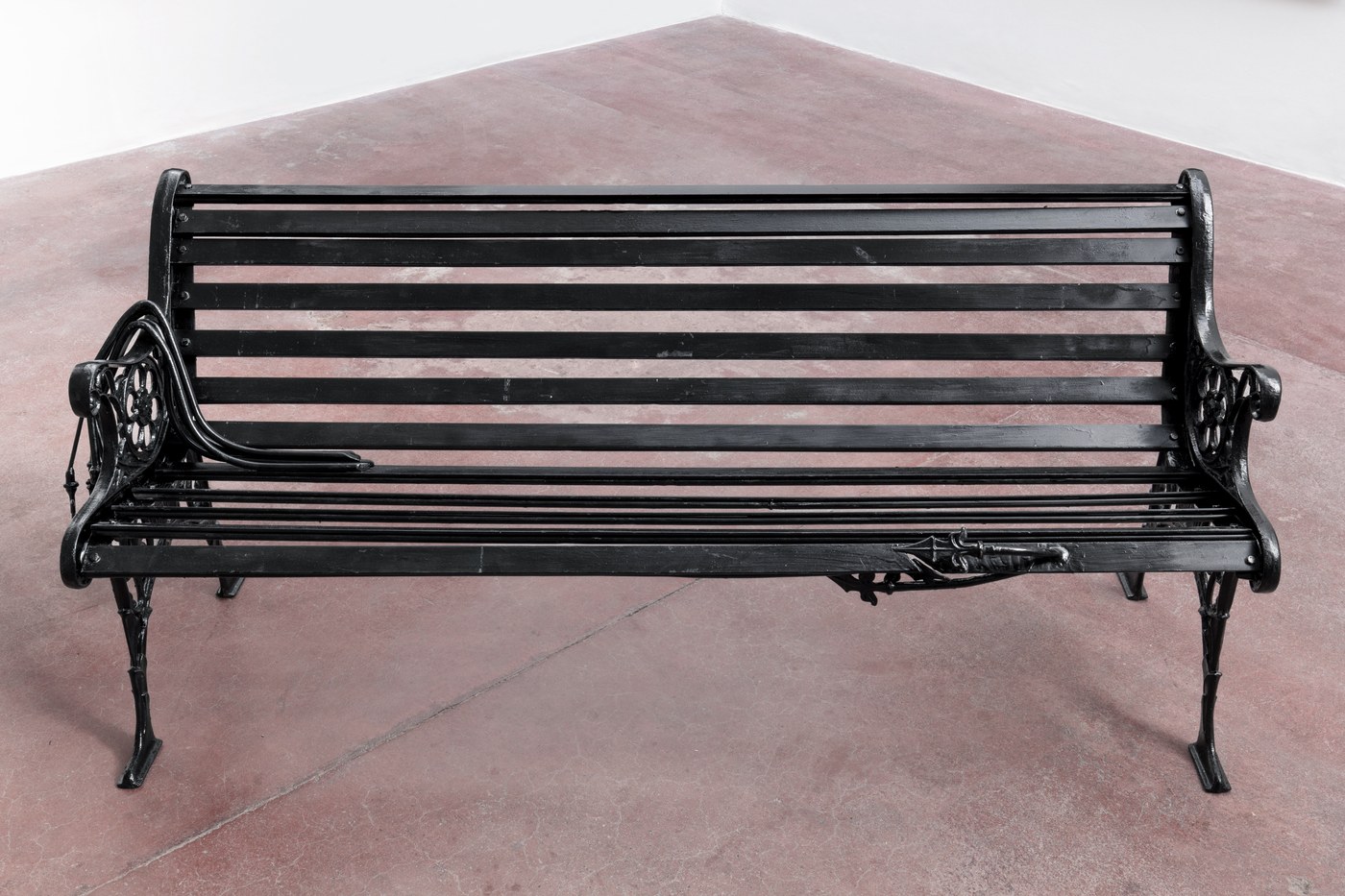
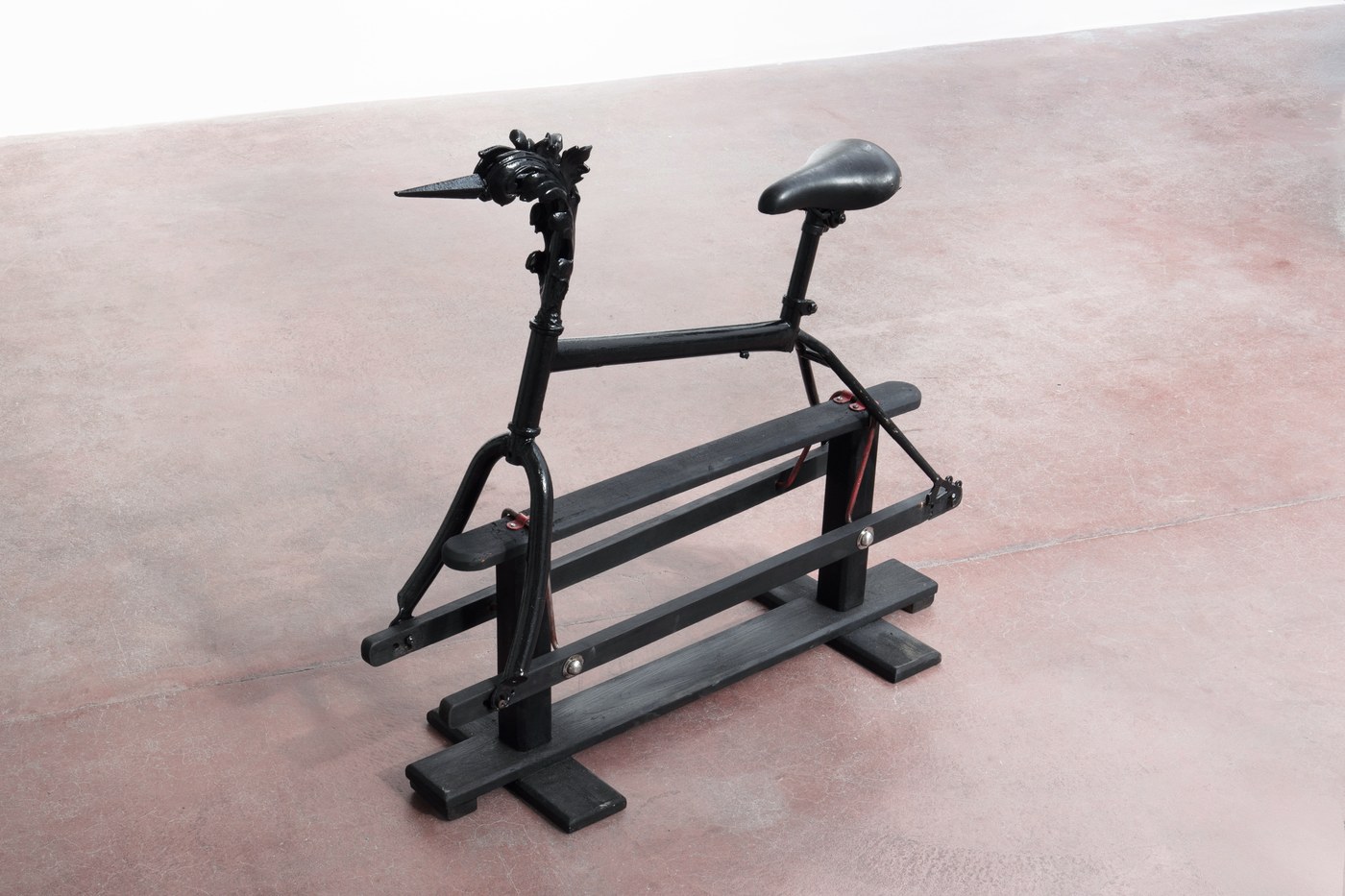
The show evokes a strange sense of comfort despite the starkness and brutality of the materials. The source of this comfort doesn’t read as celestial. It comes from the street. Black railings, park benches, shopfronts and roadside memorials are the furniture of everyday urban life, seen so often that they stop being seen. The elemental familiarity of metal and black railing lends the viewer even a sense of security. Moss builds almost entirely from this vocabulary. Now, Today, Tomorrow and Always looks like an ordinary cast-iron park bench, but railing spears are worked into its seat and armrests, and something is just slightly wrong with it. It preserves its primary function while minimally obstructing comfort. It can still be sat on, still rested on. Comfort and edge sit in the same object. Memorial Bouquet turns fleur-de-lis railing tips into the stems of the flowers left on lampposts in remembrance: the bouquet is sharp and piercing, grief made of railing. Rocking Horse, built on a child’s bike frame, raises what we trust such objects to do: to hold a child, to keep them safe. That trust is a kind of faith too, the everyday kind. Moss’s sculptures live somewhere “between recognition and estrangement”, and the whole show sits in that liminal space. Barbetta Thompson’s fence and Soffe’s family portraits work the same way. The familiar holds you just long enough for the strange to arrive. Ubiquitous urban objects and materials evoke comfort, while their almost magic-realist treatment adds intrigue. The magic here is hard-edged and urban rather than wondrous: railing spears, charcoal, steel.
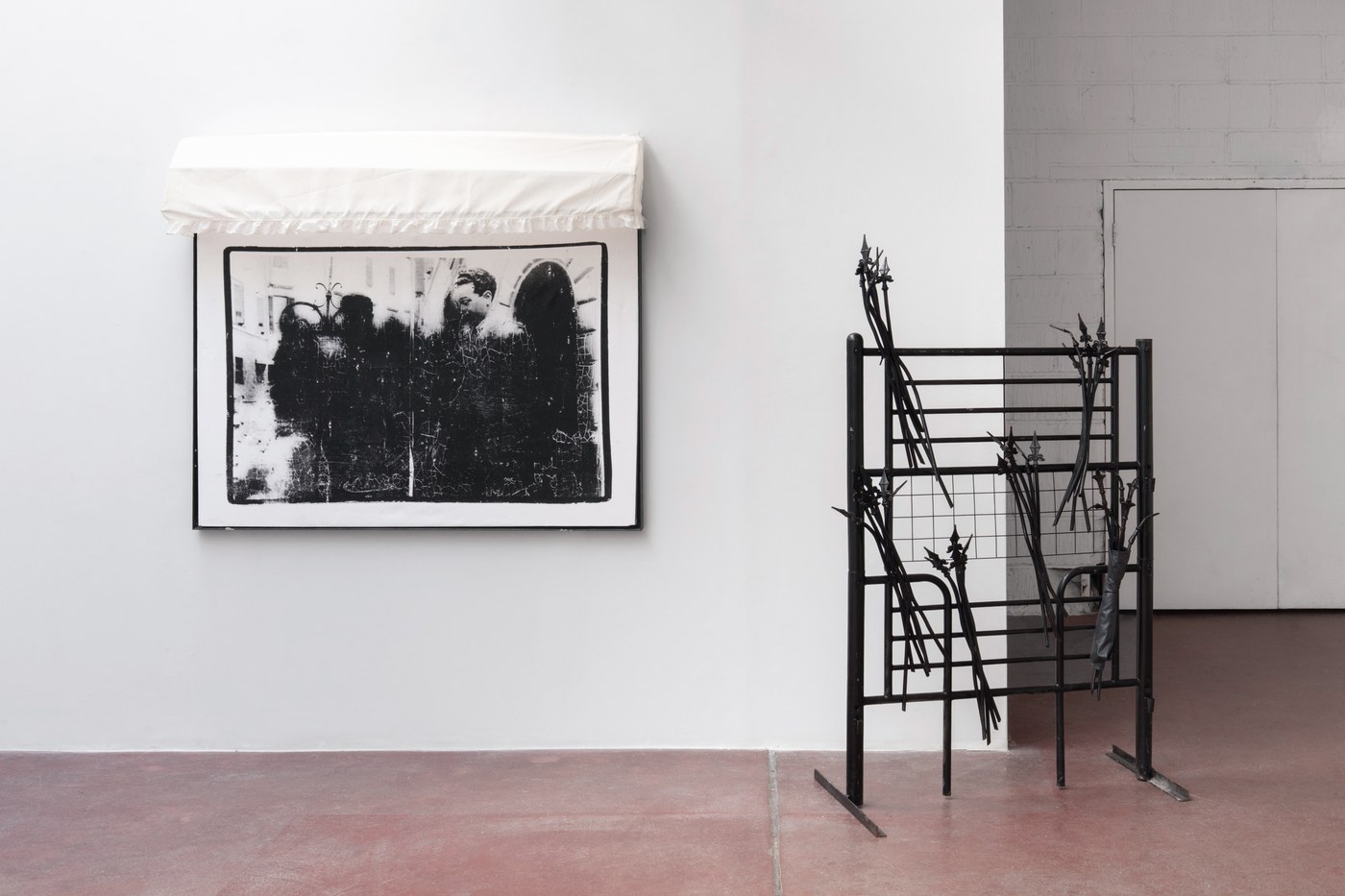
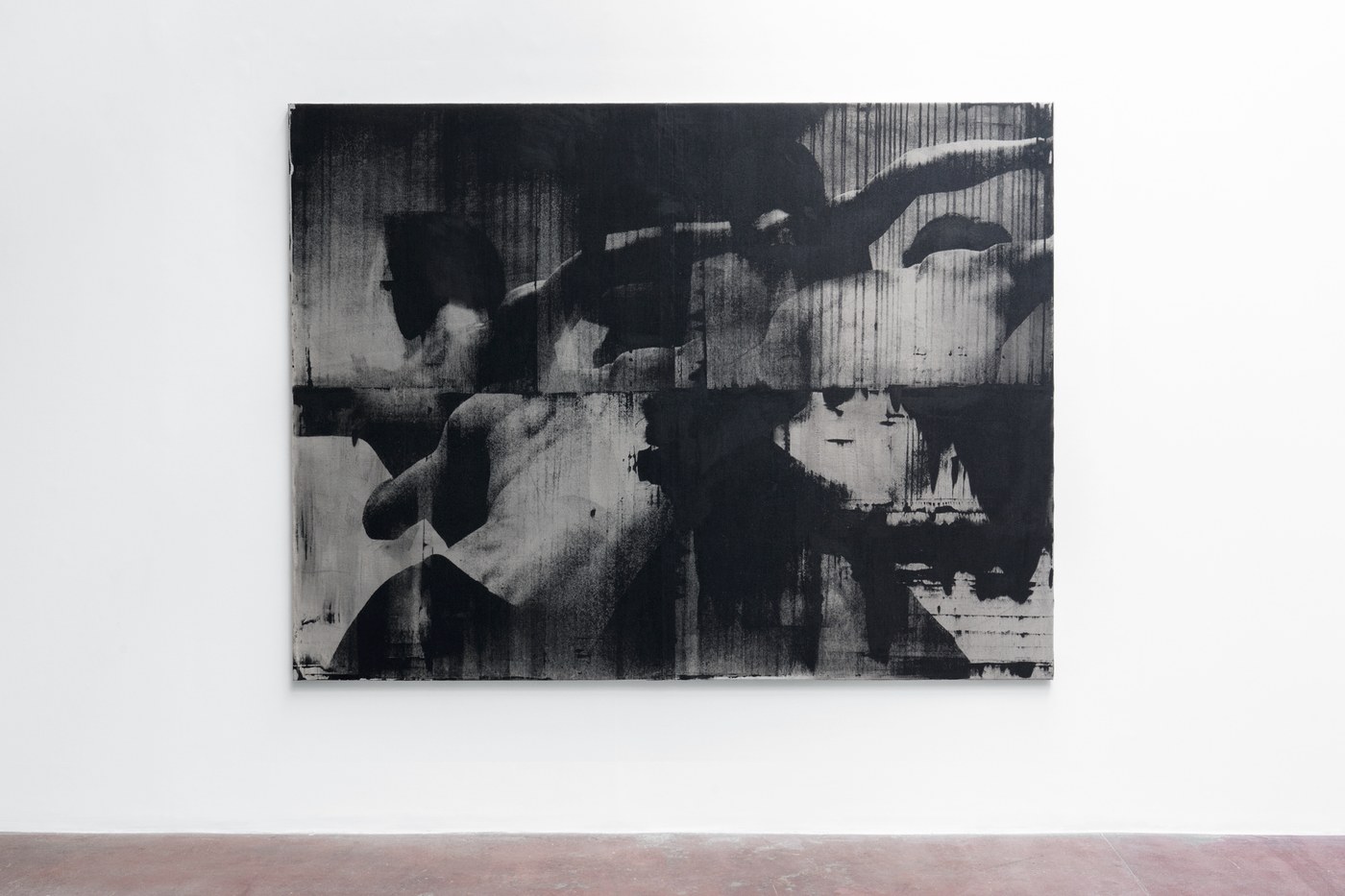
Rite of Passage is a fence of charred timber posts, beams crossed, the kind jumped in youth without a second thought. The charring is yakisugi, the Japanese method that preserves wood by burning it, but it also stains. Anyone who climbs it now comes away marked, the way anti-climb paint marks a trespasser. Barbetta Thompson works in a closed circle: the timber of Rite of Passage is burnt to charcoal, the charcoal is ground into pigment, and the pigment goes into the ink he uses to silkscreen photographs onto linen. The fence and the prints are presented as part of the same exhibition. Material and process next to each other. Burning is a ritualistic practice found in various religious and spiritual traditions and takes a similar tone in Barbetta Thompson’s practice. Burning itself is a destructive and volatile process, releasing toxic compounds and destroying structures made to last. Charcoal and ash are the result, but fire is both hazard and comfort. Have you ever become sleepy in front of a bonfire? Have you ever checked the stove three times before leaving the house? Two sides of the same coin. Burning is the ritual, ash becomes the image, and pressure does the rest, the way it turns carbon into diamond. The photographs Barbetta Thompson uses for his silkscreens are pushed to their painterly limit. Ink is worked through the mesh rather than pulled clean, which is exactly why the prints read as paintings at first glance. His printing is deliberately heavy-handed, and the dense, worked surface of the prints does something more private too. Barbetta Thompson describes shielding “fragments of himself” under “a safety blanket of texture”. The prints are self-referential, but disguised.
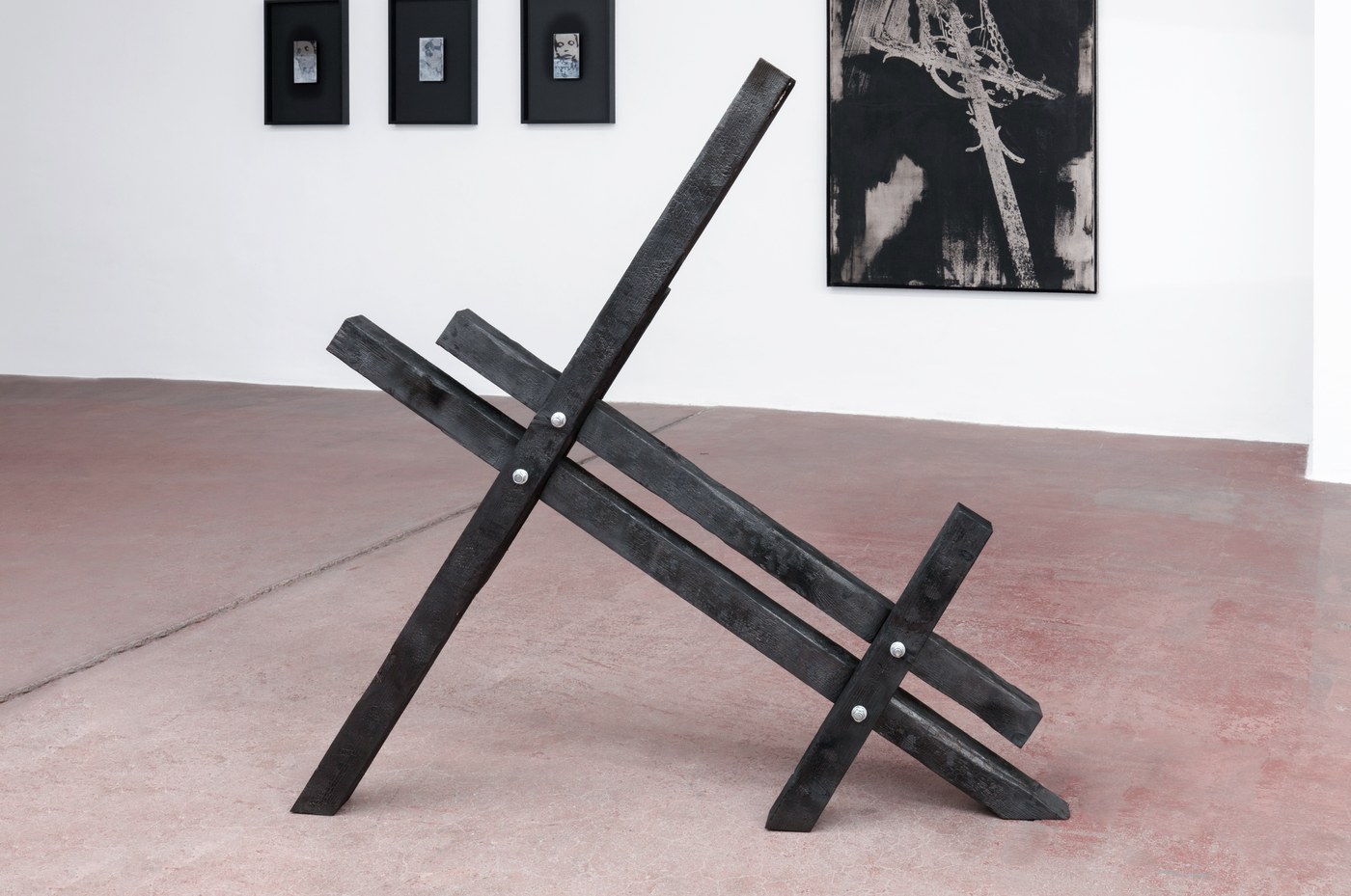
Fire has been a painter’s tool before. In the 1950s Alberto Burri took a blowtorch to plastic, wood and iron and let the burn make the image. Cornelia Parker’s Mass (Colder Darker Matter), made in 1997, the year she was shortlisted for the Turner Prize, suspends the charred remains of a Texas church struck by lightning. Barbetta Thompson, drawing on his Italian Catholic heritage, works in the same territory: what is left of something sacred after fire, and what can still be made from it. The Dance shares its title with Matisse’s ring of weightless dancers, but placed beside Aggression in the same series, Barbetta Thompson’s bodies could as easily be fighting. Here the dance itself is aggressive.
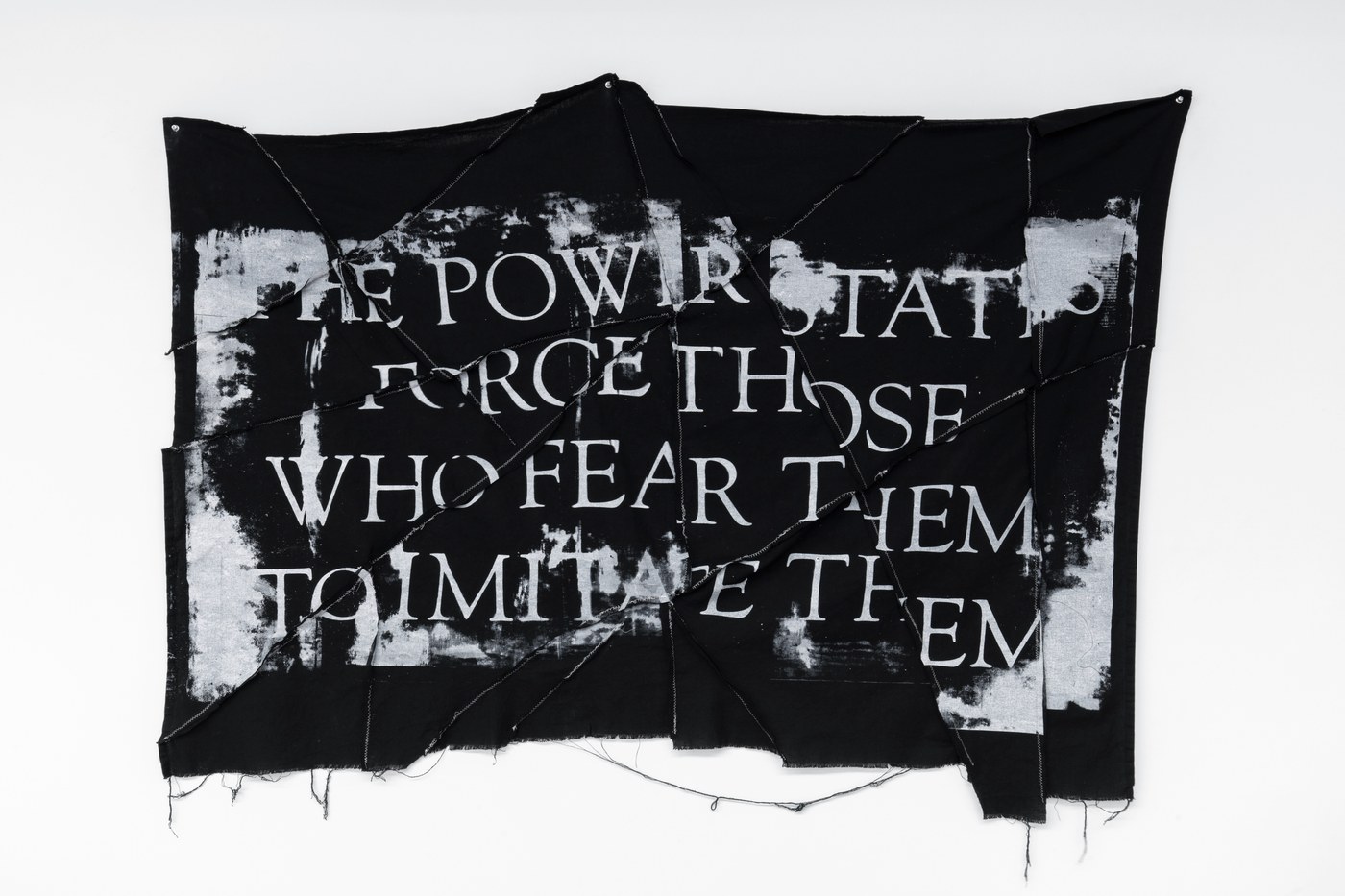
Soffe’s bodies and sounds mimic the structures of the city, as a way of trying to feel closer to it. The question is whether that distance exists at all. His own reference, the 2002 documentary Tokyo Noise, shows the city as a body, crowds flowing in and out like a pulse. If the city becomes human as much as the human becomes the city, closeness is not something to reach for; it is already the condition. Agnus Dei [Laura] shows what that condition costs. Laura lies asleep across her bed, the latest in a long line of reclining female figures, but she is not posed for anyone. She looks peaceful, unassuming, but really worn out by the ever-moving city. The image covers only the top of the steel, and the metal below is left bare. The flag carries the idea outward: “The power states force those who fear them to imitate them”, painted in broken white letters across black cotton. Power reproduces itself through the people it frightens, an echo chamber made of fabric. Kierkegaard put it more bluntly: the crowd is untruth.
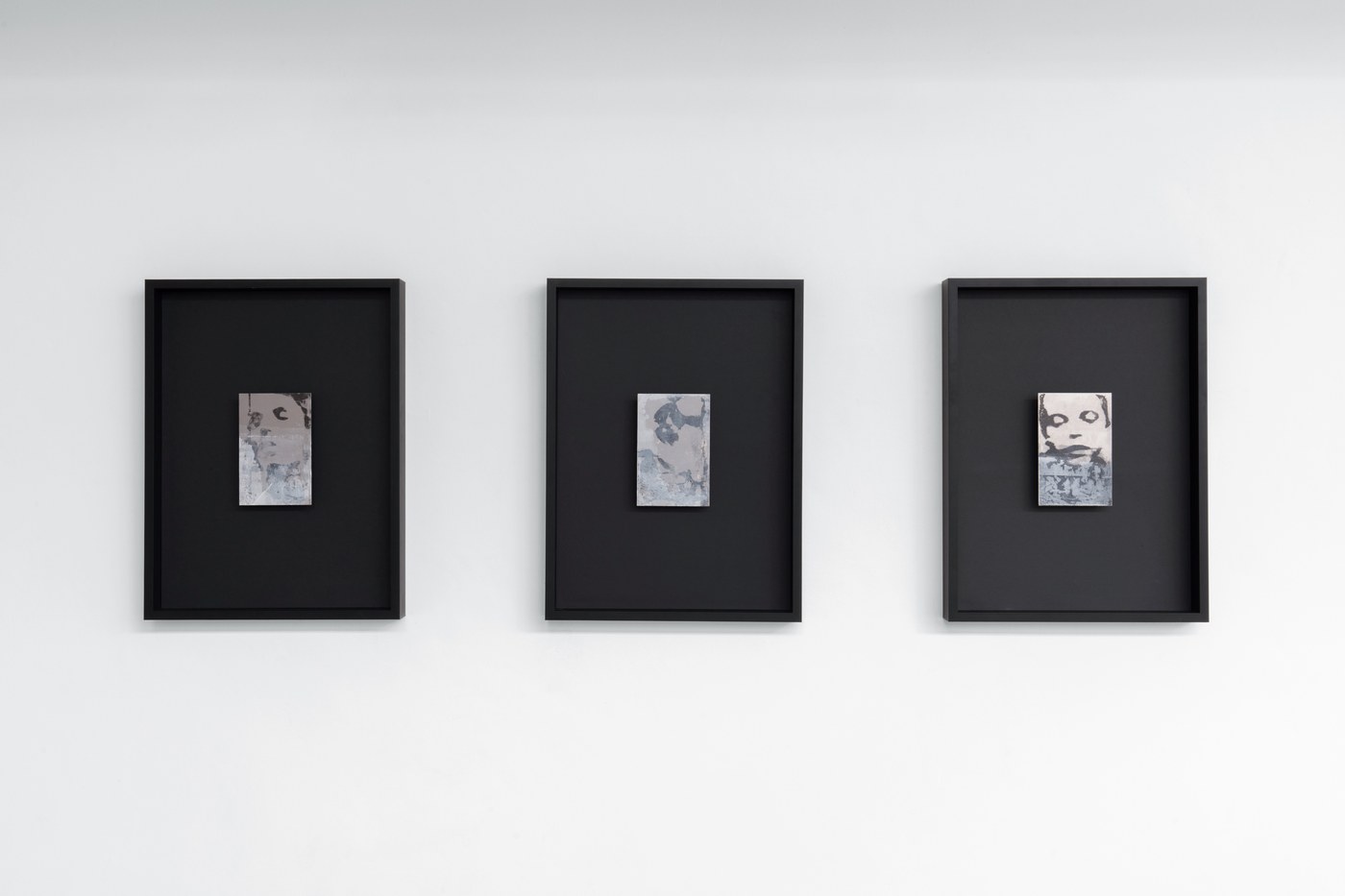
Muzzle is one of the most intimate works in the show. Three portraits, of Soffe’s father, brother and late uncle, are cast onto steel and partly covered by a wash of white pigment. How much of each face shows depends on how long that person has been present in the artist’s life; those absent longest are given the least to see. Time is not depicted here. It is measured, and the measurement is personal: the perception of time woven into a family story, with visibility as the cost of absence. In the 1960s Michelangelo Pistoletto put photographic figures on polished steel so that viewers would see themselves in the work. Soffe uses the same metal to withhold.
The red floor and the industrial character of the venue do as much work as any single piece. The space becomes the invisible city that runs through all of the works. The overlooked urban environment the works are made from carries into the building itself: worn concrete, steel beams, skylights. The space reads less as a white cube than as one more piece that serves to complete the exhibition itself. The sculptures stand directly on that oxblood stained concrete floor. The predominantly black, grey and white colours of the artworks are complemented by the oxblood red. The three practices are woven through the room rather than kept apart, so closely that the show reads almost as the work of one studio. Moss’s bench sits beneath Barbetta Thompson’s The Dance, with Soffe’s Laura close by; Soffe’s red + hangs between Aggression and Gate, San Michele. The clearest moment is a sightline: Rite of Passage stands in front of the +, one cross framed by another, while Barbetta Thompson’s own Cross hangs nearby beside Muzzle. Three artists, three ways of making the same sign.
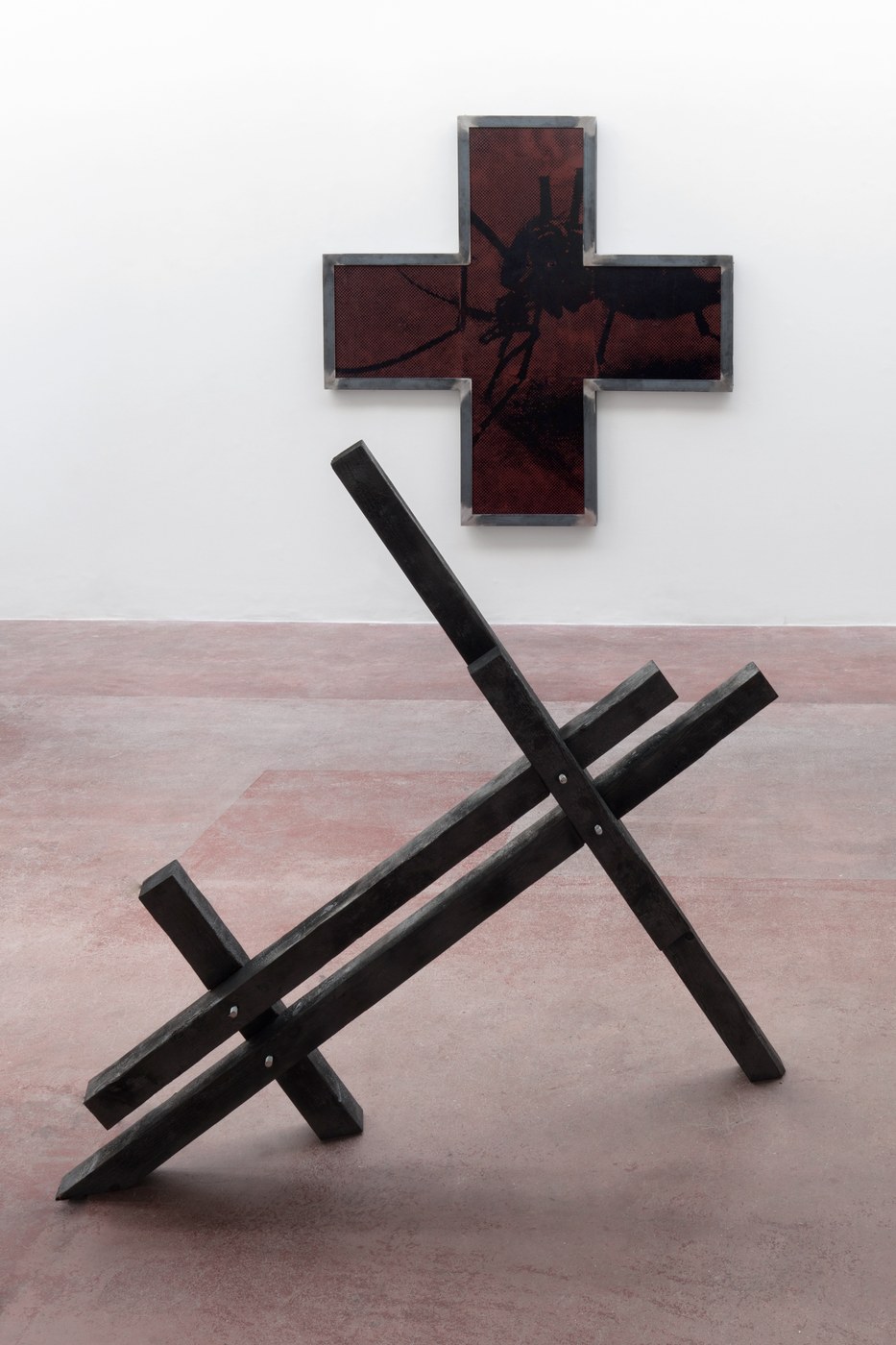
The works speak to each other through theme, material, presentation, and silkscreen runs through all three: Barbetta Thompson’s charcoal prints, Soffe’s screen painting on wood, Moss’s Shopfront III, printed onto canvas cracked with house paint. Each pushes the print towards painting, turning the mechanical into the singular. The works allow the viewer’s eye to mistake silkscreens for paintings on first encounter. Silkscreen is an industrial, repeatable medium, made for multiples like posters and shop signs. Pushed towards painting, each print becomes one of a kind, worked by hand, almost like a relic. It is the same move the whole show makes: something ordinary and urban turned into something to hold on to. It almost makes the act of looking a leap of faith. A photograph is supposed to be evidence. Once it is dragged towards painting, it can no longer say for certain what it shows: a print or a painting, dancing or fighting, a face or its absence. The eye has to trust what it sees.
Leap of Faith was on view at Greatorex, 10 Greatorex Street, London E1 5NF, from 1 to 6 October 2026.
Responses.
Received. Thank you.