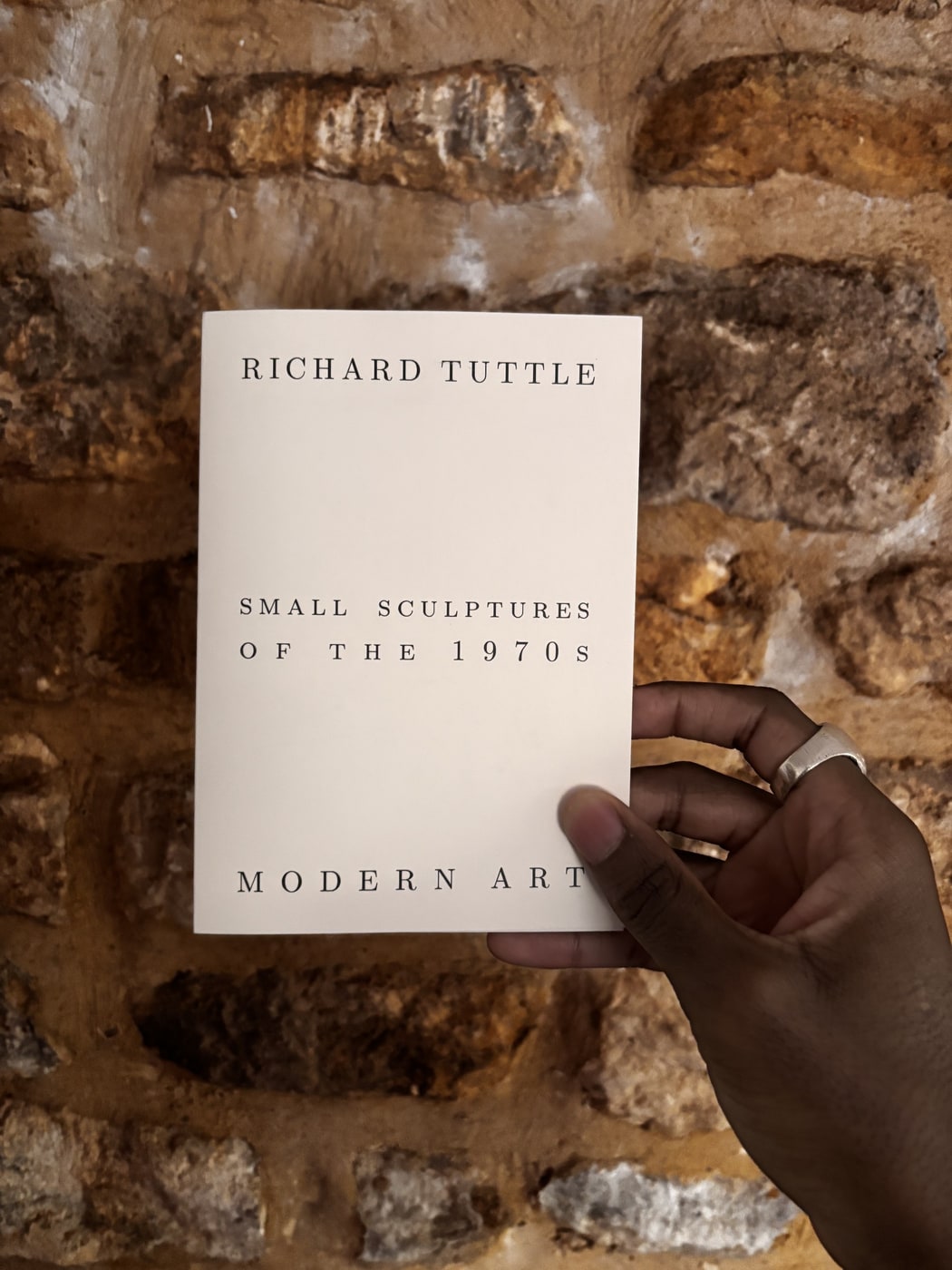
Small Sculptures of the 1970s ran at Modern Art on Bennet Street, London, from 3 September to 3 October 2026. It was Richard Tuttle's seventh exhibition with the gallery, and it has closed. The gallery's release describes work made in New York towards the end of a five-year period in which his practice moved decisively towards greater material and formal reduction, and which stayed largely unseen for decades.
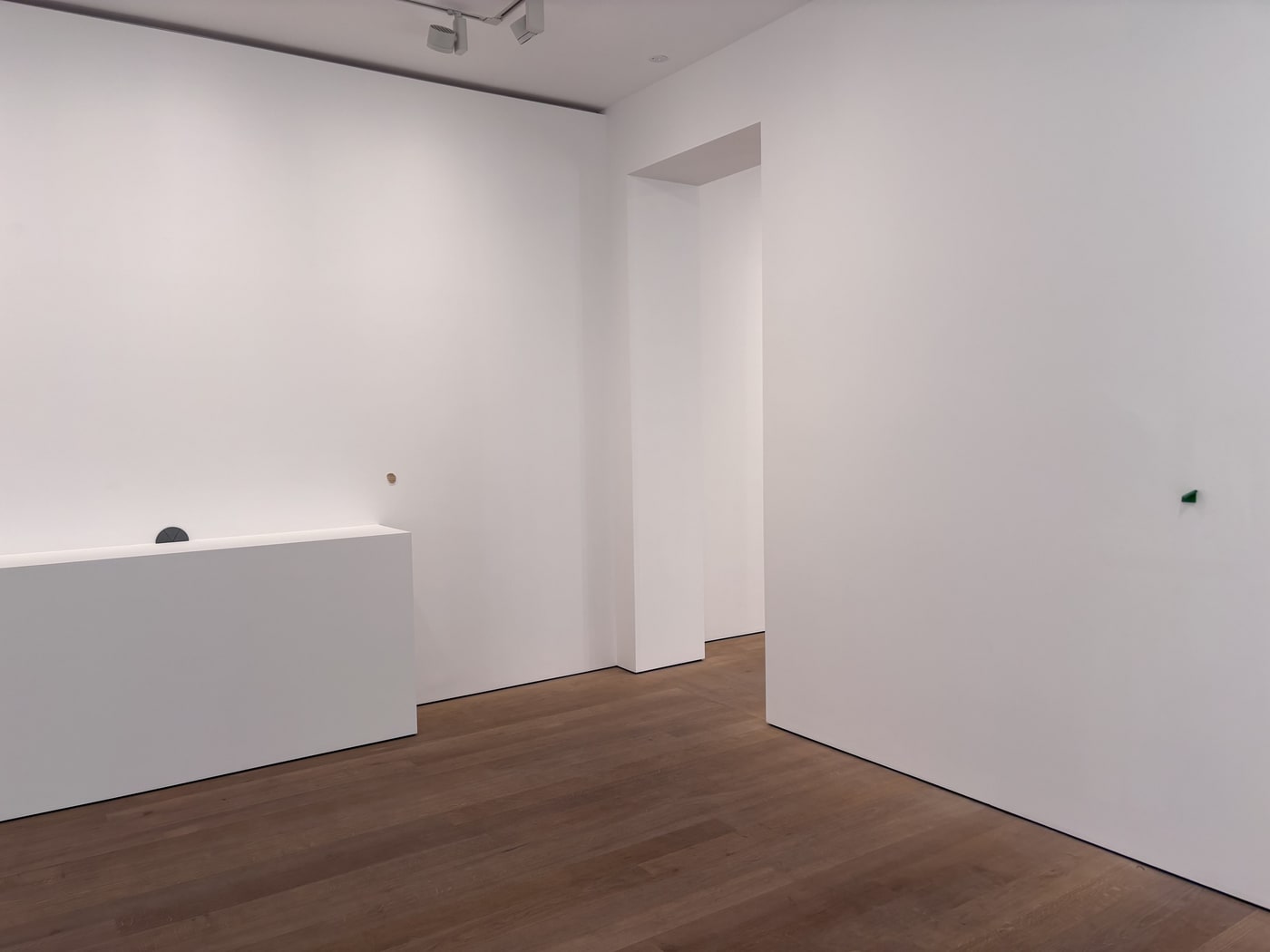
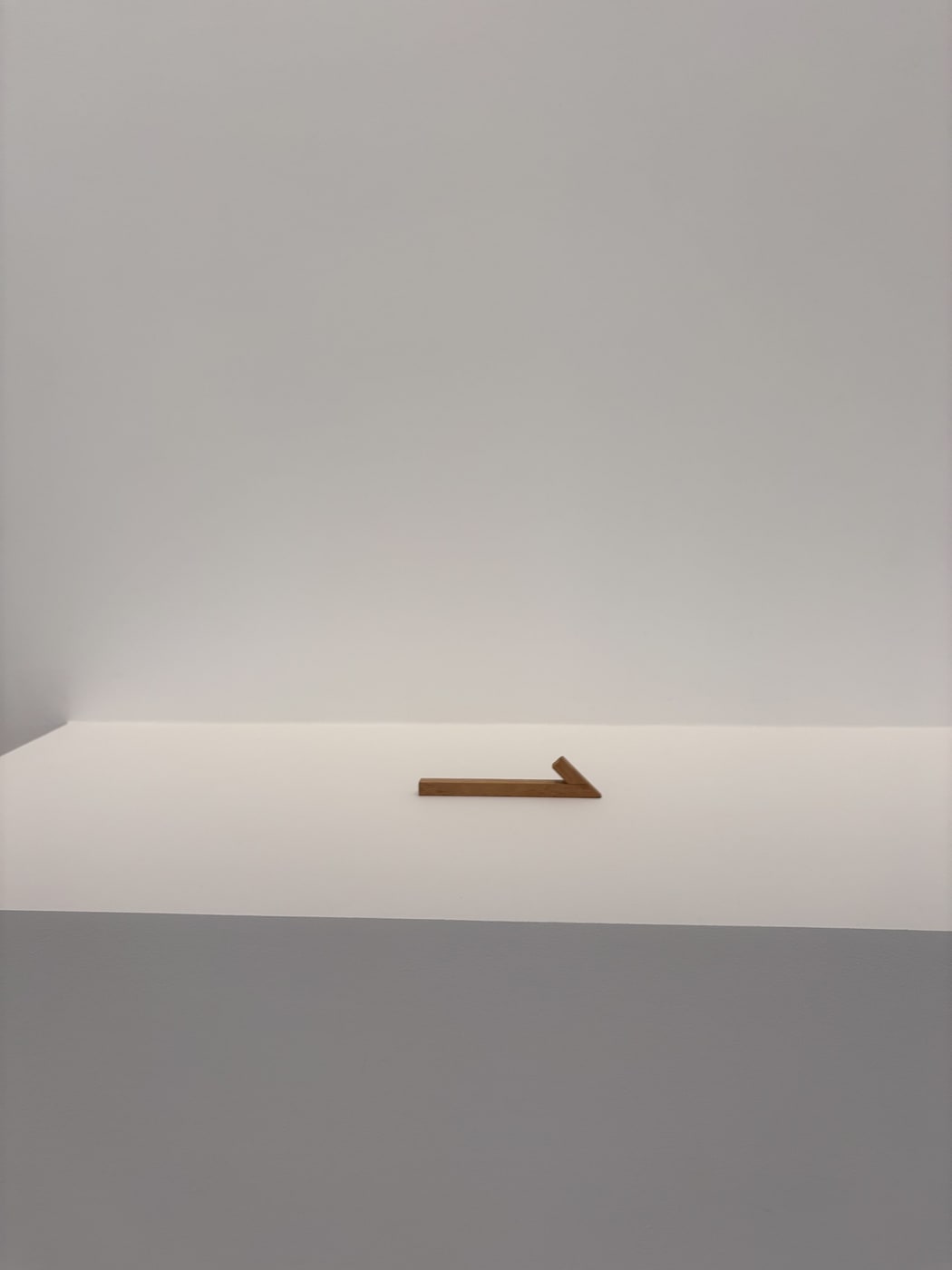
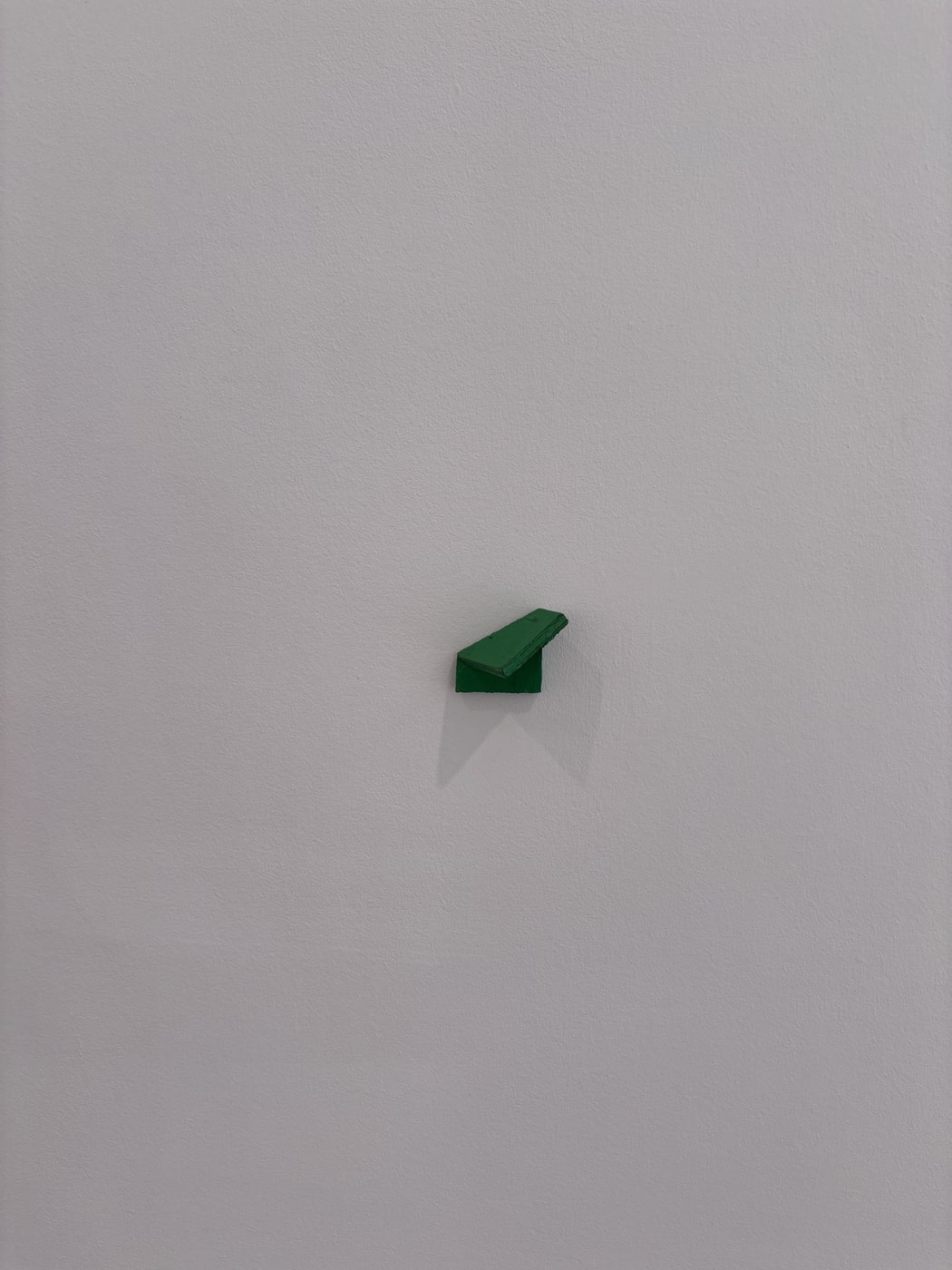
The rooms are large and white, with an oak floor, and the works are hand-sized. In the photographs, each one sits alone with a wide field of wall around it. One (Indivisible) lies flat on a low white shelf. One (Alana and Her Sister, II) hangs low, close to the floor. A dark piece on a plinth and a small green one on the far wall read as specks from across the room. ArtReview's review, by Phin Jennings, counts eighteen sculptures, most of them on a long, low shelf in the main gallery, and says everything is hung or placed below eye level. A visitor has to bend to see it. The reviewer reads that as deliberate, and as a small joke at the visitor's expense: the crouch is part of the work.
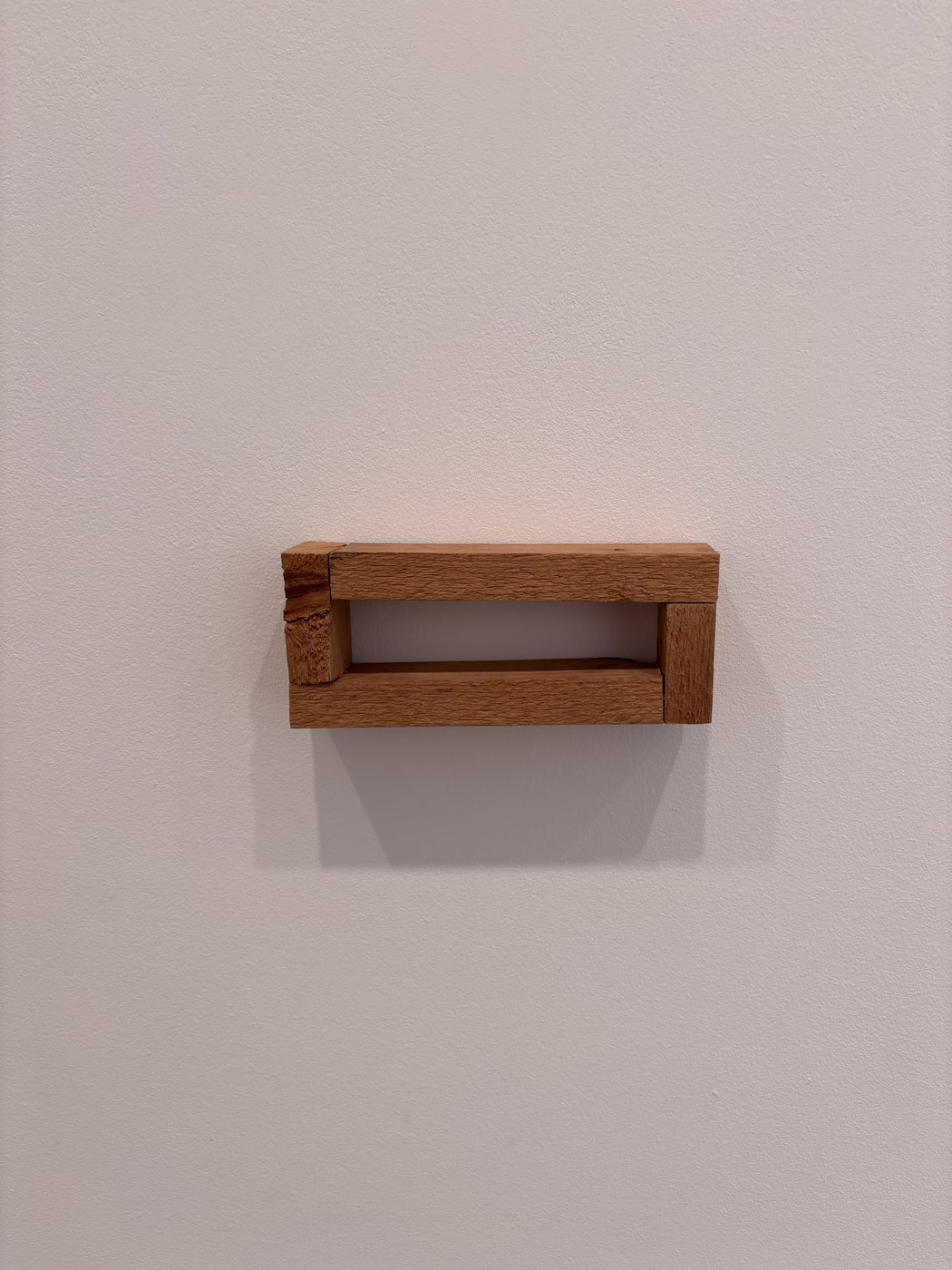
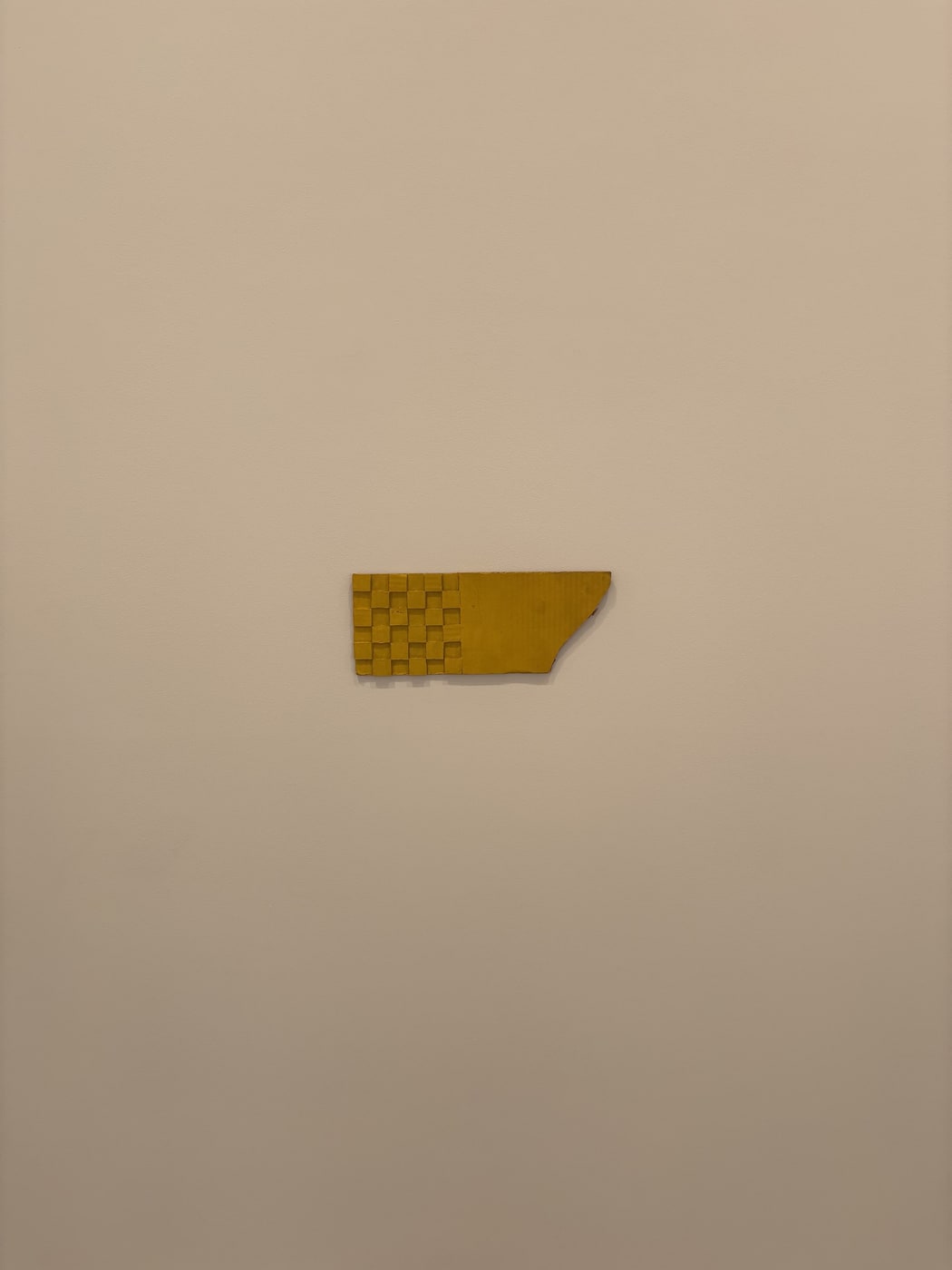
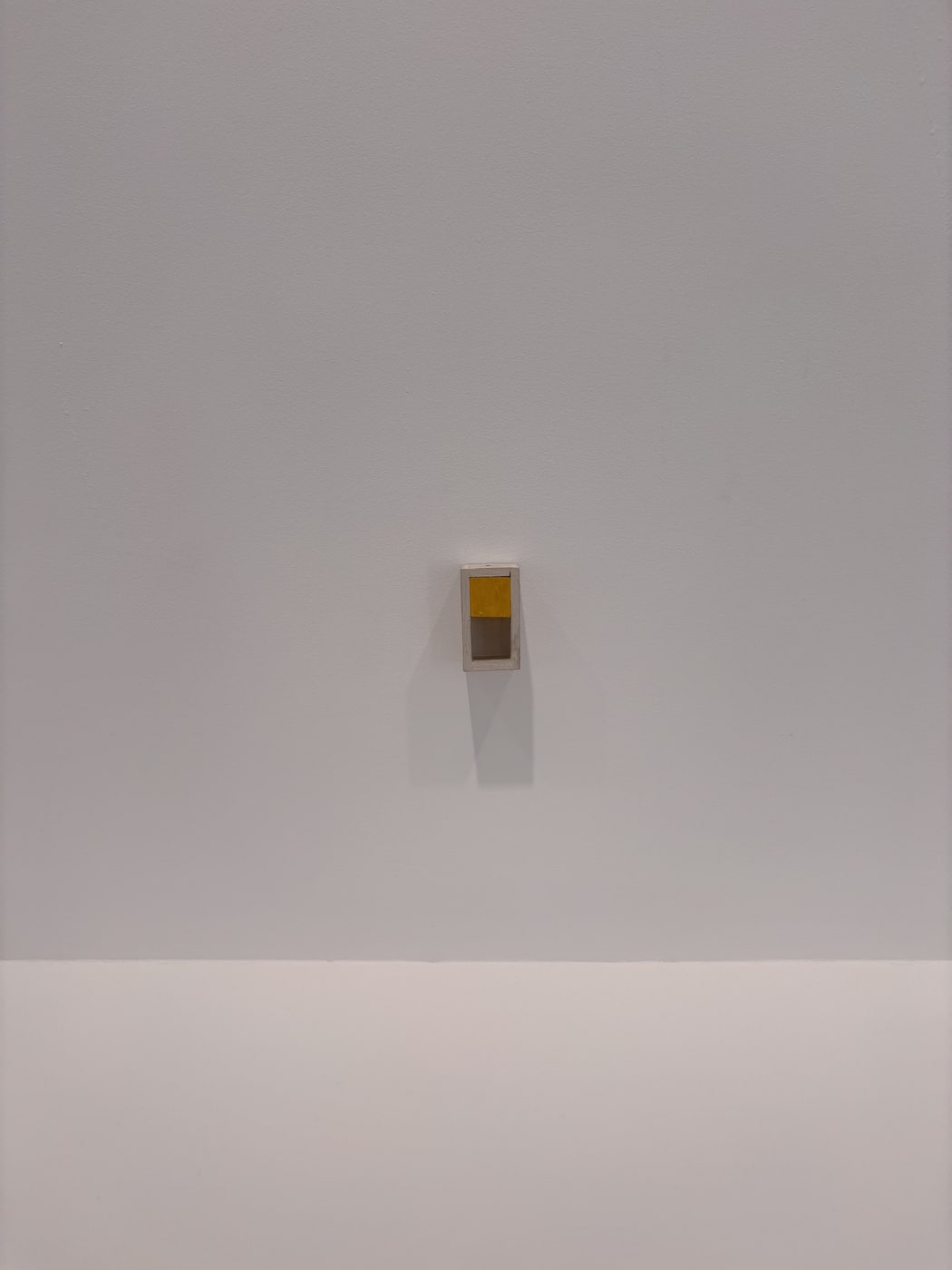
The release lists everyday materials: painted wire, jigsaw-cut timber, plywood slats. The photographs bear it out. A torn piece of yellow corrugated card (Beyond the Edge). An open frame of raw wood with its shadow thrown on the wall (Surface). Two thin white strips leaning into an angle (Rest). A green piece (Center), a red upright with a black bar. ArtReview says the sculptures look like rescued workshop scraps, and names cardboard, aluminium gauze and bent wire. Nothing has been finished into permanence. If they are workshop scraps, as ArtReview says, the materials are within reach of anyone with a table.
That was the argument. The release places these works at a moment when American Minimalism was becoming defined by large, industrially made objects, and says Tuttle went the other way, towards what is easily overlooked. In his words, "People like something that lasts; I like something that vanishes." The release adds that his work carries a sense of physical vulnerability that challenges assumptions about spectacle, material authority and permanence. A shelf of cardboard and wire makes that case without a wall text.
000 is built against disposability: it asks for sustained attention, prefers made things to polished ones, and refuses spectacle. The shelf meets all three. It cannot be taken in at a glance, and it makes the visitor bend (as ArtReview notes). A feed delivers everything at one size and one speed; the shelf delivers one thing at a time, at the pace of a body bending. One principle appears to cut the other way. 000 values work made with the care of things meant to outlast their medium, and Tuttle prizes what vanishes. The two meet in attention. The object may be fragile; the looking is not. What lasts is the care, in the maker's hand and in the viewer's.
The story around these works is well rehearsed. In 1975 Tuttle had a one-person show at the Whitney, organised by Marcia Tucker. The gallery's release says the radical reduction of the work proved controversial and eventually led to Tucker leaving the Whitney and founding the New Museum of Contemporary Art. ArtReview adds the critic: Hilton Kramer, writing in The New York Times, dismissed the show, and Tucker reportedly left as a result. The review gives her founding of the New Museum as 1977, the year Homage to Claude went into the Whitney Biennial.
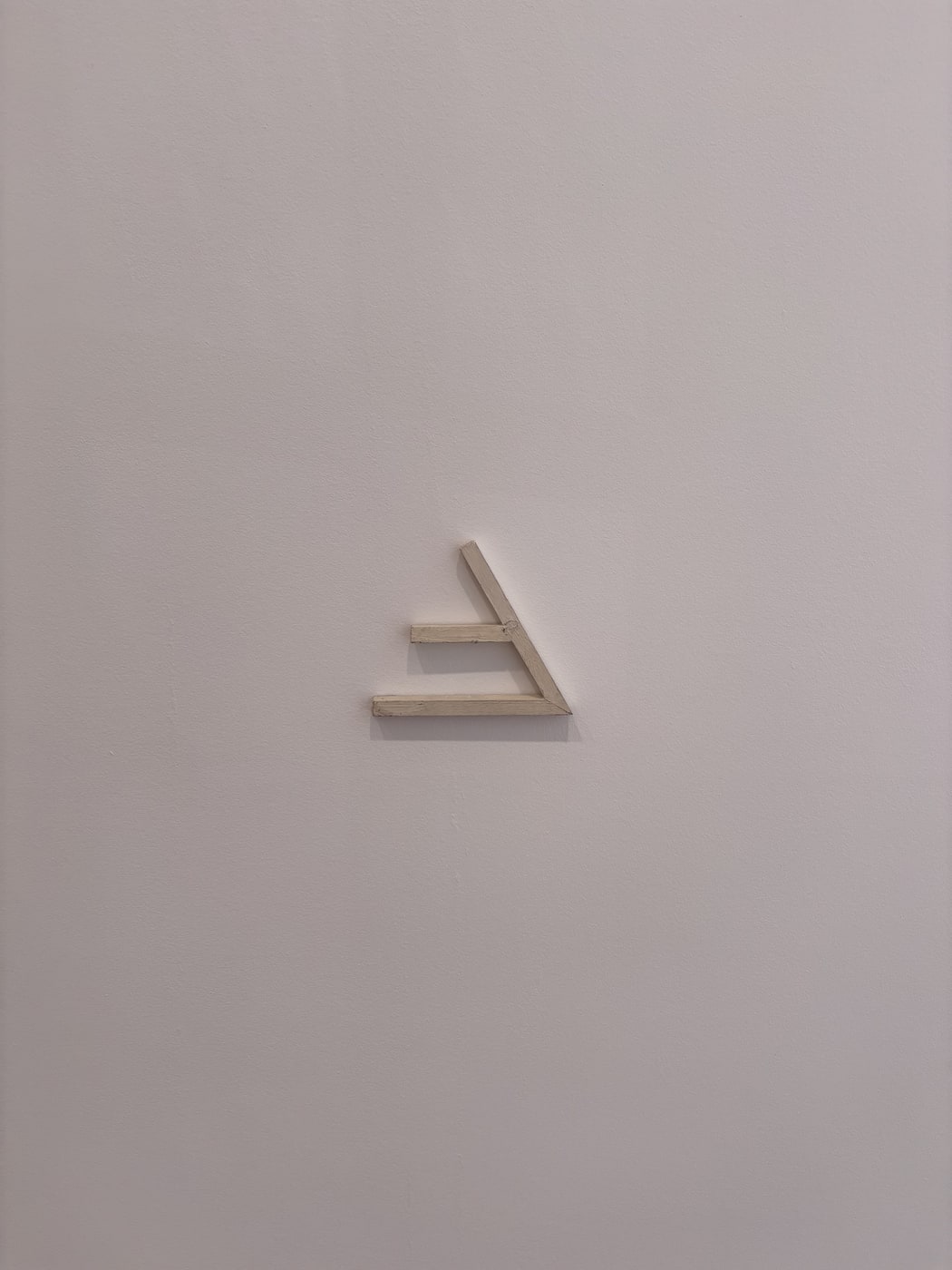
The review is also the only voice here that doubts the story. Its argument is that a legend like this can make a work seem more controversial or more important than it is, and that the sculptures may be enough on their own terms. The photographs lean the reviewer's way: a shadow on a wall, a torn edge, a strip of wood. None of it needs a quarrel to be worth looking at. That is a reading, not a finding. The release leads with the history; the review asks how much of it the objects need. The test travels: take the story away from any work, and see what is left on the shelf.
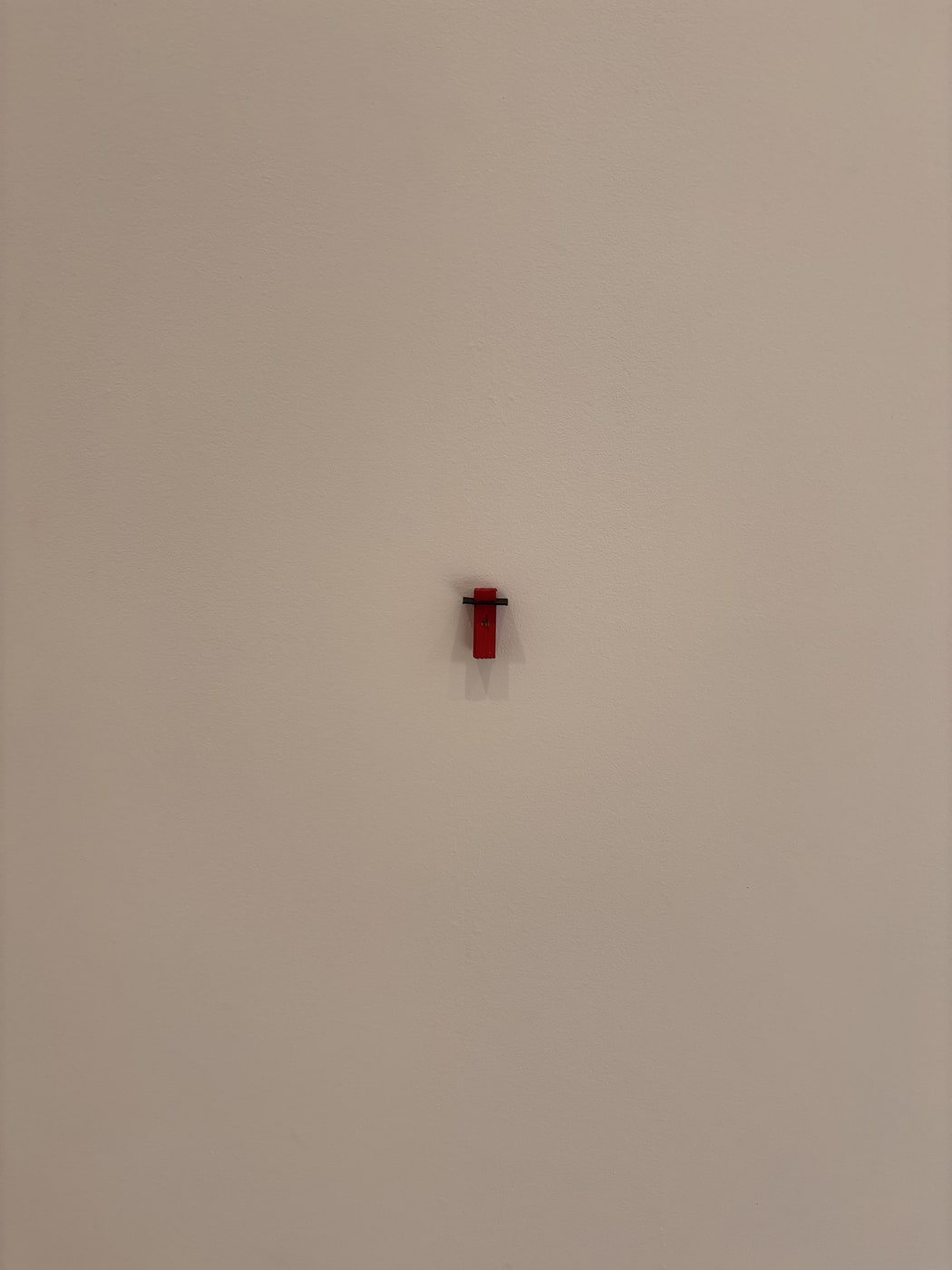
The show held Homage to Claude (1977), presented as a single work. Tuttle has said he was intrigued by the tiny figures in Claude Lorrain's huge landscapes, and that perhaps the first piece is about space and the second about time. ArtReview describes two tiny painted wooden pieces nailed to perpendicular walls a little above waist height, each barely taller than a pen lid, and notes that they do not look like people. The work had been kept in an envelope before it was hung.
The exhibition is over. The release says Half-Light, his solo show at Dia Beacon, opened in July 2026 and is on long-term view. The same release likens his exhibitions to a musical score in which scale, space and perception come into an intimate relation. Try it at that scale. Give yourself ten minutes and one thing from the desk: a card, a strip of wood, a length of wire. Make it small enough to hold in a hand, and leave it unfinished. Put it where you will pass it every day, then look at it from another angle, and say what the story adds.
Responses.
Received. Thank you.