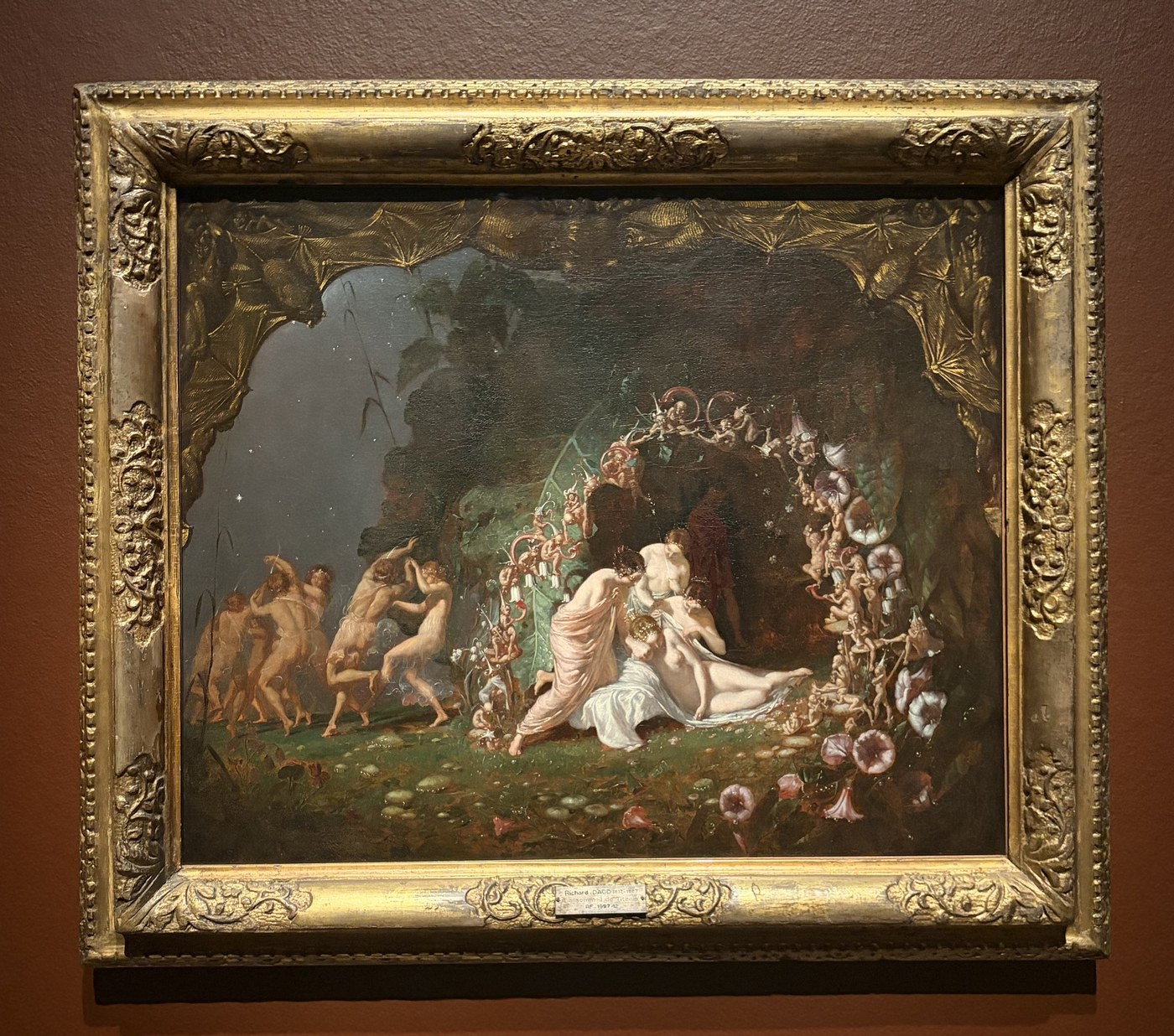
The painting that made Richard Dadd's name was shown at the Royal Academy in 1841, and the label beside it in the Royal Academy's retrospective says so. Titania Sleeping: the Queen of the Fairies asleep in her bower, Oberon lurking in the darkness behind her with a flower to touch her eyes, and round her an arch of trumpet flowers worked over by goblins. The label calls it a living arbour of musical goblins. The Louvre lent it. I went on 6 September, and the date on that label did most of the work in the room: 1841 is the year before he set out on a tour of the eastern Mediterranean, and three years before he entered Bethlem.
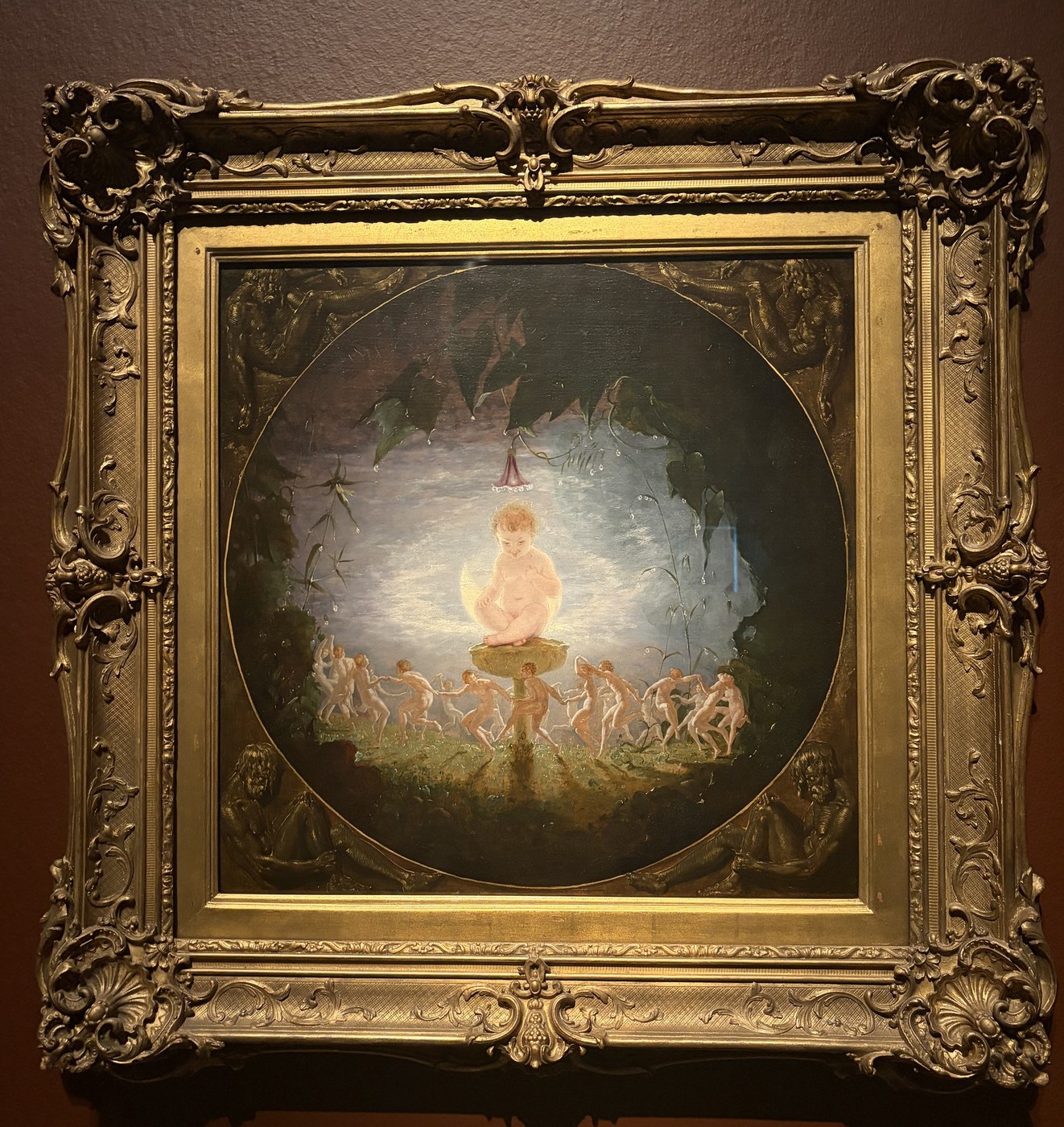
That order of events is the show's argument, and it is made without being stated. The usual account of Dadd runs one way: the fairies came out of the hospital. Puck, also 1841, does not fit it. A naked child sits on a pedestal under a hanging bell-flower while a ring of dancing figures circles him, and the whole thing is lit as if from inside the canvas. The Harris in Preston owns it. The opening wall text, for its part, mentions the illness once, in a clause, and moves straight on to the Royal Academy Schools, where it says he attended the Antique School more often than any other student in 1838. The show is arguing that he was a painter first.
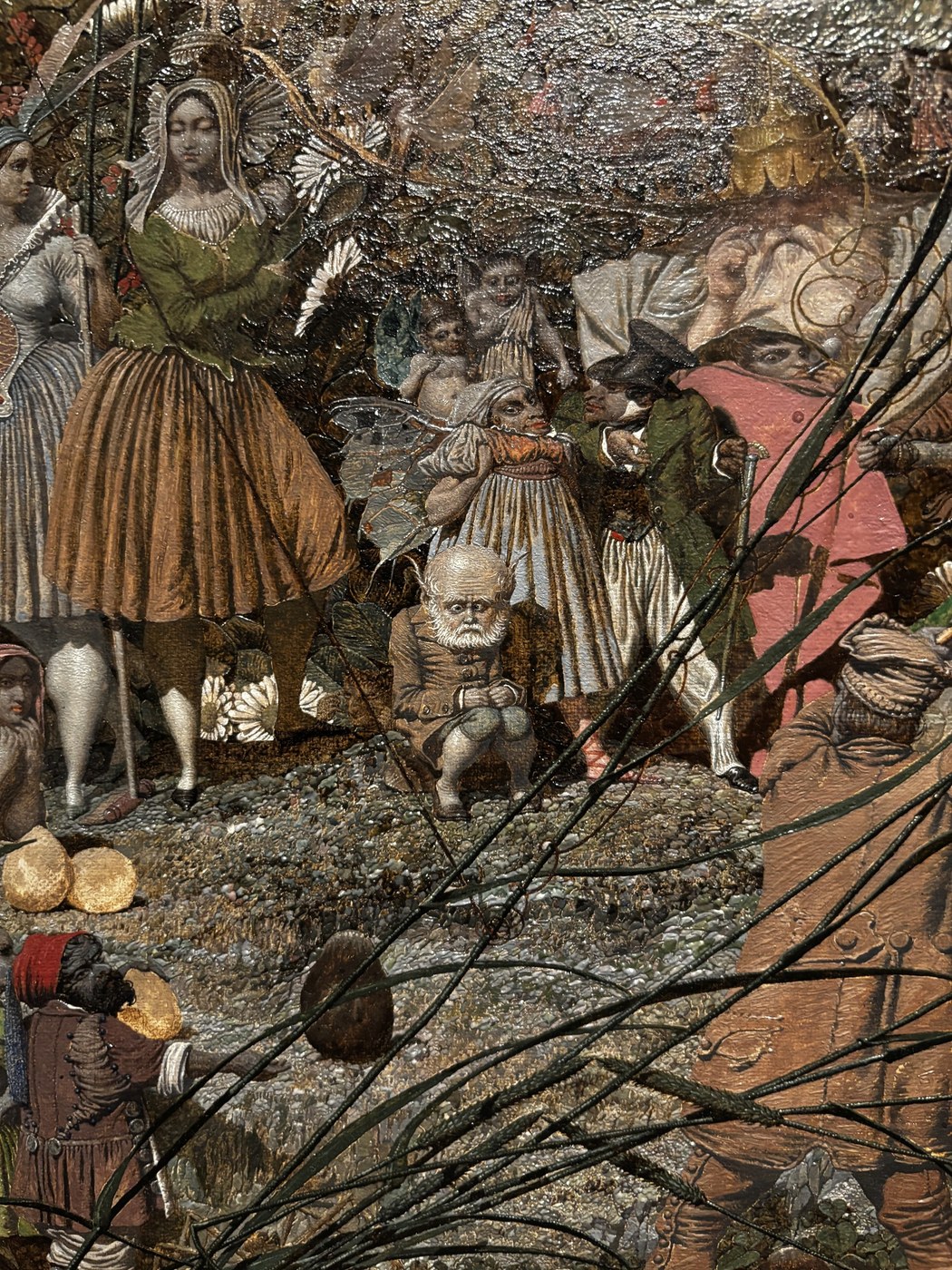
Then the hospital. Dadd spent twenty years at Bethlem, which stood in Southwark then, and the staff encouraged him to keep painting; some became his patrons and sitters. The Fairy Feller's Master-Stroke was begun in 1855 at the request of the hospital's steward, George Henry Haydon, and took almost a decade. Queen Mab needs a new carriage. She waits on the elongated brim of the patriarch's hat at the centre of the canvas while the fairy feller of the title prepares to split a nut. I came to it over other people's shoulders, and it does not resolve at that distance. Closer, it breaks into separate worlds: a woman in a green bodice, a bearded old man squatting on the gravel with his eyes wide open, grass drawn across the foreground in fine dark lines. The wall text calls the imagery at once explicitly precise and giddily disorientating, and that is exactly the sensation. Tate owns it. Siegfried Sassoon presented it in 1963, in memory of his friend Julian Dadd, the artist's great-nephew, and of Julian's two brothers, who all gave their lives in the First World War.
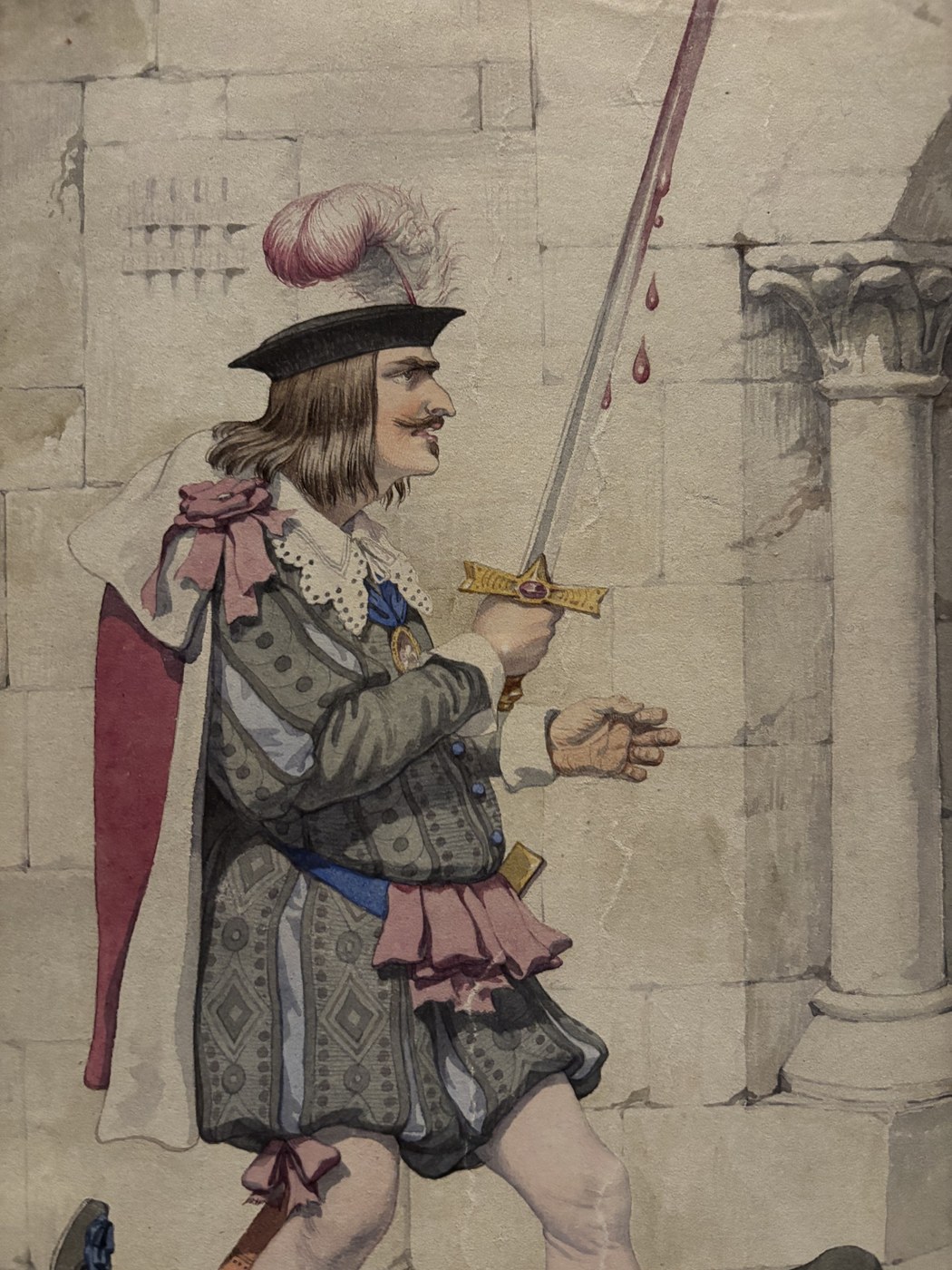
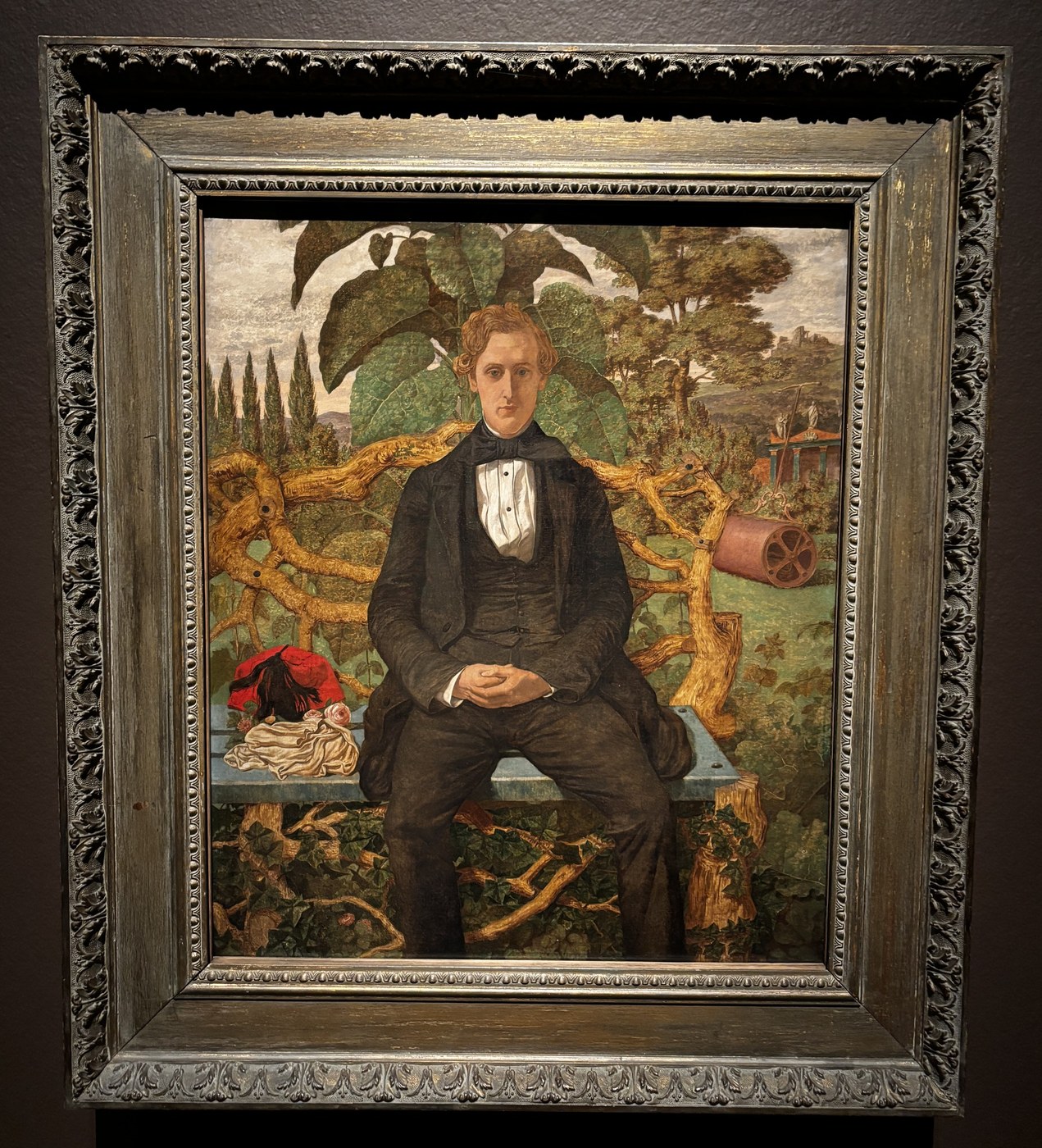
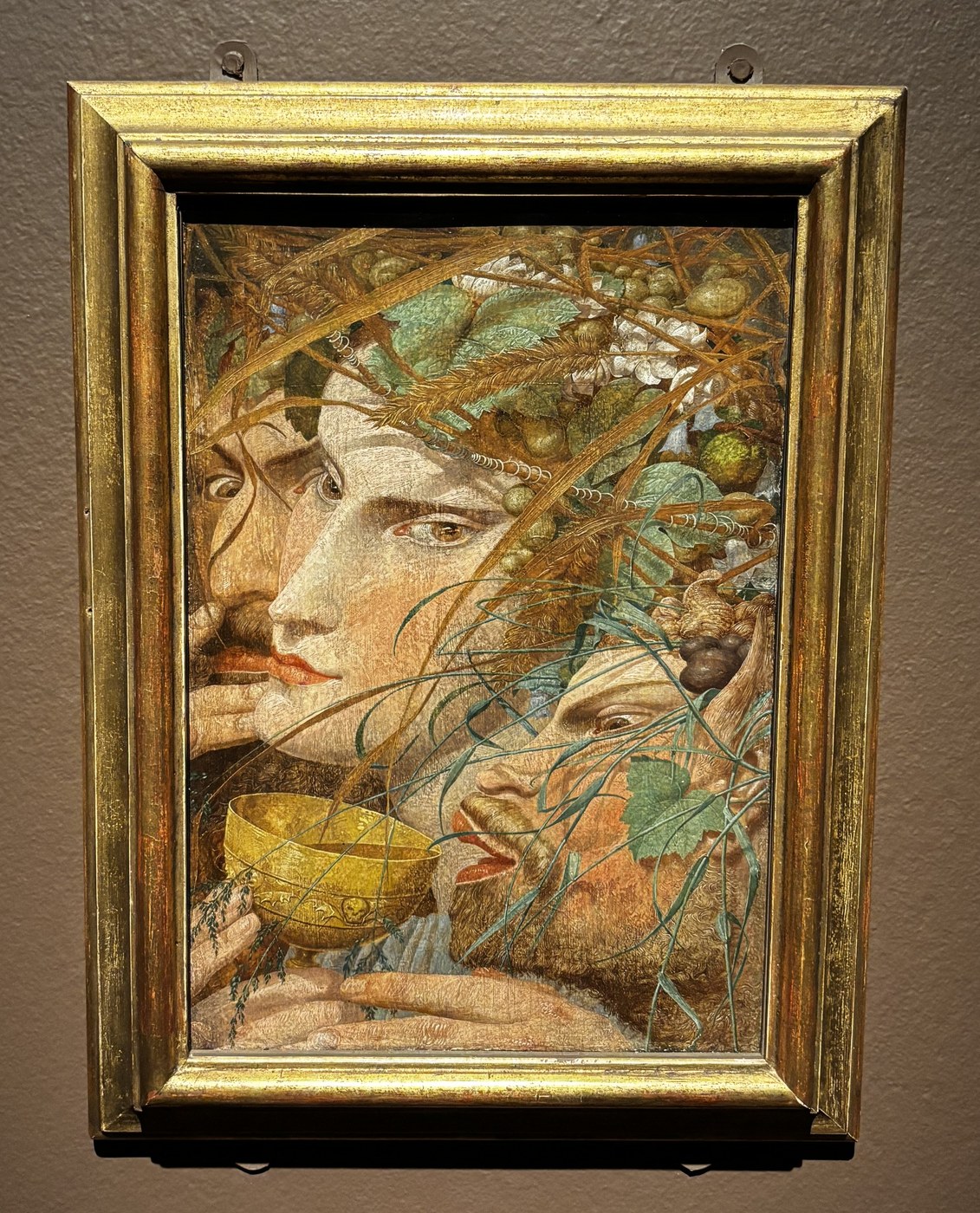
What surprised me was the range. Portrait of a Young Man (1853) puts a man in a black coat on a bench in an invented garden, and the wall text thinks the sitter is Charles Hood, the doctor who ran the hospital. Contradiction. Oberon and Titania (1854 to 1858) has the fairy king and queen quarrelling over a changeling boy, and the label says the real subject is environmental discord: their feud has thrown the natural world out of balance, so the leaves around them wilt. In the watercolours of the 1850s the precision turns on people: a plumed swordsman, blood falling from his blade, steps past a man lying on the ground. And in Bacchanalian Scene (1862) the scale reverses entirely. After the swarming worlds, three faces are jammed into a small panel: a young woman in a wreath of vine and corn, a satyr with his mouth open, another face at her shoulder, a gold bowl held in the foreground.
The London run closed on Sunday 25 October. The wall text called it the first survey of his art since the 1970s, and I found no sign of a tour. What a reader can do is go to where the paintings live: the Louvre, the Harris in Preston, Yale, Tate. What the show established, room by room, is a sequence: the fairies first, the hospital second. It does not make the second irrelevant. It takes it away as the explanation.
Responses.
Received. Thank you.
So glad to see Dadd getting attention. Such a special 19th-century artist, and the detail in his work is remarkable. He deserves far more representation than he’s had.
B ·