There is a special kind of nostalgia in arriving at a place you’ve never been before. But you’ve read about it. Dreamt about it. Pictured yourself in it. Rebecca Brodskis found a copy of Annemarie Schwarzenbach’s Lyric Novella abandoned on a street in France when she was eighteen. The book’s picture of Weimar Berlin, in the early 1930s, stayed with her for years. The Last Ones Awake is a retelling, in portraiture, of the connections Brodskis found during her time in the city. The title is a nod to those Berlin nights, when hardly anyone slept. Her show puts the viewer where she once stood: drawn towards a world of people she doesn’t yet know. Speaking to Johann König on his podcast, the artist describes how she paints her friends: she glances at a photo on her phone, never propped beside the canvas, then paints from memory. A stranger might not recognise the person, she says, but her friends know it’s them. The paintings speak directly to the people who already know the sitters and the painter. The sitters are friends from her Berlin years, when they were in their early twenties, around fifteen years ago.
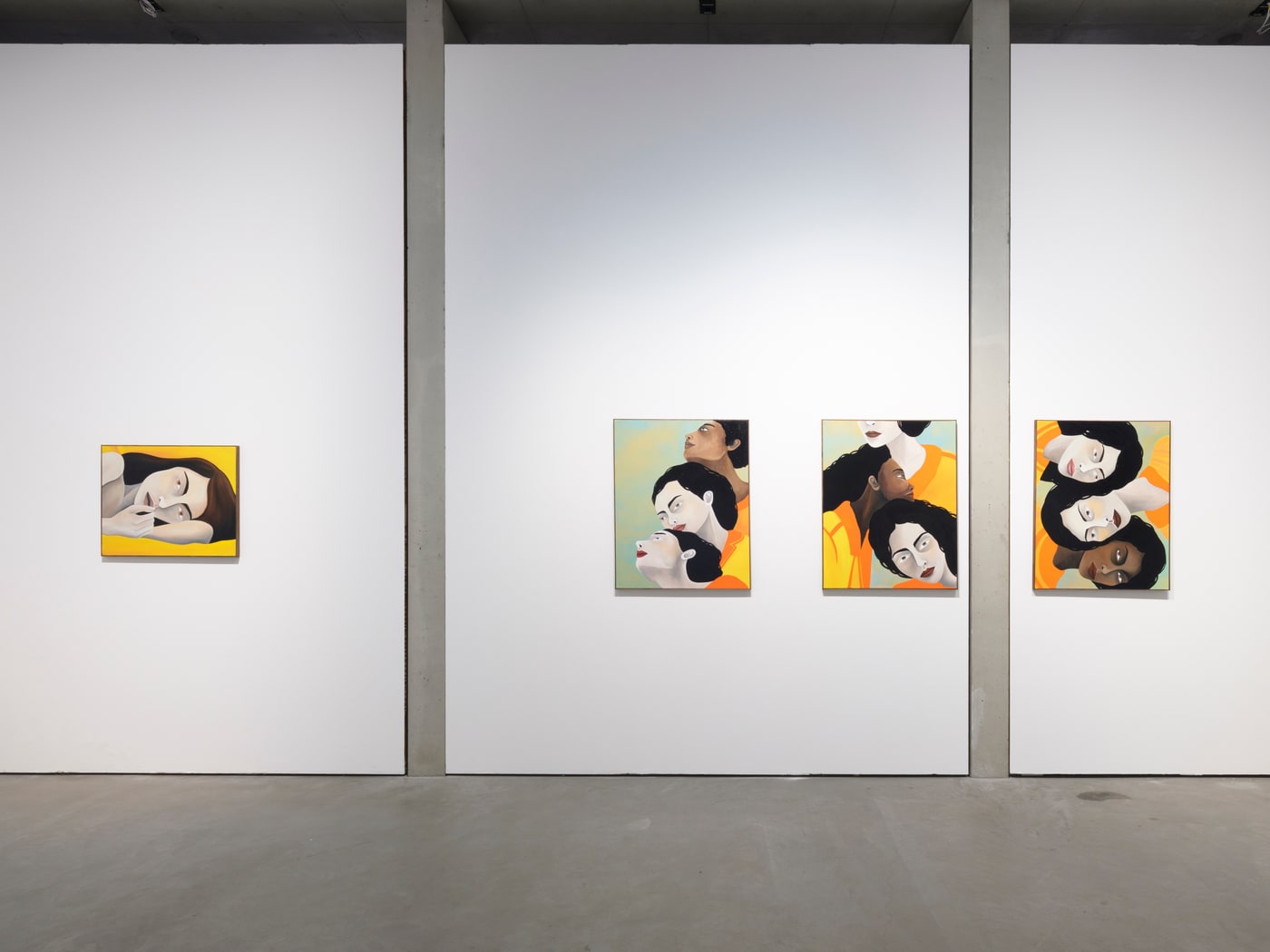
Every other individual portrait is titled with a first name: Hans, Clement, Denis, Leon, Danielle. Somewhere We Were is the only one that doesn't feature the name of the sitter. It suggests a place and a time instead of a person, and neither is specific. A woman lies on her side, her head resting on her forearm. There is no bed and no pillow. She is surrounded by saturated yellow. Her dark hair spreads behind her, darker than anything else in the painting. One hand curls at her mouth, fingertips at her lips, as if she’s about to say something or has just decided not to. Her eyes are open, amber and heavy-lidded, her gaze turned straight at the viewer. Lying down, wide awake: the last one awake. The absence of a name suggests the possibility of a self-portrait. If so, she places herself among the friends she remembers, fifteen years on.
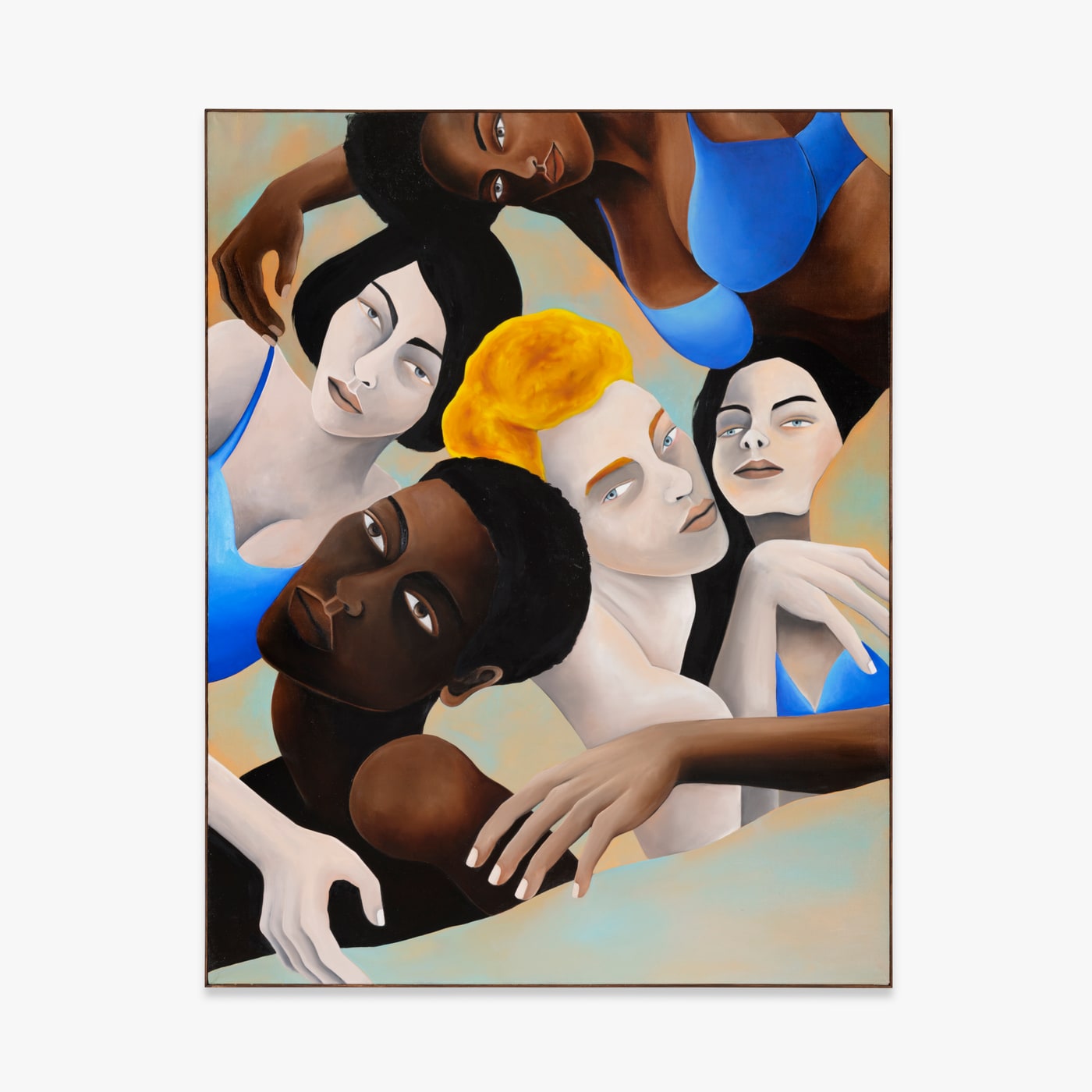
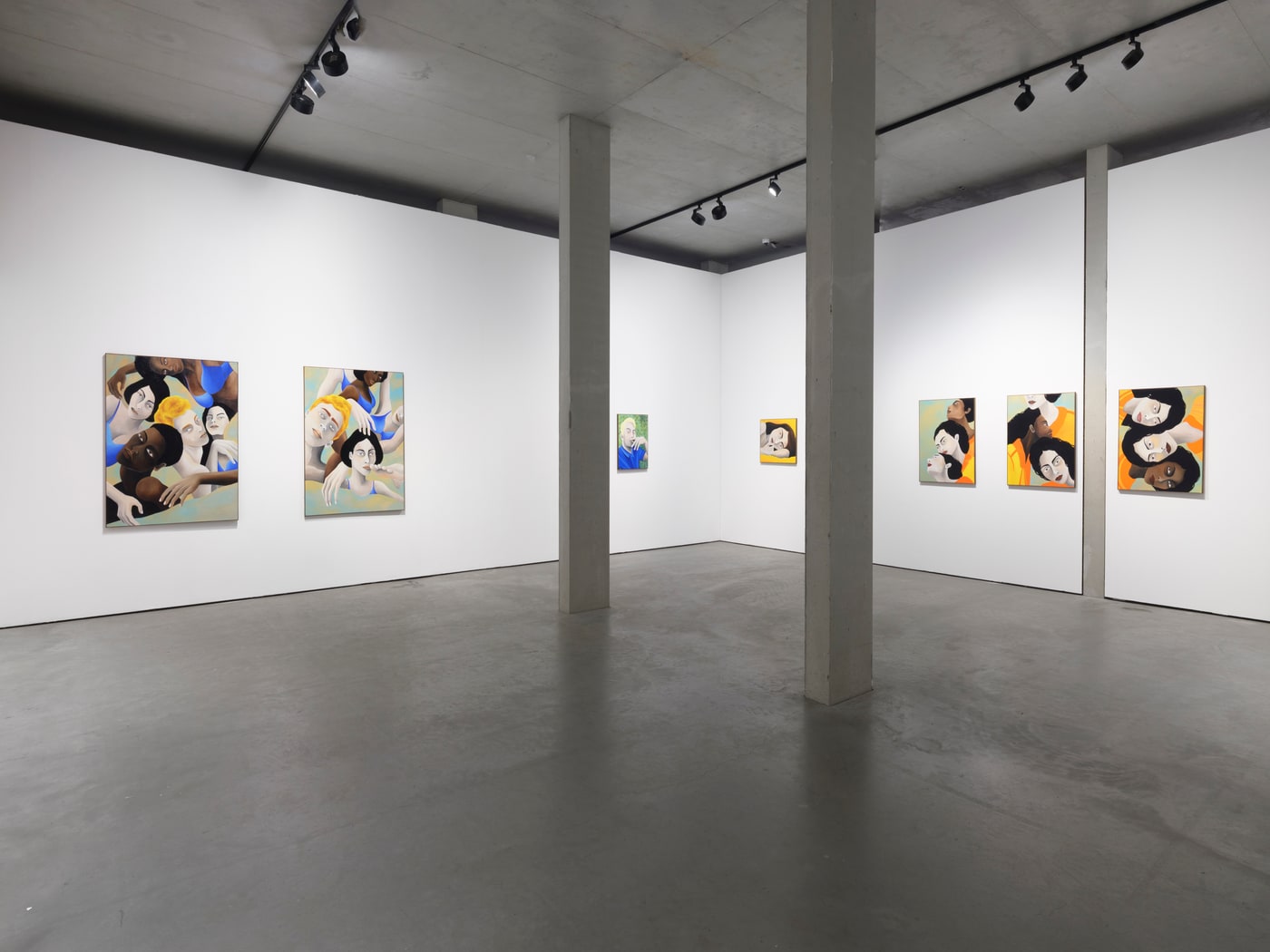
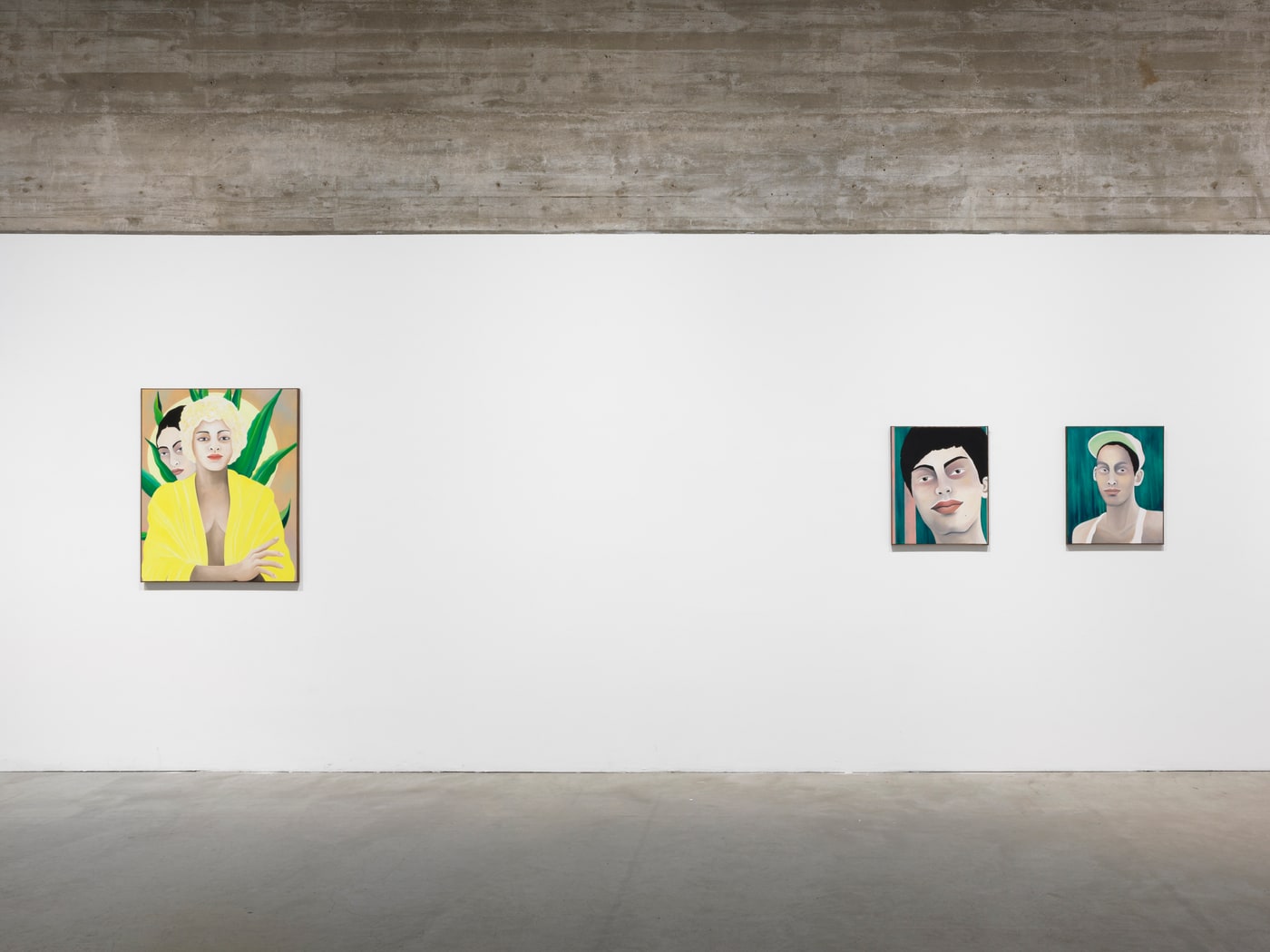
Two clear stylistic modes recur throughout the show. The single bust-length portraits isolate each sitter against a field of colour. The group paintings pack bodies together, faces and hands overlapping until the space between them almost disappears. The chosen family is shown as a physical fact, shoulders against shoulders.
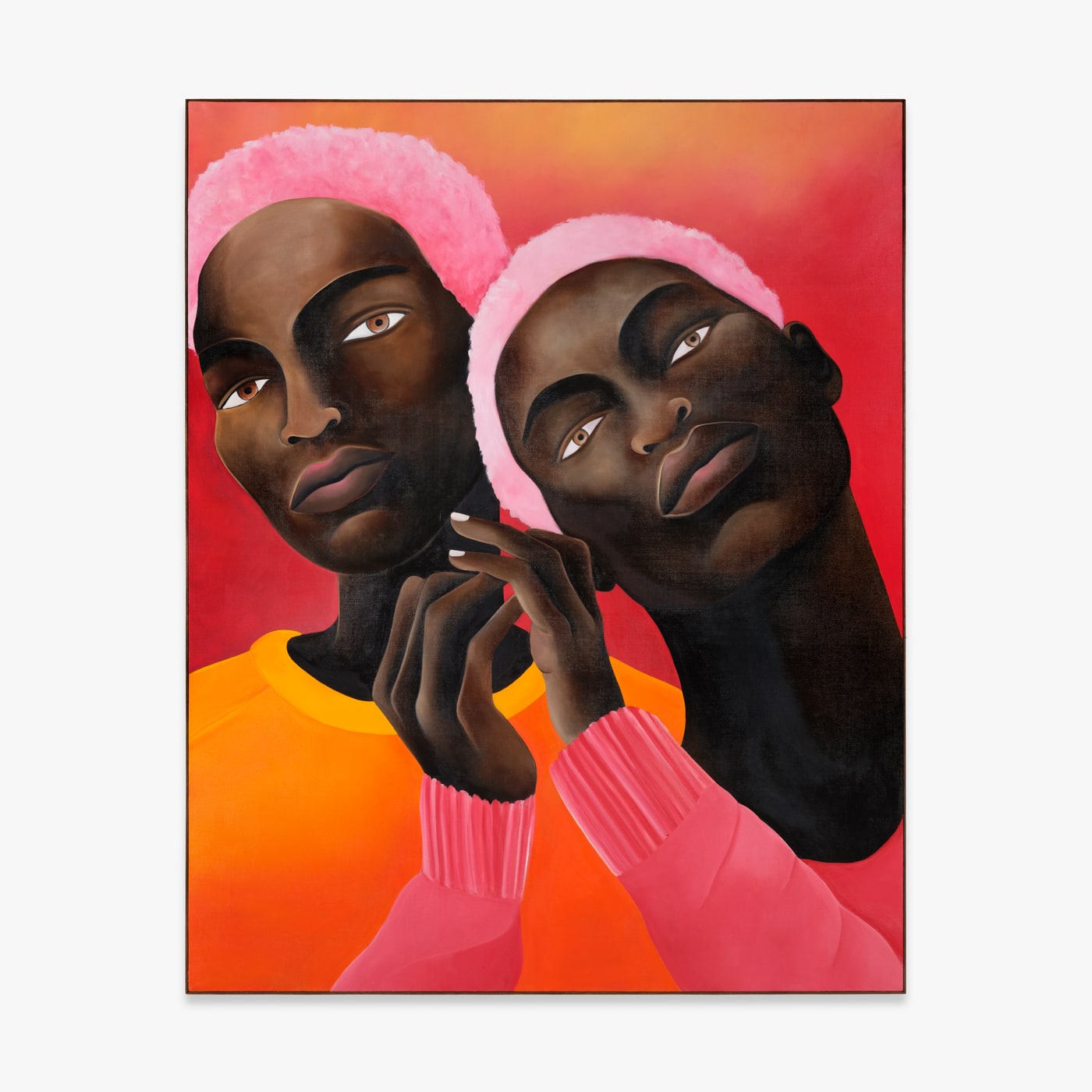
Colour does the rest. Saturated backgrounds of near-Fauvist coral, orange, cobalt, yellow and forest green are set against much cooler, flatter skin rendering: pale, chalky grey. The contrast gives the figures a suspended, almost airless quality that feels contemplative and intimate. She calls the gap between the figure and the background “a way for me to really bring them forward”, making the figures very present on the canvas. The faces the artist depicts are reminiscent of Modigliani: the long necks, small mouths, heavy-lidded almond eyes, faces flattened into something closer to a mask than a likeness. That flattening makes the faces feel remembered rather than observed.
Brodskis keeps her figures out of any defined time or place, and she says this makes them “more universal”. In the room, that timelessness feels private. The touching bodies and steady gazes communicate intimacy, but give little away about the lives shared by this group of people. Their closeness is felt even without knowing their history.
The story the canvases leave out gives that closeness a history. Berlin then was a city where an artist could live on next to nothing: cheap rent, studios set up wherever there was room. Brodskis studied sociology on a €500 monthly grant and painted the rest of the time. Then the city changed. Rents rose, and her friends began to leave. “They come and go,” she says. Leon went to Athens, then came back. For anyone who has left home and built a circle of friends elsewhere, these departures and returns may be familiar: a place becomes home through people, then changes as they leave.
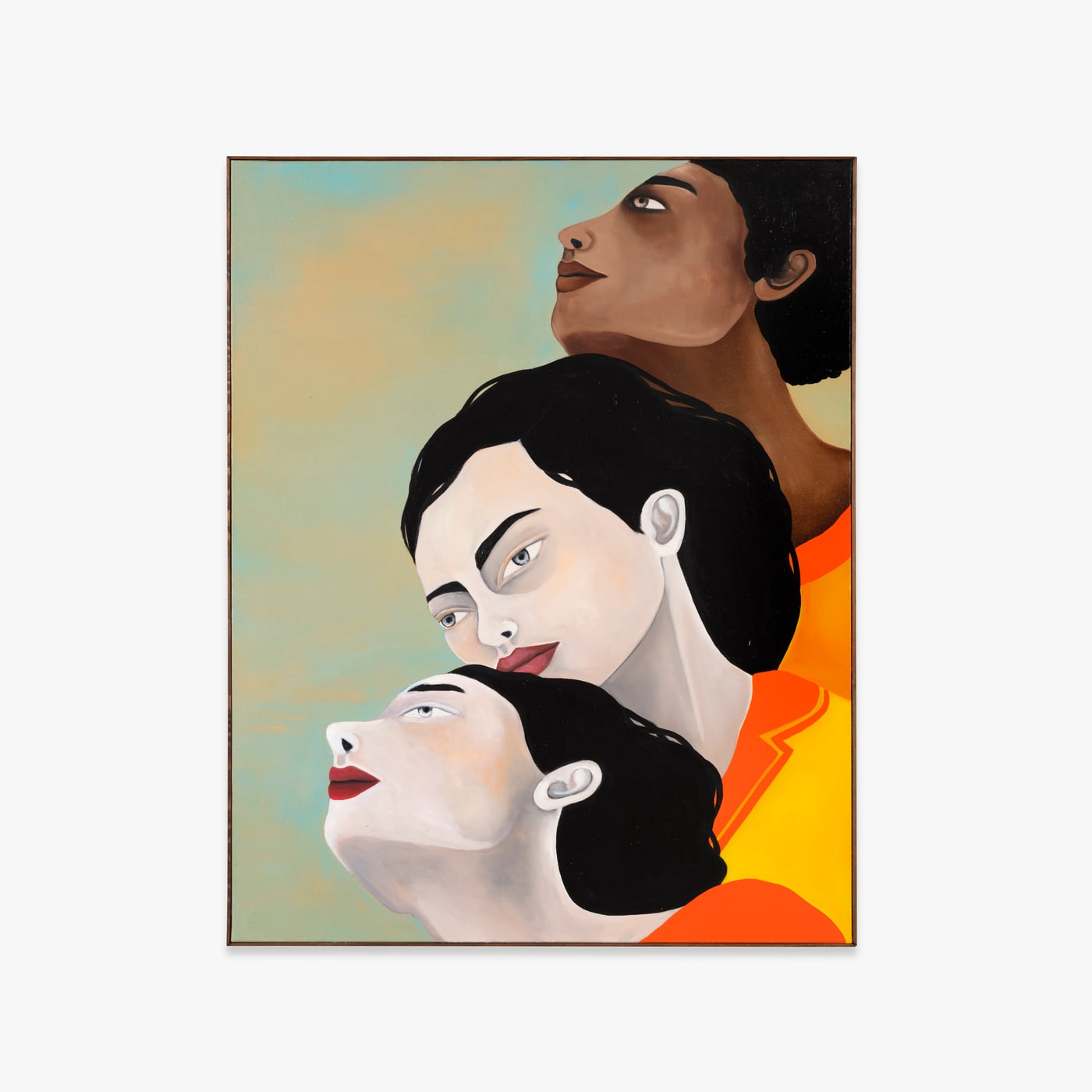
In The Last Ones Awake triptych, each canvas holds three heads stacked on one another, packed in tightly and pushed against the edges. Across the three, the space between the friends closes and their gazes turn toward the viewer. The first panel’s composition is diagonal, rising from lower left to upper right. Heads are tilted back and chins lifted, leaving open space on the left. The middle panel is a tighter, more central cluster. The top figure is cropped at the nose, its eyes beyond the frame. In the final panel, the heads turn sideways, as if lying down. They nearly fill the canvas, with little ground peeking between them. Hair is painted as flat black masses with a few loose curling strokes at the edges. It works as a graphic shape, almost a silhouette, and locks the heads together. Clothing is reduced to flat colour planes in orange and yellow, its hard edges contrasting with the softly modelled faces and necks. Behind them, cloudy grounds blend sage, turquoise and ochre, almost like a dusk sky. It is as though memory keeps the faces and flattens everything else.
This is a deeply personal exhibition. It draws you in, but the relationships remain elusive. It feels like the artist’s story, addressed to the people who lived it with her. It opens up once you know where it comes from. Fifteen years on, from her studio in Marseille, she paints her Berlin with an eye on New Objectivity (Neue Sachlichkeit). Her Berlin sits on top of an earlier one. Brodskis seeks universality through timelessness. She finds it somewhere else. The show speaks beyond her circle because its story is familiar to those who left home and made a home of each other.
The Last Ones Awake is on view at KÖNIG GALERIE, St. Agnes (Vault), Alexandrinenstrasse 118-121, 10969 Berlin, until 8 November 2026.
Responses.
Received. Thank you.