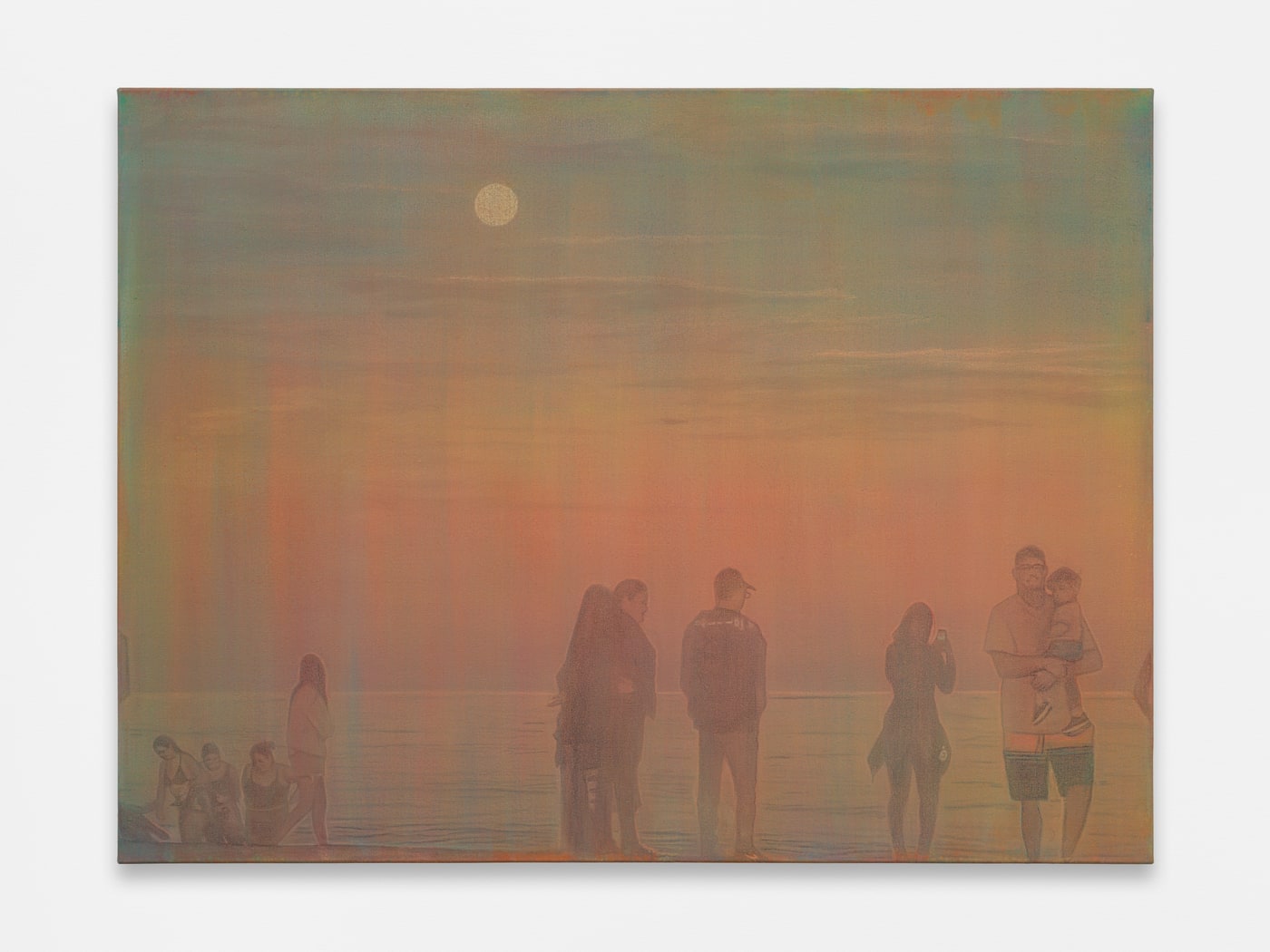
Two women sit on the edge of a carved basin full of water. One, dressed in white satin, gloved, flowers in her hand. The other, almost naked, red satin draped over her shoulder. Between them, a small Cupid leans over, stirring the water. The women are Sacred Love and Profane Love, depicted by Titian around 1514. Five hundred years later, in Alta Vista, a fictitious town somewhere along the coast of California, where land meets water, the water hasn’t settled. Everything is sun-bleached: the faded pink of stucco after too many summers, the orange of a smoggy LA sunset. Everything is soft and hazy. Built by Ramiro Hernandez, painting by painting.
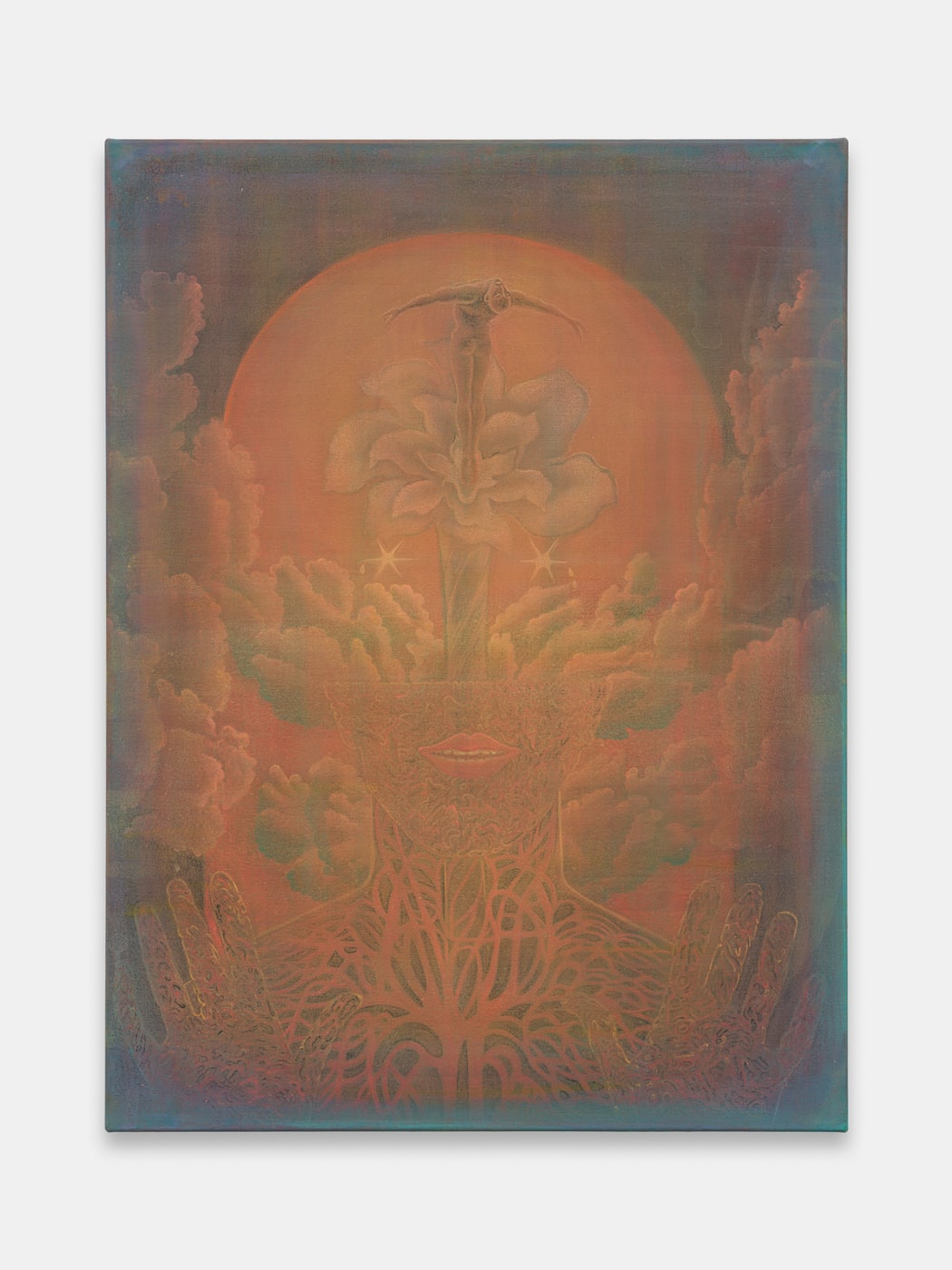
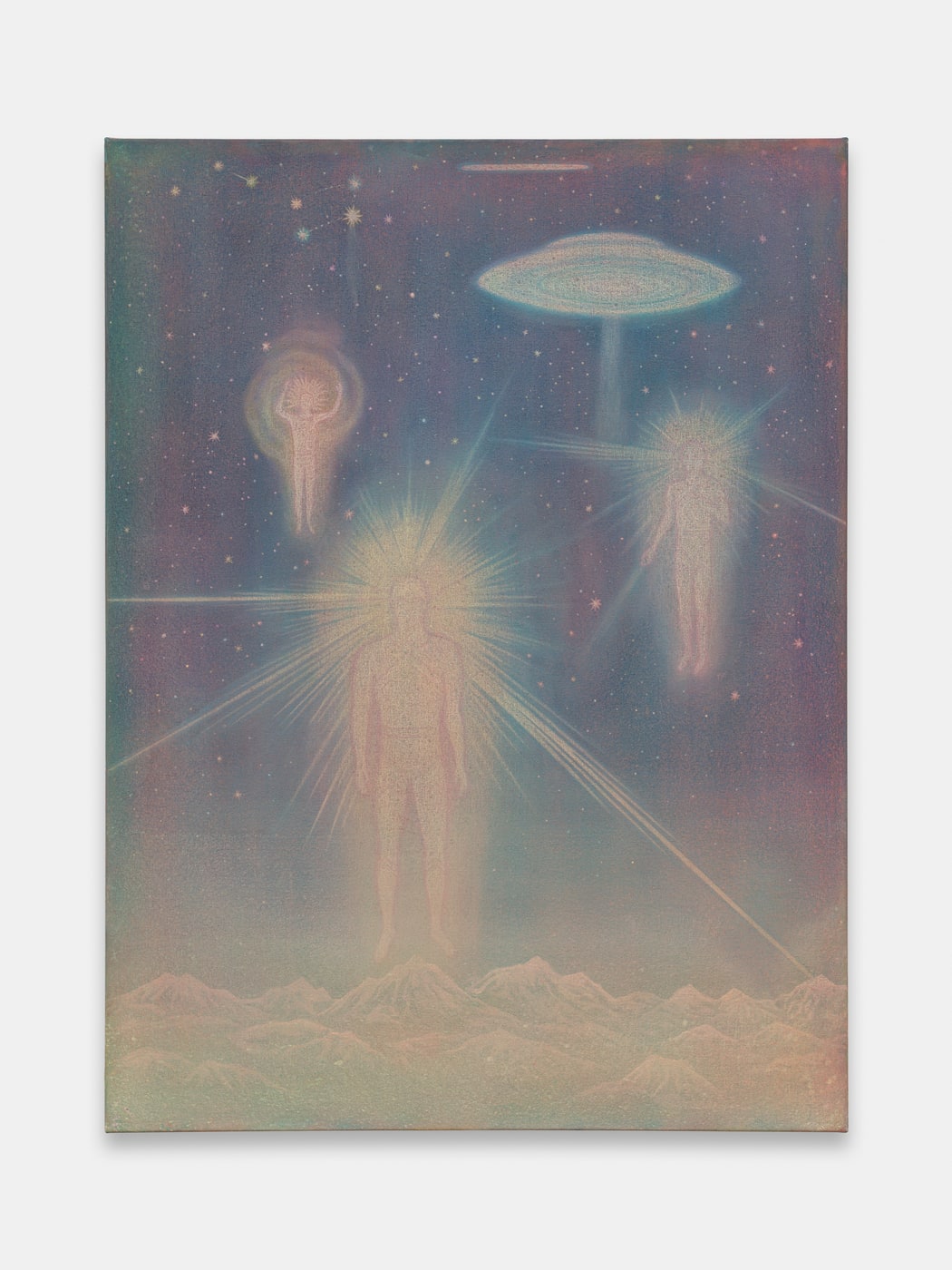
In his commentary on Plato’s Symposium, Ficino names two Venuses. The Celestial one has no mother. Born of the heavens, she draws the soul upwards, towards the divine. The Natural one is born of two parents and embodies beauty in matter: in bodies, in flowers, in the world you can touch. Both are love. One looks up. The other looks around. In 1939, Erwin Panofsky read Titian’s basin through Ficino, a reading still argued over. The two women are the twin Venuses. Nakedness is truth without ornament. The clothed woman belongs to the earth. The nude to the heavens. Hernandez presents his paintings in two realms: the Natural and the Celestial. He flips Panofsky’s scheme. On his beach, the bodies are bare, and in his visions the figure is veiled and armed. Halcyon, the orange celestial Untitled, and Ghost Force I reconstruct Titian’s arrangement: an exposed figure and a clothed, veiled figure positioned around a central supernatural image. Bathers on the bank of the Seine, the factory chimneys of Clichy peeking over the horizon behind them. Seurat’s Bathers at Asnières is where nature meets industry. They share one frame. Seurat’s bathers disappear into the landscape by way of the brushstroke. Hernandez’s disappear into the haze by way of the wash. Serious Play keeps Seurat’s cast: young men at the water, off duty. But Seurat’s boys sprawl apart, each alone in the heat. Hernandez’s huddle, arms round each other’s shoulders, bare to the waist. Close enough to be one body. Leisure, taken seriously.
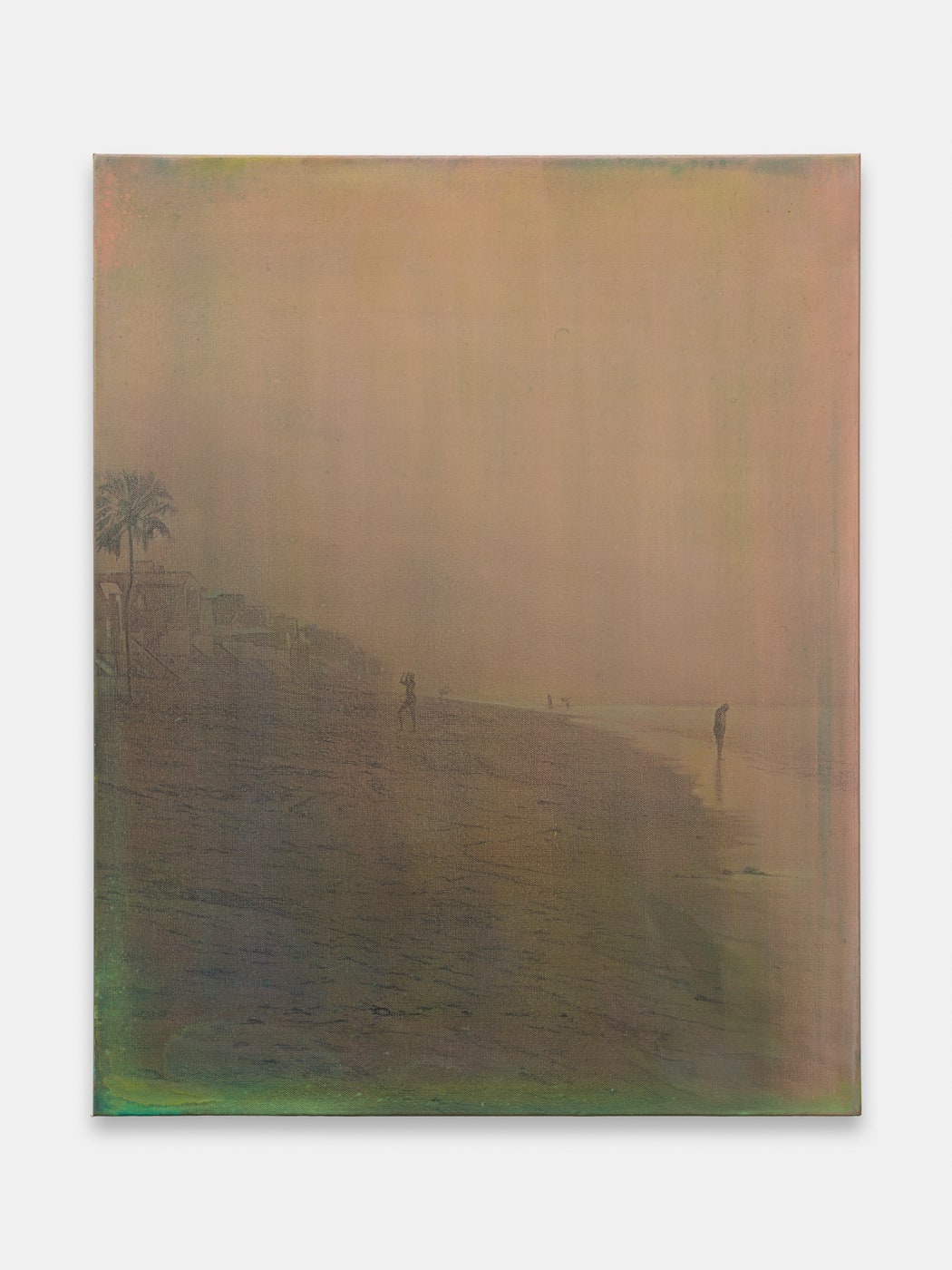
Hernandez calls his beach scenes “a sequential narrative, akin to the Stations of the Cross if nothing ever happened.” Except something does happen, and not only on the beach. Get Together hangs alone on the wall facing the entrance: figures in swimsuits or coats, under a light that could be sunset, sunrise or moonrise. You can’t tell which way the day is going. The next wall opens with Ghost Force II, a helicopter over a hazy sea. The beach is followed by machinery. There’s no aircraft in Hernandez’s beach paintings, no chimney on his horizon. He takes them out of the scene and gives them canvases of their own. Seurat keeps leisure and industry in one frame. Hernandez separates them, and lets the hang bring them back together.
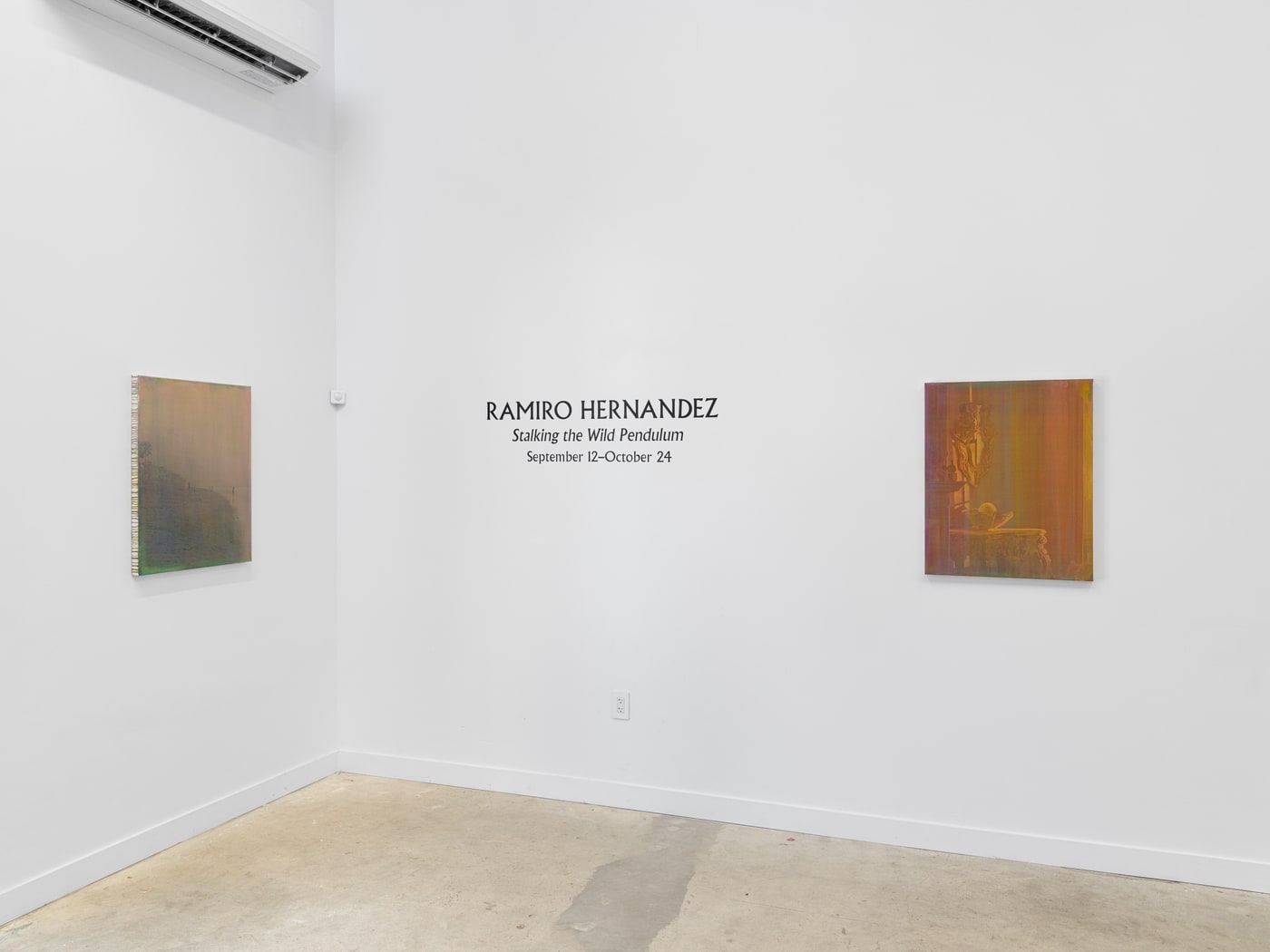
Why California? Because here, the beach and the machine have always shared a wall. In Santa Monica, the RAND Corporation, where the Cold War strategy was drafted, sits a short walk from the pier and its Ferris wheel. Up at Big Sur, the Esalen Institute turned self-exploration into a movement. In Laurel Canyon, the counterculture lived on the same hills as Lookout Mountain, a once-secret military film studio. Gurus and engineers. Retreats and defence contracts. In California, the search for the divine and the machinery of control grew up next to each other. The helicopter was always beside the bathers. Hernandez divides his exhibition into two realms, then makes that division impossible to maintain. Machinery and mediated images break into the bathers. The military figures take on the remoteness of apparitions. Every canvas, hung on its own, still carries traces of the system it was taken from. On the beach, the bodies are bare, earthly, affectionate. And yet their closeness may be the most transcendent image in the room. In the visions, the figures are veiled and armed. They look celestial, but what they carry is earthly violence. Hernandez doesn’t simply reverse sacred and profane. He unsettles which is which. He separates the two realms only to let them leak into each other, on the walls and in the eye of whoever walks between them.
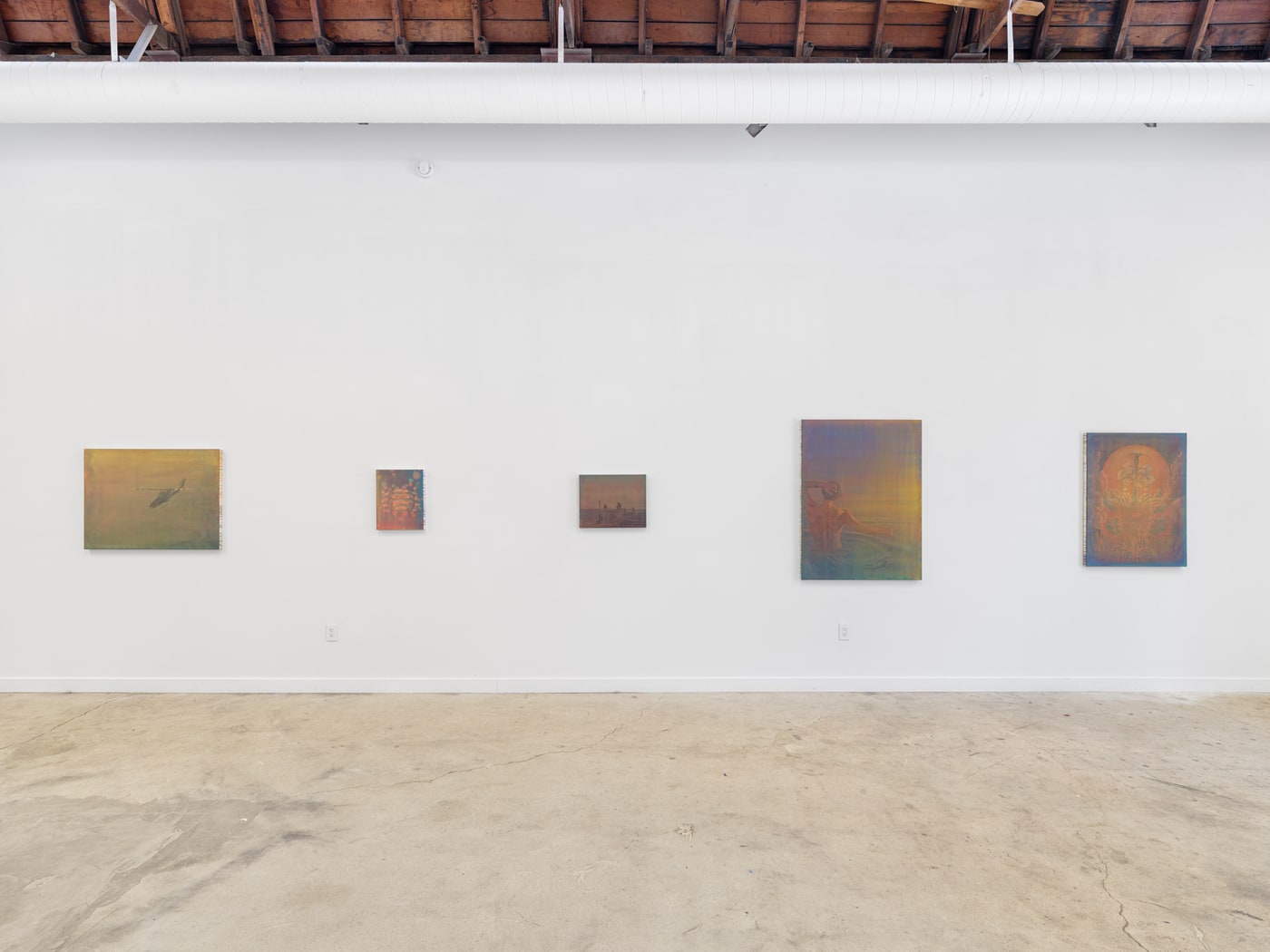
Nothing here arrives first-hand. Every painting begins as a found image: a screenshot, a news-app photo, a YouTube still. Washed through his haze, they come back as something closer to cinematic memories. Hernandez projects each one, traces it, then washes it out in pure colour until only a ghostly, rainbow imprint is left. Then he brings it back. Over and over. All of this in acrylic, a medium that dries fast and flat. Here, wash over wash, the paint takes on a depth and glow rarely seen outside oil. None of it restores an original. The image goes through its own history of forgetting and remembering, until it looks like the beach: soft, hazy, half there.
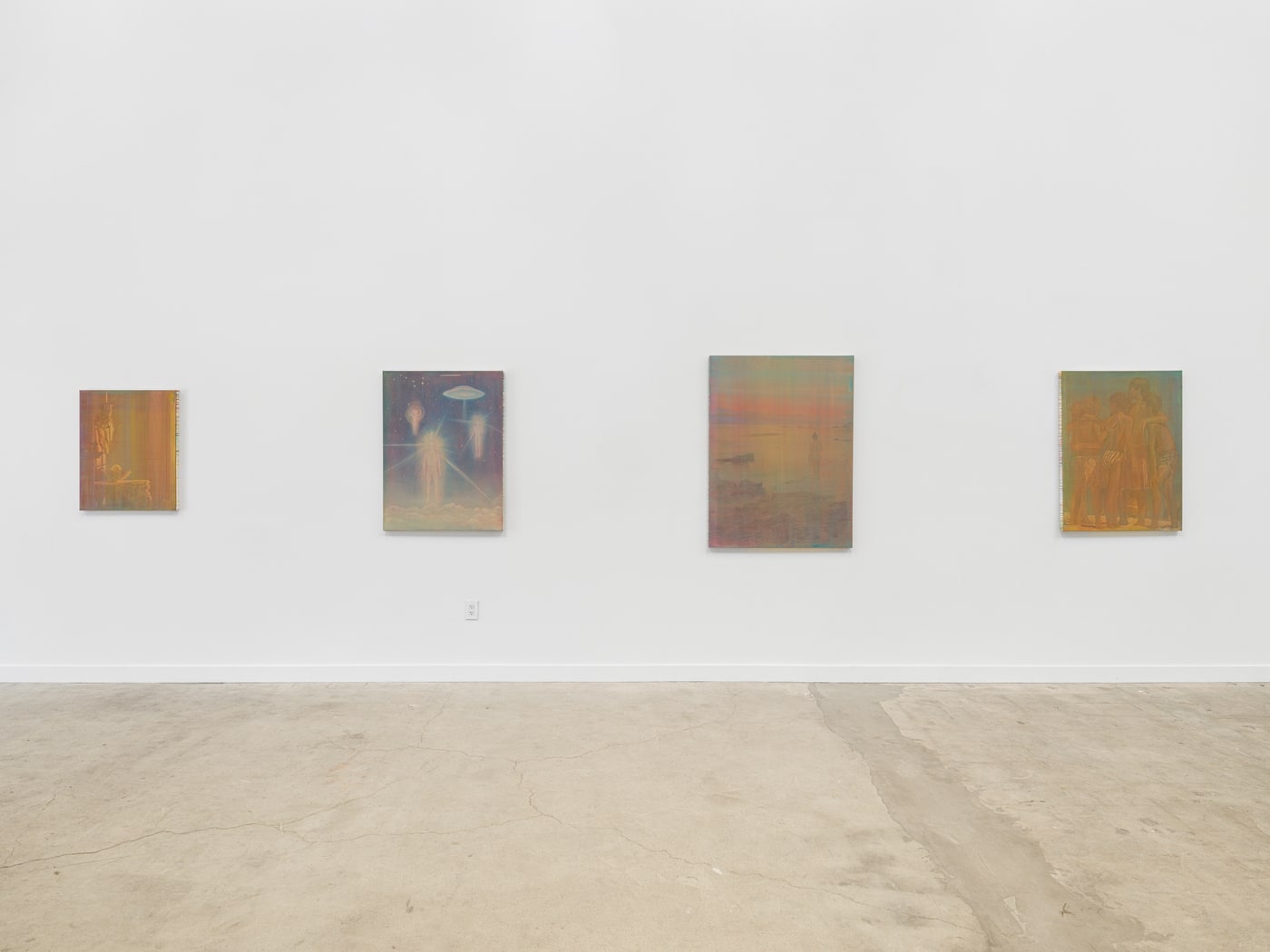
The exhibition takes its title from Itzhak Bentov’s 1977 book Stalking the Wild Pendulum. For Bentov, reality is a pendulum, swinging between matter and the void. Hernandez’s show swings the same way, from beach to vision and back. To explain the hologram, Bentov throws pebbles into water. The splash looks chaotic, but every ripple can be traced back to its source. Freeze the ripples, shine a light through them, and you have a hologram. Drop the frozen sheet and every shard still holds the whole event, only fuzzier. Hernandez’s paintings work the same way. Each canvas is a shard. Hung apart, a beach scene still holds a trace of the helicopter. A vision still holds a trace of the beach. Each part is a dimmer copy of the whole. Like the water in Titian’s basin, nothing settles.
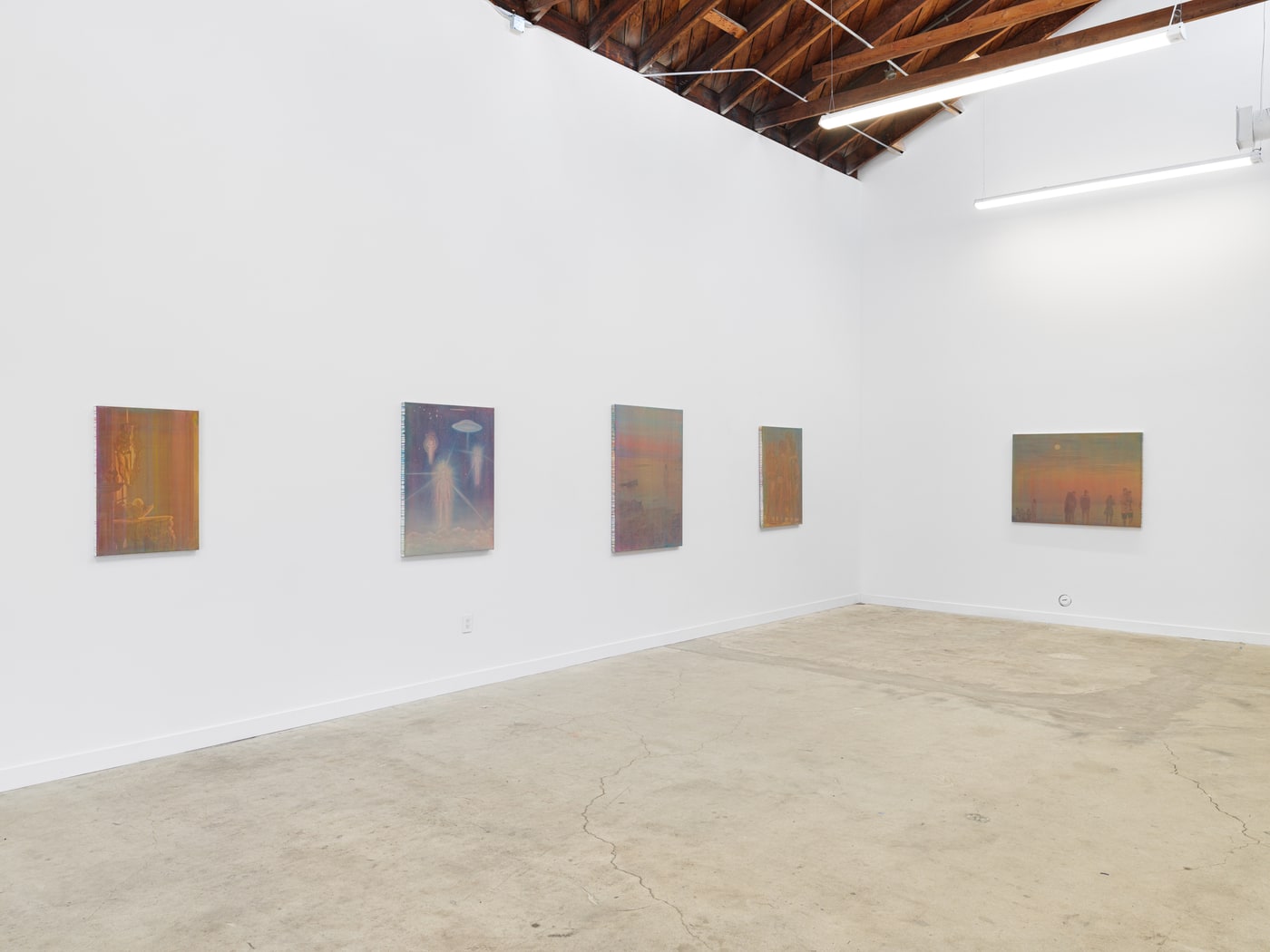
Ramiro Hernandez: Stalking the Wild Pendulum is on view at Dominique Porter Gallery, 3025 Fierro Street, Los Angeles, until 24 October 2026.
Responses.
Received. Thank you.