Alex Greenberger dubs the show "boring" in his ARTnews review, “The Only Shocking Thing About Jordan Wolfson's Gagosian Show Is How Boring It Is”. The show is clinical, sensorial and threatening: states seldom accompanied by boredom. Wolfson says: "if an image was overtly explicit, it flattened the exhibition." The restraint is the method. The threat is in the warning.
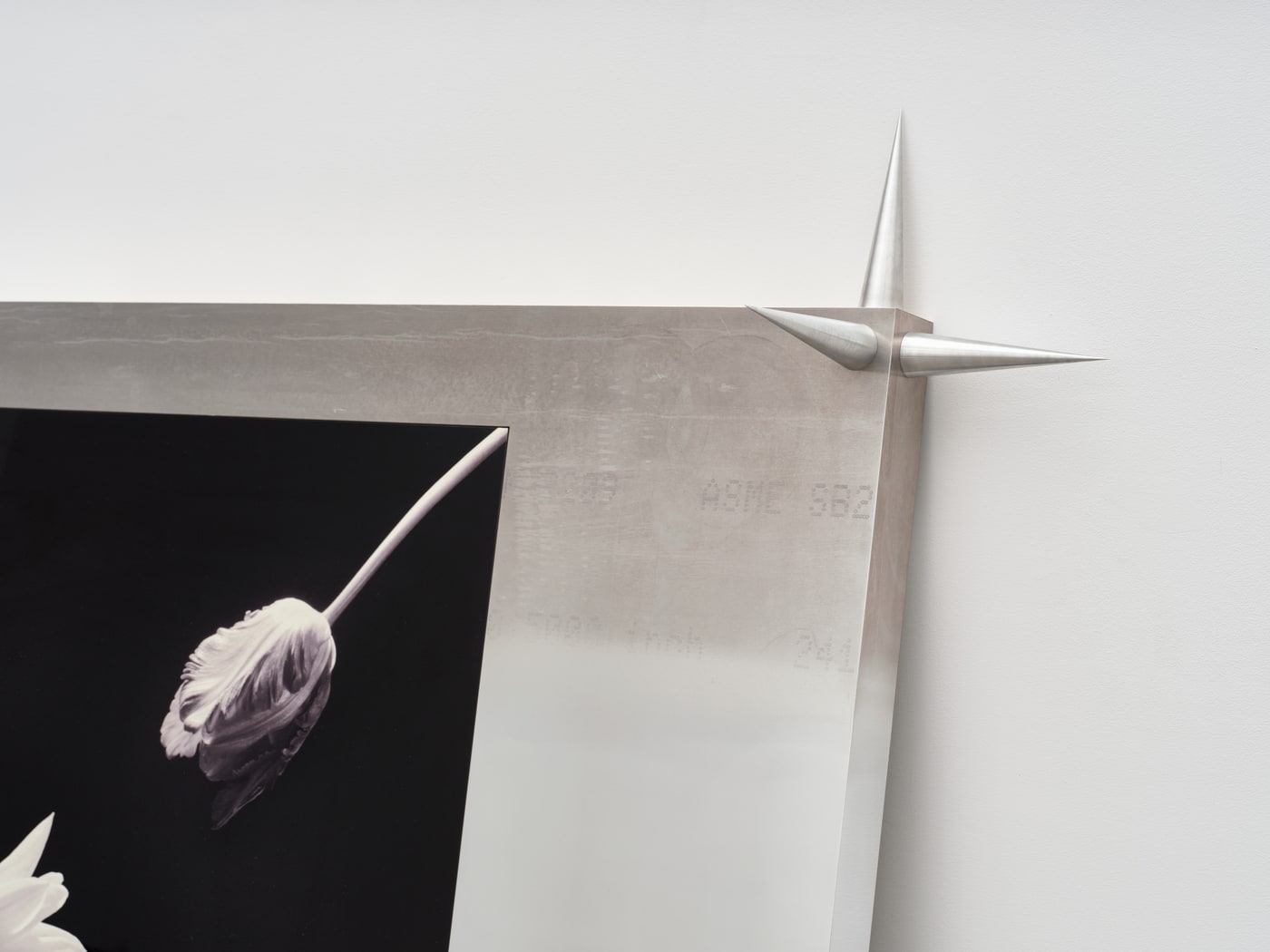
The sculptural essence of the show is sterile. Sterility is built into the materials. The floor sculptures still carry the mill's stamped spec codes: ASTM B209, 6061-T651, "0.5000 inch", "AMAG rolling". They look like industrial stock with spikes added, and it works: the stamps make the case for sterility better than any description could. A factory label feels colder than a blank surface. Factories are cold, lonely places, even when they are packed with people; metal and machinery dominate. Sterile the way a lab is sterile: a lab built for uncovering art-historical and cultural threads and extracting new meaning. The sterility gives way to something sensorial. Wolfson adds long, sharp spikes along the edges of the sculptures in every direction. The danger arrives first. The sharpness registers before the viewer ever approaches an individual work.
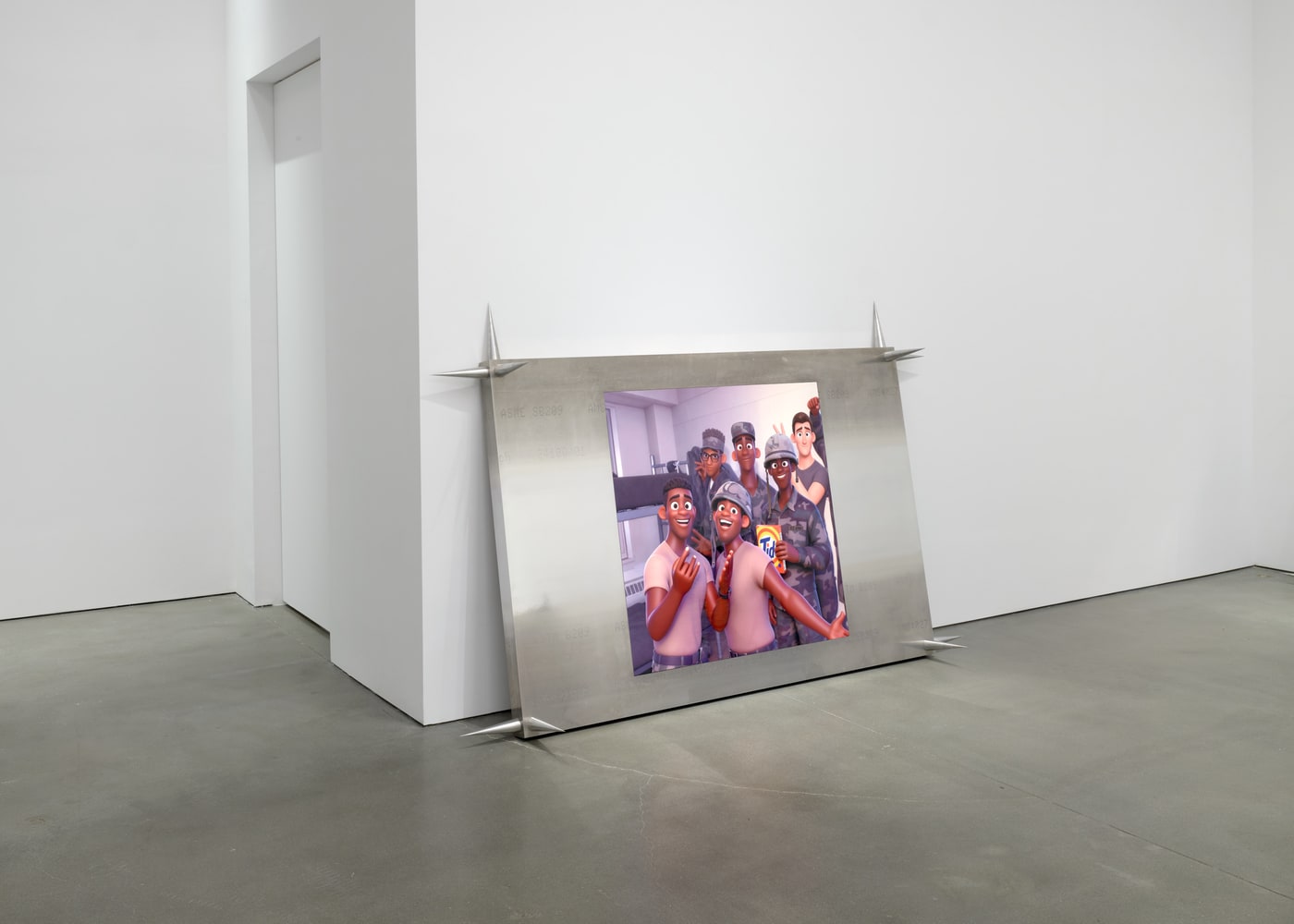
There is a sense of unity and repetition throughout the show. The works are defined and differentiated only by the images on them: provocative references to pop culture and collective moments. Otherwise, they are virtually identical. Some images have been digitally altered, and the AI use is almost painfully obvious. The clumsiness reads as deliberate, juxtaposed with the sterility. The aluminium surface of each work reflects the other works in the show, which raises, once again, the question of reflection and gaze: who is looking, and looking at what. It is a running theme in Wolfson's work; his animatronic Female Figure, 2014, is famous for this. This show has no robot, only reflective surfaces that act as mirror objects. It feels like a natural progression in Wolfson's work. Polishing is the one place the hand shows up, and it is used to erase the hand. Female Figure looked you in the eye. In this show, the works look at each other, leaving the viewer exposed, with a tightening sense that they are not where they should be: the observer becomes the observed. But no one is observed alone. Individual viewers become part of a collective that shares knowledge and memory of the images on display. The gaze becomes communal.
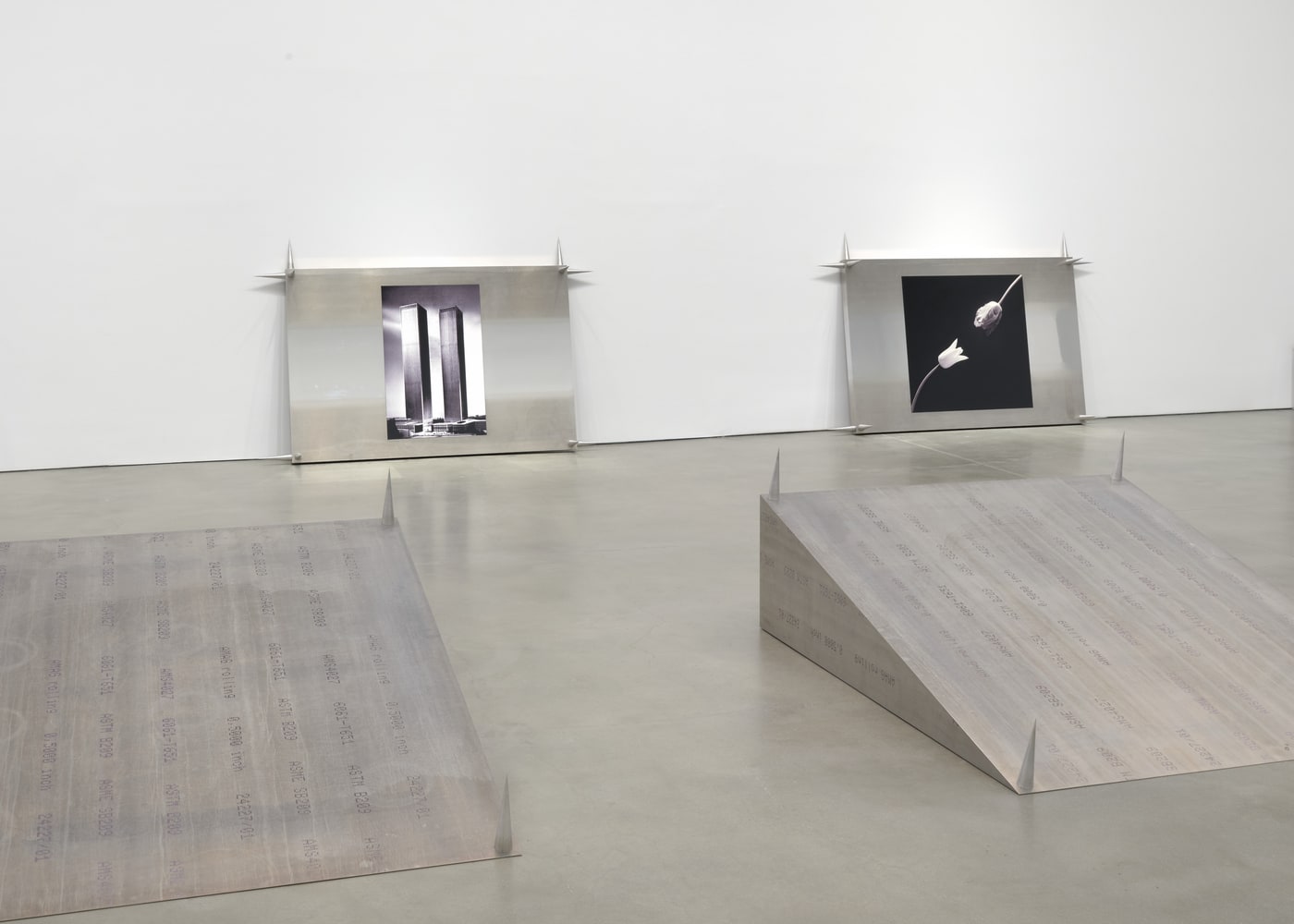
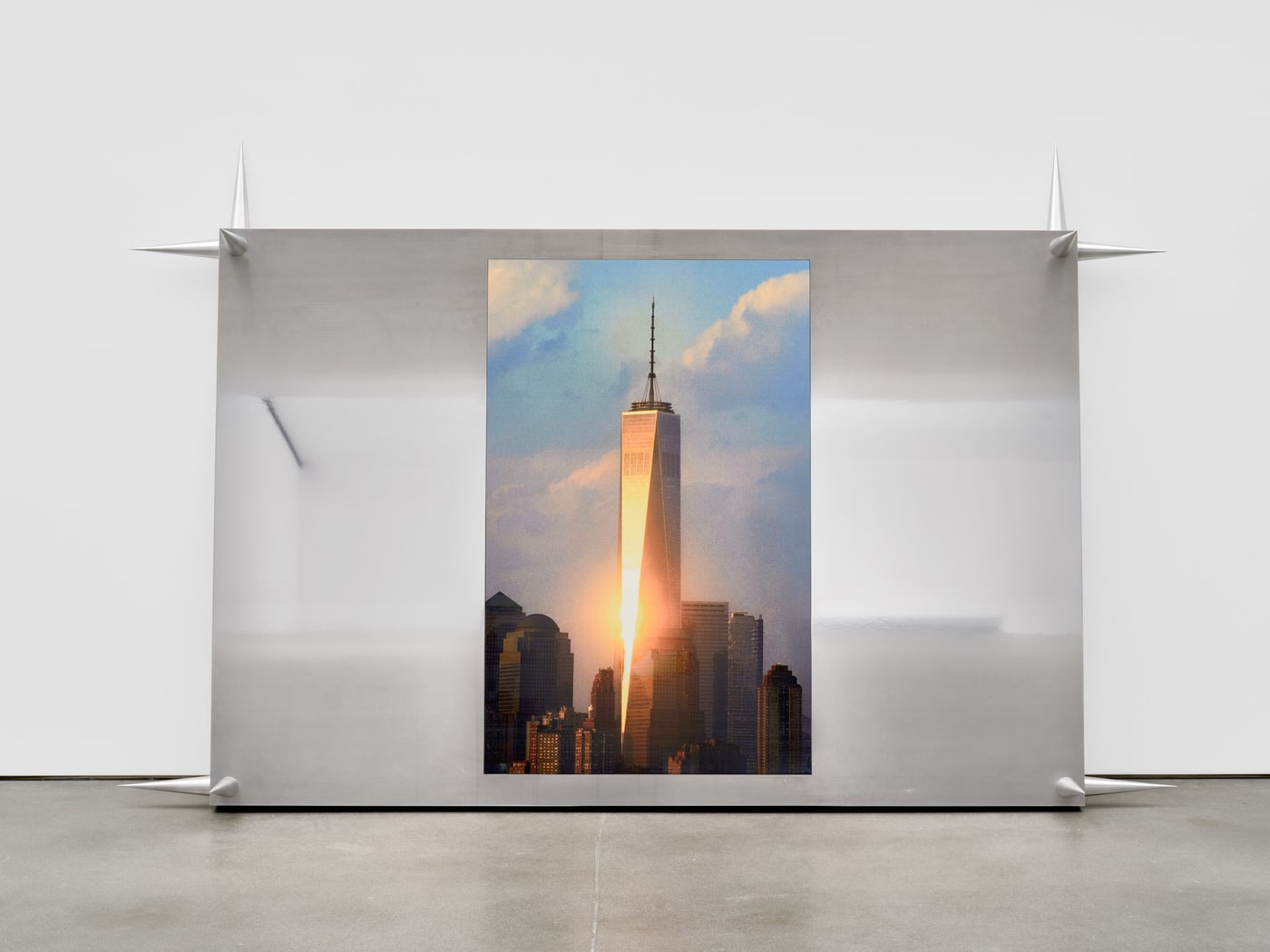
Doubling and its aftermath are another thread to follow. Two works double the Twin Towers: the towers photographed at night in colour, and an architectural model of them in black and white. One World Trade Center in sunlight and Mapplethorpe's two tulips complete the set. The aftermath is what the viewer carries out of the room. Wolfson hopes the show "ferments inside you and then reminds itself to you in future days." The doubling goes beyond the towers. The whole show can be read in pairs. The two floor sculptures are a very clear pair. The soldiers in their barracks and the scene after Jeff Koons's Silver Shoes share the same cartoon style. Shrek and Guston's The Studio pair through the cartoon, as well. Guston's hooded Klansman, smoking as he paints his own portrait, is redrawn as a digital illustration. Guston called the hooded figures self-portraits: "I perceive myself as being behind the hood." The hood is a literal mask. Guston's late style was already cartoonish; he was criticised in 1970 for abandoning abstraction for comic-strip figures. Wolfson sets it beside Shrek, a cartoon turned into a stage show, its actors masked in prosthetics.
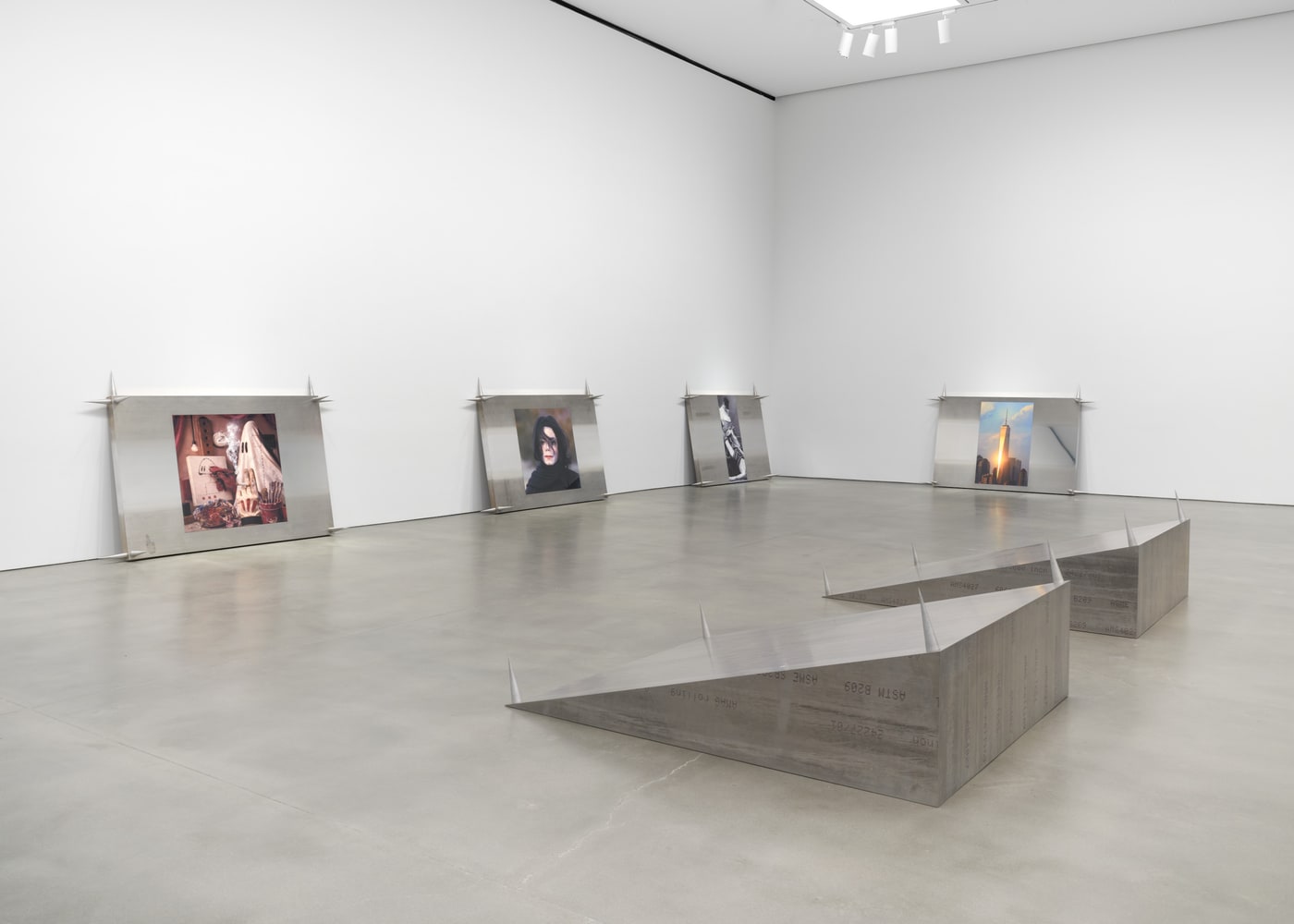
The three World Trade Center images, Mapplethorpe’s tulips and the cartoon soldiers make up an interesting cluster. Between them, they cover the four registers the show is built on: collective trauma, art history, pop culture and provocation. Of the four registers, provocation dominates the other three. I can see how Greenberger arrived at “boring”. You walk into a windowless room with fourteen aluminium plates resting against the four walls and two floor sculptures in the middle. Everything is grey and repetitive except what is printed on the plates. That's deliberate. In the images, joy is hollowed out; even the soldiers' grins are empty. This is not a joyous exhibition. It is a provocative one. The shock isn't gone; it's delayed. The spikes hit at once. The images take longer: they land on the second look, once you've spent time with them. Concealment doesn't remove the shock. The show plays on trauma and on the collective register of its viewers. It also arrives at a moment when AI is being discussed in the language of threat: its environmental consequences, its behavioural and cognitive impact on us, and the possible emergence of superintelligence. The threat isn't pictured; it's in the making. Several of the images have visibly passed through AI, the Guston and the Koons among them. Of working with AI, Wolfson says it "takes all emotions and simplifies them," that it "simplifies the complexity of the image and creates a new complexity." He means it formally. But the new complexity doesn't stay inside the picture. It's the one we're living in.
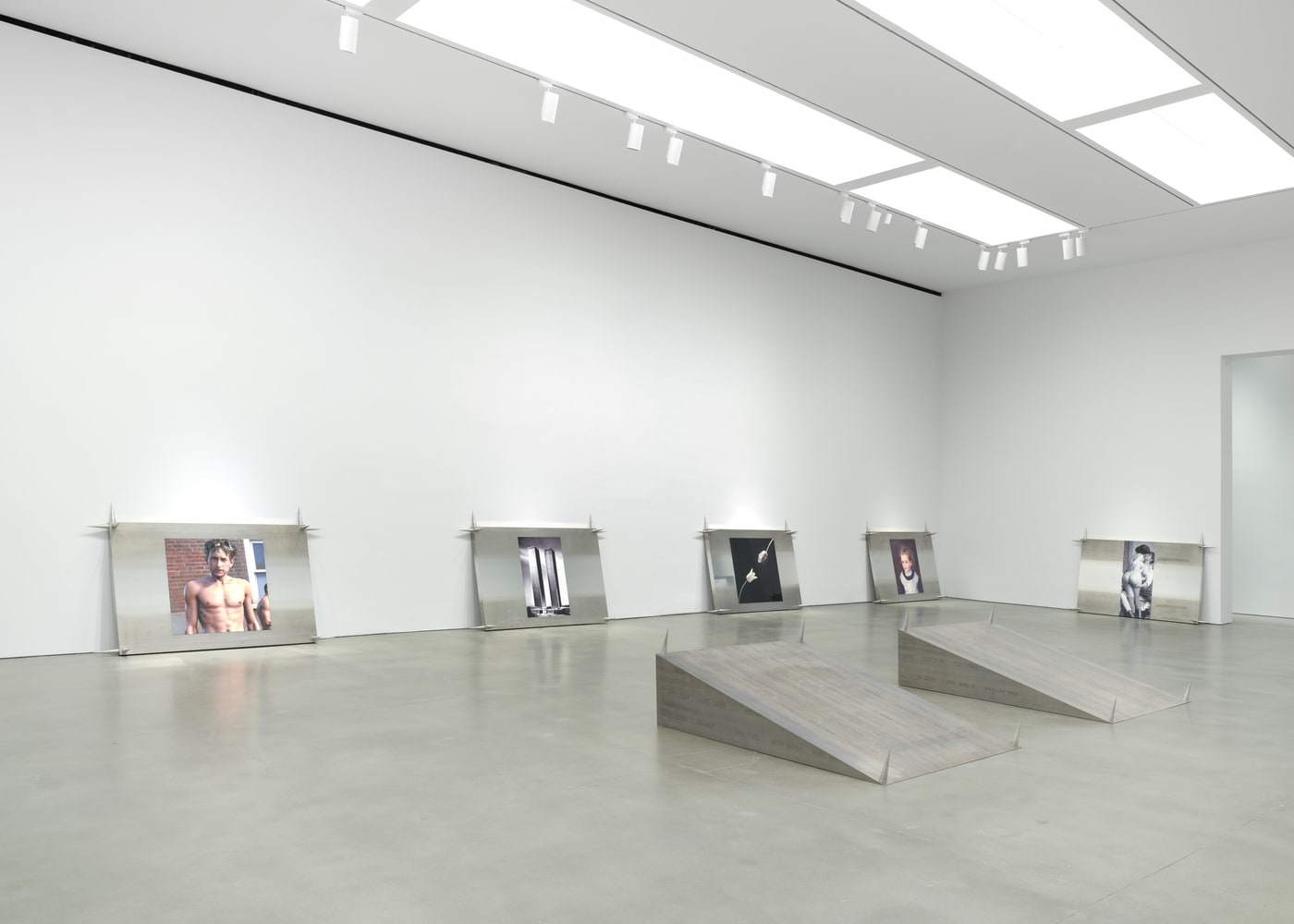
Greenberger writes that Wolfson "once more goes the less dangerous route, appropriating a 1984 photograph of two tulips in a black void instead of something more explicit." But the tulips aren't the safe option. Mapplethorpe himself said there was little difference between how he photographed flowers and how he photographed sex. The tulips work precisely because they are Mapplethorpe's explicitness in hidden form: the same charge, reworked in seeming innocence. Greenberger reads them as Wolfson avoiding the S&M pictures. In conversation with Ottessa Moshfegh, Wolfson says "concealment is not necessarily about hiding. I think it's about pretending. It's about putting on a mask at the ball." The tulips are the S&M pictures wearing a mask, as Guston's painter wears his hood. That is exactly what the whole show does. Its transgression works through concealment, not overt exposure.
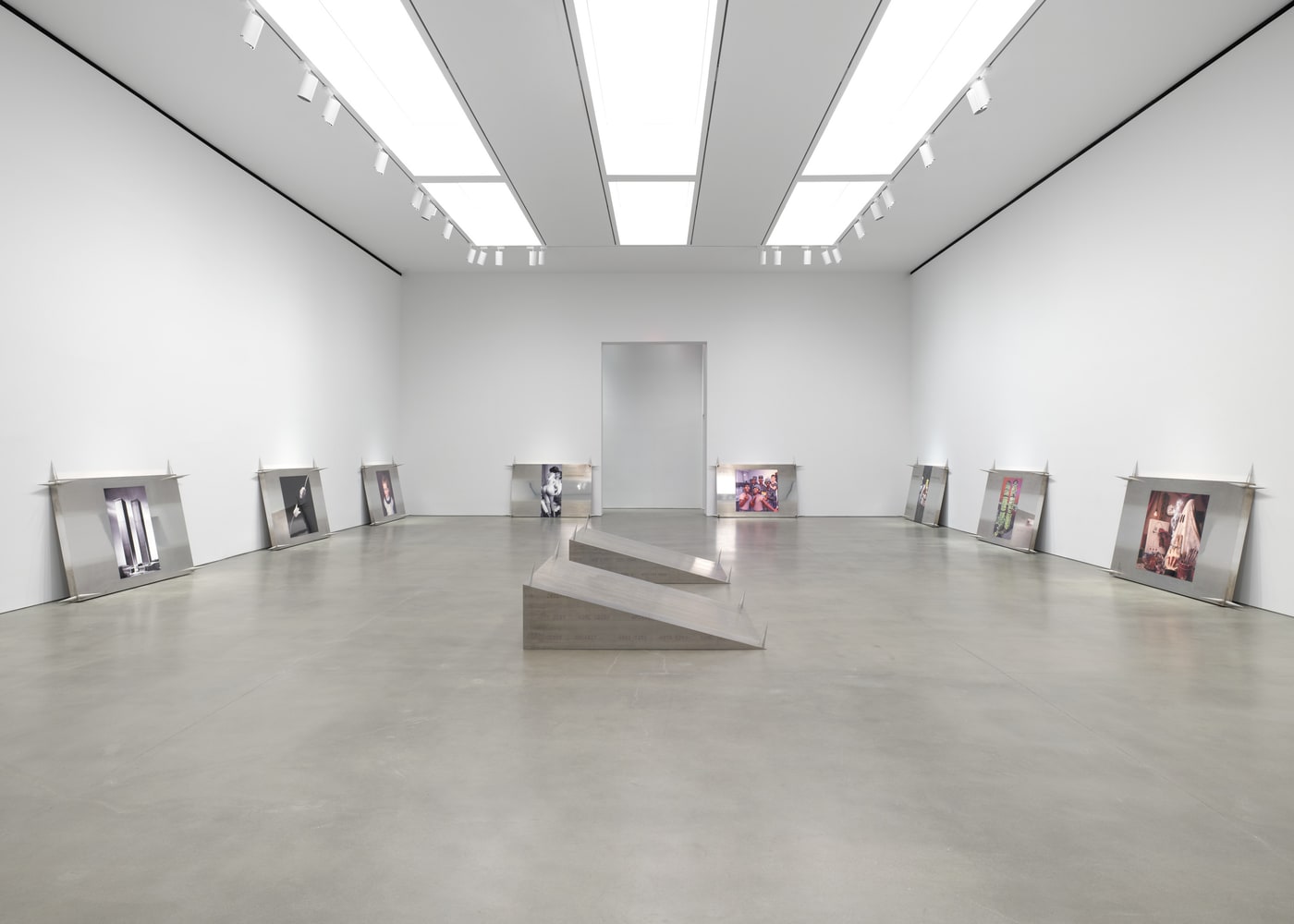
Jordan Wolfson's exhibition is on view at Gagosian, 555 West 24th Street, New York, until 24 October 2026.
Responses.
Received. Thank you.
another amazing read 🖤
M ·