This week

Summer Exhibition 2026

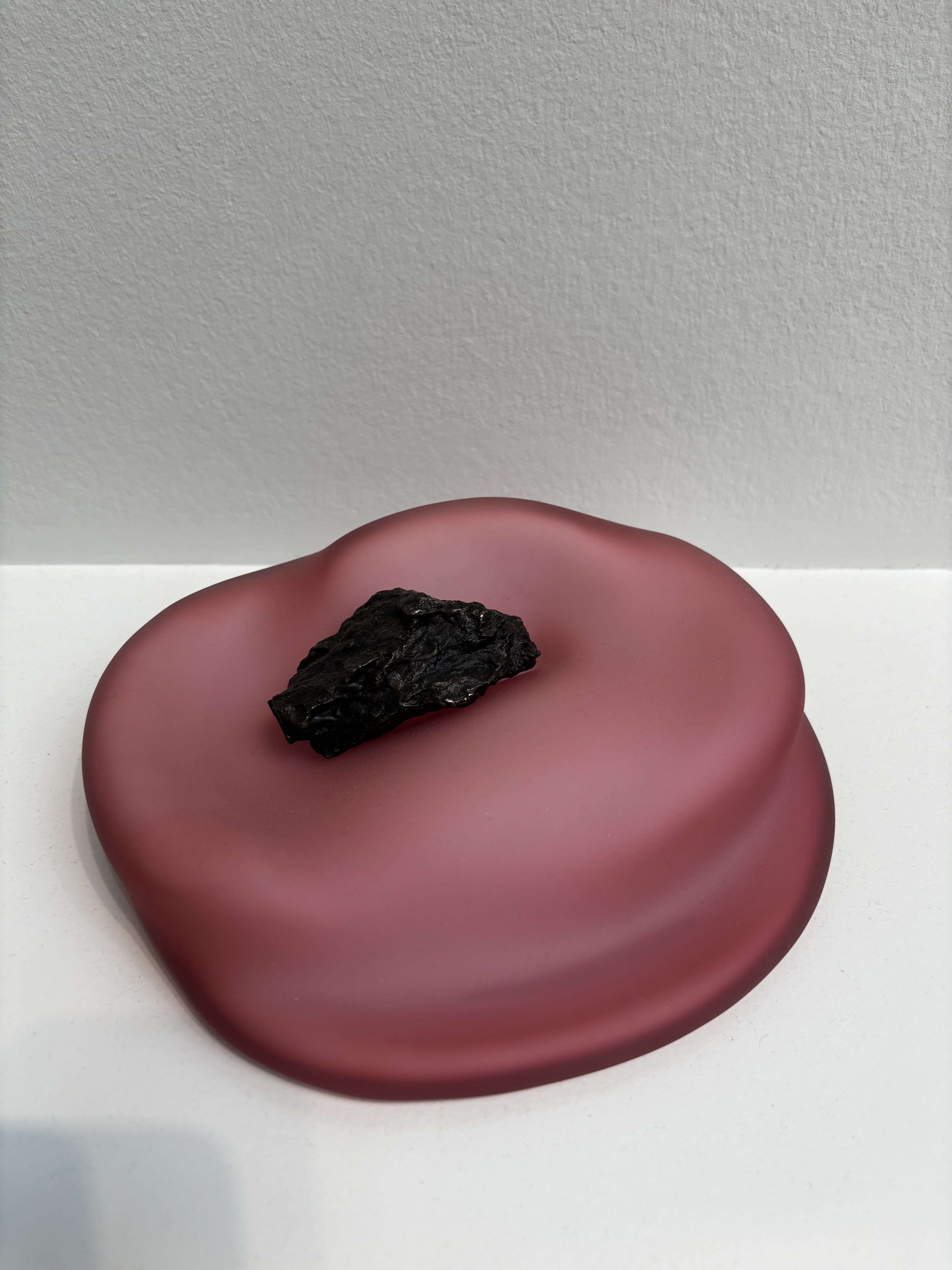
A soft-edged, rounded wall-mounted sculpture in translucent blush pink glass or resin, with a small rough black mineral-like object embedded near its centre.
A soft, rounded, blush-pink wall piece with a rough black mineral lodged in it.

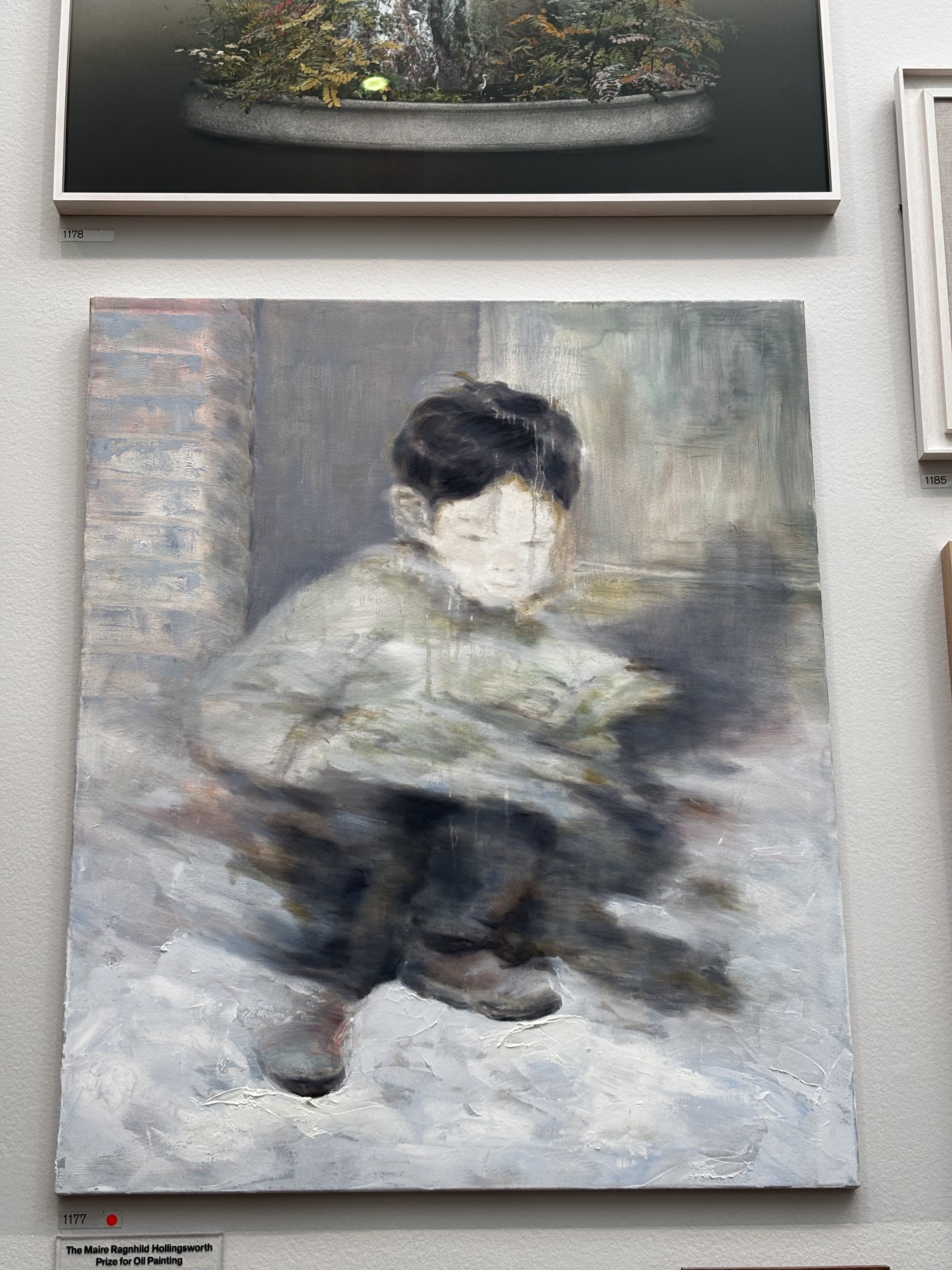
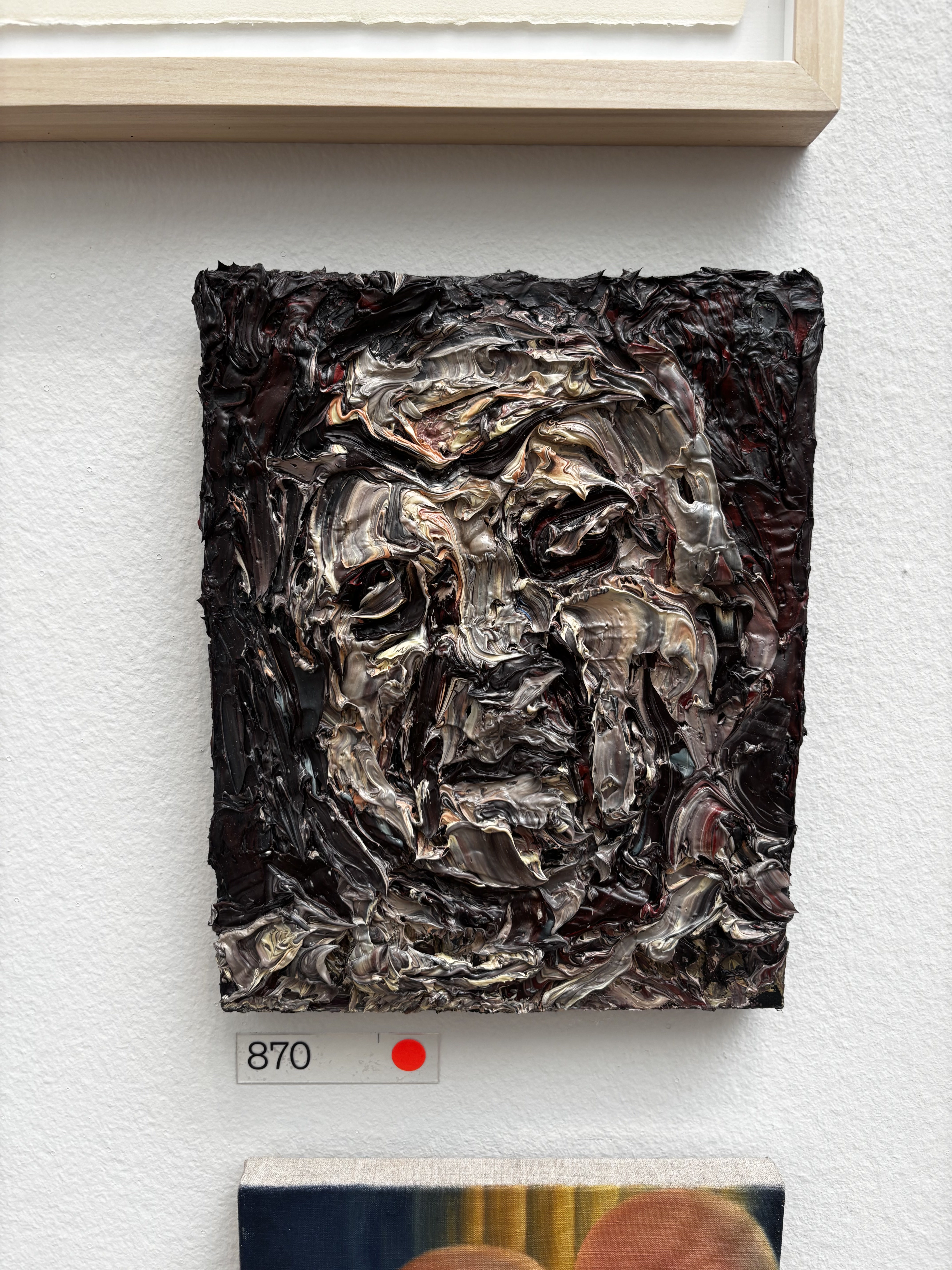
The Summer Exhibition returned to the Main Galleries at Burlington House this year (16 June to 23 August 2026), coordinated by Ryan Gander RA under the theme Interconnectedness. Its open-submission premise argues before any single work does: Academicians, professional artists and complete unknowns share a wall on the strength of a small printed number alone. The clearest case for that levelling sat in two paintings arguing with paint as substance, in the old Greenbergian sense of a medium insisting on its own flatness and facture: no. 1441, white impasto worked into ridges and craters, a seam of black and ochre bleeding up one side; no. 870, the same argument in reverse tonality, black and pewter dragged by palette knife into something like crushed foil. Beside that noise, no. 1177 read as a rebuttal: a boy seen from behind in greys soft enough to seem to drip like rain on glass, the only work on the wall carrying its own label, the Maire Ragnhild Hollingsworth Prize for Oil Painting, awarded this year to its maker, Jiyoung Pyo, for Bittersweet. Materiality asserting itself, then a painting succeeding by refusing to.
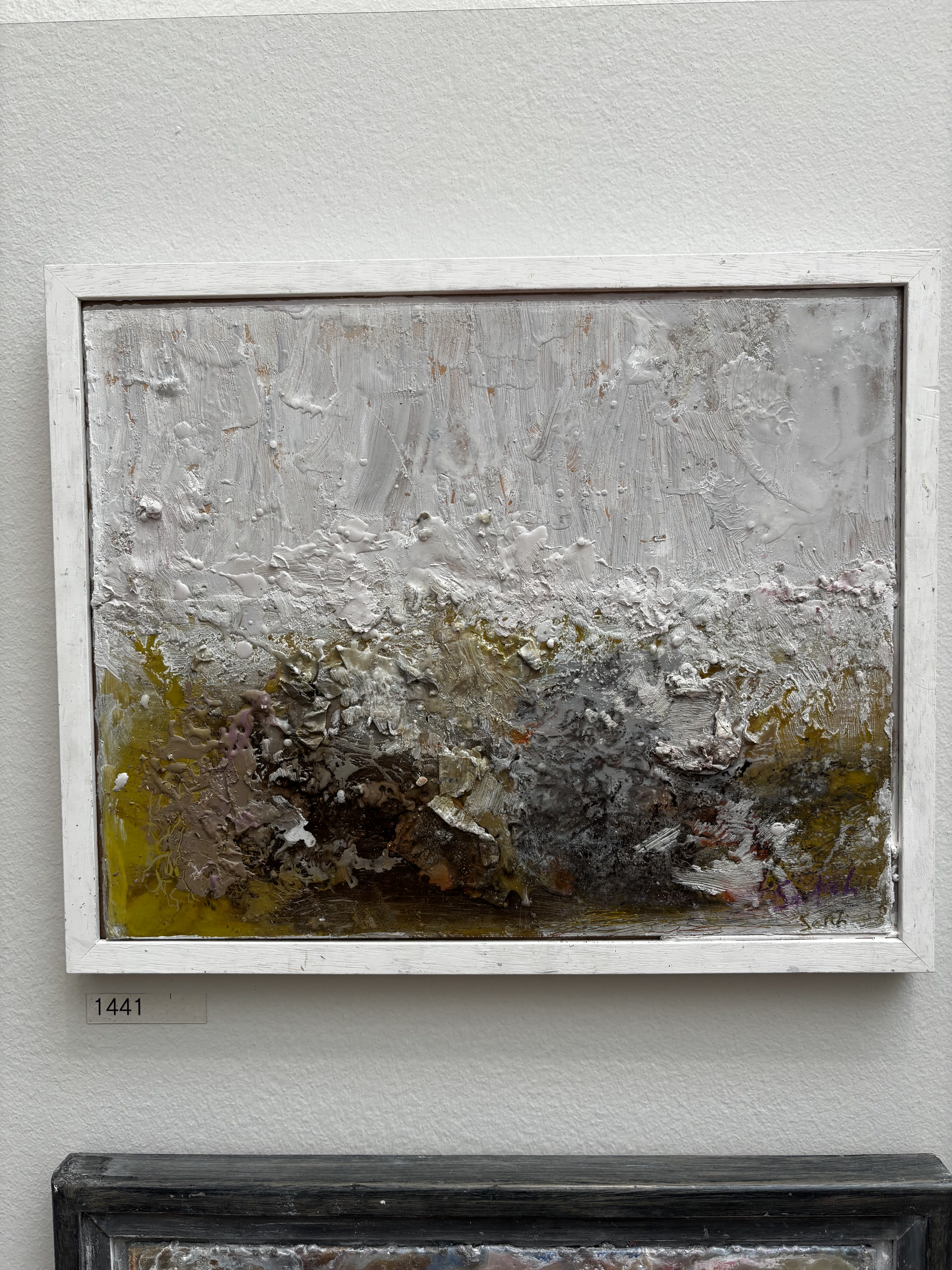
A thickly textured abstract painting in white impasto with a dark ochre and black passage in one corner, hung in a gallery, catalogue label 1441 visible below.
No. 1441. White impasto worked into ridges and craters, a seam of black and ochre bleeding up one side.
A small abstract painting worked entirely in black, silver and dark maroon palette-knife strokes, catalogue label 870 visible beside it.
No. 870. Black and pewter dragged across the surface with a palette knife.
A soft grey-toned oil painting of a boy seen from behind, seated on a low wall, with a wall label reading "The Maire Ragnhild Hollingsworth Prize for Oil Painting" beside the catalogue number 1177.
No. 1177. Jiyoung Pyo, "Bittersweet", winner of the 2026 Maire Ragnhild Hollingsworth Prize for Oil Painting.
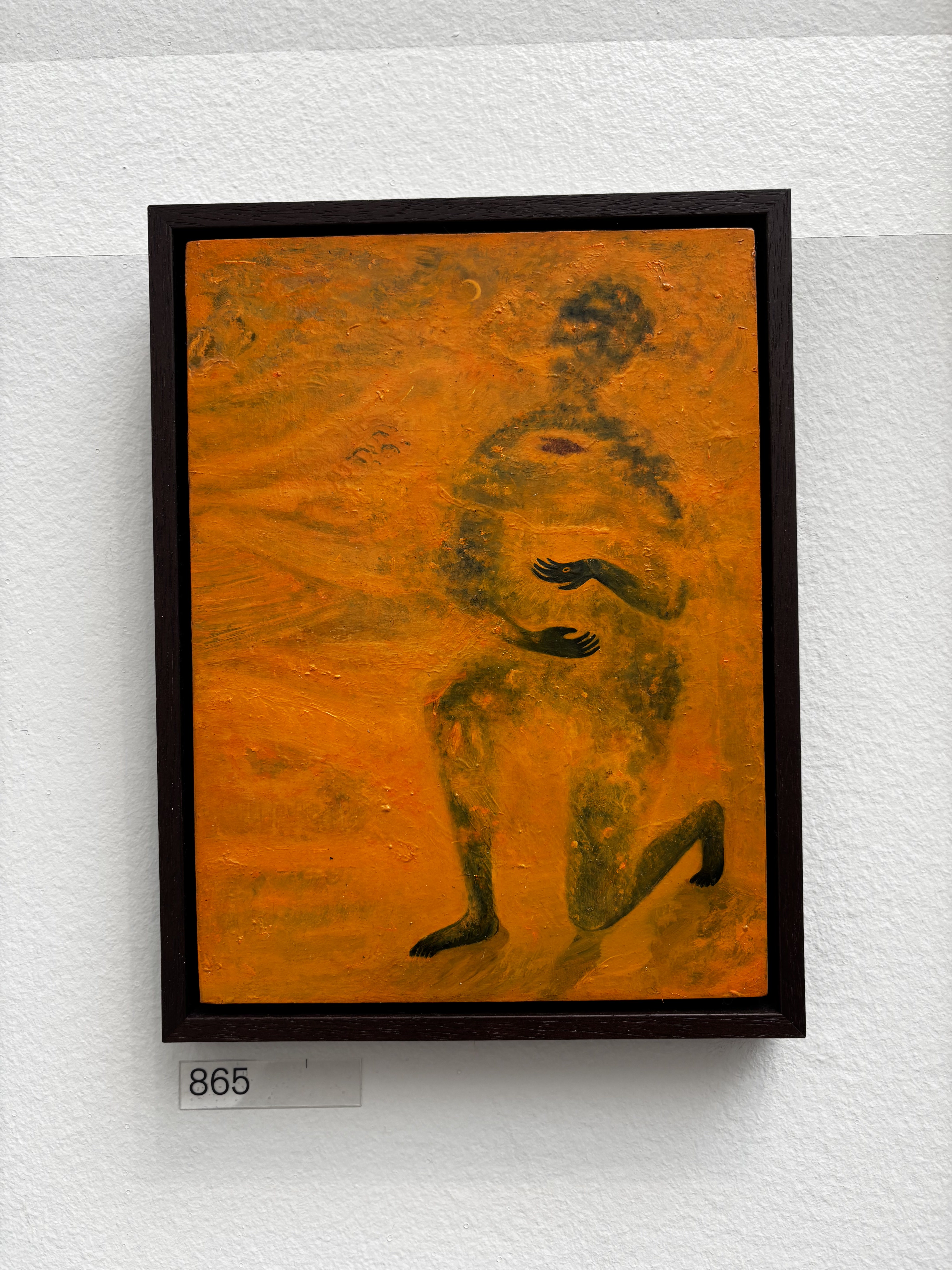
A painting on an orange ochre ground showing a dark silhouetted kneeling figure with both hands raised, a small crescent moon above, catalogue label 865 visible below.
No. 865. A kneeling figure in flat olive-black silhouette against raw ochre, hands raised.
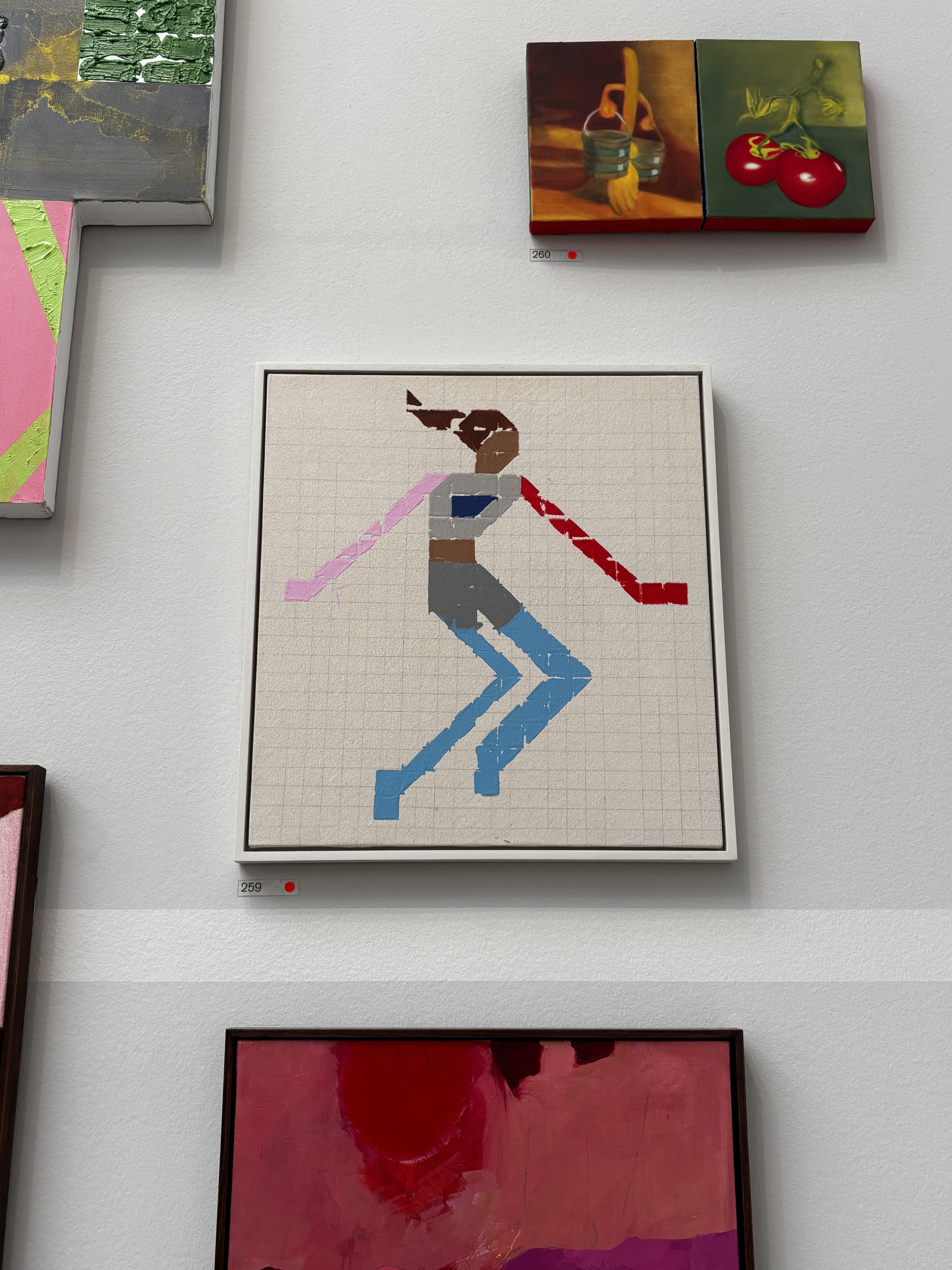
A geometric abstract painting on a grid-lined ground depicting a reclining figure built from flat colour blocks in brown, grey, blue and pink, catalogue label 259 visible beside it.
No. 259. A reclining figure rebuilt from hard-edged colour blocks over a visible pencilled grid, by the same hand as no. 473.
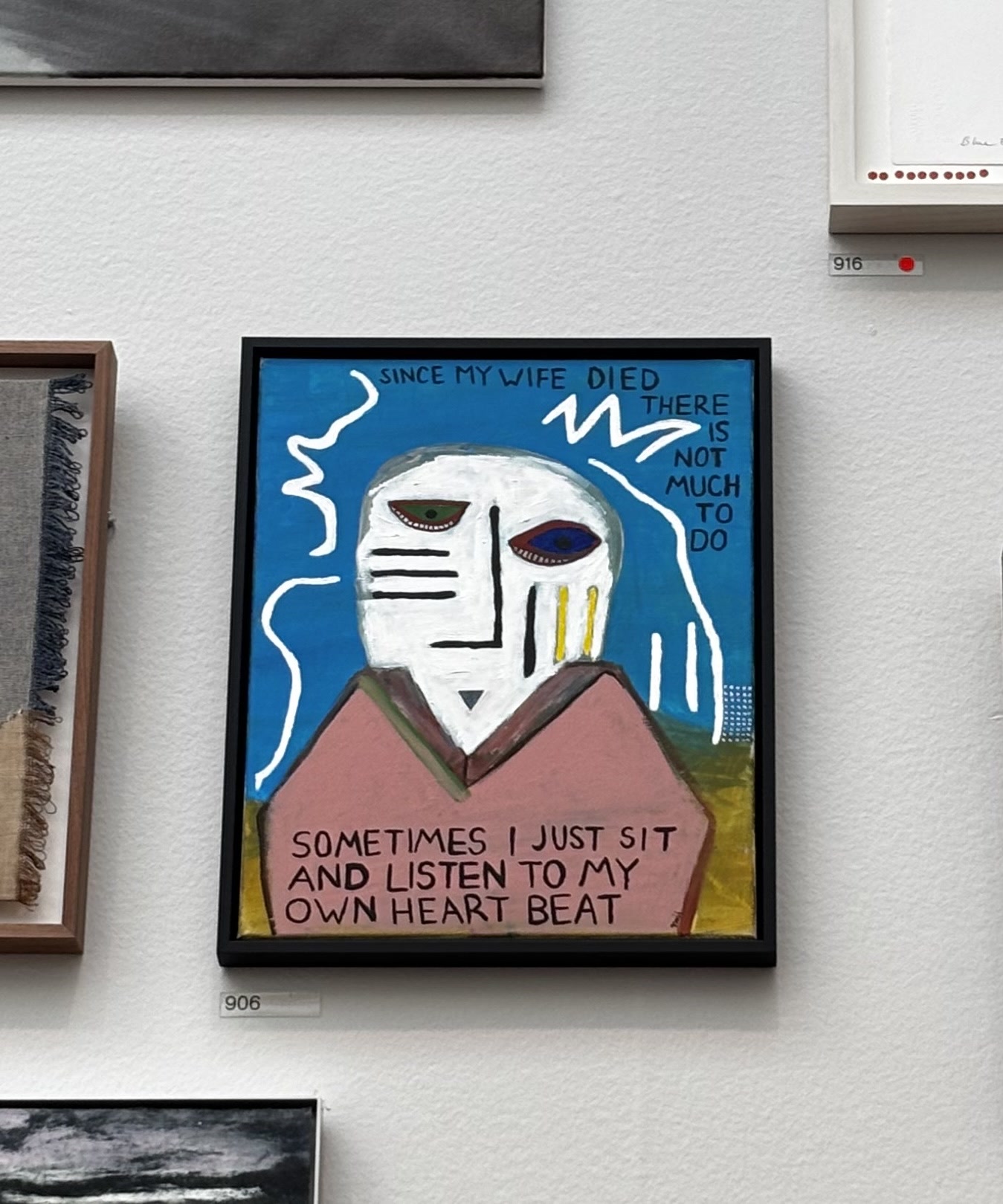
A flat, mask-like painted face in white and blue on a blue ground, with hand-lettered text reading "SINCE MY WIFE DIED THERE IS NOT MUCH TO DO" and "SOMETIMES I JUST SIT AND LISTEN TO MY OWN HEART BEAT", catalogue label 906 visible below.
No. 906. "Since my wife died there is not much to do. Sometimes I just sit and listen to my own heart beat."
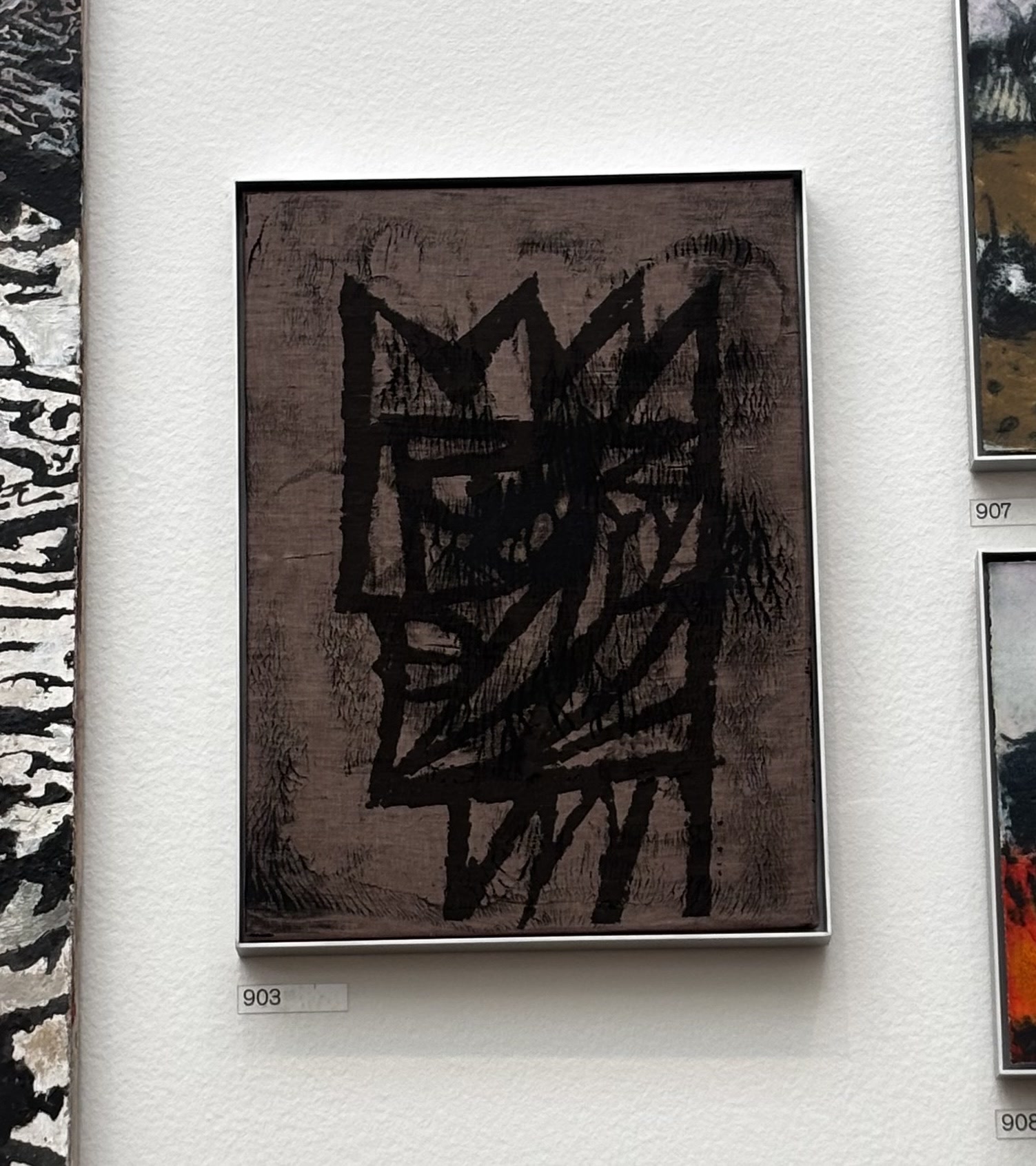
A dark gestural ink painting on a grey-brown ground forming a rough ladder or grid shape with dripping vertical marks, catalogue label 903 visible below.
No. 903. To 000's eye, a figure wearing a crown, built from a jagged ink form and a tangle of drips.

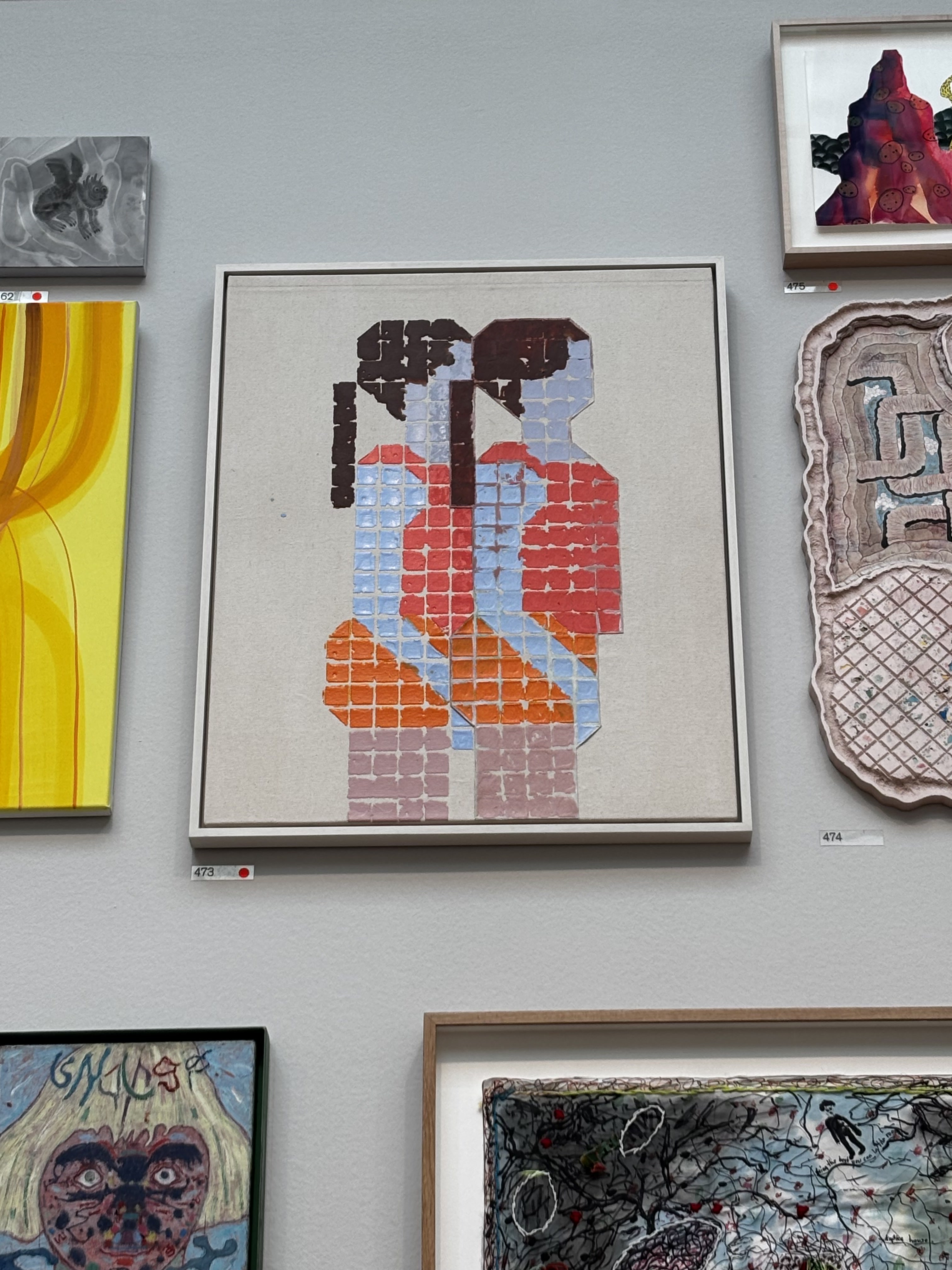
A second argument ran through how a body gets represented at all. No. 865 laid a kneeling figure out in flat, olive-black silhouette against raw ochre, hands raised as if catching something invisible. No. 259 and no. 473, the same hand at two different scales, worked the same problem twice: a reclining figure built from broad colour blocks over a pencilled grid, and, elsewhere in the show, a standing figure built the same way in miniature, from small painted tiles in red, powder-blue and burnt orange, a modular unit standing in for a modelled body either way. No. 906 abandoned the image for language outright, a mask-like face over hand-lettered block capitals, SINCE MY WIFE DIED THERE IS NOT MUCH TO DO, SOMETIMES I JUST SIT AND LISTEN TO MY OWN HEART BEAT, doing the work of confession painting rarely manages alone. And no. 903, to 000's eye, read as a figure wearing a crown rather than an abstraction: a jagged, peaked ink form over a loose tangle of drips, less pure gesture than a portrait hiding inside one.
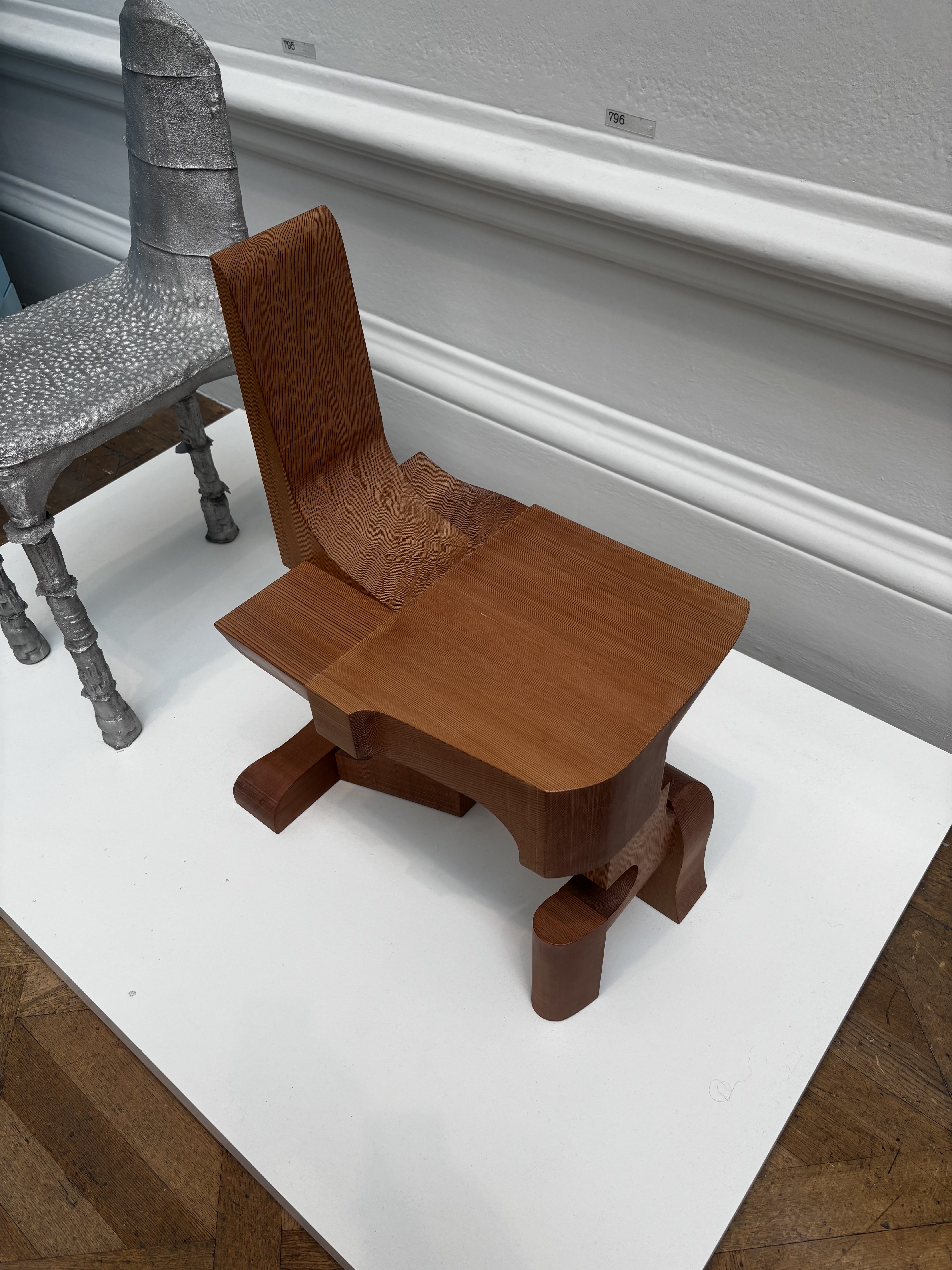
A sculptural wooden form resembling a twisted, curved chair in warm brown wood, standing on a plinth beside a rough-textured silver-toned sculpture, catalogue label 796 visible on the wall.
No. 796. A carved, curving form in warm-toned wood, twisting a chair into something closer to a body mid-turn.
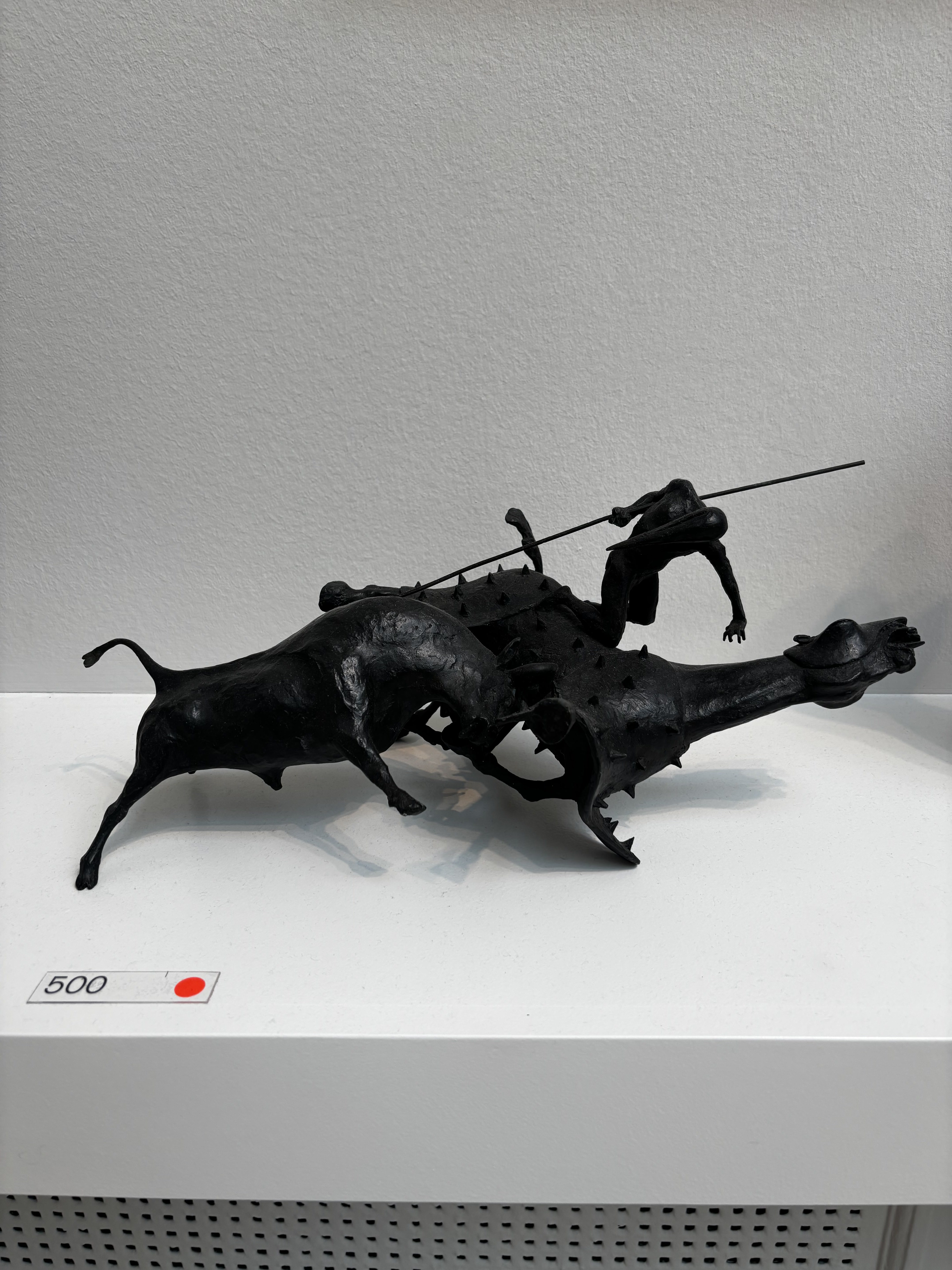
A dark-patina sculpture depicting a hooded rider gripping a long lance, astride a thorn-covered creature with the body of a horse or bull and a jagged open mouth, catalogue label 500 visible on the plinth below.
No. 500. One of 000's two favourite sculptures in the show: a hooded rider with a full-length lance, astride a thorn-covered, part-horse, part-bull creature.
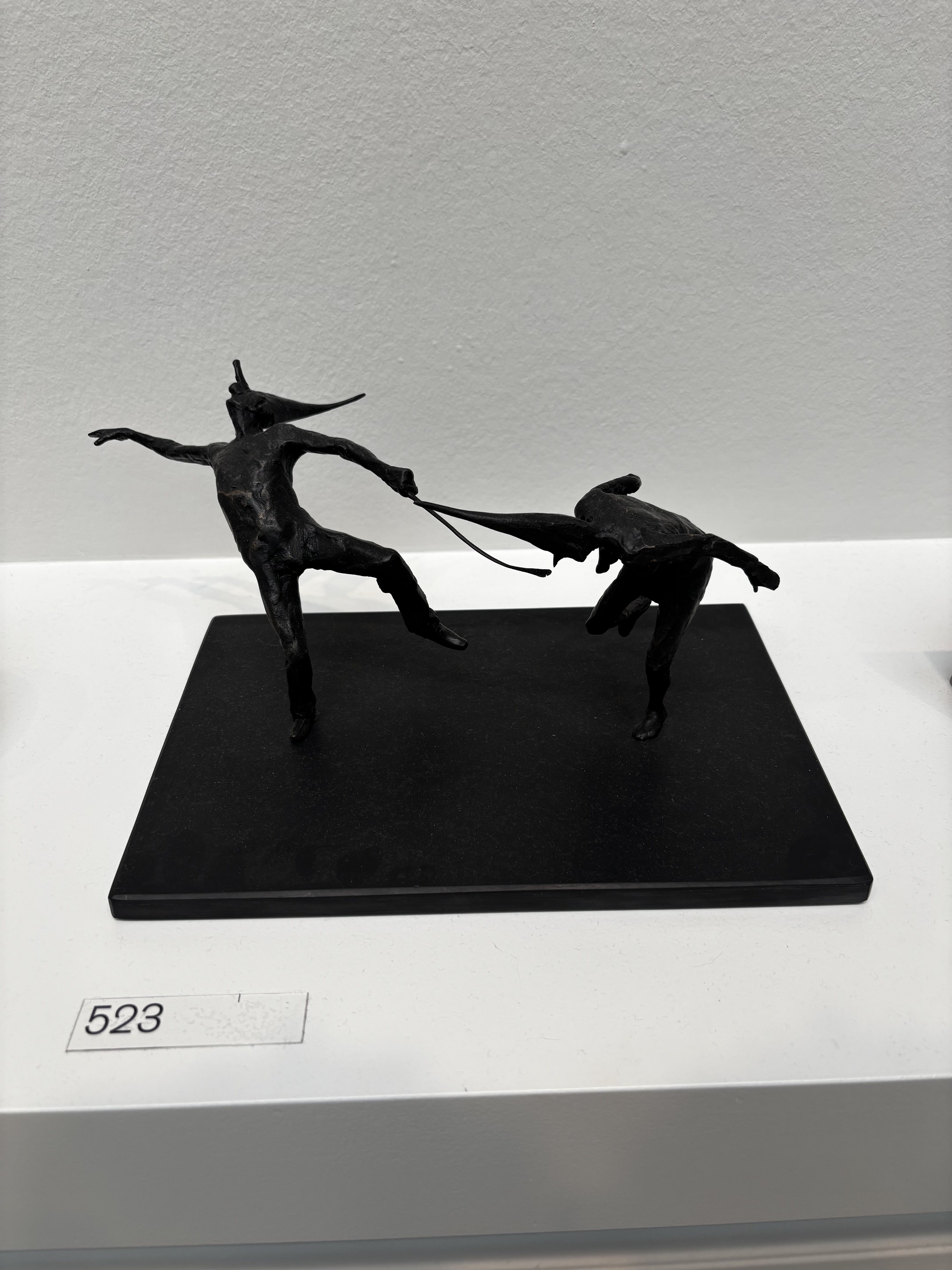
A dark-patina sculpture of two hooded, harlequin-featured figures leaping on a black rectangular base, connected to each other by a thin cord held in their hands, catalogue label 523 visible beside it.
No. 523. 000's other favourite: two hooded, harlequin-featured figures caught mid-leap, tethered to each other by a cord.
A geometric painting made up of small textured tile-like squares in salmon red, light blue, orange and dusty mauve forming an abstract standing figure, catalogue label 473 visible beside it.
No. 473. A standing figure built entirely from small painted tiles in red, powder-blue and burnt orange, by the same hand as no. 259.
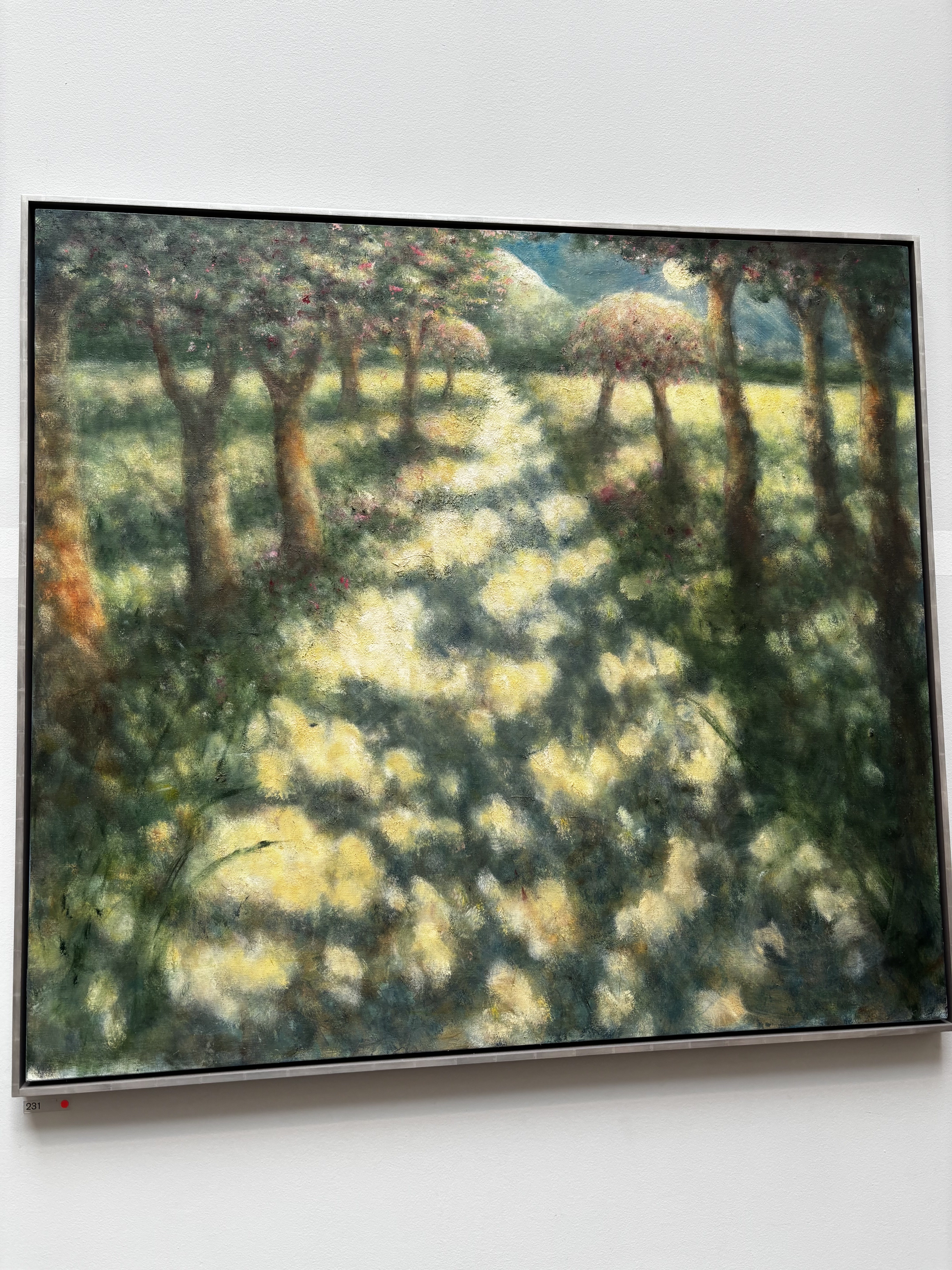
A large impressionistic painting of dappled light through blossoming trees in yellow-white and green tones, with pink flowers at the lower edge, catalogue label 231 visible at the bottom right.
No. 231. A wall of dappled yellow-white blossom and green shadow.
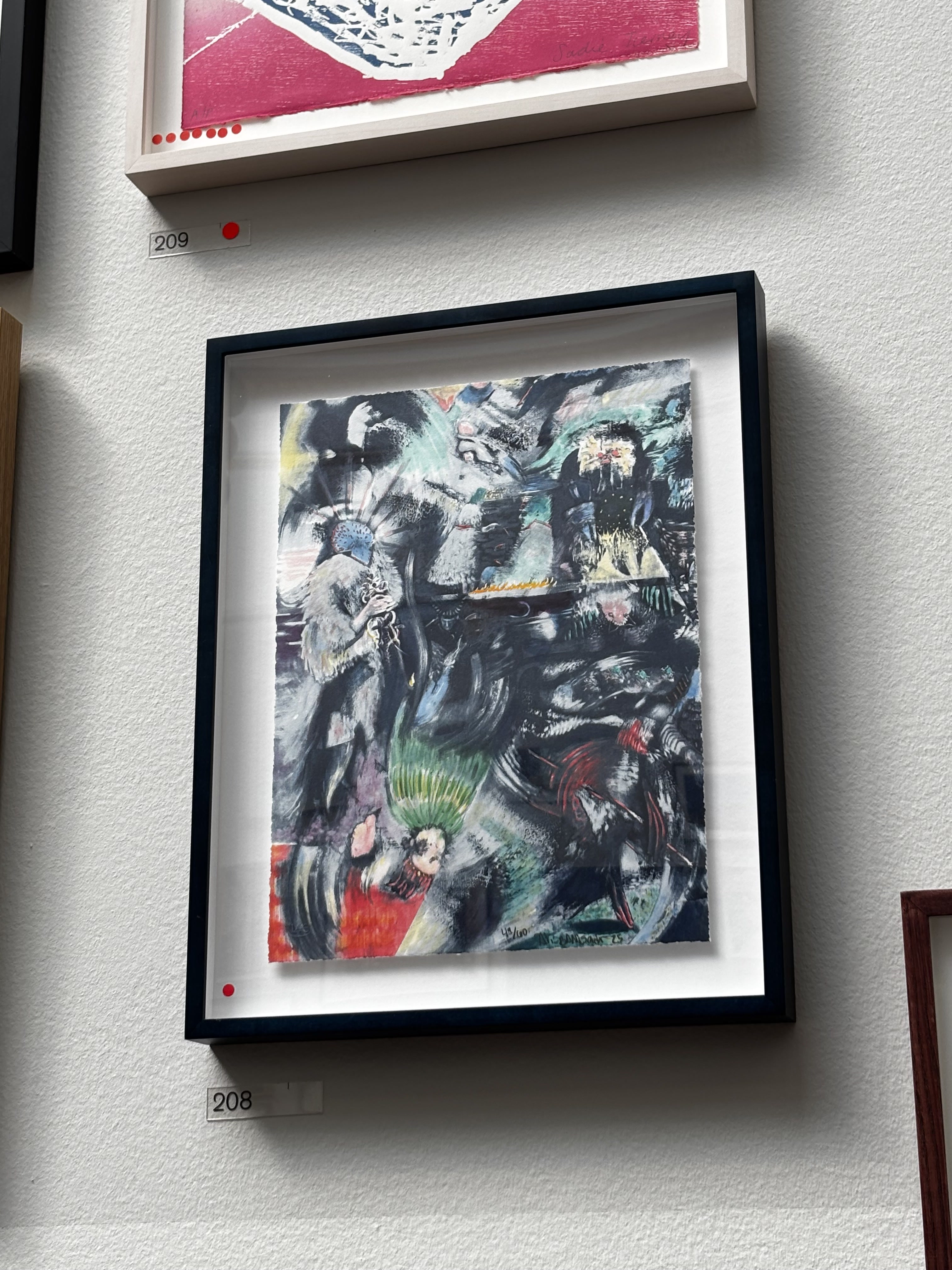
A dark, brushy mixed-media work on paper with mostly black and grey gestural marks and one passage of green and red colour, catalogue label 209 visible beside it.
No. 209. A dark, brushy work on paper with one unexpected passage of colour breaking through.
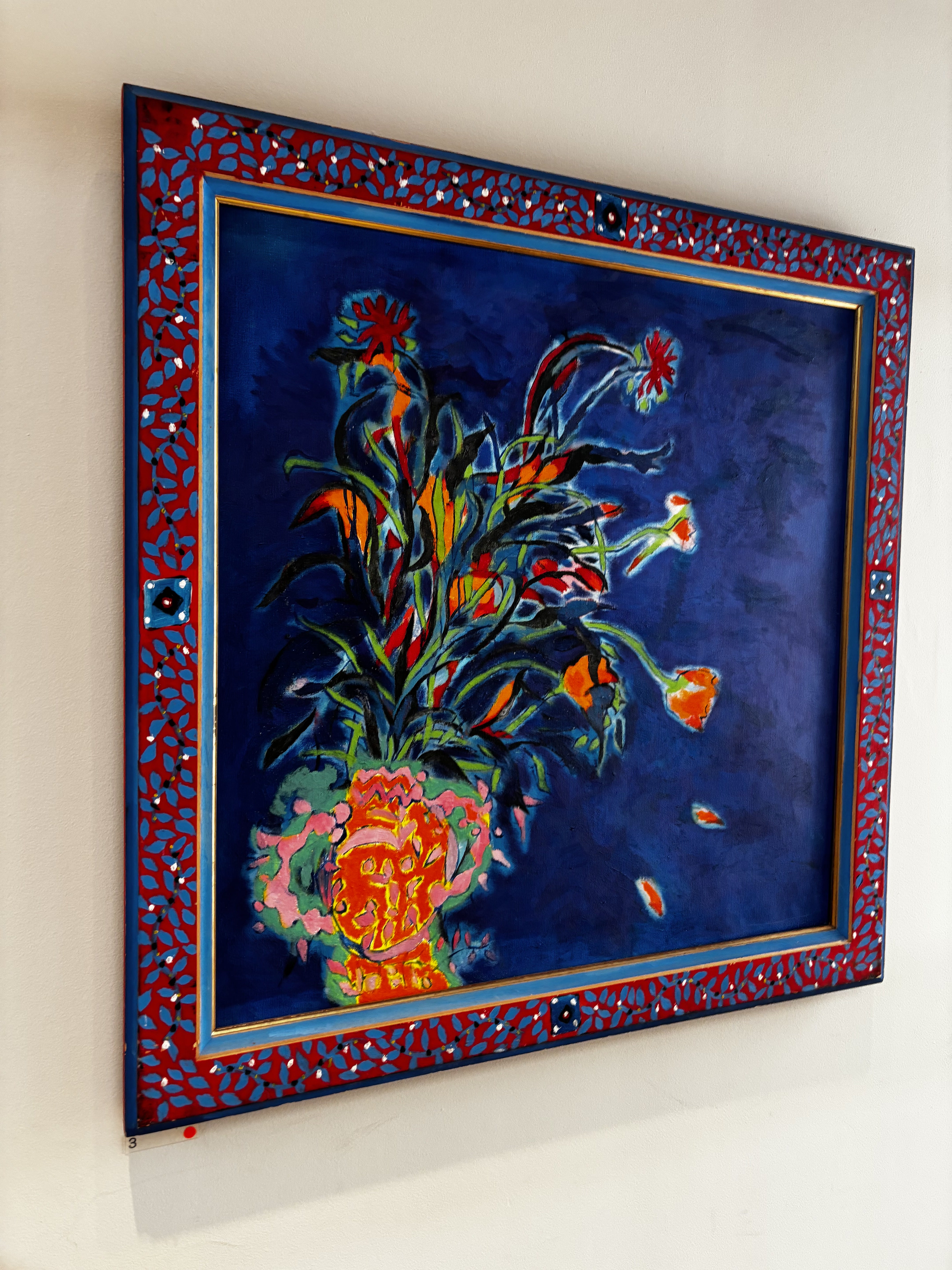
A small painting of orange and red flowers on a deep blue ground, set in an elaborately hand-painted frame decorated with a red and blue leaf pattern and small inset tiles, catalogue label 3 visible at the lower right.
No. 3. A small blue-ground floral painting, hand-painted in a dense red-and-blue leaf pattern with small inset tiles.

Sculpture closed on a different note, and two pieces near each other were the ones 000 kept coming back to. A carved, curving form in warm-toned wood (no. 796) twisted a chair, back, seat, leg, into something closer to a body mid-turn. No. 500 miniaturises and darkens the old equestrian-monument tradition, the mounted rider on a plinth running from Marcus Aurelius to every condottiere statue since, into a nightmare version of itself: a hooded rider grips a full-length lance astride a thorn-covered, part-horse, part-bull creature baring a jagged, open mouth, less a portrait of triumph than of a fight neither side is winning yet. No. 523 answers with a quieter violence: two hooded, harlequin-featured figures mid-leap on a single black base, tethered to each other by a thin cord, neither figure's motion complete without the other's. Together they stage, in dark-patina metal, the argument Interconnectedness otherwise only asserts in wall text, one figure locked in contest with an animal, another pair locked to each other by a visible line, closer to Rosalind Krauss's sculpture in the expanded field than to either tradition alone. One last piece stayed with 000 for a different reason: no. 3, a small blue-ground floral canvas whose real event was its frame, hand-painted in a dense red-and-blue leaf pattern with small inset tiles, doing more work than the painting it enclosed, arguing the old Pattern and Decoration case that ornament is a structure in its own right, not painting's lesser cousin. Fifteen works, almost none in conversation on purpose, Gander's theme sitting over the top regardless. If they cohere at all, the connection is supplied by whoever is walking the floorplan, at the reading end, not the painting end.

Responses.

Join for free to respond.

By joining you confirm you are 13 or over.

Privacy · Terms

Continue reading.

A ↺ A

Reading offline. Pages you have opened are still here.