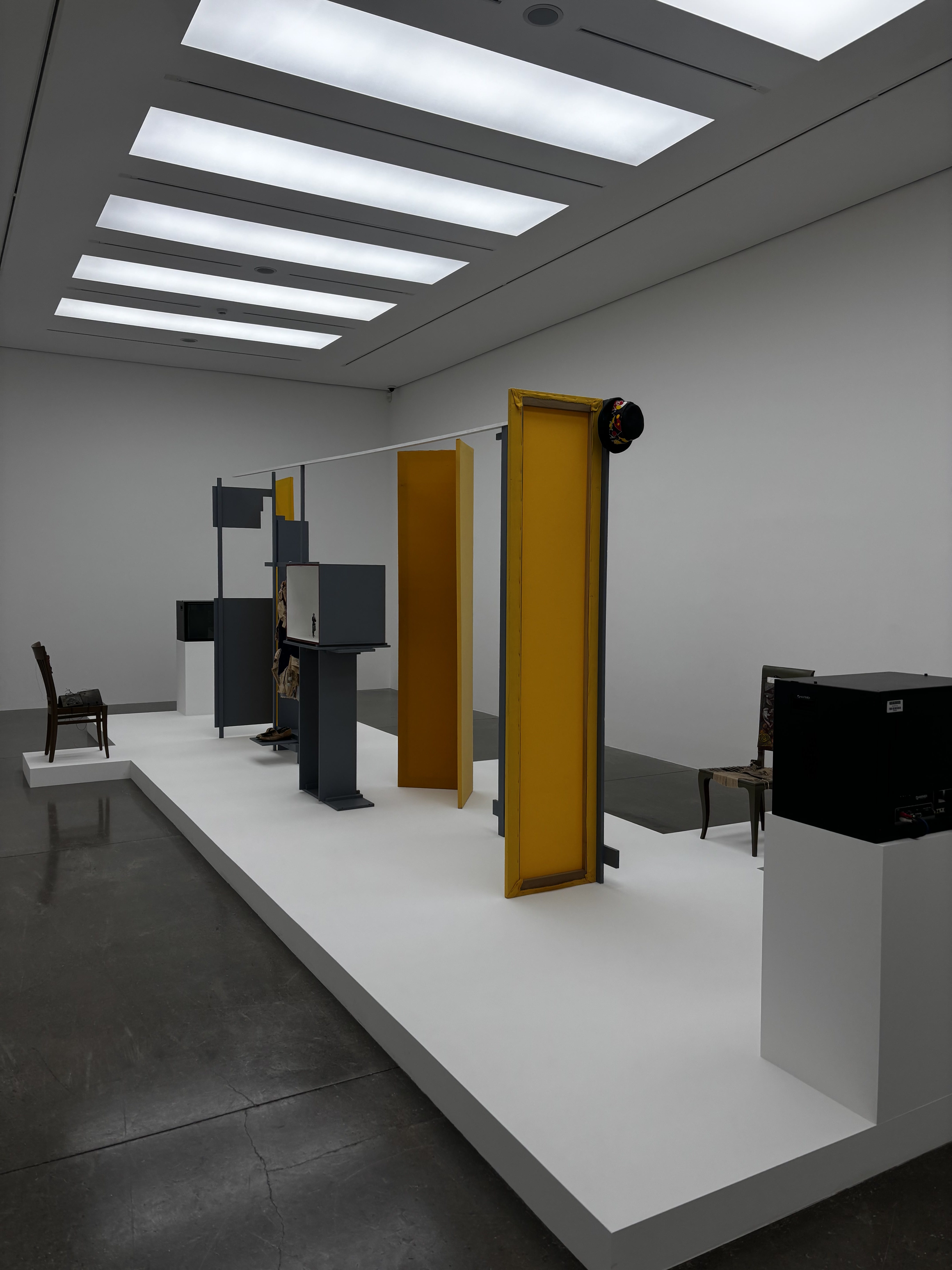
We spend most of our lives performing. At work, at dinner, even alone with a phone, some version of us is always slightly on, arranging itself for an audience that may or may not exist. What we rarely get to see, and what we quietly long for, is the version of a life that happens backstage: the rehearsal, the half-finished thought, the moment before the curtain that nobody was meant to watch.
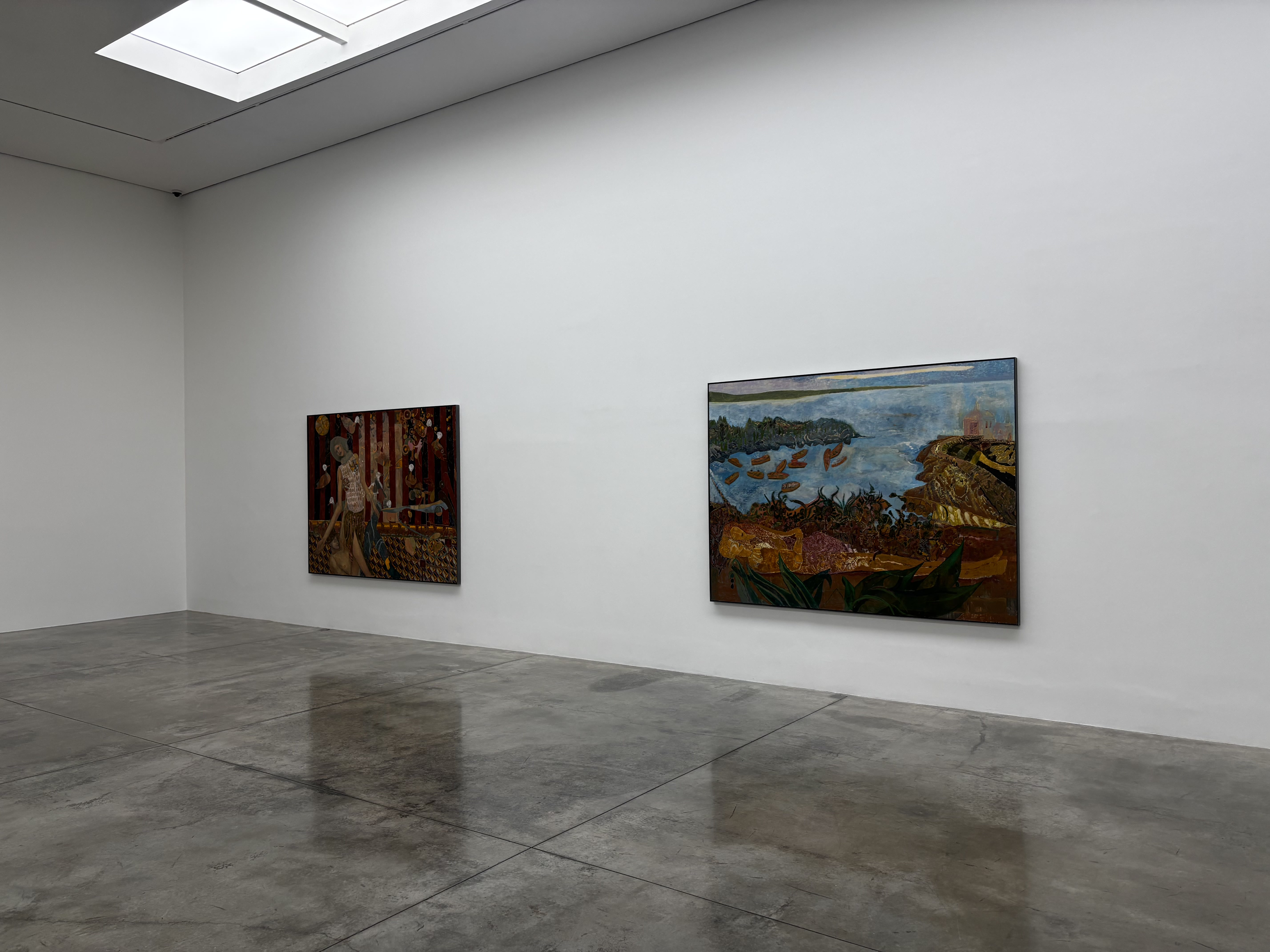
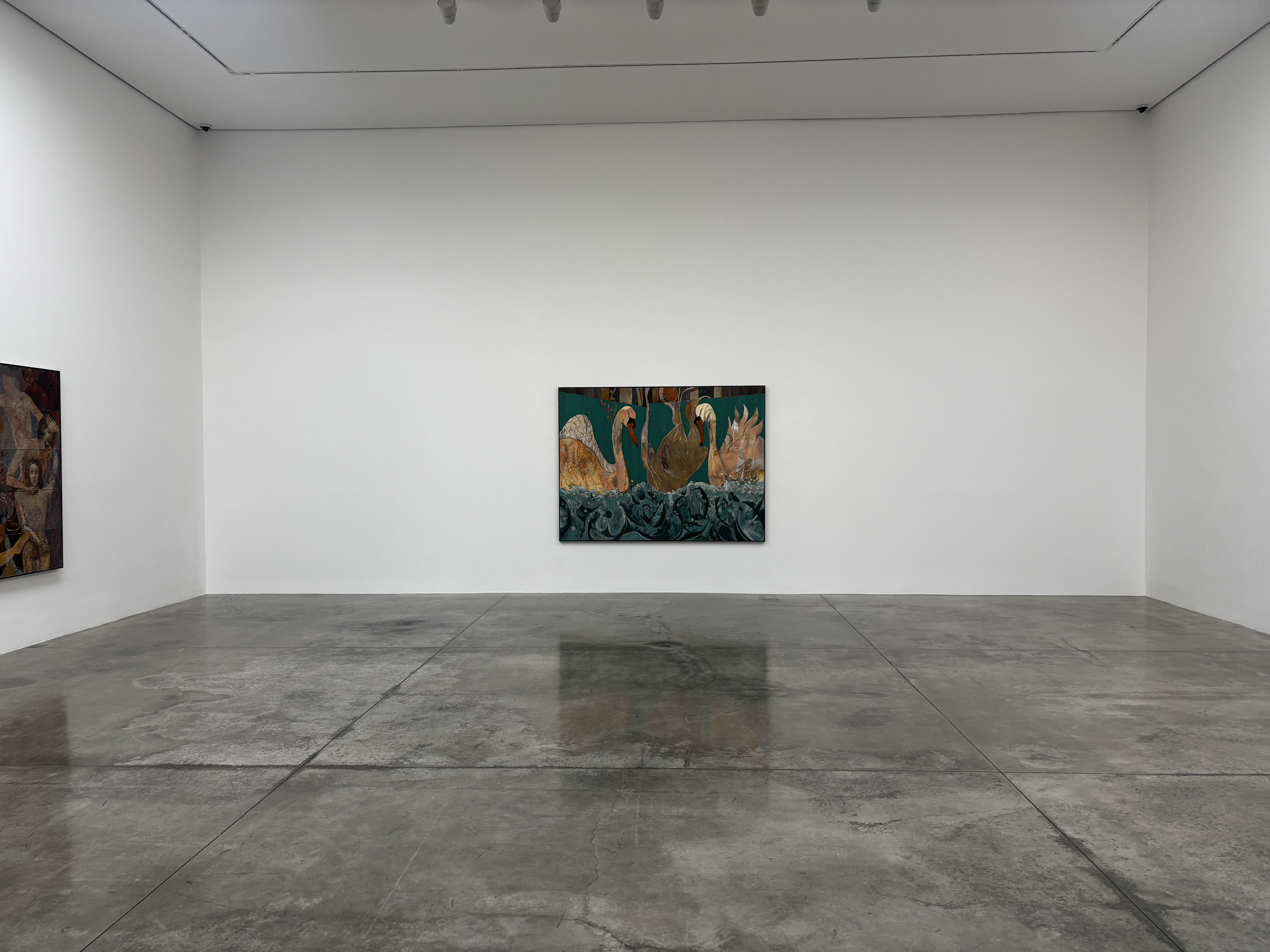
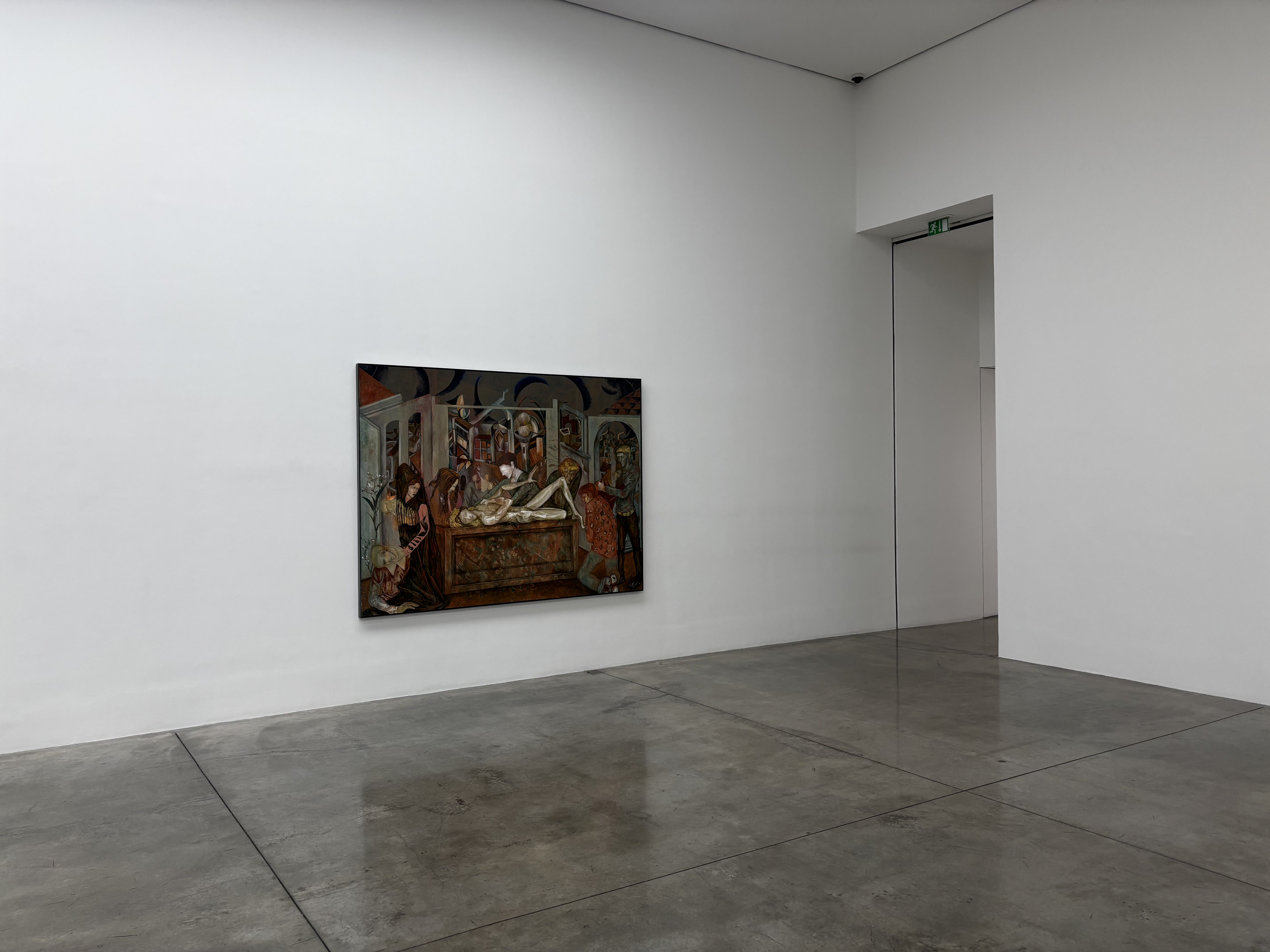
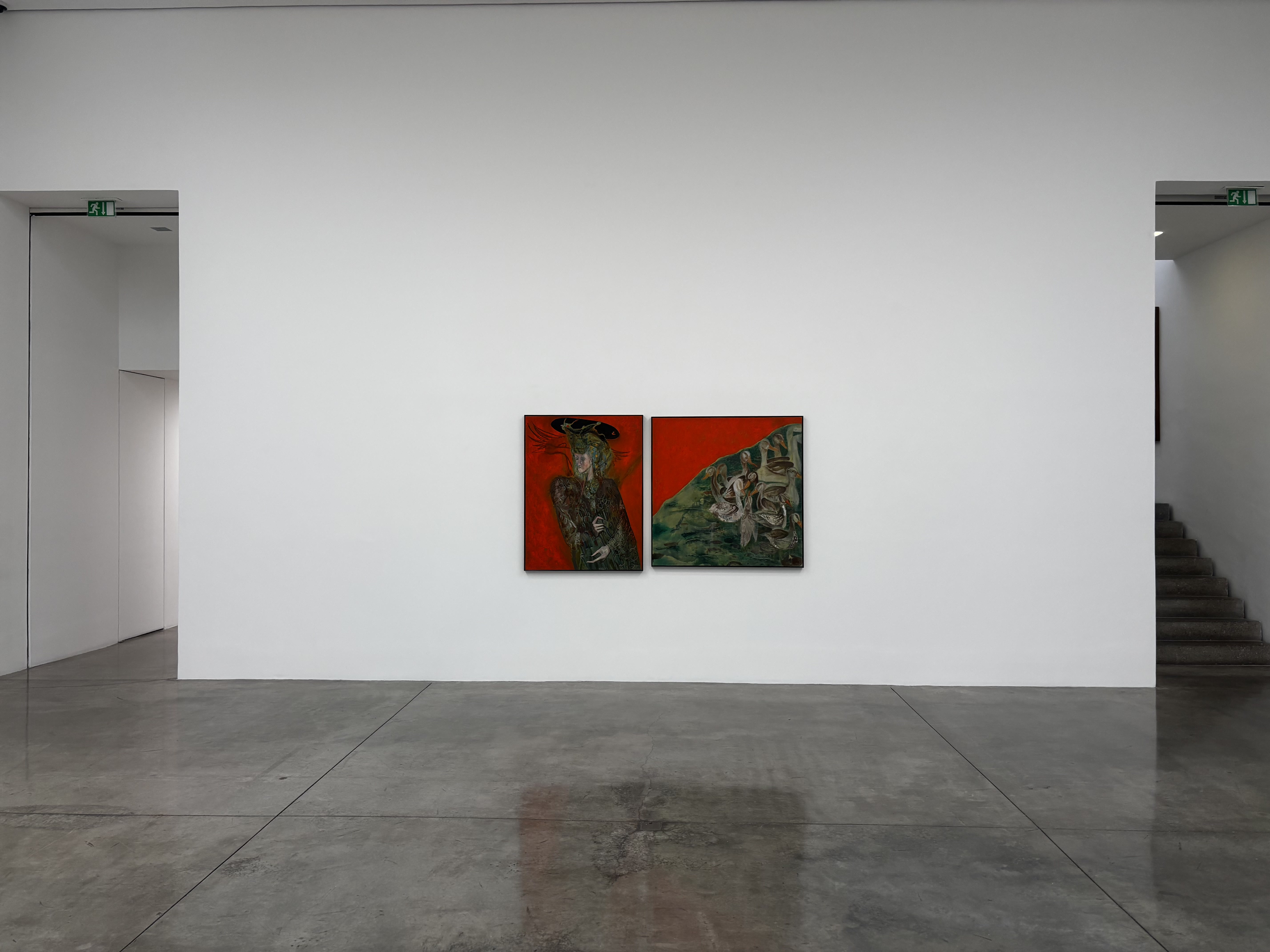
TARWUK's Mit dem Frosch zu schmusen, ist es unmöglich, at White Cube Mason's Yard from 9 July to 15 August, gave the ground floor over to exactly that moment. Standing in the room, what read first wasn't sculpture, it was furniture caught out of use: raked mustard-yellow panels braced at an angle like flats waiting for a scene change, grey block forms doing duty as tables and shelving, a single black hat left resting on a ledge as if someone had only just stepped out of frame. It looked abandoned, but the better word is exposed. Art can do something therapy rooms and self-help books rarely manage, since neither is in the business of leaving things unresolved: it can put us backstage and let us stand there long enough to notice that nothing essential was actually missing. The scaffolding was the point.
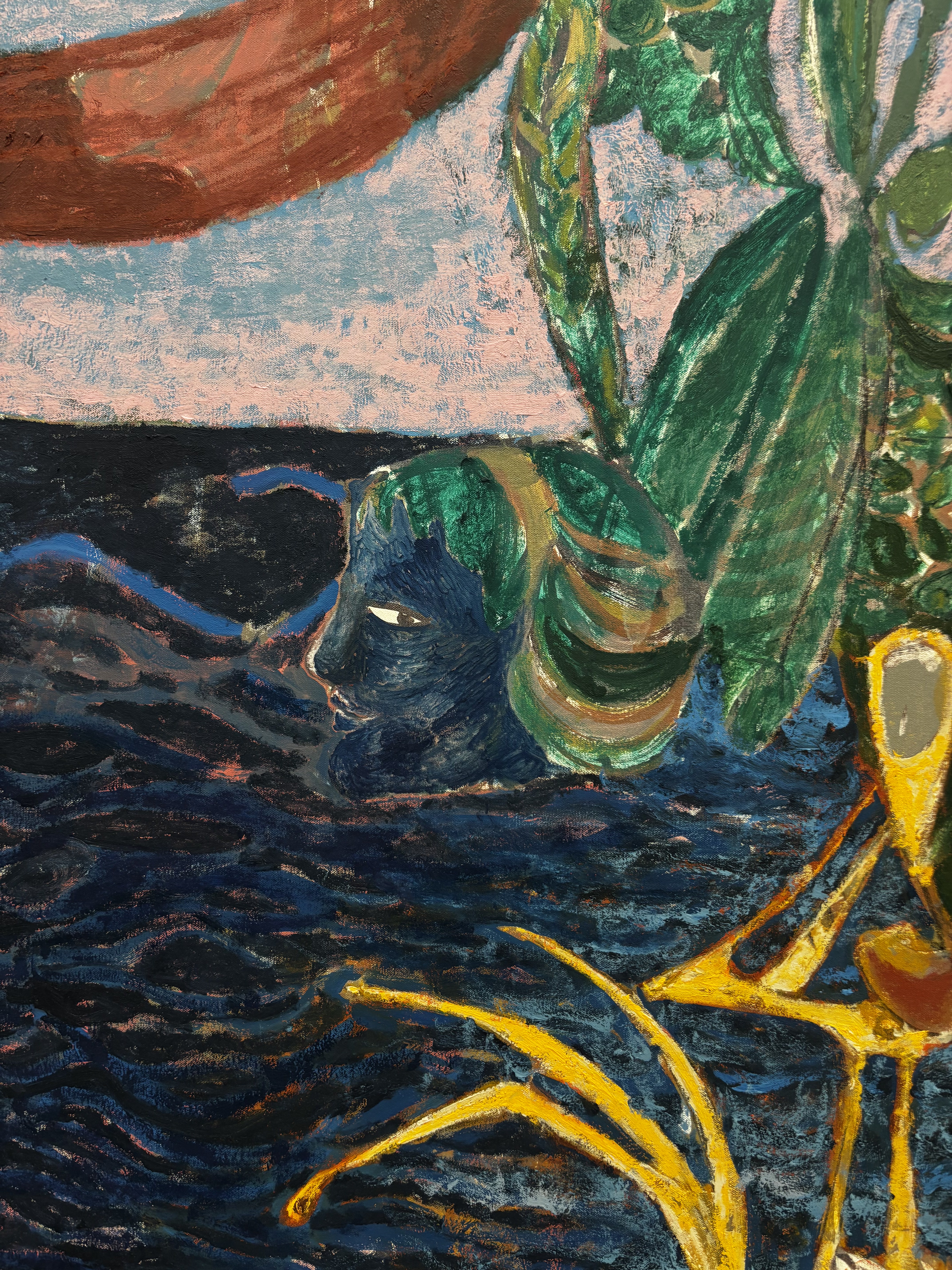
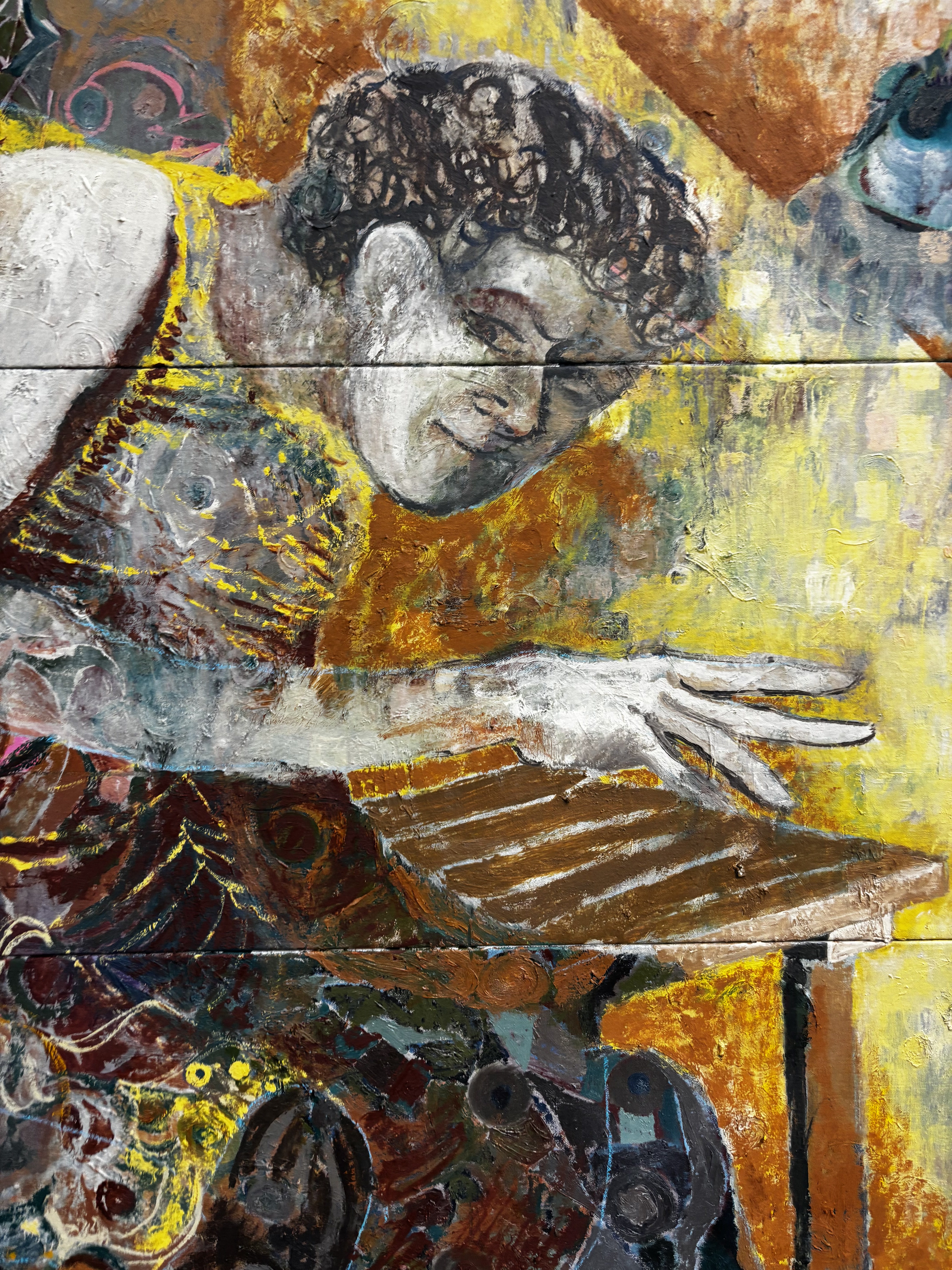
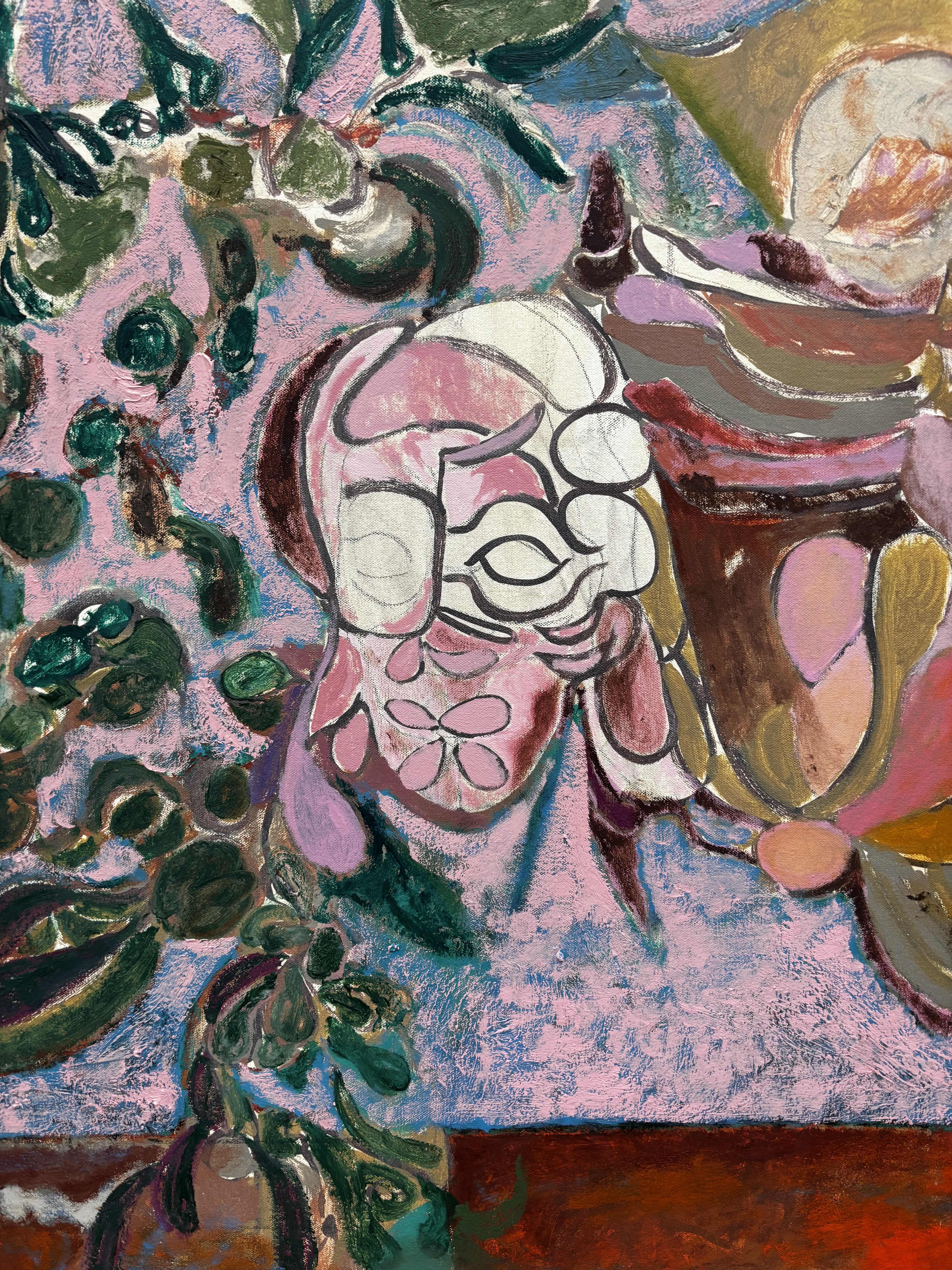
Down a level, the paintings made the opposite argument, and made it with their hands rather than their premise. Up close, they're rougher than they read from across the room: paint built up into ridges thick enough to cast their own shadow in one place, then dragged almost dry and see-through in the next; one canvas turned out to be several joined wooden panels, the seams left showing rather than filled and sanded smooth. We are trained to expect a finished image to hide its own making, the same way we are trained to hide our own effort. These paintings refuse that courtesy. 000's own reading, standing close to one, was less like reading an image than catching someone mid-sentence, and there is a real relief in that: proof that the unfinished, the seamed, the still-working-on-it can be hung on a wall and called whole.
Bruno Pogačnik Tremow and Ivana Vukšić have worked this way since 2014, describing what they do less as a partnership than as a single shared condition: process over product, relation over any one signed name. It's worth sitting with why that idea felt consoling rather than merely conceptual, standing in the room. Most of us are quietly exhausted by the demand to be one continuous, authored self. TARWUK's answer, backed by Ana Teixeira Pinto's accompanying essay, is that identity was never required to hold that still. 000 left thinking about the hat on the ledge, still there, waiting for whoever it belonged to, in no particular hurry to be picked back up.
Responses.
Received. Thank you.