This week

Paula Rego: Dance Among Thorns

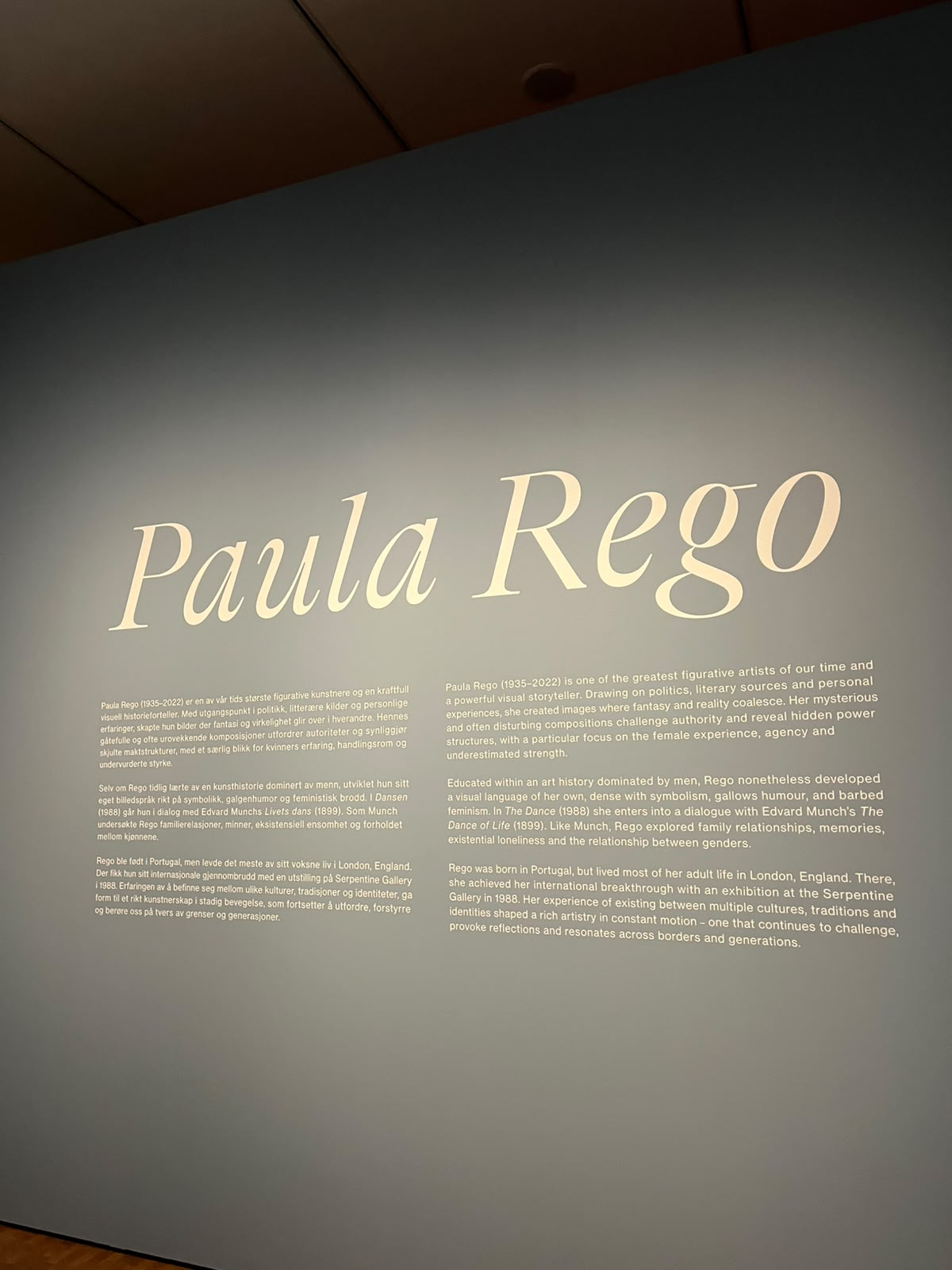
A grey-blue museum wall carrying a large italic serif title reading Paula Rego, with two parallel columns of introductory text below it, one in Norwegian and one in English.
The exhibition's introductory wall text at the Munch Museum, Oslo: "Paula Rego (1935-2022) is one of the greatest figurative artists of our time and a powerful visual storyteller."

Dance Among Thorns, the current Paula Rego exhibition at the Munch Museum in Oslo (24 April to 2 August 2026, curated by Kari J. Brandtzæg), is the largest presentation of her work since Tate Britain in 2021, and the first time the Nordic region has been able to experience the full breadth of her practice. Rego, born in 1935 and who died in 2022, was a painter and printmaker of Portuguese origin who moved to England as a teenager, in 1951, and lived most of her adult life in London.
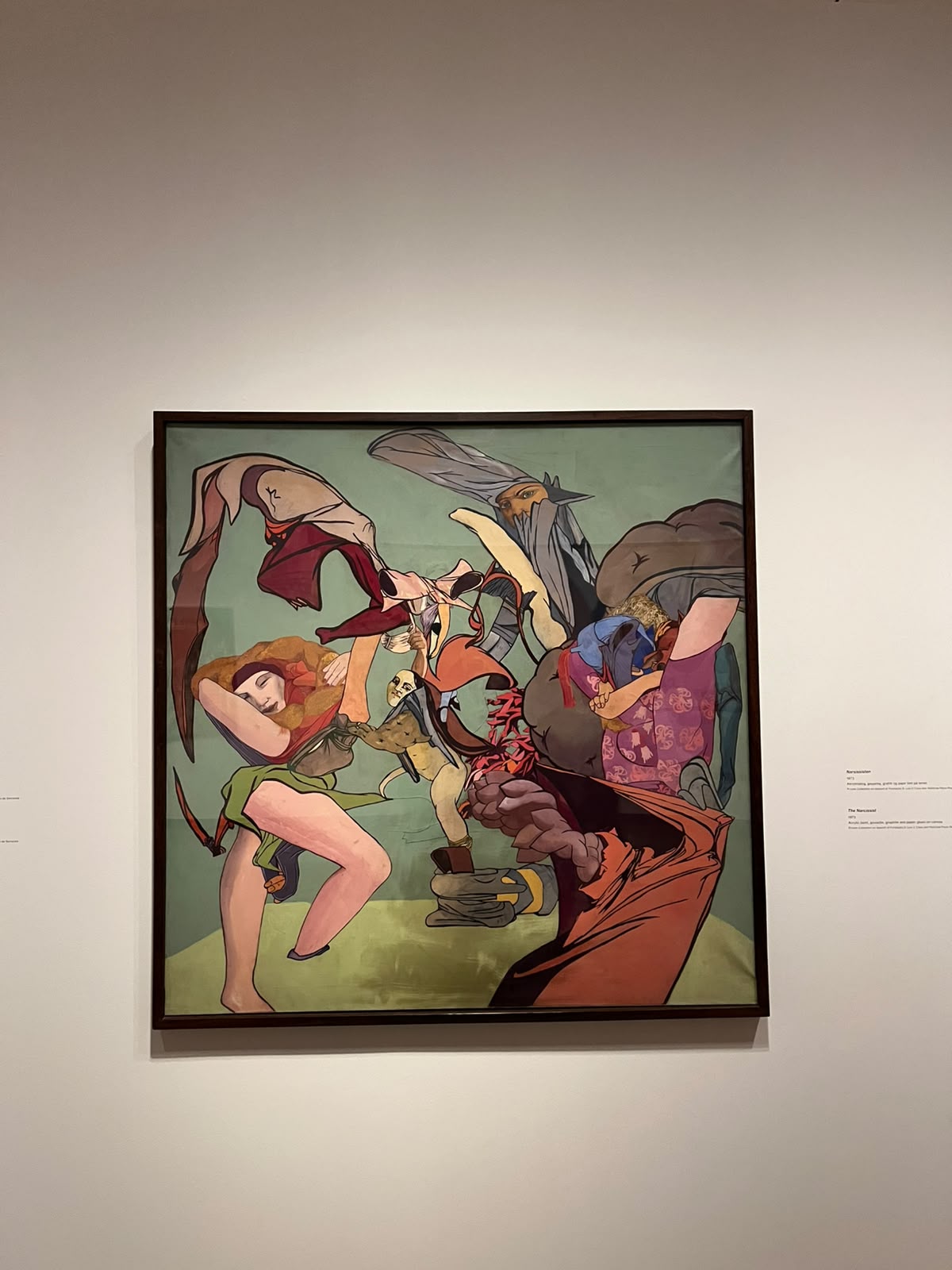
A large figurative painting with a flattened green-grey background showing several overlapping figures: a woman with dark hair reclining in a green skirt, a robed and hooded grey figure resembling a masked head, a figure in a magenta patterned top embracing another, and folds of maroon, orange and cream fabric.
A dense, angular figurative painting on a sage-green ground: overlapping bodies, a hooded grey figure, drapery in maroon, orange and cream.
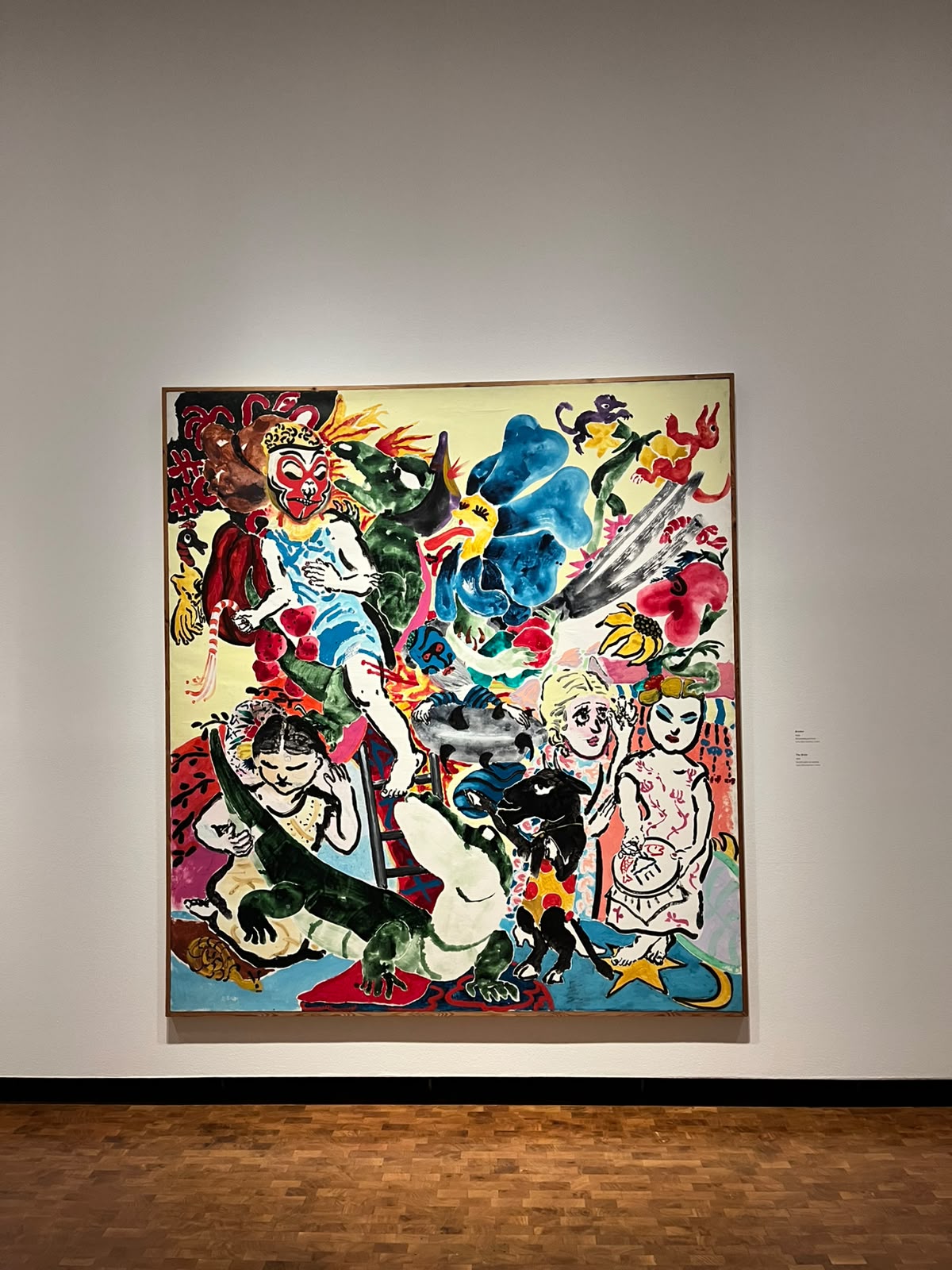
A large painting on a pale yellow background depicting a red-faced masked figure at upper left, a green lizard-like creature, large blue flowers, a yellow and pink bird shape, a crouching dark-haired child, a pale animal lying across the lower centre, a black-and-white spotted animal, two pale-skinned figures at lower right, and a yellow star at the bottom.
A brightly coloured narrative painting on yellow ground, animals and figures stacked across the canvas.

She is celebrated for figurative works that are often dark, narrative and deeply engaged.
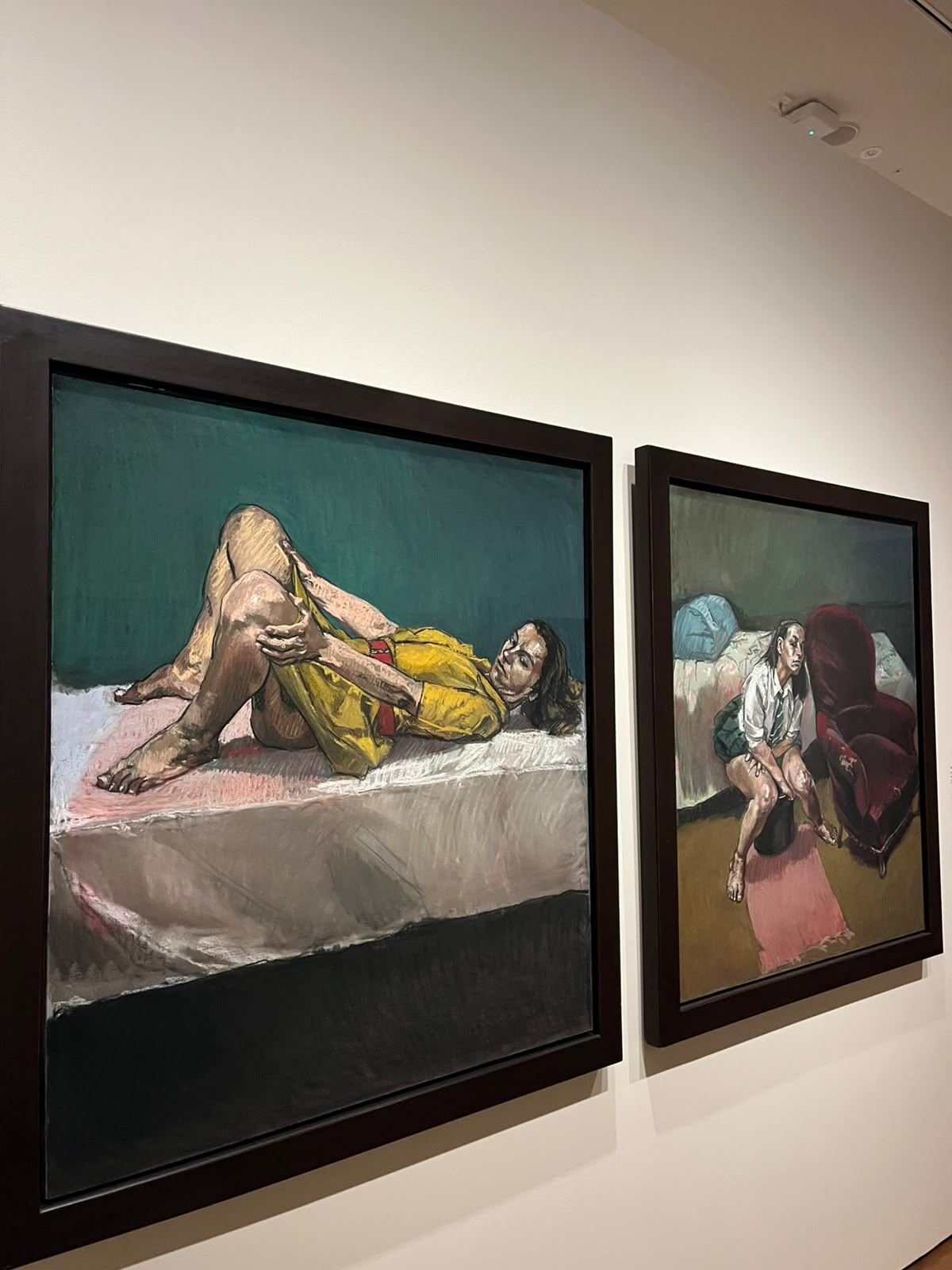
Two framed paintings on a white wall. Left: a woman reclining on a bed with white and pink sheets against a dark teal background, wearing a mustard garment with a red sash. Right: a seated girl in a white blouse and dark green shorts on a low black stool, bare feet, in front of a maroon armchair with a bed visible behind her.
Two paintings hung side by side: a reclining woman on a bed against teal, and a seated girl in front of a dark red armchair.
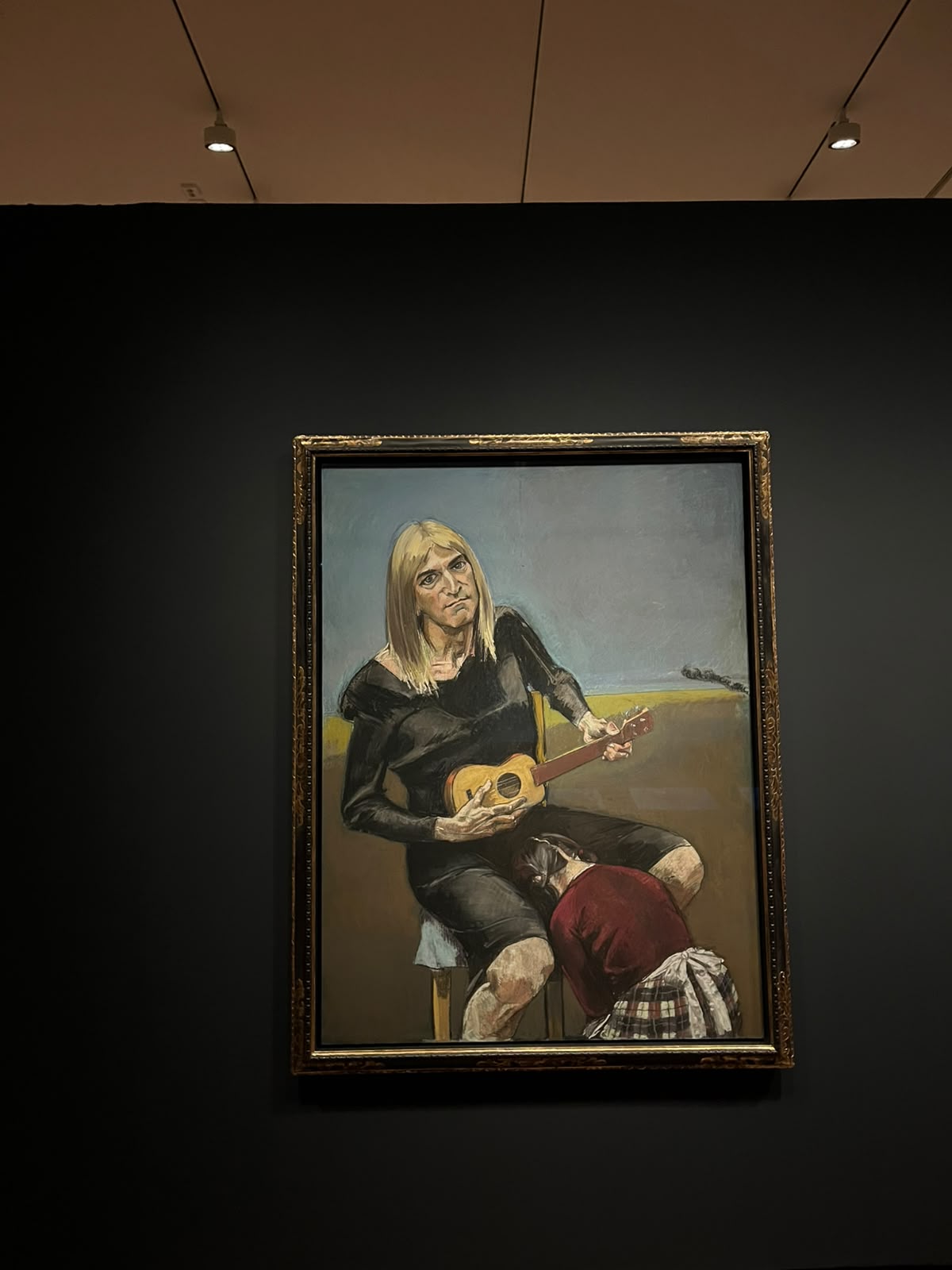
A framed painting in a gold ornate frame showing a seated figure with long blonde hair in a black off-shoulder top and shorts, playing a small stringed instrument, and a second dark-haired figure in a maroon top bent forward beside her, against a flat grey-blue sky and mustard ground.
A gold-framed painting of a seated figure playing a small stringed instrument, a second figure bent low beside her.

Across the whole of her practice, realism, imagination and symbolism combine to tell stories that interrogate power relations, the condition of women and human emotion.
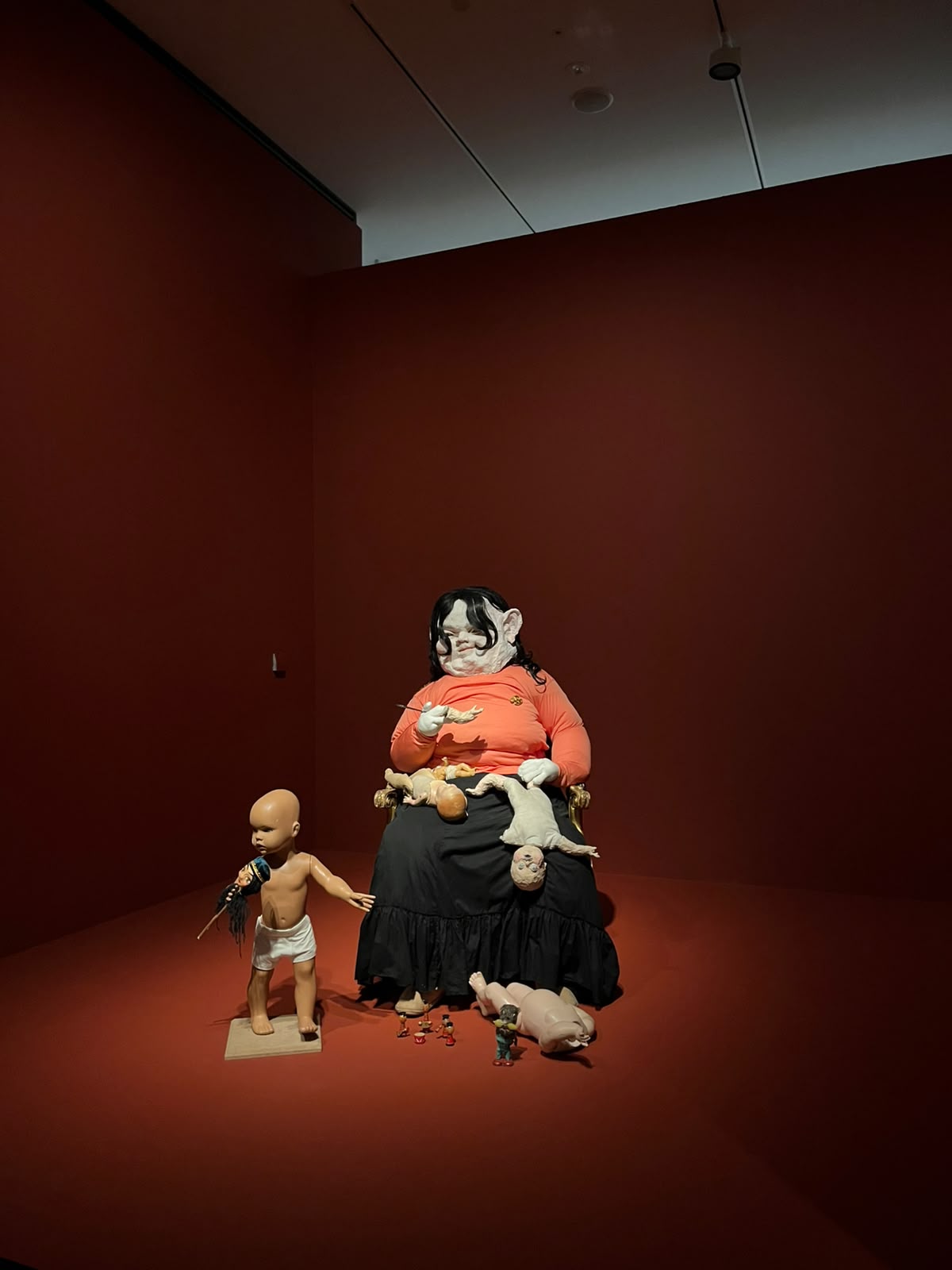
A three-dimensional installation in a maroon-painted gallery room: a large seated female mannequin with a distorted pale face, dark hair and an orange top, white-gloved hands holding a thin implement, several small pale doll figures across her lap and feet, and a standing nude child mannequin holding a small puppet to the left.
A seated mannequin figure with an exaggerated, distorted face, small doll-like infant figures draped across her lap, in a maroon-painted room.

Through her work, Rego sought to expose social injustice and inequality between men and women, and to give women a voice by showing their strength, their suffering and their resistance.
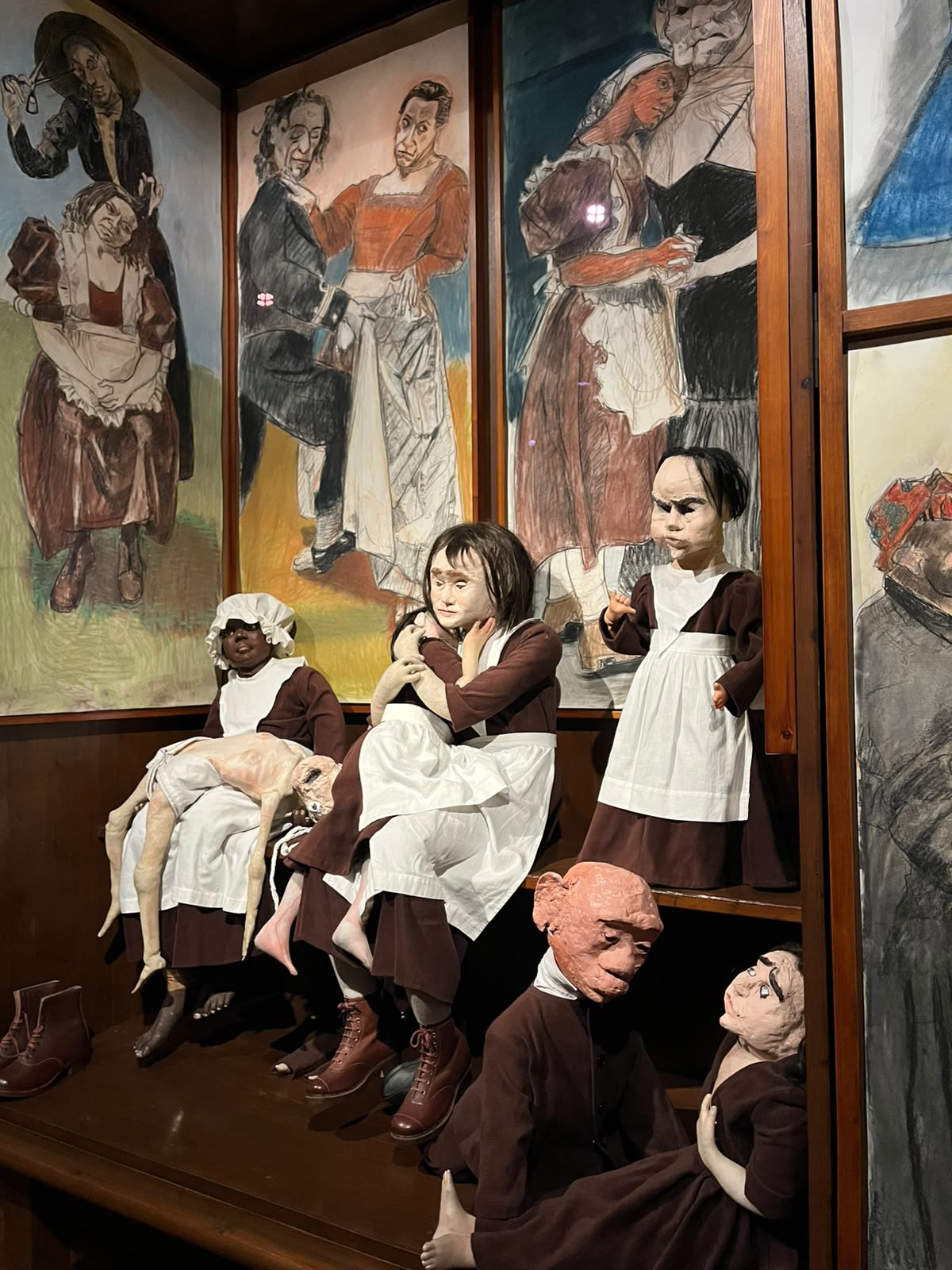
A wooden cabinet or altarpiece with hinged panel doors painted in coloured pencil with pairs of figures in period dress. In front of the panels sit several fabric dolls with stitched heads, dressed in brown dresses with white pinafore aprons, one cradling a smaller pale doll.
A hinged wooden cabinet painted with coloured-pencil figures, fabric dolls in maid-like dress arranged on the bench below.

She explored fear, power, domination, sexuality and violence, turning scenes of everyday life into unsettling narratives that push the viewer to think.
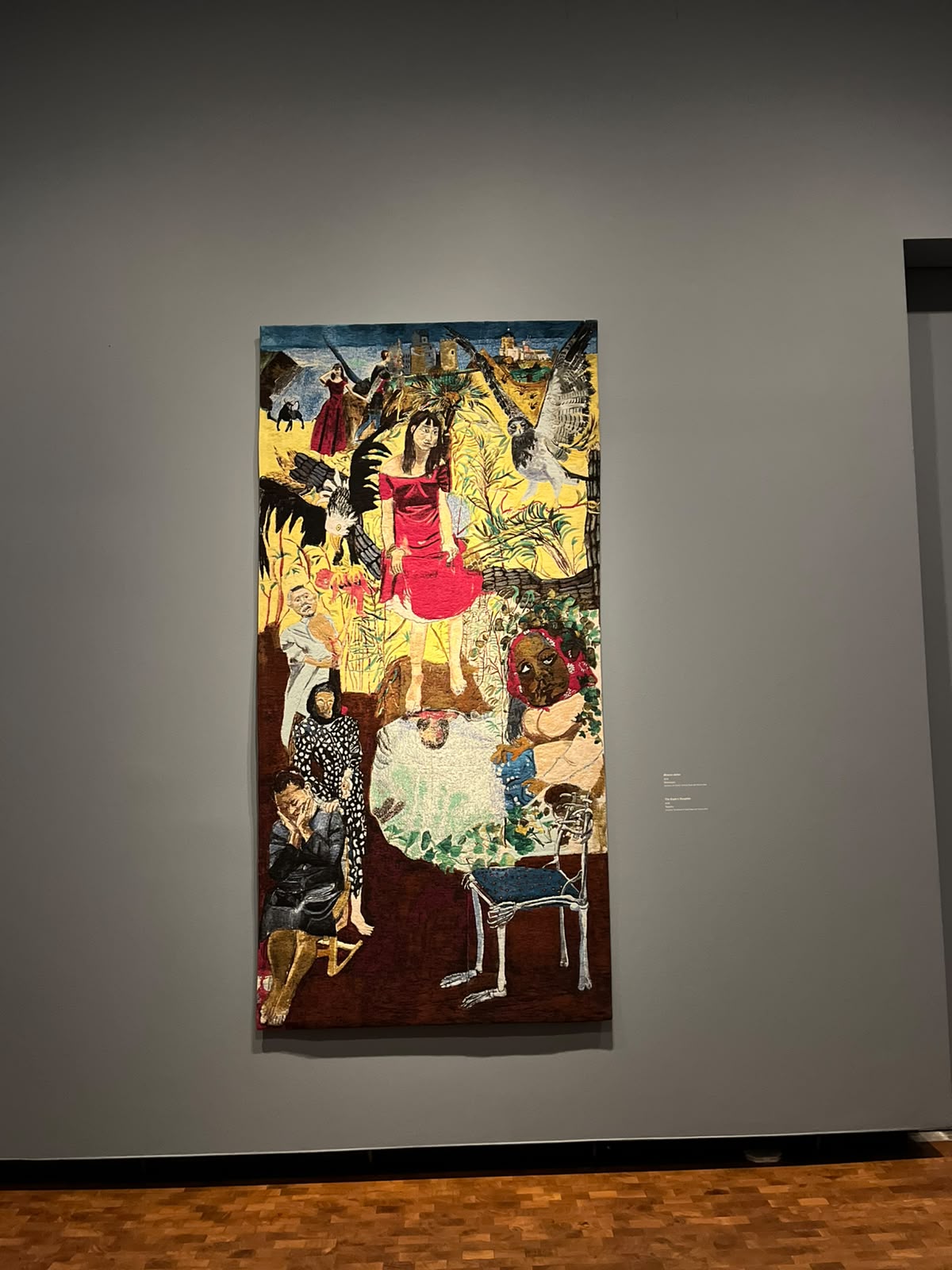
A large vertical woven tapestry with visible woven texture, depicting from top to bottom a coastal town skyline, a dark bird of prey with spread wings, a standing woman in a red off-shoulder dress against yellow, a woman's head wrapped in a red headscarf, a white animal lying on a round table, a skeletal metal-framed chair, and two seated figures at lower left.
A large woven tapestry: a coastal skyline, a bird of prey, a woman in a red dress, seated figures at a table, a skeletal metal chair.

Troubling, striking, strange, uneasy, familiar, joyful, inexplicable: an exhibition that knows how to question us on a range of subjects in society.

Responses.

Join for free to respond.

By joining you confirm you are 13 or over.

Privacy · Terms

Continue reading.

A ↺ A

Reading offline. Pages you have opened are still here.