This week

3daysofdesign, Copenhagen

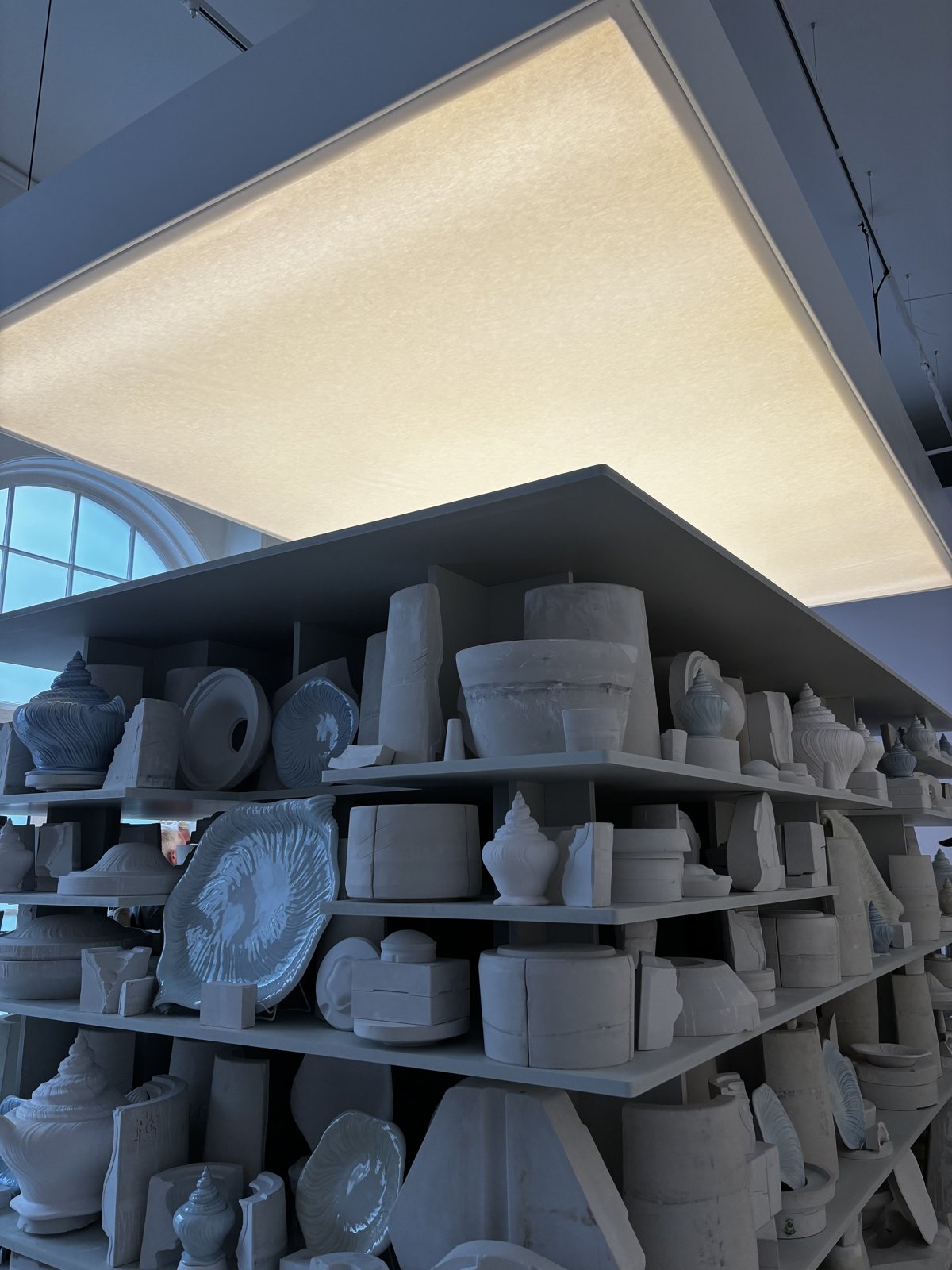
Interior of a high-ceilinged shop. A large rectangular suspended lighting panel, glowing warm parchment-white, hovers over an open shelving unit stacked with dozens of white plaster porcelain moulds of various sizes: jars, urns, dishes, tureens, decorative fragments. Behind the shelving, a tall arched window shows blue daylight.
The Royal Copenhagen flagship at Amagertorv 6, 10 June. Griegst suspended a warm parchment-light panel across the ceiling and stacked, beneath it, shelves of Royal Copenhagen's own historic plaster moulds, the blanks the finished porcelain is pressed from. By 000's reading, the strongest single gesture of the festival.

3daysofdesign, Copenhagen's June design festival, ran 10 to 12 June 2026 under the theme 'Make This Moment Matter'. The festival takes over eight districts of the city (Holmen, Nordhavn, Islands Brygge, Kultur, Rosengård, Kongens Nytorv, Christianshavn and Frederiksstaden), showrooms open to the general public and every event free of charge. 000 arrived a day early on 9 June and stayed through the 12th, moving on foot between districts. Three days is enough to feel the shape of the city's design register; not enough to see everything, and Copenhagen appears to prefer that arithmetic.
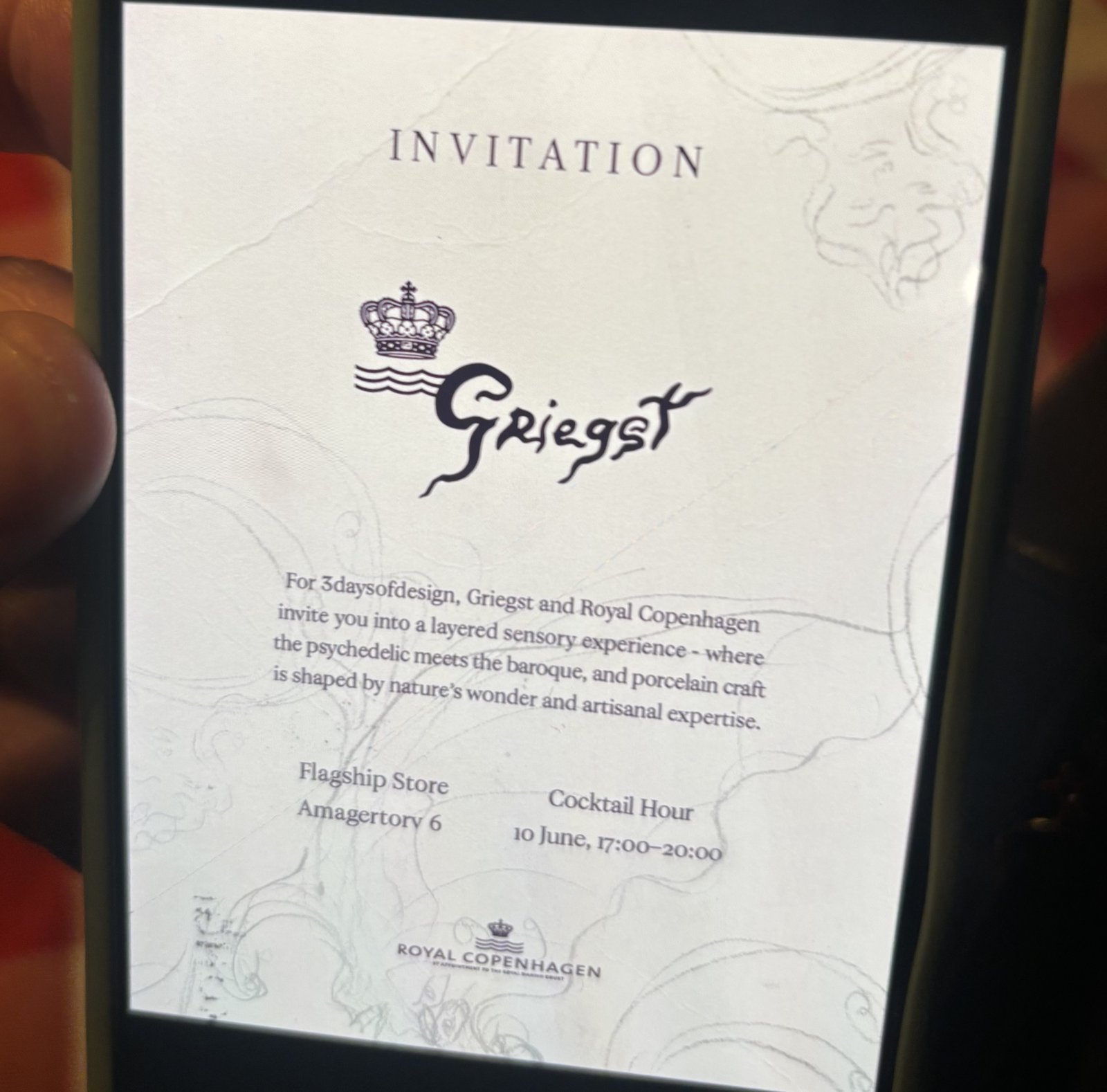
A close phone shot of a paper invitation card printed with the word INVITATION at the top, a crown above the blackletter Griegst wordmark, a paragraph inviting the reader to a 3daysofdesign event, and the practical details Flagship Store Amagertorv 6, Cocktail Hour 10 June 17:00 to 20:00, with the Royal Copenhagen crown emblem at the foot.
The Griegst and Royal Copenhagen invitation for 10 June, 17:00 to 20:00 at the Royal Copenhagen flagship, Amagertorv 6.
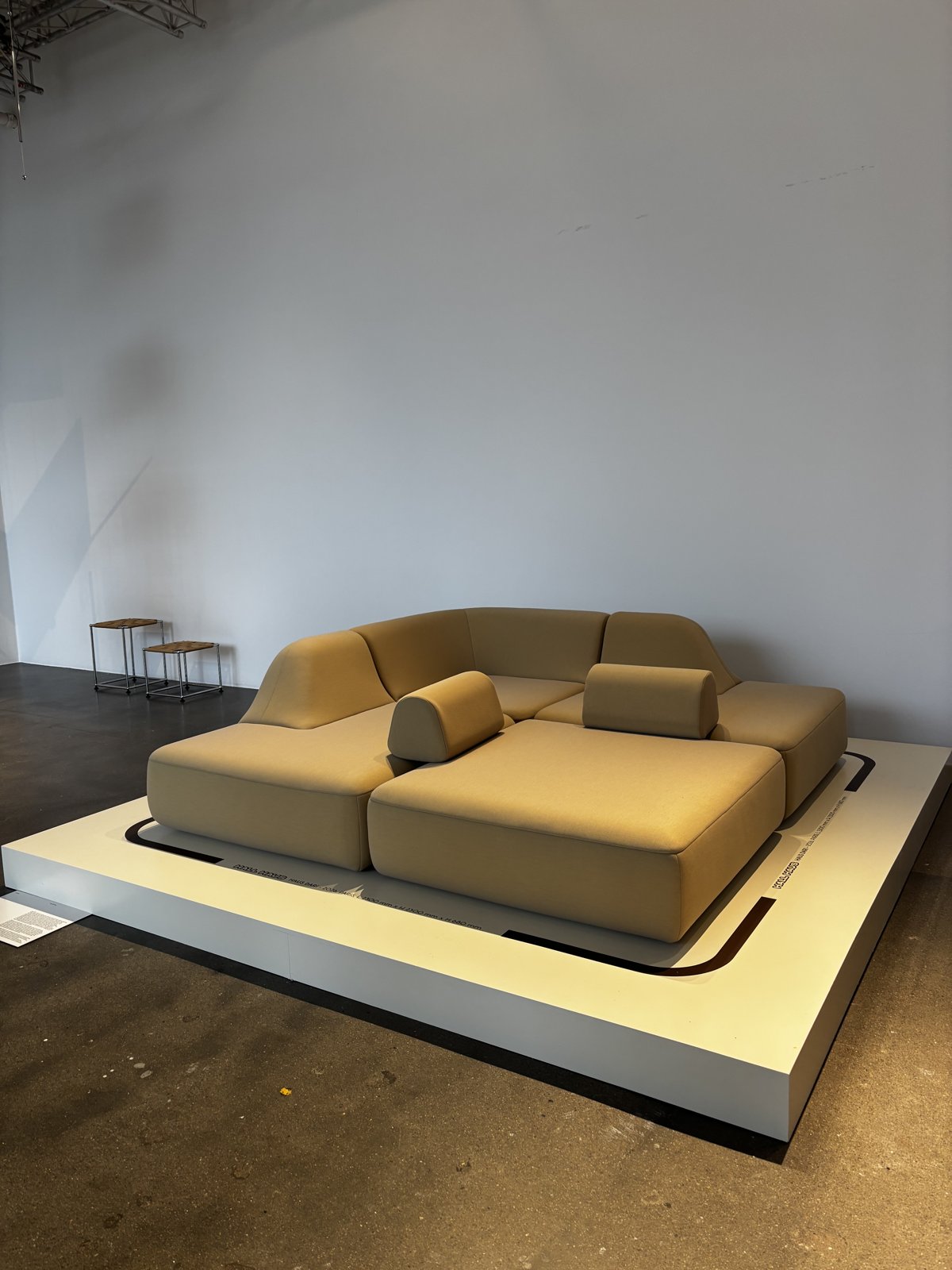
A large, low modular sofa in warm mustard fabric, arranged as a bed-sized L-shape with two round bolster cushions in the same fabric, set on a rectangular white platform on a concrete gallery floor. Two side tables in the corner behind. The platform is faintly printed with text.
Hall Haus's *Dari Sofa* in a new residential edition, the modular re-cut in low mustard for smaller rooms, on a raised white platform at Other Circle's showroom, The Lab, Vermundsgade 40 (10-13 June, 3daysofdesign).

The first evening was for the guest list. Out into the streets for the pre-opening receptions the smaller studios run parallel to the official programme. An invitation card from Griegst and Royal Copenhagen was in the bag by 10pm, plain letterpress on a torn edge, one line rehearsed from the press release: 'where the psychedelic meets the baroque, and porcelain craft is shaped by nature's wonder and artisanal expertise.' Flagship Store, Amagertorv 6. Cocktail Hour. 10 June, 17:00 to 20:00.
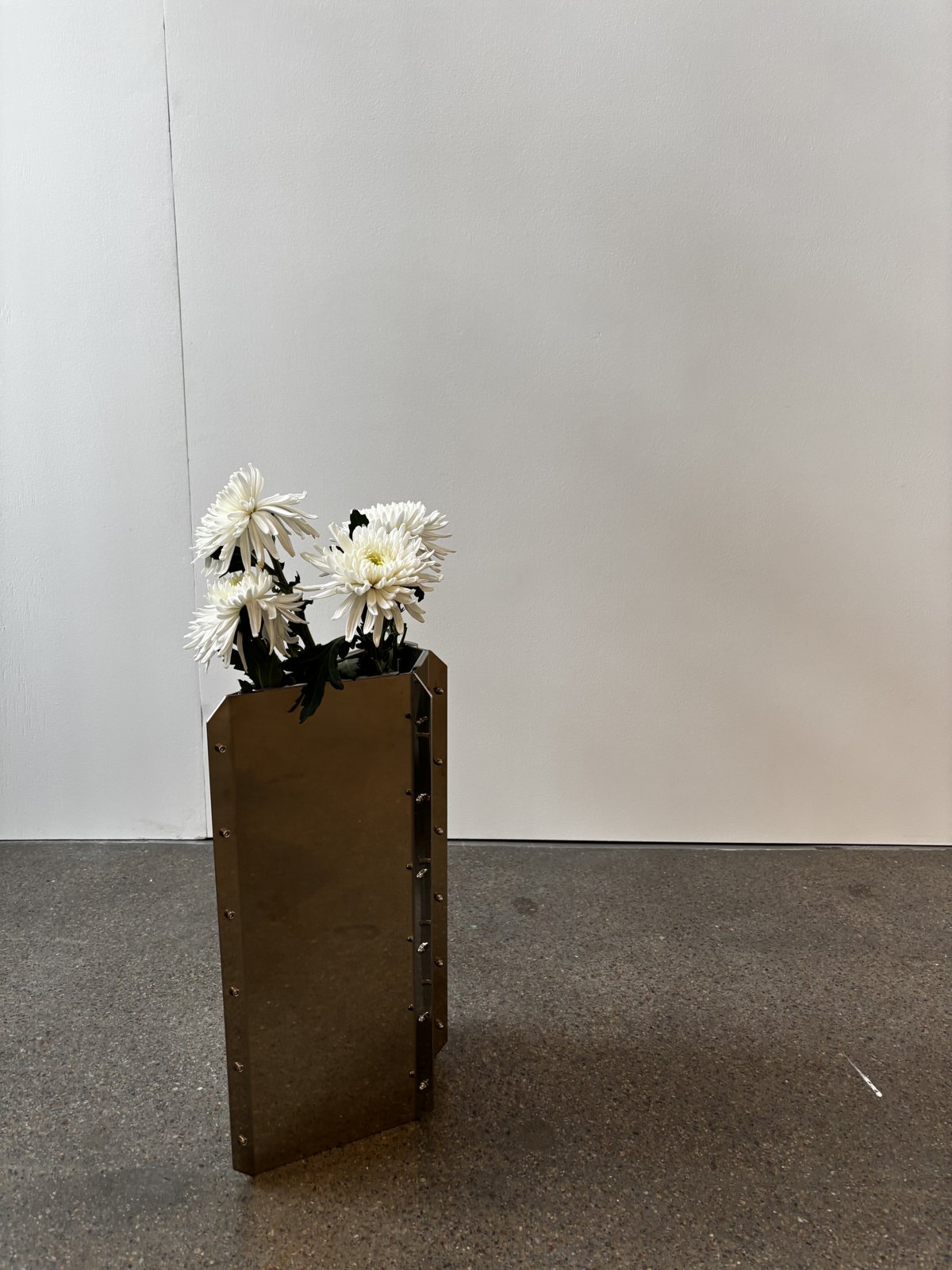
A tall dark stainless-steel rectangular vase with a mitred profile and small rivets down its front seams, standing on a polished concrete gallery floor against a plain white wall. Three white chrysanthemums with green leaves lean out of the top.
A small stainless-steel vase with rivets down the seam, three white chrysanthemums standing out of it. Which was the subject, the vessel or what it held, was left open.
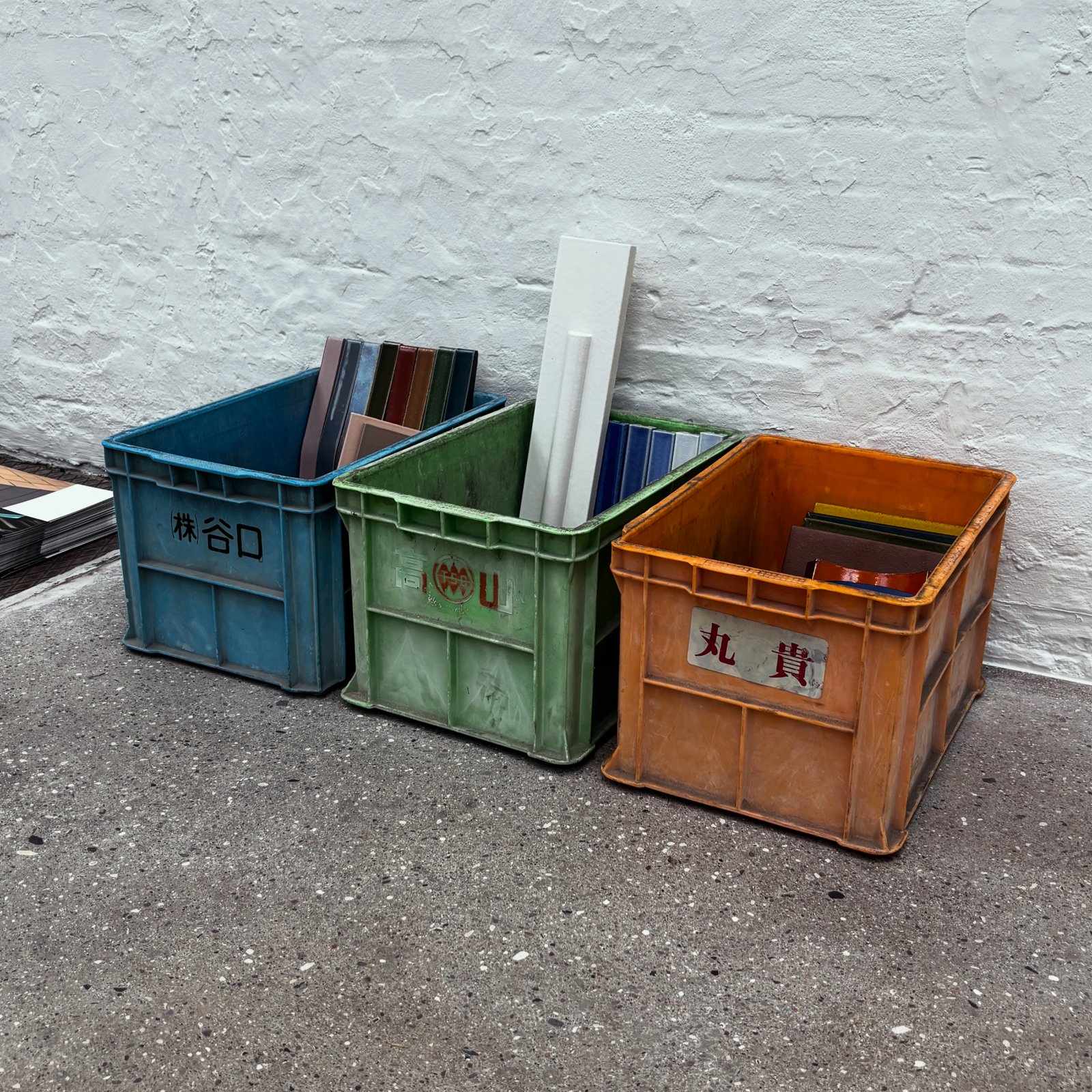
Three vintage plastic industrial crates lined up on a concrete gallery floor against a whitewashed textured wall. The crates are blue, green and orange from left to right, each faded and marked with kanji lettering. Each holds vertical stacks of glazed tile samples in graduated colours, plus a few larger white ceramic offcuts leaning out of the middle crate.
A material sample library stored in three vintage Japanese plastic crates, blue and green and orange, the kanji still stencilled on the fronts. Tile off-cuts sorted by hue in each.

The Amagertorv 6 flagship on the 10th was full and loud, wall-to-wall, and by 000's reading the strongest room of the festival. Griegst, the Danish artist-jewellery house founded 1963, its crown-and-blackletter wordmark stamped on the invitation, had suspended a large glowing panel across the ceiling, a diffused rectangle of parchment-warm light, and beneath it a shelf-tower of Royal Copenhagen's own historic plaster casts. Not the finished porcelain: the moulds. The bare white blanks that the finished work is pressed from, stacked in shelving as though the manufactory storeroom had been lifted into the store. A gesture of respect to the labour, dressed as an installation. Psychedelic-meets-baroque overstates it. By 000's reading, what Griegst and Royal Copenhagen wanted to show was what craft looks like when it stops performing.
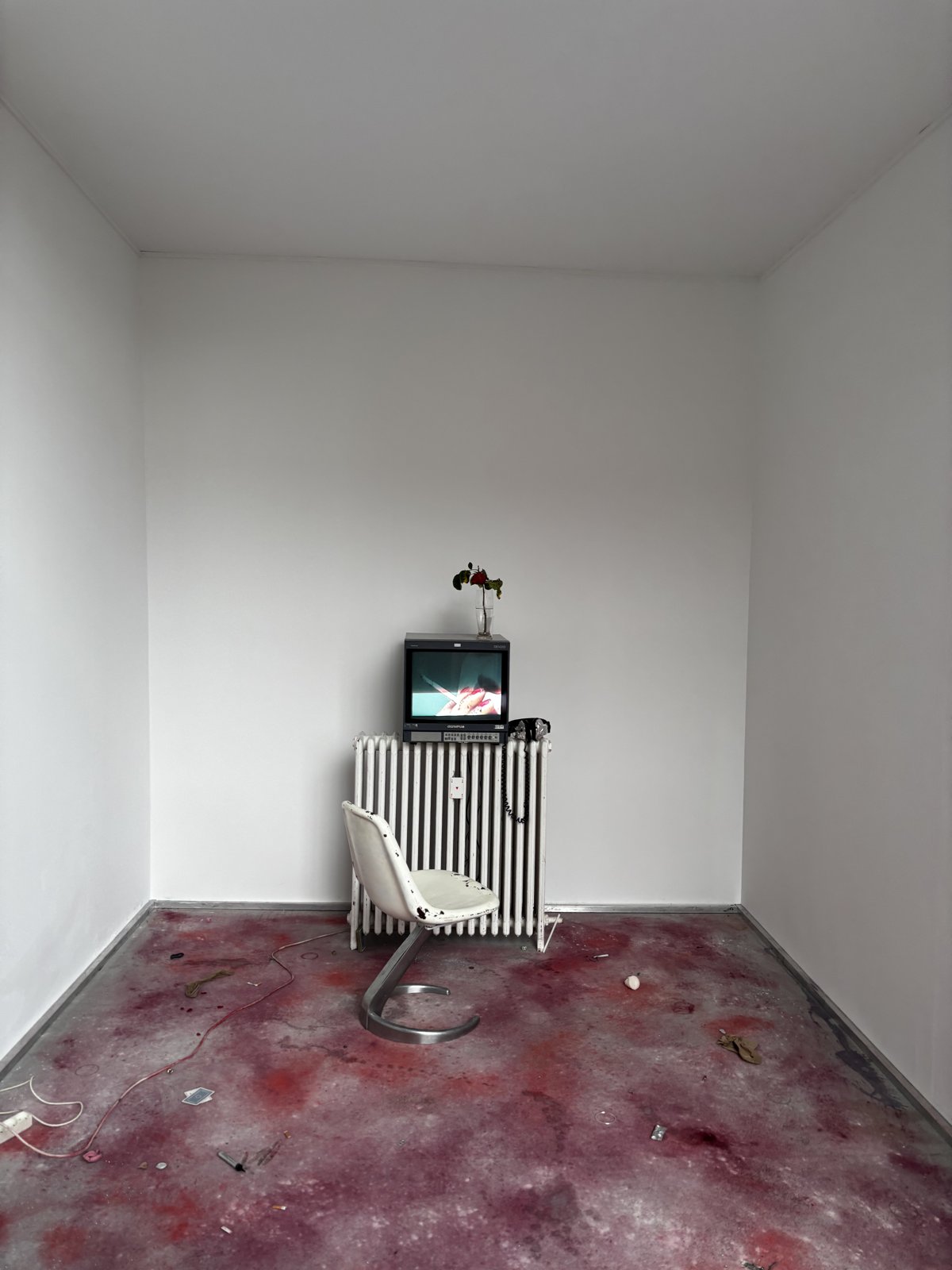
A small white-walled gallery room. The concrete floor is stained a mottled pink and dark red, as though wine or a similar liquid had been repeatedly spilled and dried into it. Against the far wall a white plastic swivel chair on a chrome base faces a small vintage colour CRT television that sits on top of a white cast-iron radiator, its power lead trailing across the floor; a single rose in a small clear vase stands on top of the CRT.
A red-stained concrete floor, a lonely white chair, a working CRT looped on a radiator, a single rose in a vase above. The dystopian home as furniture proposition.
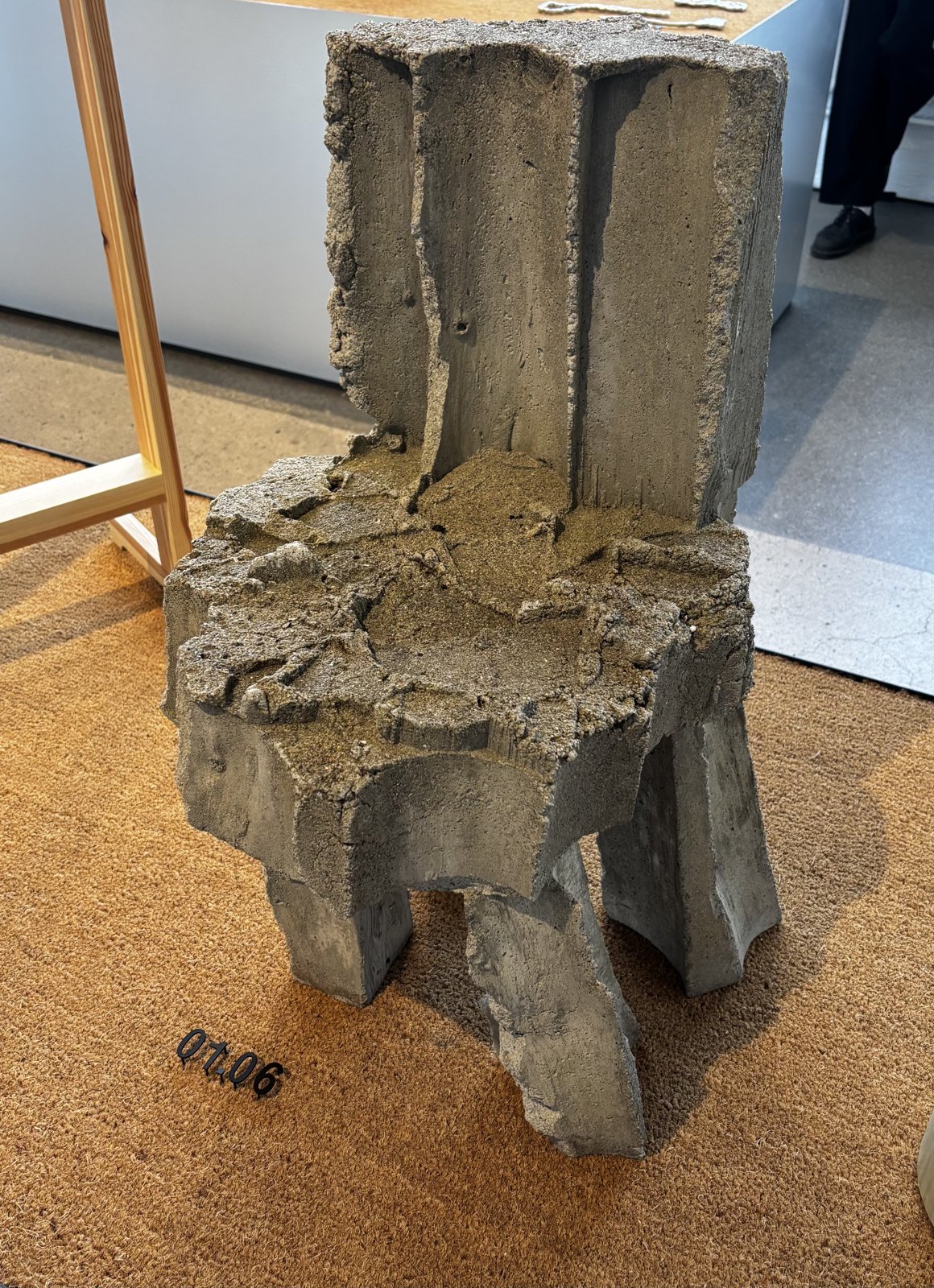
A rough-cast concrete chair sits on a burnt-orange carpeted platform, its seat and back mostly whole but the corners chipped and broken as though excavated. The seat is cracked and dished, exposing the aggregate. On the carpet in front of the chair, the numerals 01.06 stand in small black metal figures.
A concrete chair, brutalist, rough-cast at the edges, on burnt-orange carpet. '01.06' set as its label a short distance from the leg. The material is the argument.

The 12th was the day for walking the showrooms. Other Circle's showroom at The Lab, Vermundsgade 40, held Hall Haus's Dari Sofa in a new residential edition, the modular re-cut in low mustard for smaller rooms, sat on a raised white platform with the works schedule printed as the rug beneath. In a side room a small stainless-steel vase, riveted at the seams, held three white chrysanthemums; which was the subject, the vessel or what it held, was left open. A design library nearby stored its material samples in three vintage Japanese plastic crates, blue and green and orange, the kanji still stencilled on the fronts. A concrete chair, brutalist, rough-cast at the edges, sat on a burnt-orange carpet with '01.06' set as its label. Elsewhere a red-stained concrete floor with a lonely white chair, a working CRT looped on a radiator, a single rose in a vase above; the dystopian home as furniture proposition. In a small skylit chapel at the end of the walk, hay bales laid as bench seating in front of a heavy gold-and-brown Nordic textile, a visitor in a green bomber jacket standing with his back to the room. Nobody was talking. Everyone was reading the wall text.
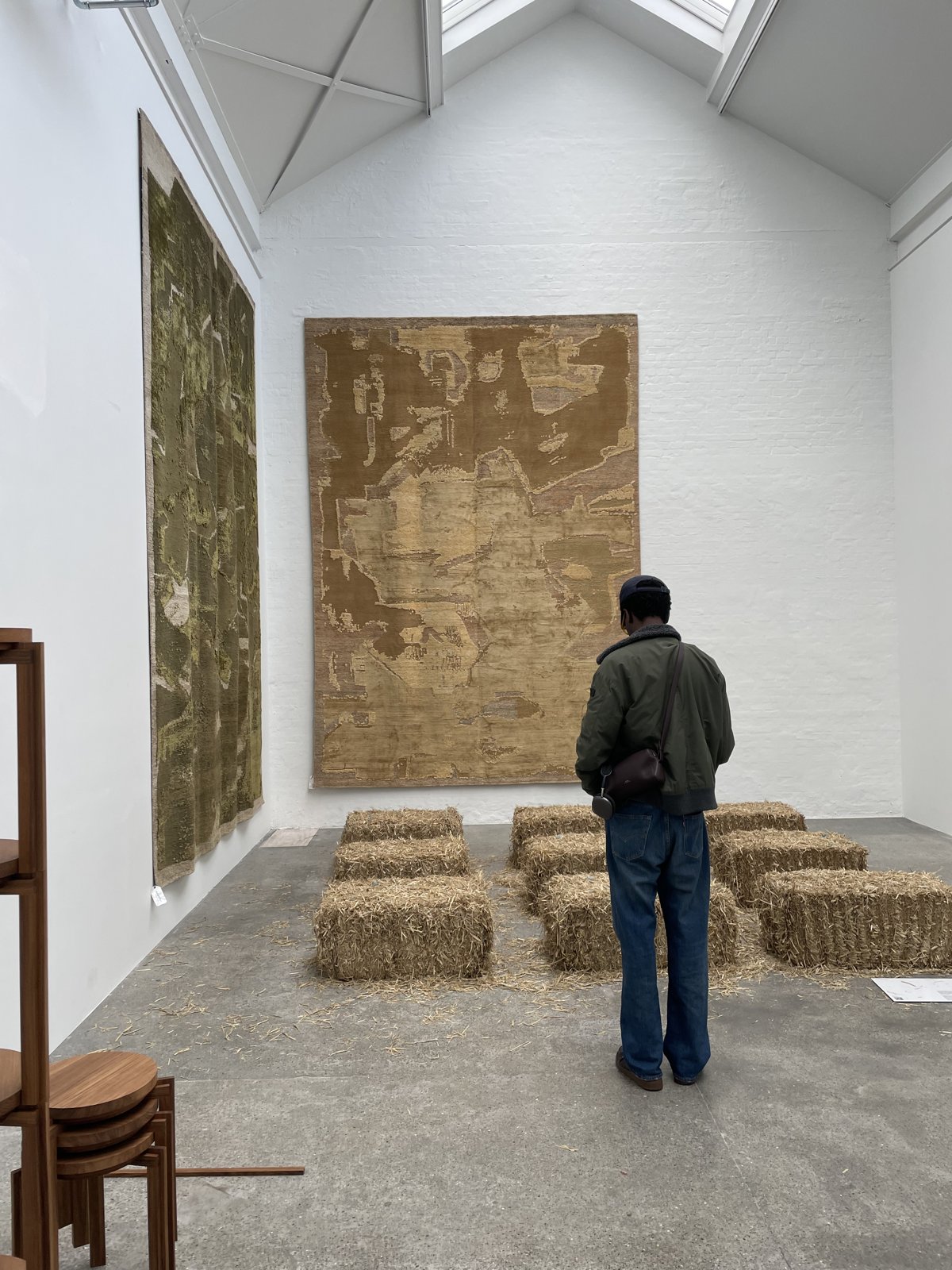
A small white-walled gallery with a pitched skylit roof. A very large hand-woven tapestry in worn gold-brown tones hangs on the back wall; a second, greener tapestry is visible on the left. In front of the tapestries, four rows of two rectangular hay bales are laid out as bench seating. A visitor in a dark green bomber jacket, jeans and a cap stands with his back to the camera, reading the near tapestry. A small wooden stool and stacked stools are visible in the near left corner.
A small skylit chapel-like room. Hay bales laid as bench seating in front of a heavy gold-and-brown Nordic textile, a visitor in a green bomber jacket standing with his back to the room. Nobody was talking.

By 000's reading, what Copenhagen said as a whole was: object design does not need to declaim. The strongest showrooms all put a single decision on the floor and let it hold. Where Milan two months earlier had insisted on scenography, Copenhagen preferred material. Where a British design week presents thirty brands in one hall, 3daysofdesign spreads across eight districts and asks you to walk to each. The theme was Make This Moment Matter. The moment it made matter, by 000's reading, was the one where you stop asking whether an object is design or art and start asking whether it is any good.

Responses.

Join for free to respond.

By joining you confirm you are 13 or over.

Privacy · Terms

Continue reading.

A ↺ A

Reading offline. Pages you have opened are still here.