This week

Studio Iron at Saatchi Yates

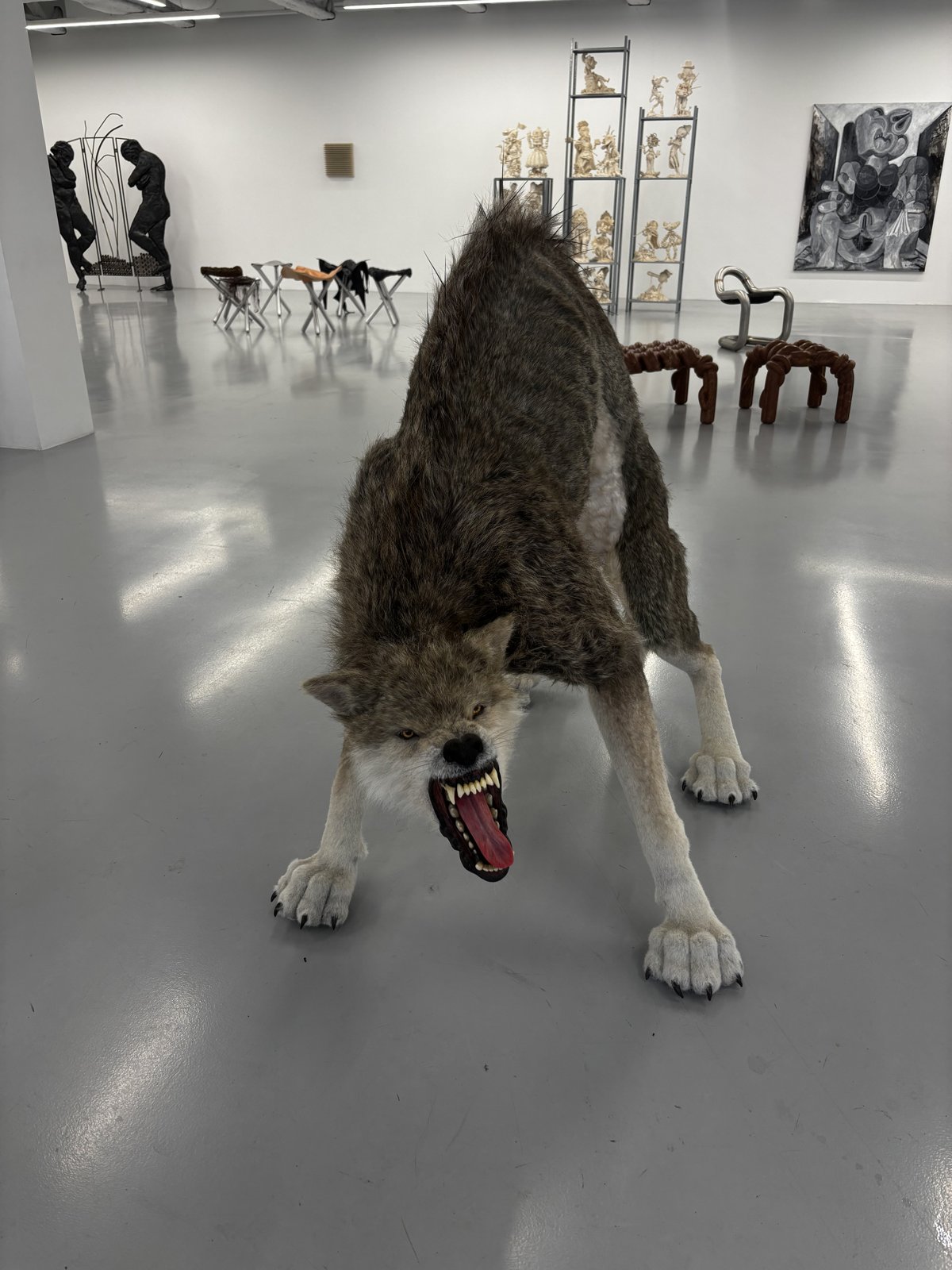
Wide view of a gallery room with a snarling life-size wolf sculpture in fur, resin and silicone in the foreground, ribs arched and head low; in the background a metal shelving unit holds rows of small pale carved figures, with a polished steel chair and braided dark-orange stools visible to the right and a black-and-white painting on the far wall.
Benjamin Kustow's *Untitled (Wolf)*, 2026, holds the centre of the main room: resin, silicone, fibreglass and synthetic hair. To the rear, carved figures on metal shelving and a polished steel chair at the right edge.

Studio Iron ran at Saatchi Yates in St James's from 30 April to 7 June 2026: Isamaya Ffrench's first turn as curator, and the inaugural project of her own newly launched design gallery, also called Studio Iron. The name carries through from her own; Isamaya means iron strength in medieval Germanic. The show gathered a group of artists and designers chosen, in Ffrench's own framing, for work that blurs the boundaries between object, art and design, function and form. The conceit is older than it sounds. What made the room hold was the conviction of the staging.
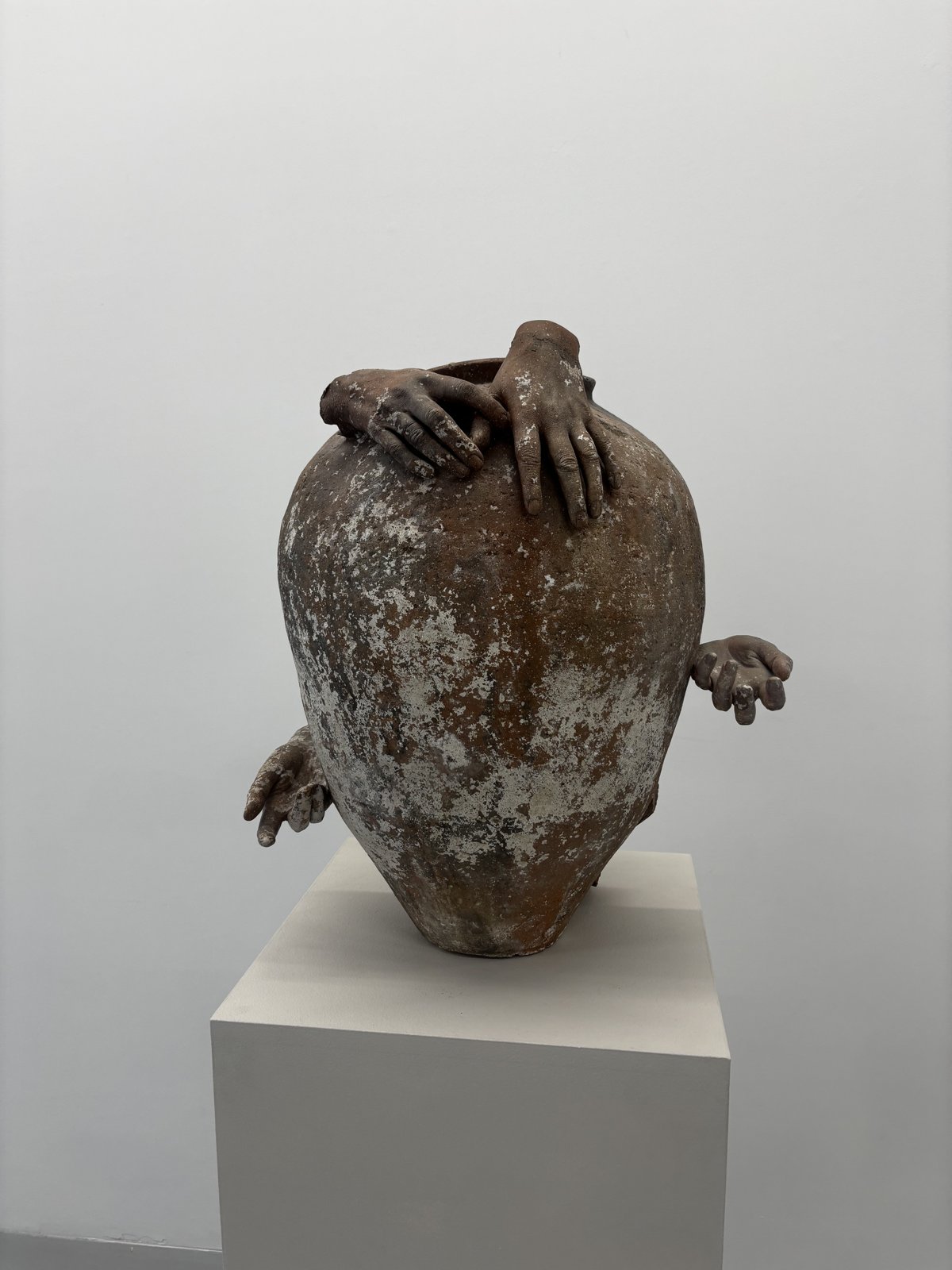
A large terracotta amphora on a white plinth in a grey-walled gallery. Pale clay hands have been cast or attached at the rim and on the sides, reaching outward as though grasping or releasing the vessel; the body of the jar is mineral-patinated in white and rust over the original red clay.
Clementine Keith-Roach's *The Mammal*, 2019: a weathered terracotta vessel with cast pale plaster hands grasping the rim and reaching out from the sides, set on a white plinth in a side room. The oldest work in the show by a margin of seven years.
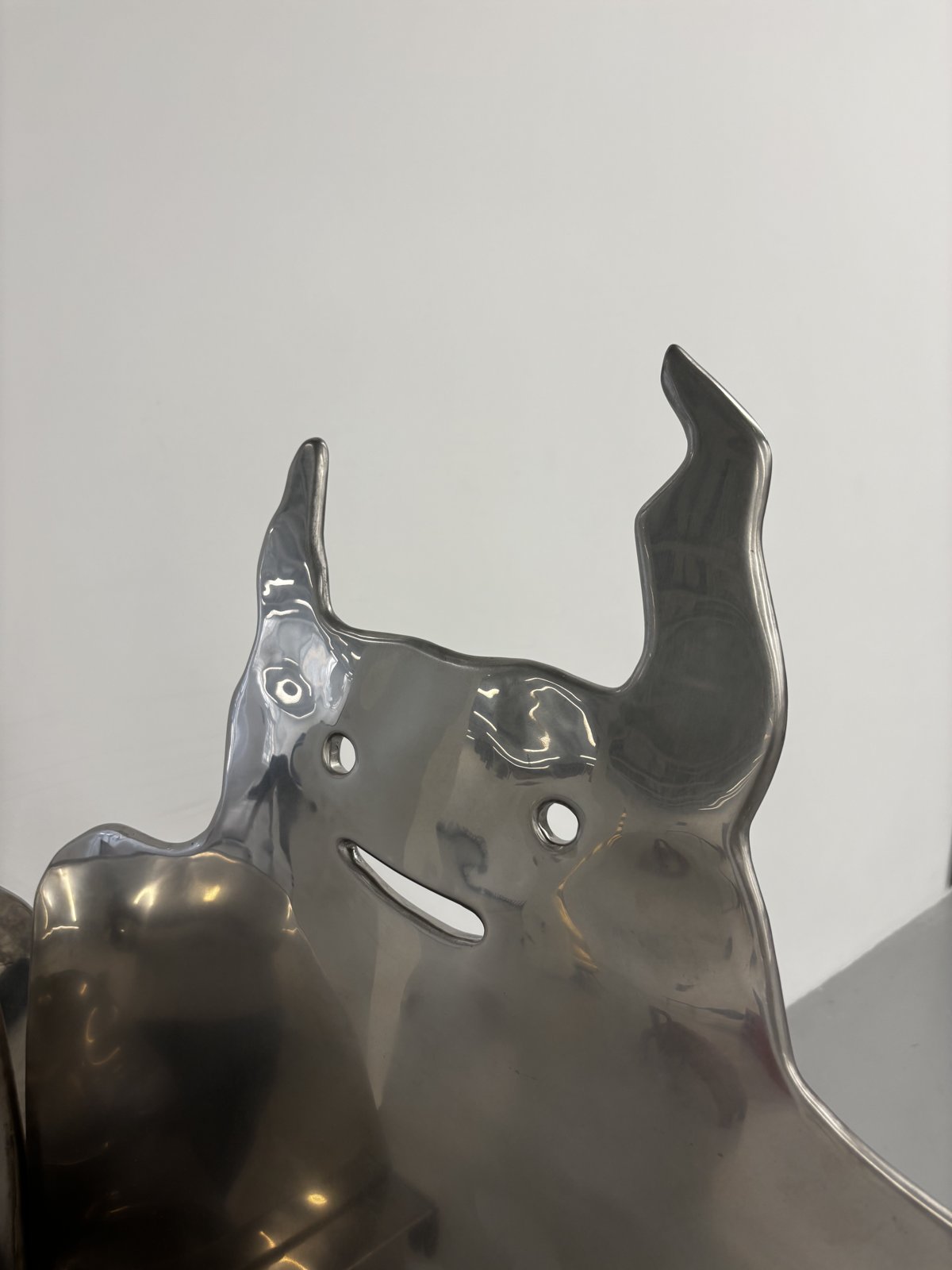
Close-up of a polished stainless-steel sculpture against a white wall, with two upward-curving horn-shaped projections at the top, two small circular cut-outs and a long curved slit beneath them, the surface bright and reflective, picking up ceiling shadows.
Close detail of a polished stainless-steel sculpture, two horn-like ridges rising at the top with cut openings beneath. By 000's reading, Michael Moore's *La Chaise Diable*, 2026: the title (devil chair) sits cleanly against the form.

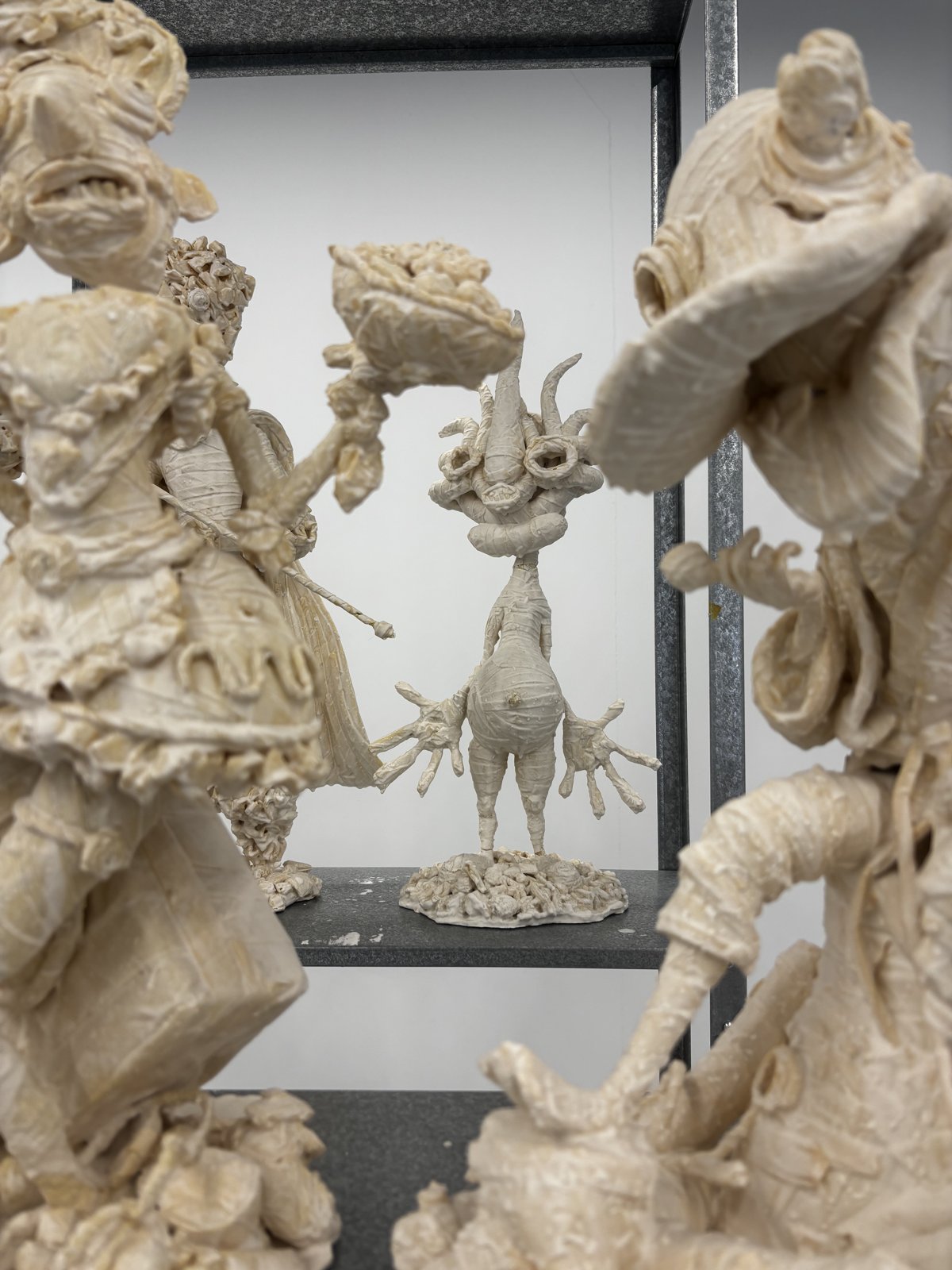
Steel and iron set the temperature. Benjamin Kustow's Untitled (Wolf), 2026, held the centre of the main room, a snarling life-size beast in resin, silicone, fibreglass and synthetic hair, low to the ground, ribs arched, eyes catching the strip lights overhead. Behind it, on metal shelving, sat Gary Card's Untitled, 2026, sixty-five small figurines built in masking tape, armature wire and jesmonite, a procession of spindly hybrid bodies. The far room was anchored by Anselm Kiefer's Streu dein Blumen Fremdling, 2012, oil, emulsion, shellac and crayon on canvas with handwritten German text, and in front of it Kouros Maghsoudi's Hug Bed, 2026, a lacquered black bed with white sheets, the gloss reading like wet vinyl against the dust and ash of the Kiefer.
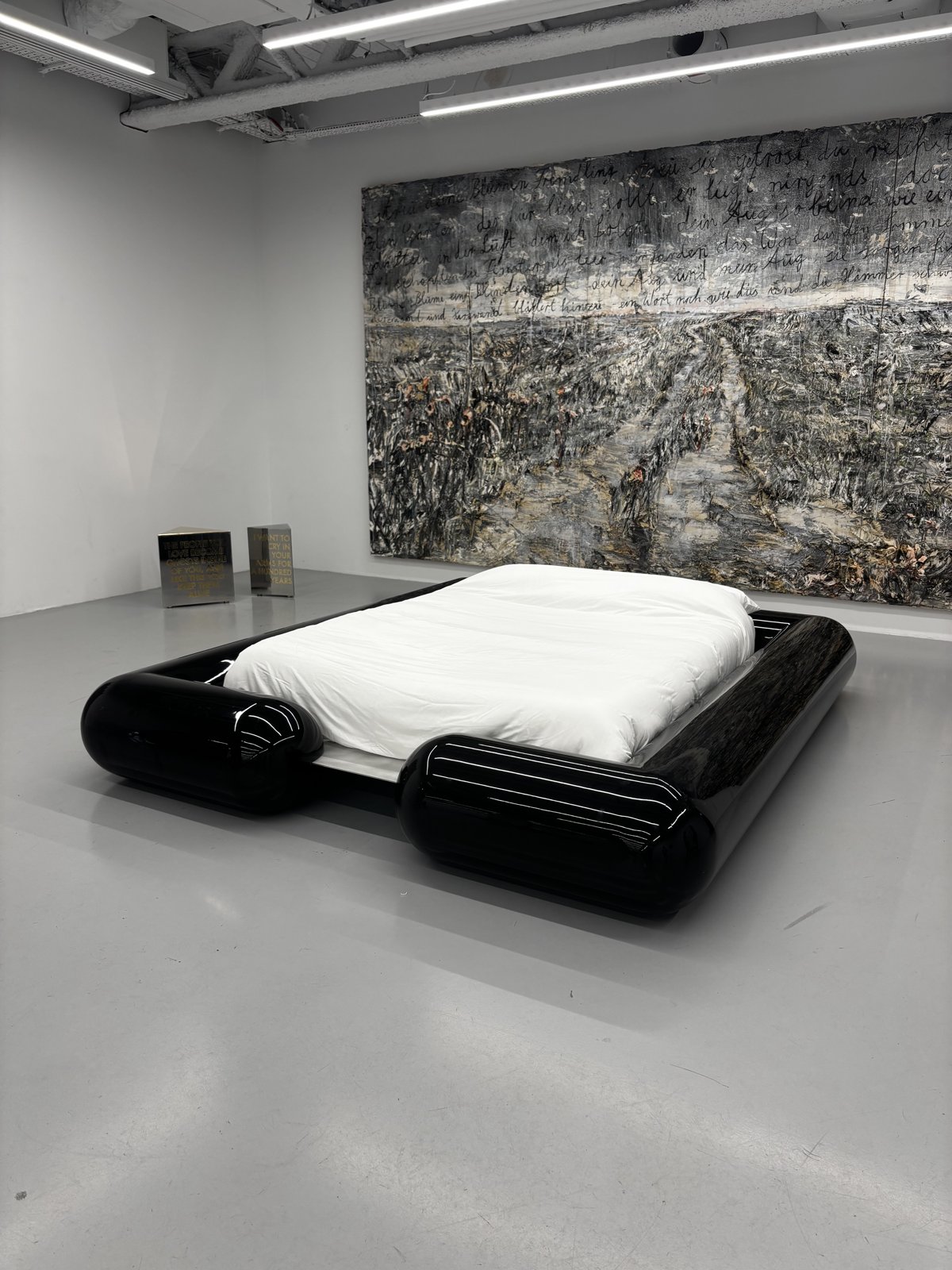
A low rectangular bed with a glossy black lacquered bumper-rail surround and a flat white sheet, set on the polished floor of a gallery; behind it, a very large mixed-media canvas worked in greys, blacks and burnt ochres with handwritten German text and a heavily textured paint surface. Two glossy chrome-finished boxes sit on the floor at the left.
Kouros Maghsoudi's *Hug Bed*, 2026 (FSC-certified wood, furniture lacquer, recycled aluminium and fibreglass), set in front of Anselm Kiefer's *Streu dein Blumen Fremdling*, 2012 (oil, emulsion, shellac and crayon on canvas). By 000's reading, the single strongest pairing in the show.
Tight shot of pale carved sculptures on dark metal shelves. A central spindly figure stands with multiple breast-like protrusions and an insect-like compound-eyed head; around it, partial figures including a clothed kneeling form on the left and a draped figure on the right, all rendered in the same chalk-pale material that reads as carved wood or fired clay.
Gary Card's *Untitled*, 2026: sixty-five small figurines in masking tape, armature wire and jesmonite. A close view of the metal-shelving piece sitting behind Kustow's wolf in the main room.

That Kiefer and Maghsoudi pairing was the strongest moment in the show. The bed is the kind of object that, hung as a sculpture, would read as a joke about luxury; placed under the Kiefer, with the painting's near-monochrome of ash and burnt ochres above it and the bed's polished black bumpers below, it became the bedroom of someone trying to sleep in a war. Elsewhere the show ran on a flatter register of irony. The Pinocchio mannequin, 4_F_S_B and Tom Schneider's Locally Hated, 2026, stood in a corner in a black puffer jacket and a printed cap, nose extended in painted lacquer. The gag, by 000's reading, was too easily made; the figure landed as styling rather than as sculpture, though that may be the point of putting it on the floor of a design gallery.
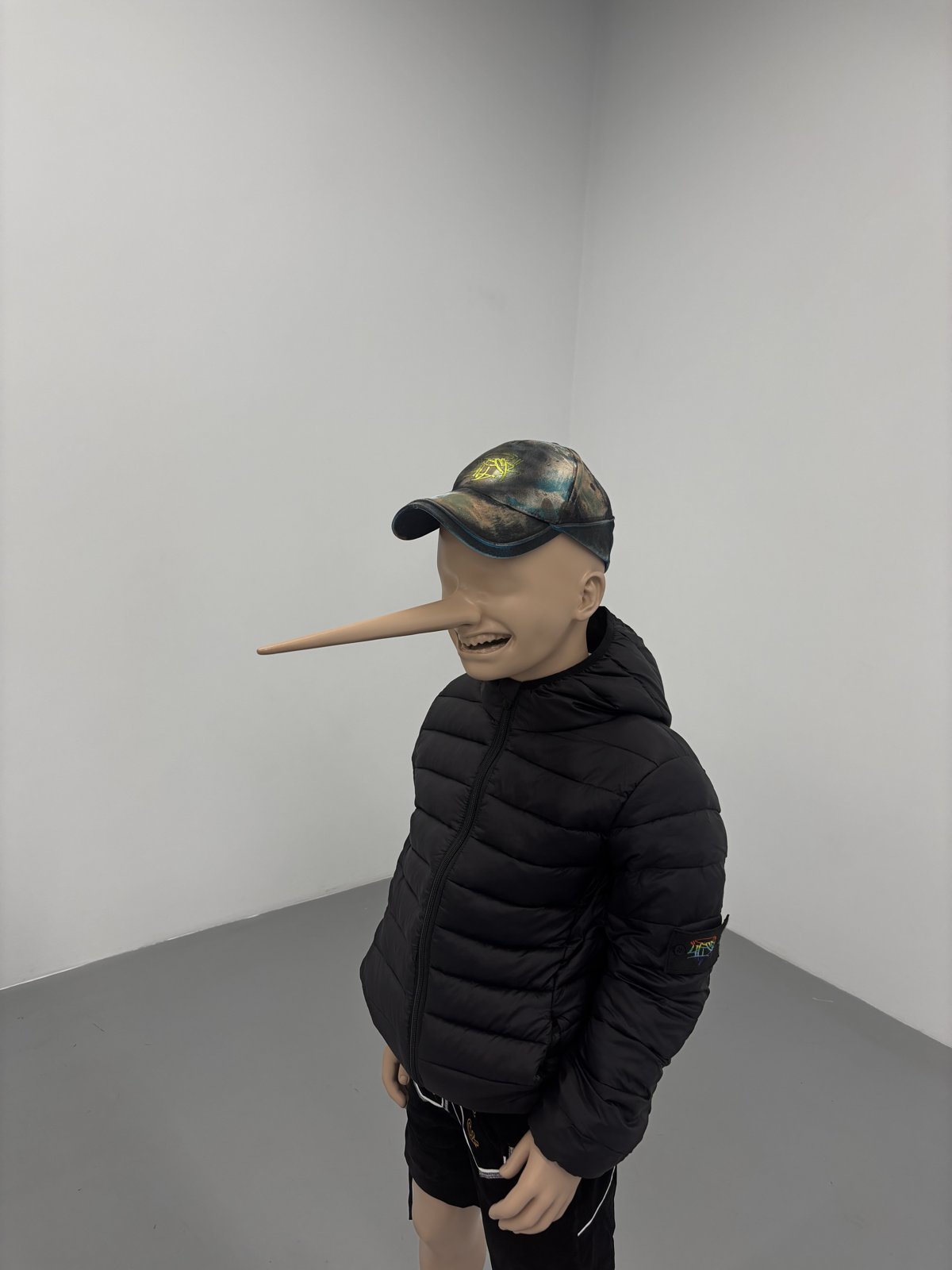
A child-sized mannequin standing in the corner of a grey gallery room, dressed in a black hooded puffer jacket and dark shorts with a printed waistband. The mannequin wears a weathered green-and-rust baseball cap with a small printed motif; an exaggeratedly long pointed nose extends from the smooth flesh-tone face.
4_F_S_B and Tom Schneider's *Locally Hated*, 2026: a child-scale mannequin in a black puffer jacket and a printed cap, the nose extended in painted lacquer.
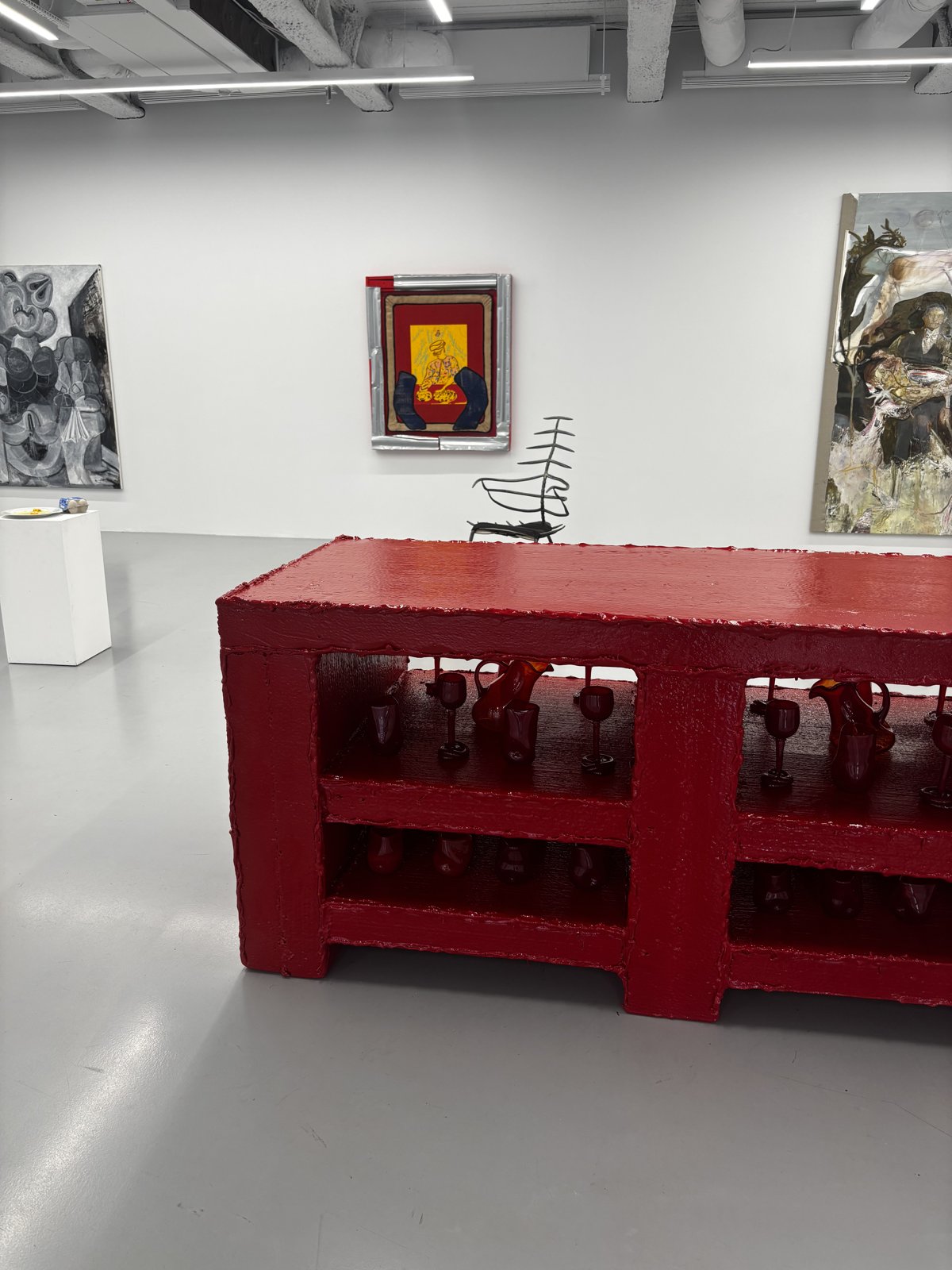
A long low rectangular bar-like structure painted in thick textured red lacquer, set on the polished grey floor of a gallery; rows of small dark red glass goblets and small vessels stand on its upper shelf and inside its lower compartments. In the background, three framed paintings and a small black wire sculpture are visible against the white walls.
By 000's reading, Alvaro Barrington's *Paid in Full*, 2026: oil, acrylic, flashe and enamel on burlap, waxed cotton thread, on painted reclaimed wood and a corrugated metal frame, the surface laid thick with red. The framed works on the rear wall sit at this distance as mixed-period registers in conversation; the small framed work at centre-left reads as Pietro Della Vecchia's *Head of a Philosopher* (Della Vecchia 1603-1678; the painting itself dated to the first half of the 17th century), the only 17th-century painting in a show otherwise tilted to 2026.

The premise, blurring art and design, is more interesting in practice than it sounds in a press release. By 000's reading, what the show actually did was treat function as ritual: the bed, the bar, the chair, the cap, the sheet all staged as objects with an intended use that the gallery context refused to honour. A thick red lacquered bar held a small assembly of dark glass cups and goblets; nothing was poured. A pair of knotted seating objects, the rope-coils made literal in a deep oxblood material, sat slightly off the white floor as though set out for a meeting that had not yet begun. The algorithm that organises culture sorts the world into single categories, a chair is a chair and a sculpture is a sculpture. The room insisted that both might be the same object viewed from different distances.
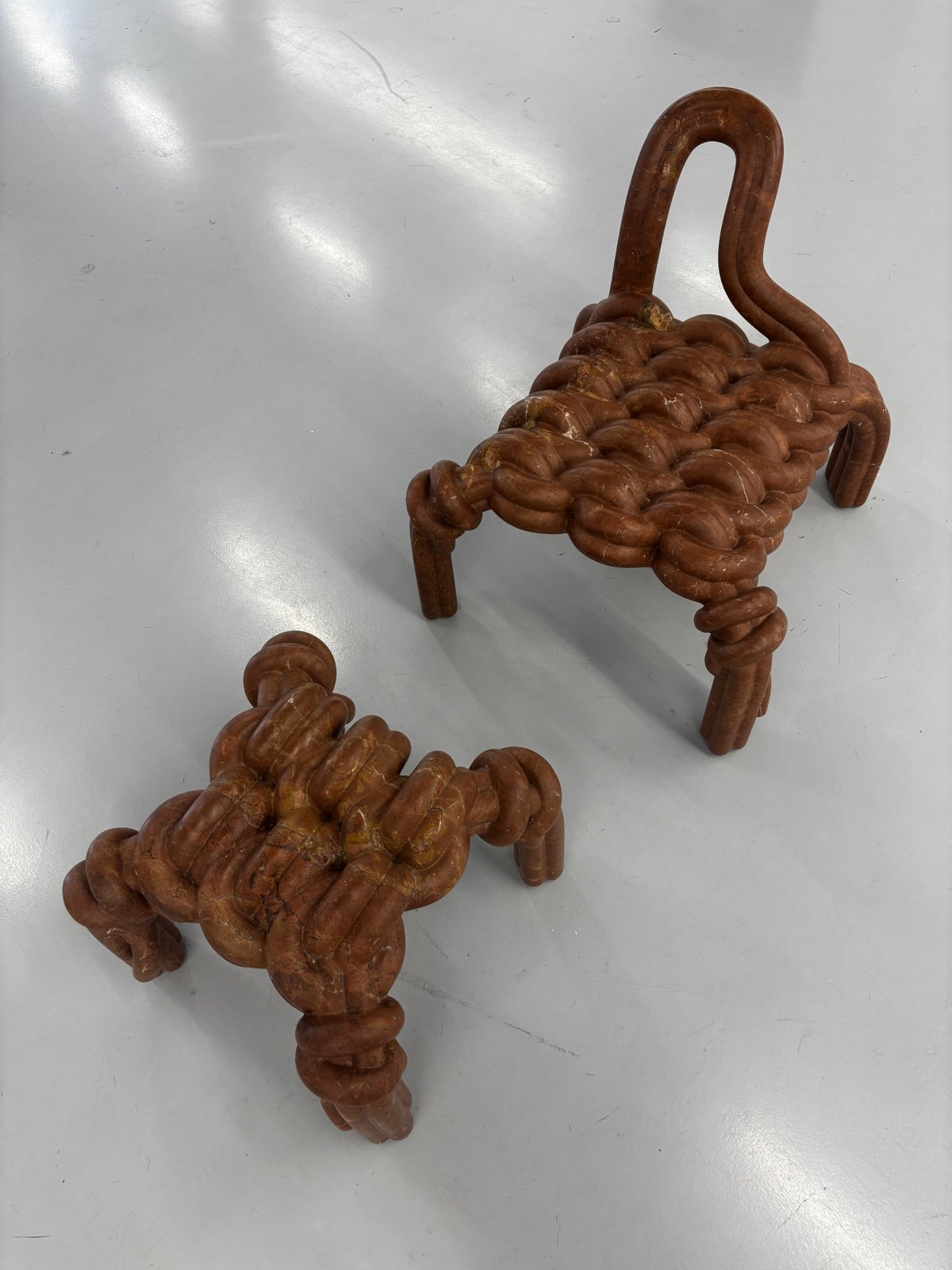
Two seating objects on a polished pale gallery floor: one chair-height with a high looped back, one low footstool, both formed from thick braided rope-like coils in a single mottled deep red-orange material that reads cast rather than woven.
Two knotted seating objects, the rope-coils made literal in a single moulded material. By 000's reading most likely one of Jabez Bartlett's *Untitled Chair* pieces, 2026 (the show had two wax-chair pairings: pleather wax with a porthole cushion, and crystalline wax with a pony hide cushion); the alternative, given the chair-and-companion grouping, is Kelly Wearstler's *Nudo Low Chair* + *Nudo Ottoman*, 2026, in marble worked to read as rope.

Studio Iron closed at Saatchi Yates on 7 June. The Studio Iron Gallery, Ffrench's standing project announced alongside the show, is set to open with a programme directed at the same liminal space; the show at Saatchi Yates was the manifesto, the gallery on the other side of it the working room. The case Ffrench is making is one 000 reads as adjacent to its own. The most interesting objects in the world are those that resist being filed into a single category, and the rooms that hold them have to refuse that filing first.

Responses.

Join for free to respond.

By joining you confirm you are 13 or over.

Privacy · Terms

Continue reading.

A ↺ A

Reading offline. Pages you have opened are still here.