Rome-Tehran: Parallel Avantgardes is the current show at Ab-Anbar, 34 Mortimer Street, Fitzrovia, on from 4 June to 12 July 2026 and co-curated by Salman Matinfar and Piero Tomassoni. Ten artists, five Iranian and five Italian, all of whom passed through Rome between the 1950s and the 1970s. The premise is straightforward and the evidence in the room is patient: this was not borrowing in one direction. It was a shared studio across two cities, conducted at the speed of the post and the train.
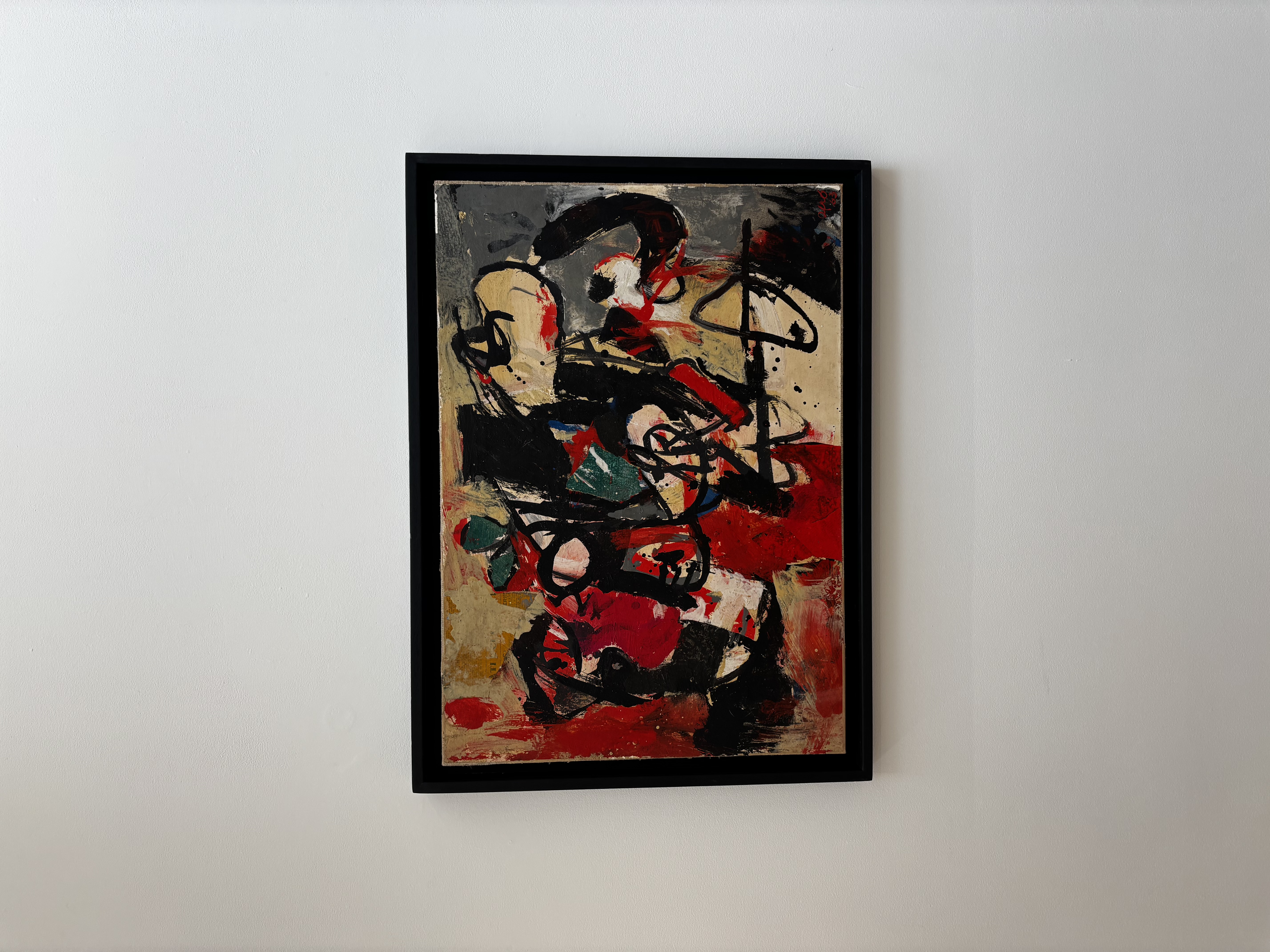
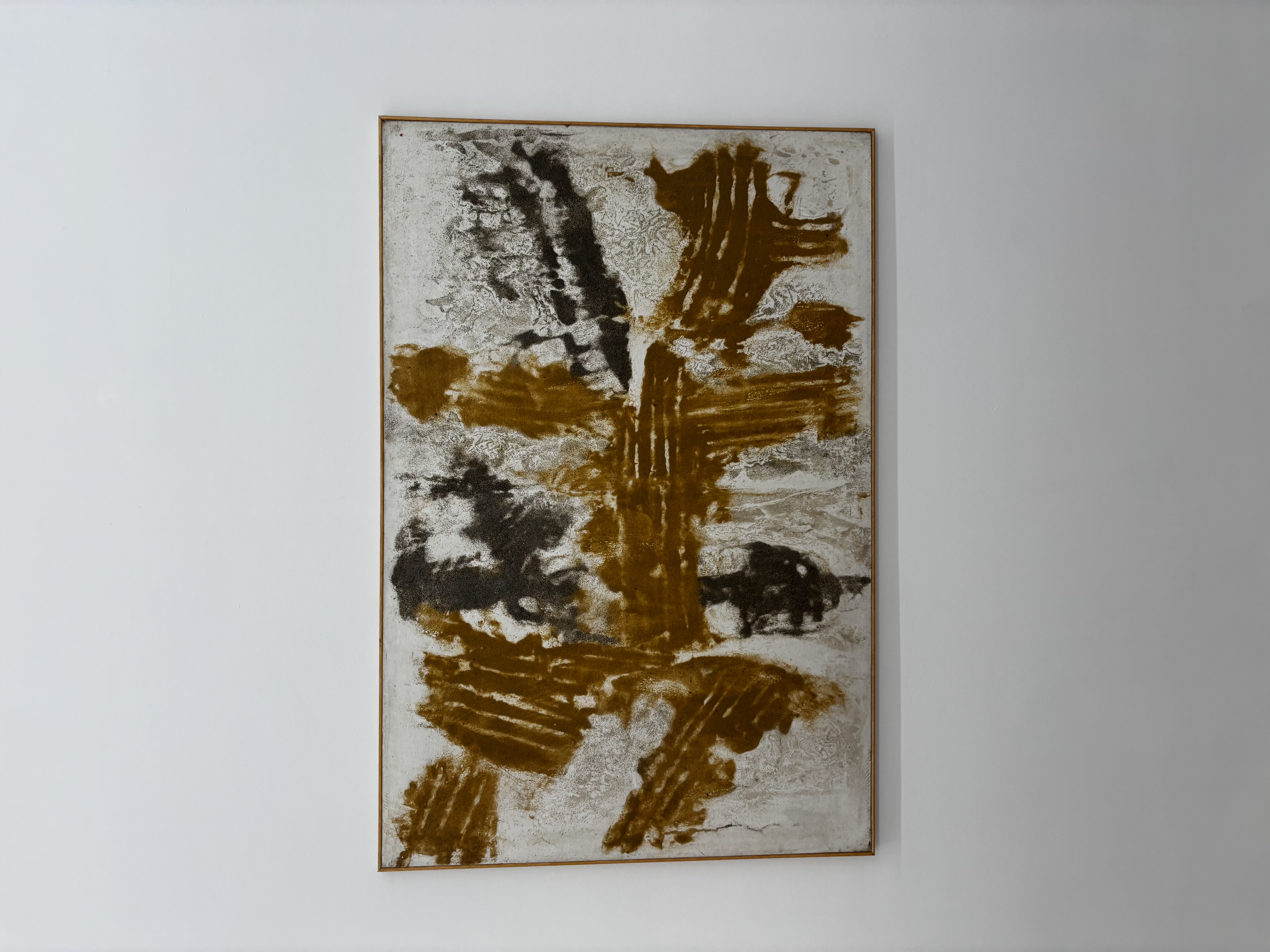
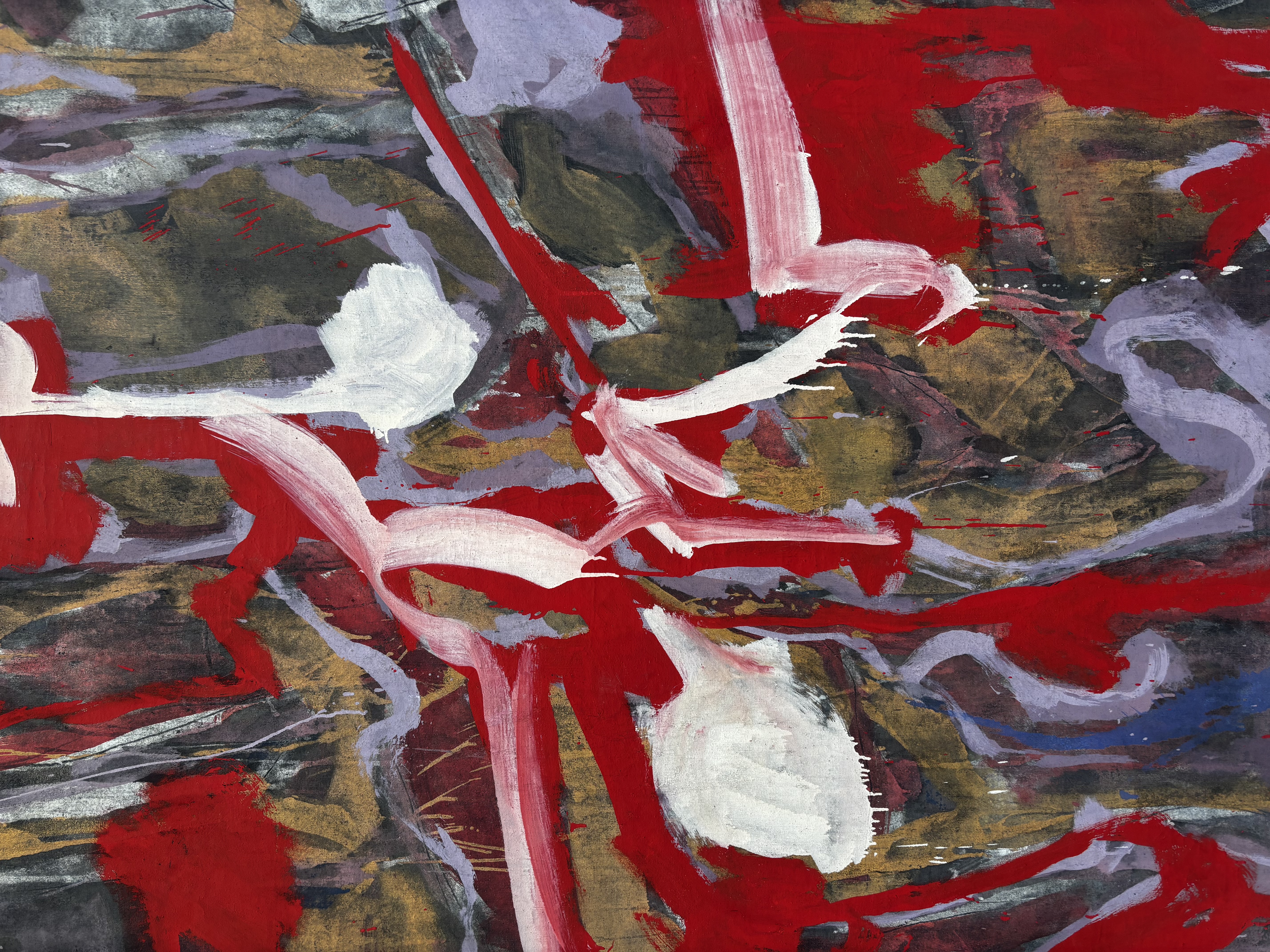
The Iranian half is led, by 000's reading, by Mohsen Vaziri-Moghaddam. The sand paintings he developed in Rome from 1959 onward are the gravitational centre of the first wall: ochre and black laid into the surface in the gestural crosses that defined the series, the canvas worked as ground rather than as window. Behjat Sadr is the other axis: palette-knife paintings whose horizontal striations move between gesture and calligraphy, sometimes black almost edge-to-edge, sometimes a clearing in red and lavender and dust. A small red figure study, signed, holds its own in the corner room; the painted nudes from this circle were rarely the work that survived, and the survival of one is worth the visit on its own.
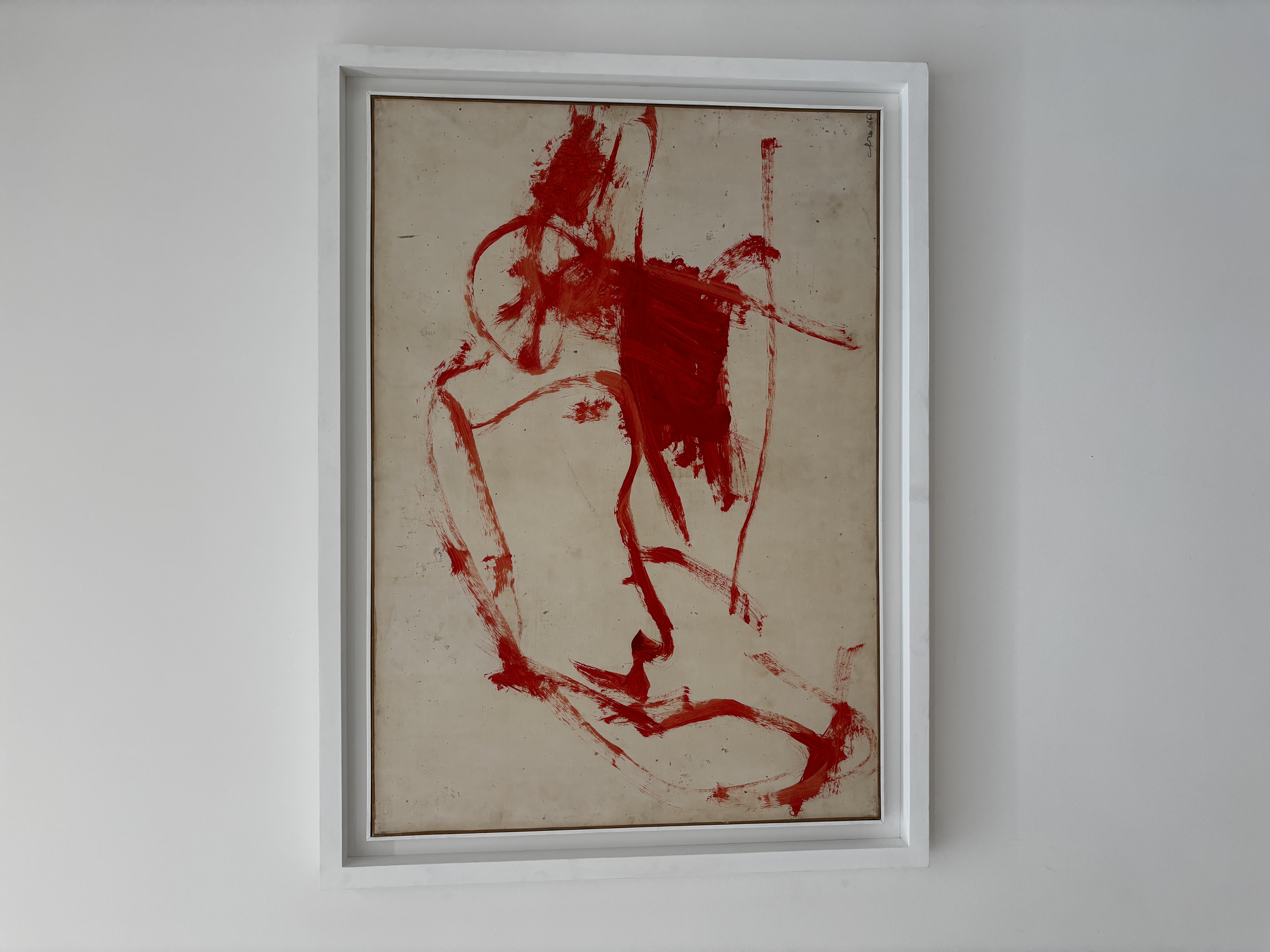
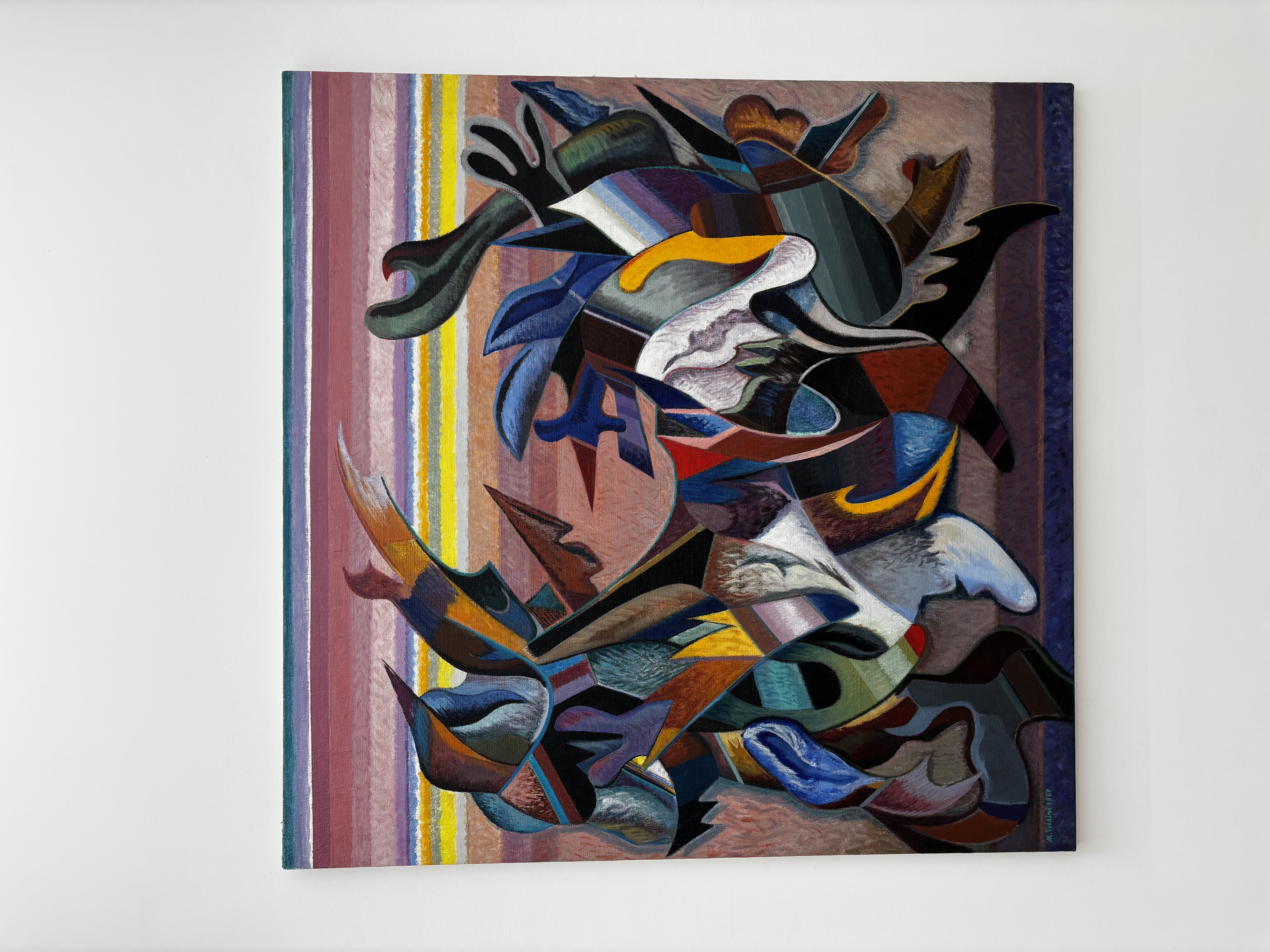
The Italian rooms answer in a different register. The names are familiar to anyone who has walked the Roman post-war collections, Afro Basaldella and Alberto Burri and Carla Accardi among them, and the surprise is how unstrained the conversation feels with the Iranian work hanging across from it. Both halves arrive at material as the subject: the sand, the burlap, the dragged knife, the calligraphic line. Both halves treat the picture plane as something to be built up out of and pressed back down into, not something to be looked through.
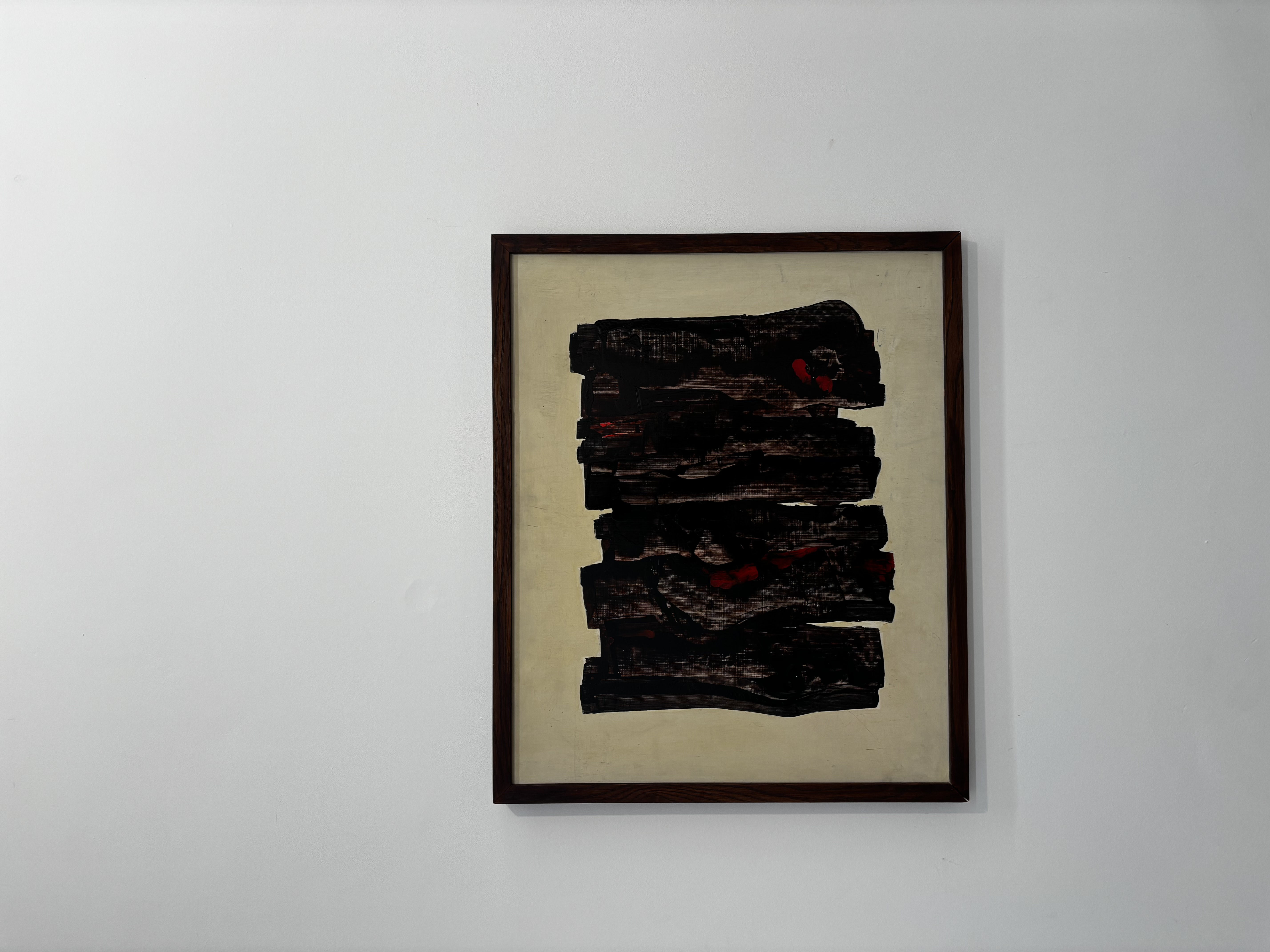
By 000's reading this is the opposite of the algorithmic premise that culture moves only in the direction of the largest market. The exchange Rome and Tehran ran for two decades was lateral, slow, institutional and personal: the Academy of Fine Arts in Rome, the Venice Biennale, the critics, the patrons, the apartments. Nothing about it scaled. Nothing about it needed to. The work in the room is what was left when two cities took each other seriously for twenty years.
Ab-Anbar opened its London room permanently in September 2023 and the space still reads as a careful one, low traffic and quiet light. The show runs until 12 July. Go on a Tuesday or a Wednesday afternoon, when the gallery is open from 11 to 6 and the room is empty, and stand close to the sand paintings; the surface only declares itself at arm's length.
Responses.
Received. Thank you.