Willem de Kooning never made it easy. Not for critics, not for the market, not for anyone who wanted to file him neatly under Abstract Expressionism and move on. Born in Rotterdam in 1904, he stowed away on a British freighter in 1926 and arrived in America with no English and no plan. What he had was an almost savage technical proficiency, trained at Rotterdam's Academy of Fine Arts. That training became the engine; New York became the fire.
He came up alongside Arshile Gorky, absorbed Cubism's spatial ambiguity, and arrived at the New York School's moment of formation knowing exactly how to paint and very deliberately choosing not to be controlled by it. Where Pollock poured and Rothko dissolved, de Kooning remained insistently physical, insistently conflicted. "Flesh was the reason why oil painting was invented," he said, and he meant it. The body was never far.
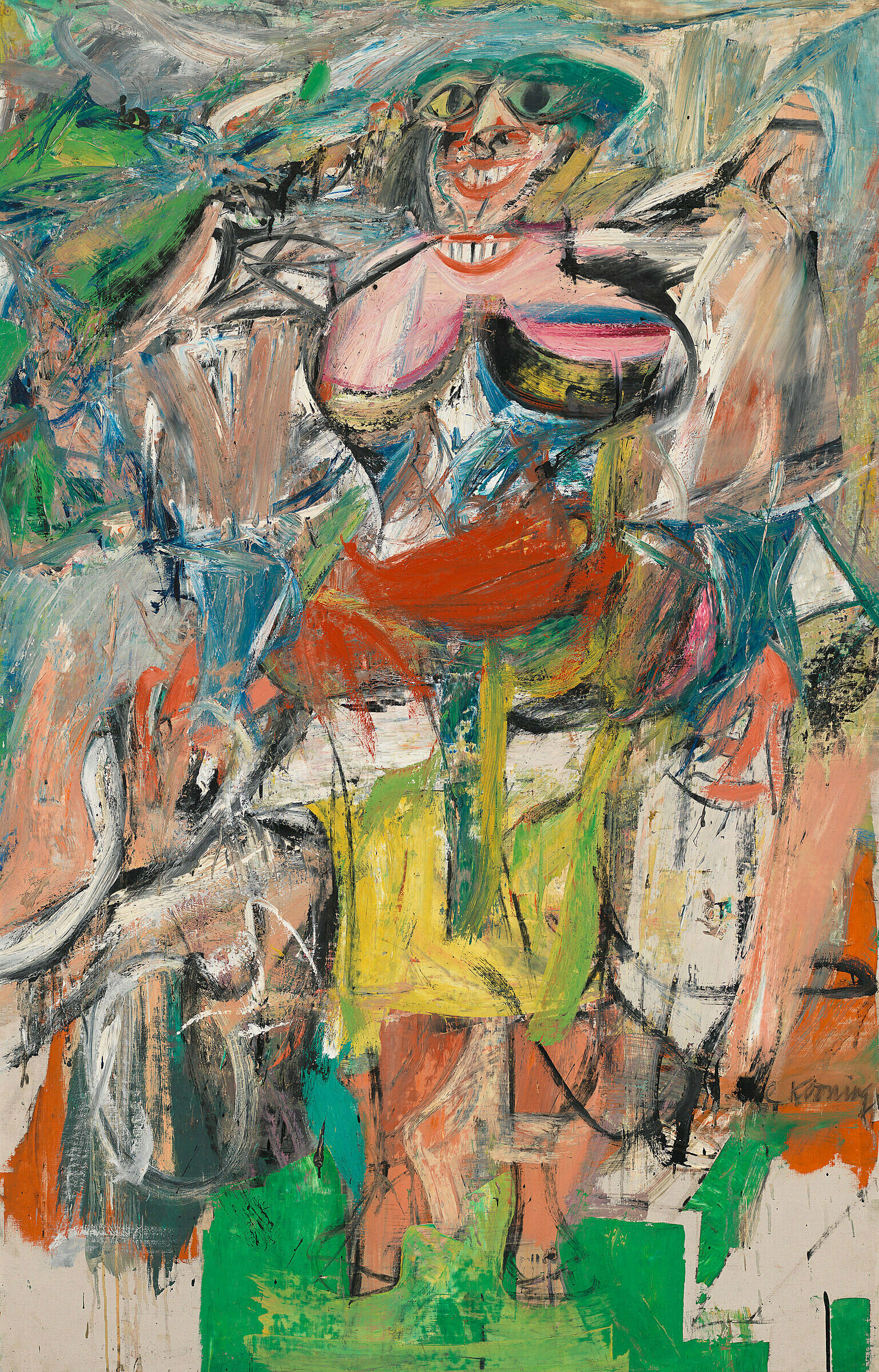
Then came the Woman series (1950-1953), and everything became complicated. He began Woman I in 1950 and spent nearly two years revising it: painting and scraping, gluing a Camel cigarettes smile cut from a Life magazine advertisement directly onto the canvas, starting again. When the work debuted at Sidney Janis in 1953, Clement Greenberg withdrew his support. De Kooning had retreated from abstraction's purity, the argument went. What de Kooning had actually done was something more interesting: refused the choice. The Women are simultaneously figurative and abstract, simultaneously ancient goddess and mid-century billboard. They grin and loom and refuse to settle.
The controversy followed him as a kind of honour. He held the centre of the New York School without conforming to its orthodoxies. The Mesopotamian idols he had encountered at the Metropolitan Museum in 1950 gave him one answer to where the frontal, staring woman had come from. There were older authorities than Picasso.
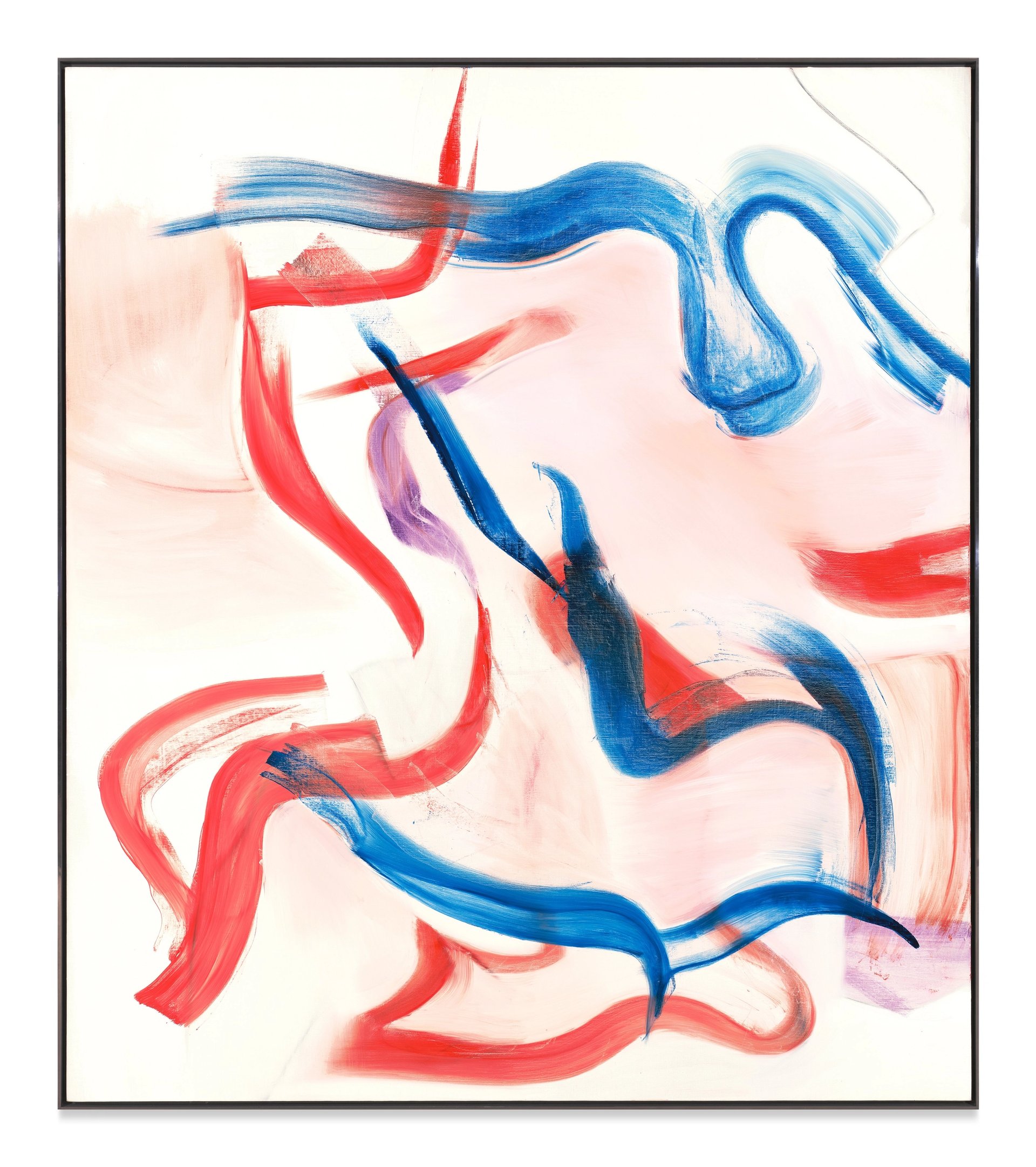
He moved to The Springs in East Hampton in 1963, and his work shifted again: looser, more architectural, more coastal in its light. By the early 1980s, Alzheimer's had begun its slow work. He continued painting until around 1990, producing work that still divides opinion. The late canvases are radically simplified: a white ground, fluid ribbons of blue and red looping across the surface with something close to ease. Whether the simplification was degradation or unexpected clarification depends entirely on what you think painting is for. What I see is someone still moving, still reaching, still finding the body inside the gesture.
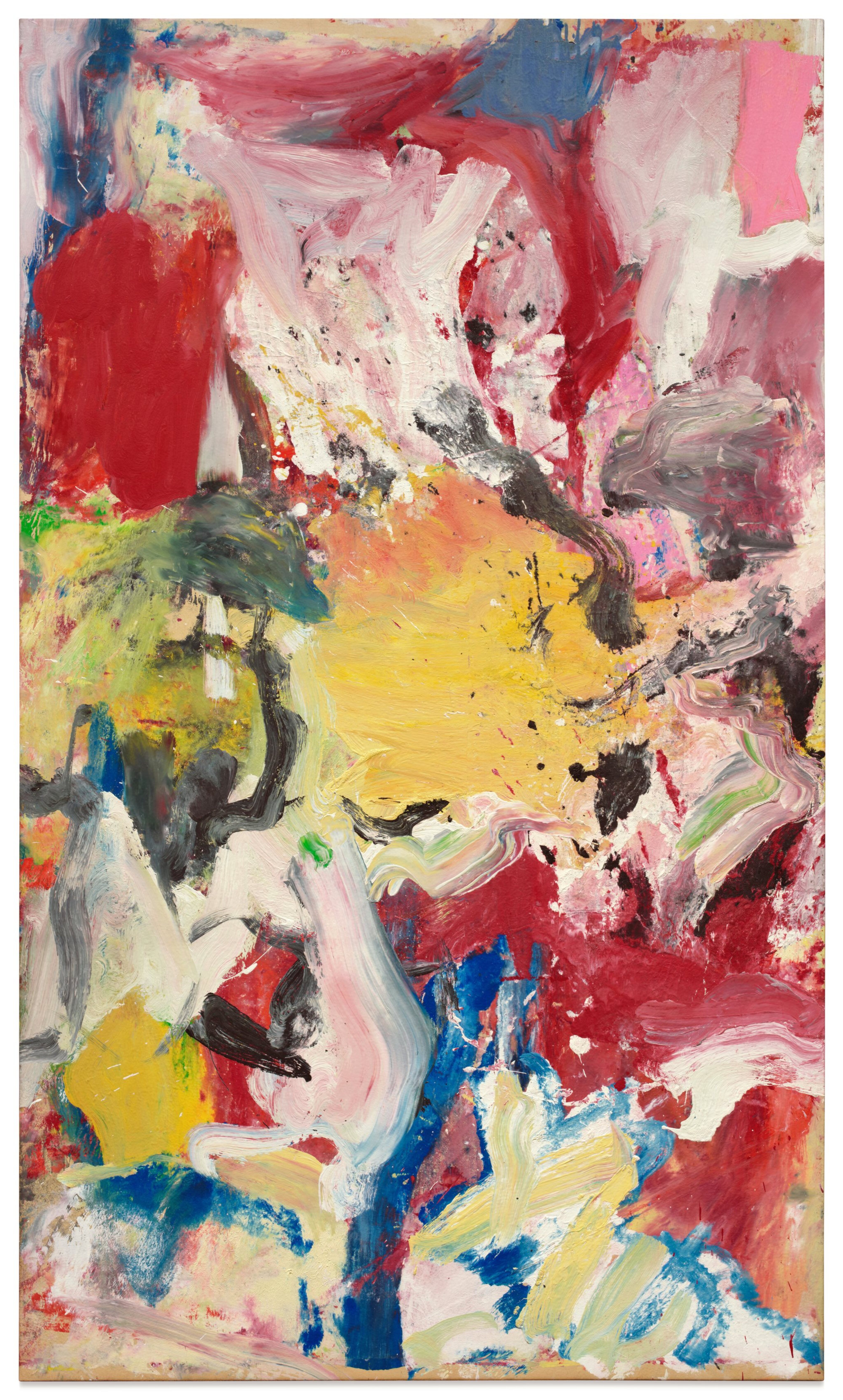
Untitled III (1975) is one of my favourite pieces. De Kooning's heterogeneous colour mixtures have always sat in a perfect pocket for me: there is something corrective about them, a supply of harmony against whatever is too jagged or unresolved. Right now, it also feels like a reflection of my current mind: diverse in colour, shape, and permutation. This work in particular settles where his earlier paintings deliberately unsettle. It sold at Sotheby's New York on 14 May 2026 for $23.5 million, drawing a single bidder, its third-party guarantor. A market note, not a verdict on the work itself.
De Kooning did not transcend the figure or escape it. He held both sides of the argument open simultaneously, for forty years, in oil paint. That refusal to choose is exactly why he still matters.
Responses.
Received. Thank you.