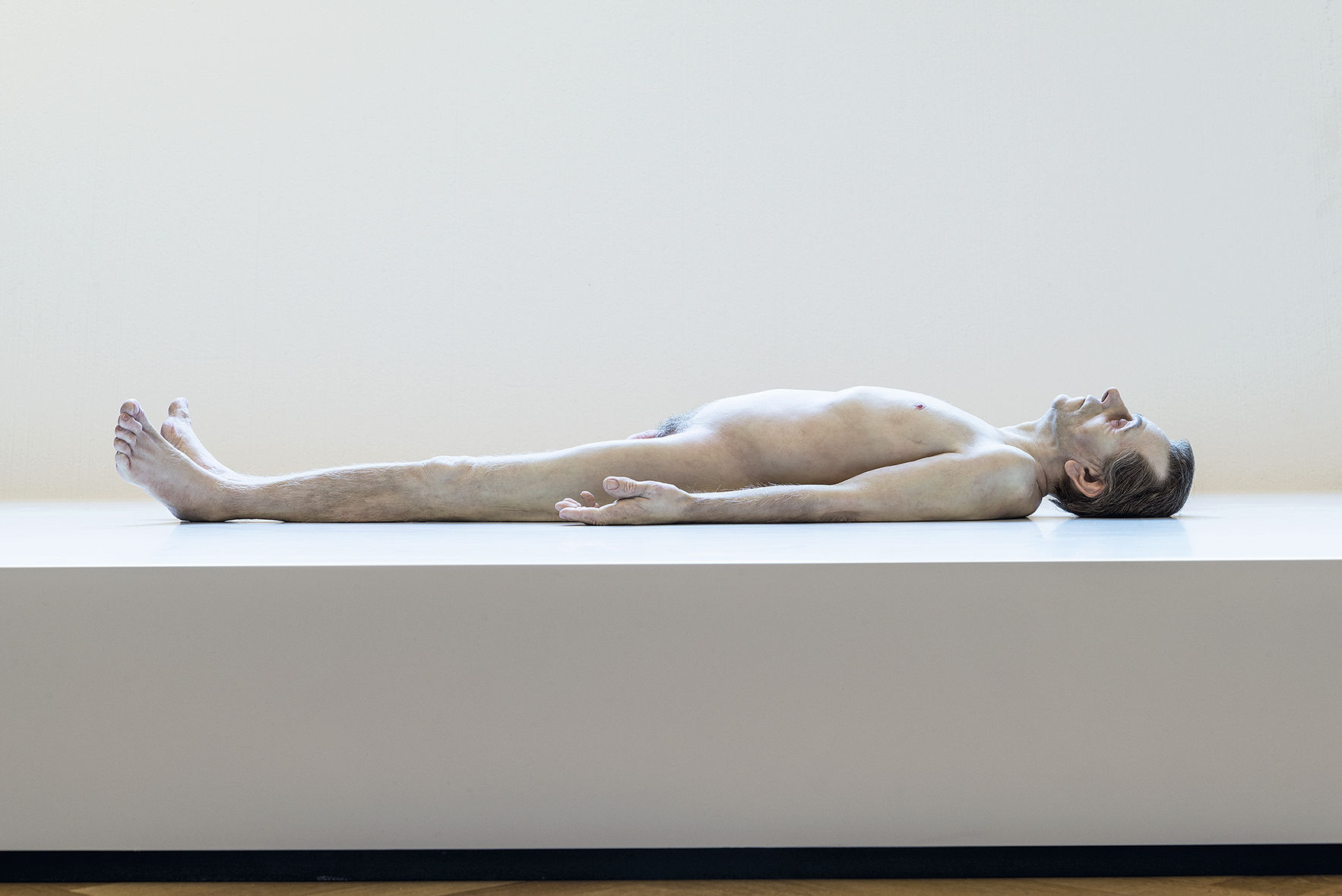
Dead Dad, Ron Mueck, 1996-97.
Hard wooden floor, the type that echoes with each step. Deep in a hidden room, I saw a sculpture that profoundly moved me.
Dead Dad by the Australian artist Ron Mueck is a small, devastatingly lifelike figure of the artist's father. The scale is deliberate and, like loss, you simply don't expect it. Profound tenderness and, in my case, gratefulness. Reading the symbolism behind it only made it better. What makes great art? How can I empathise so easily with someone I don't know and mirror it to my own experience?
Seeing a male figure in this state, palms up, someone we are collectively taught to look up to, rendered so completely vulnerable. Not an alpha, not untouchable, only hidden sacrifice and unconditional love. Do dads get held?
The historical and religious cues are all there, quiet but deliberate. The thought echoes long after you have left that room.
The figure is reduced to roughly two-thirds life size, small enough to cradle. That diminishment is the whole argument: it intensifies the sense of loss rather than describing it. Built in silicone, polyurethane, styrene and the artist's own hair, it measures only 20 x 38 x 102 cm. It was first shown in Sensation at the Royal Academy of Arts in 1997.
Design here is not decoration. Scale and pose are the material decisions that carry the meaning.
Responses.
Received. Thank you.