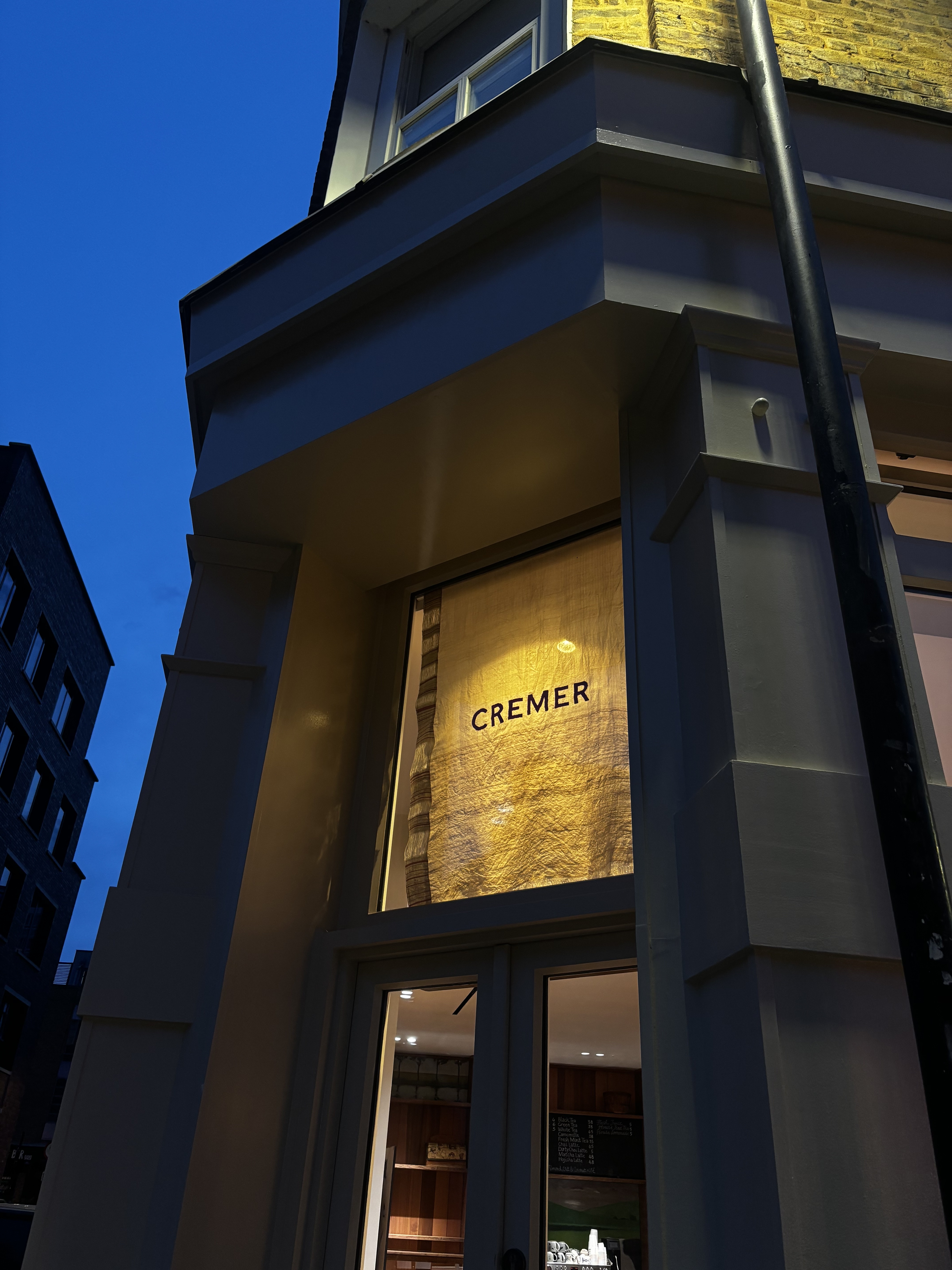
Cremer opened at 1 Geffrye Street, Hoxton, at the end of June 2026: an all-day bakery, cafe and canteen, and the second site from Ramzi Abouchalache, the founder of Space Talk, the Farringdon hi-fi listening bar 000 goes back to at night more than any other room in London to hang out and dance. Cremer is the same team's daytime one: a bakery counter in the first room, communal tables further in, a small garden past that.
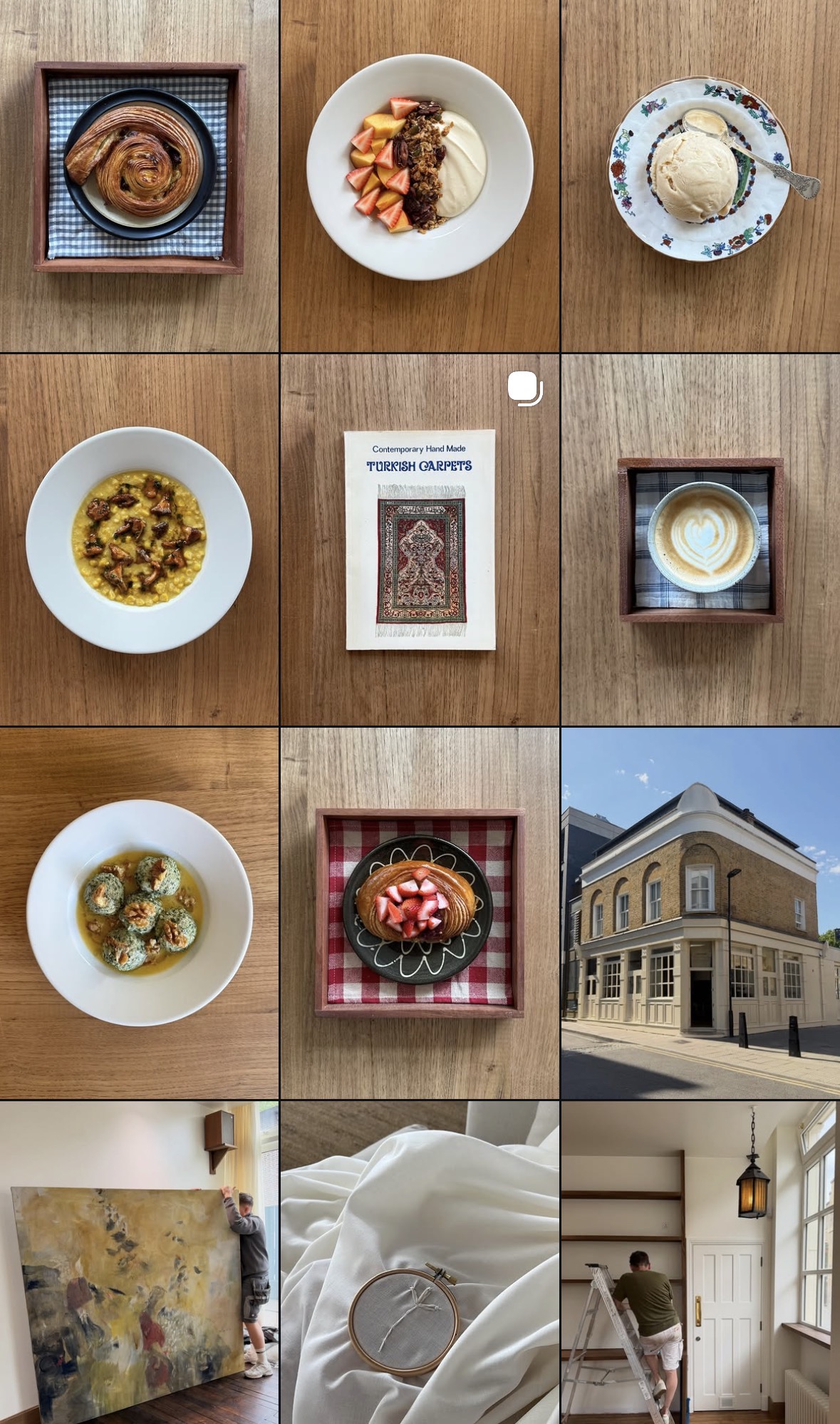
The bakery counter is not an afterthought to the room around it. Pull one of the pastries apart and the lamination shows itself: thin, distinct layers, not a single dense mass of dough. 000's standing order is the strawberry and peanut danish: fanned strawberries and a peanut swirl over that same buttery base, sweet leaning savoury, gone in about four bites. It is worth the trip on its own, design argument aside.
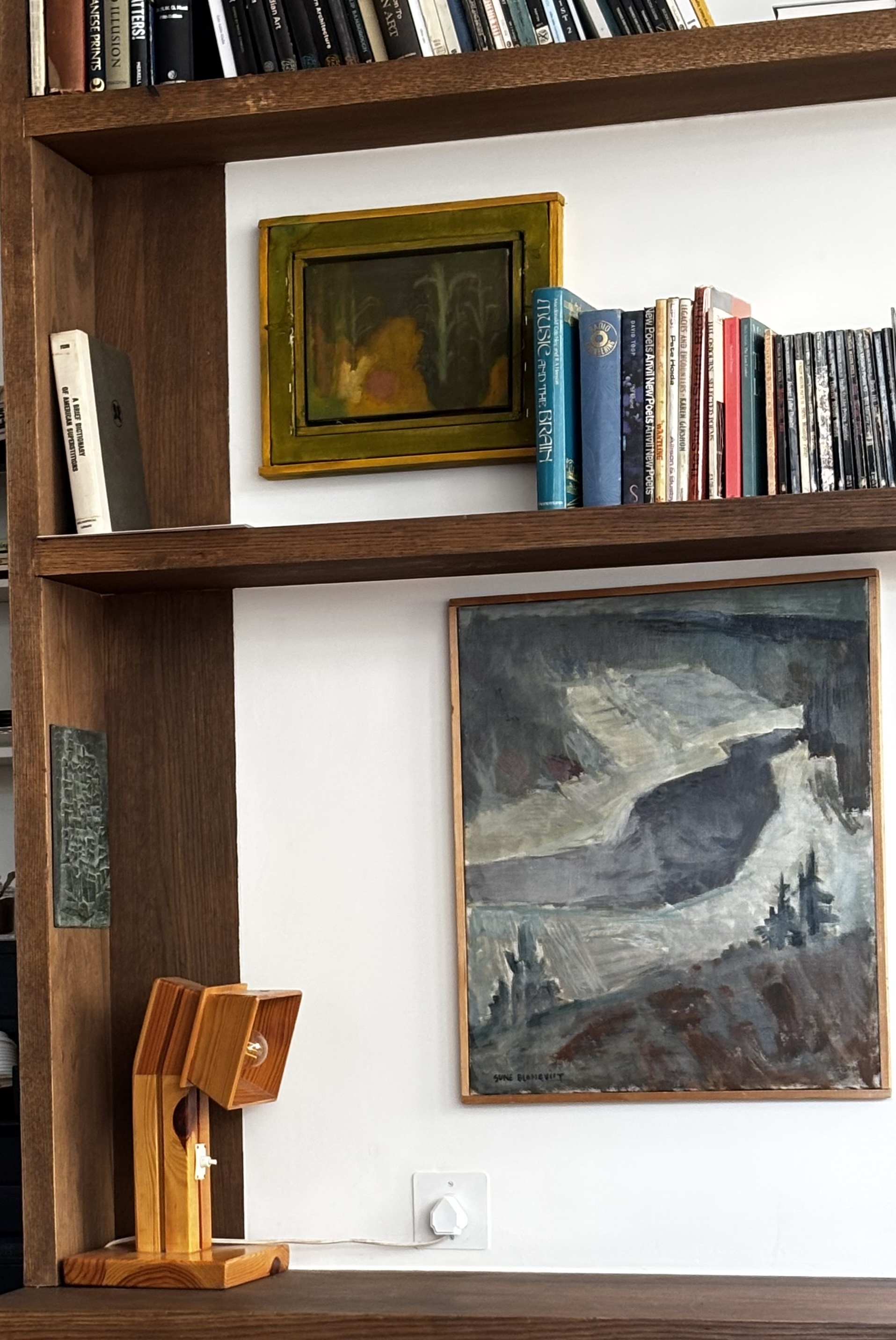
The interior is by Gennaro Leone, of the Italian restaurant Dalla, and the designer Oscar Piccolo, working, in Leone's own description, toward a room you could spend the whole day inside without feeling rushed: somewhere to work, to read, to eat, everything made in-house. George Nelson's How to See spends its whole argument on a single claim, that visual literacy, actually looking at the made world instead of passing through it, is a skill and has to be learned like any other. Cremer is a good place to practise it. The shelving running the walls doesn't hold books so much as it holds small, specific decisions about what sits next to what: a grey landscape propped rather than hung, a run of poetry paperbacks stacked rather than shelved upright, a lamp built from a few angled blocks of wood that reads as sculpture before it reads as a fixture.
One specific decision, straight from Cremer's own account: a copy of Ugur Ayyıldız's Contemporary Hand Made Turkish Carpets, captioned "from our library", its own map of Anatolia's weaving centres running east to the Iraqi and Syrian borders. It is an odd thing to notice about a bakery. By 000's reading, a reference that specific isn't a well-travelled owner's eclecticism. It is the same instinct as the propped landscape and the stacked poetry: a shelf that keeps an out-of-print weaving manual rather than a coffee-table pattern book looks like home more than decor.
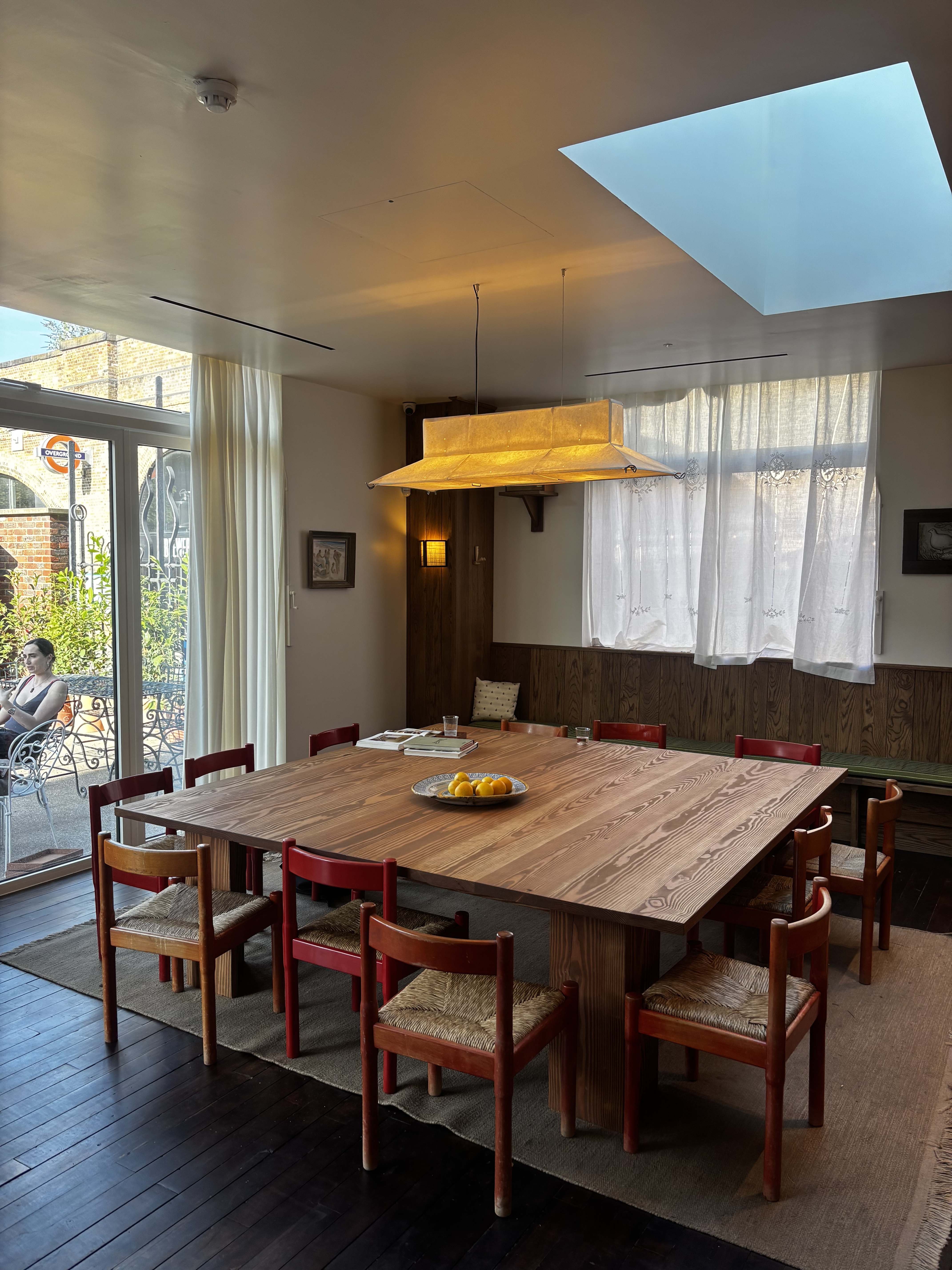
The dining room continues the same logic at a larger scale. Cane-seated bentwood chairs, unmatched enough to read as collected rather than ordered, ring a bare wood table; a shallow bowl of lemons sits at its centre the way a still life sits on a table, an object rather than a garnish. Through a half-drawn linen blind, a small garden and a wrought-iron chair are just visible. Nothing in the room announces cafe. It reads, first, as somebody's front room, which is exactly what Leone has said he was building.
Add the choices up and a vocabulary starts to repeat. Reclaimed timber left visibly grained, never lacquered smooth. Rush and cane instead of upholstery. A single hand-lettered sign, CREMER brushed onto linen, instead of anything printed or backlit in plastic. The shopfront's backlit blind and the dining room's paper pendant are doing the same job on opposite sides of the door: taking a hard light source and softening it through fabric rather than hiding it behind a shade. None of it reads as a mood board executed to spec. It reads like a short list of standing preferences, repeated room to room until the preferences themselves become legible as a language.
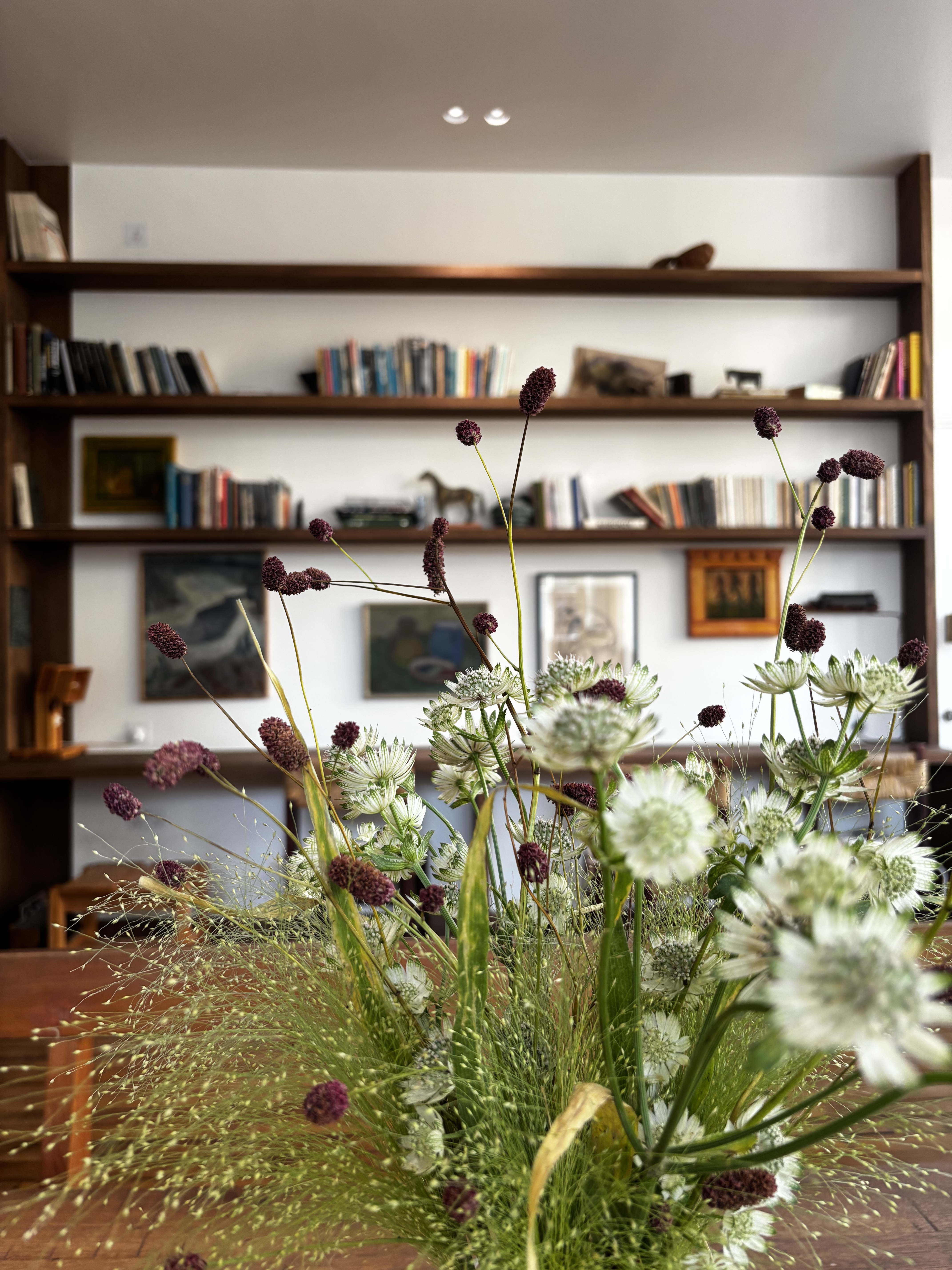
WA: The Essence of Japanese Design, Rossella Menegazzo and Stefania Piotti's survey of contemporary Japanese design, makes a related case from a different direction: that the considered object and the everyday object were never supposed to be two separate categories, that a bowl or a stool earns the same attention as anything framed on a wall. By 000's reading, Cremer runs on that same premise. The dried flowers left on the counter, stems long and a little wild rather than arranged. The small paintings that don't get a wall of their own, only a gap in a shelf that is otherwise busy doing a different job. None of it is trying hard to be looked at, and that restraint is the argument.
There is a harder version of this argument: a room doesn't just reflect the people who make it, it goes to work on the people who sit in it. A room that rewards slowing down tends, over enough afternoons, to produce people who slow down in it; a counter that gives a dried flower or a secondhand painting a considered position trains the eye that keeps coming back to check on it.
Space Talk and Cremer share no menu, but they share a hand: walnut and chrome in the listening bar, timber and cane in the canteen, different materials solving different problems, both rooms composed rather than furnished, every object placed in a stated relationship to the ones around it. That is 000's whole case for both places: not just that they are well designed, but that spending time in them is quietly formative. Cremer is Ramzi's second one, and it holds.
Responses.
Received. Thank you.