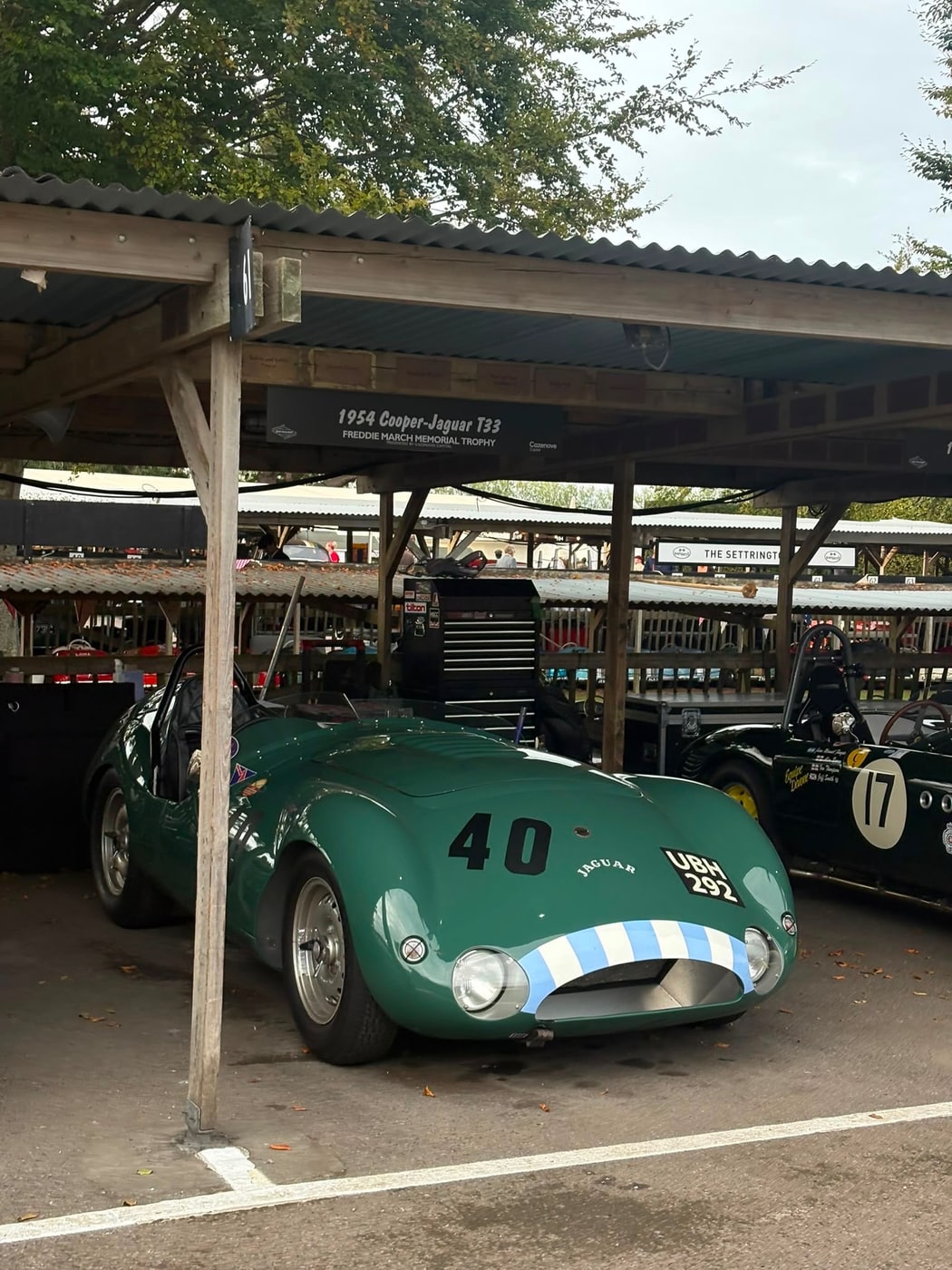
The Goodwood Revival keeps one rule above the others: nothing after 1966. The circuit opened to racing in 1948 and closed to it in 1966, and the Revival, which began in 1998, holds its cars to that span. These photographs, taken on behalf of 000, are not of the racing. They are of the paddock, the open-fronted timber garages where each car waits under a sign naming its year, its make and the trophy it is entered for. A garage is where a car stops being an image and becomes a made thing, with an oil stain beneath it and a tool chest beside it.
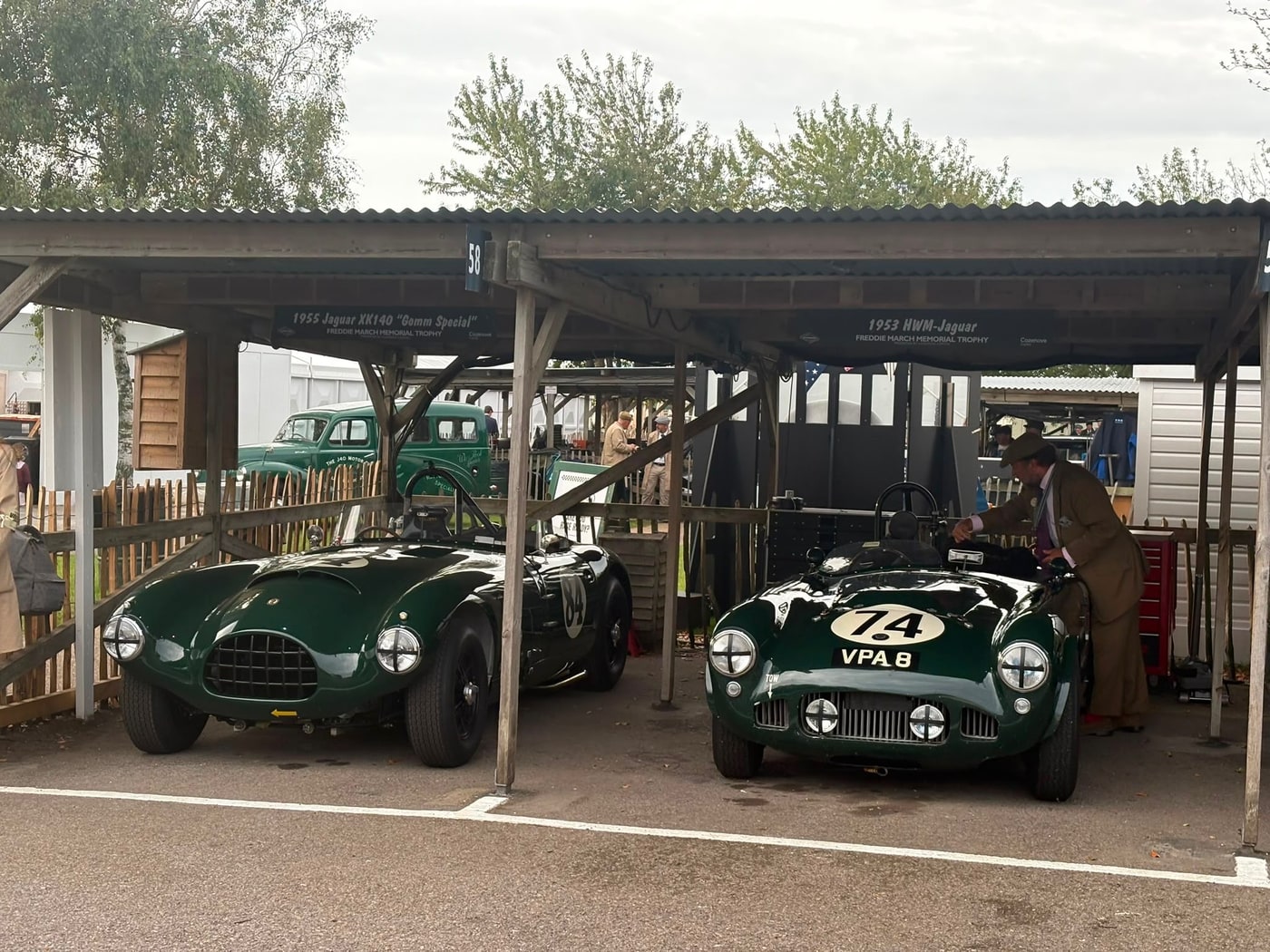
The paddock rewards a particular kind of reading, because so many of the nameplates are hyphenated. A 1954 Cooper-Jaguar T33 is a Cooper chassis built round a Jaguar XK engine. Nearby sits a 1953 HWM-Jaguar, the sports car George Abecassis built for his own use round a Jaguar six, and raced until 1956. Both are British frames carrying one British engine, and both say the same thing in their names: the engine was chosen, not inherited.
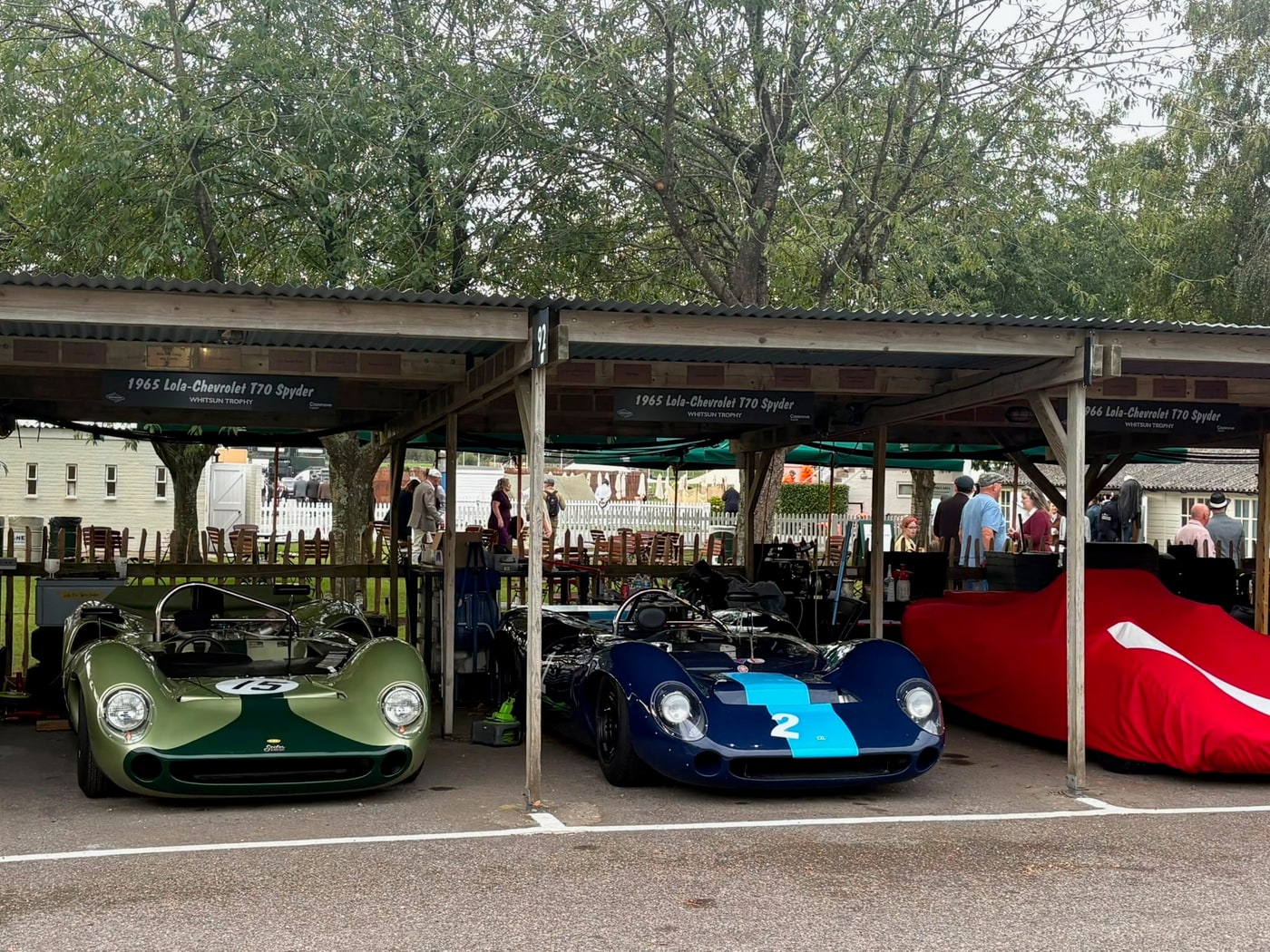
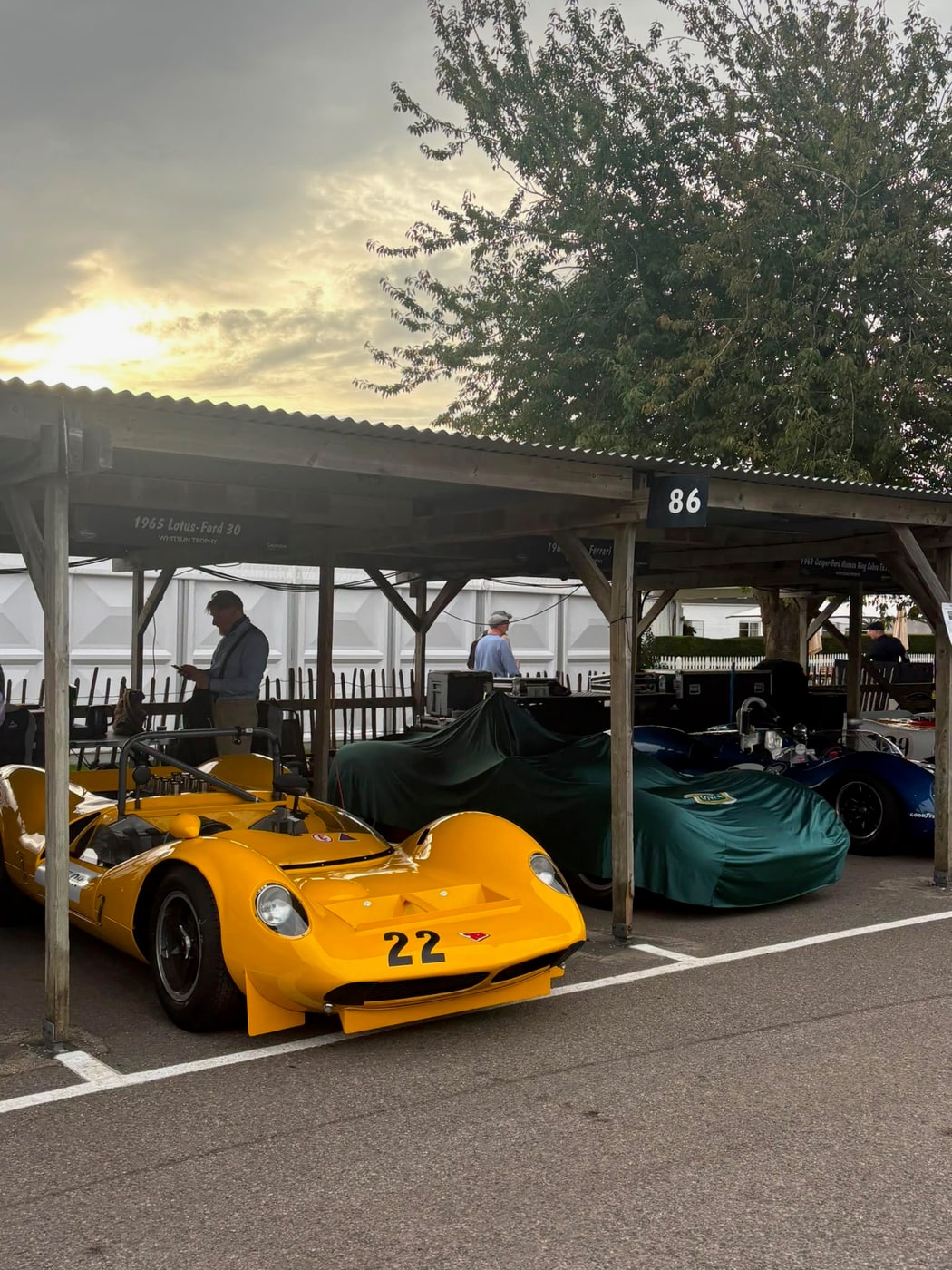
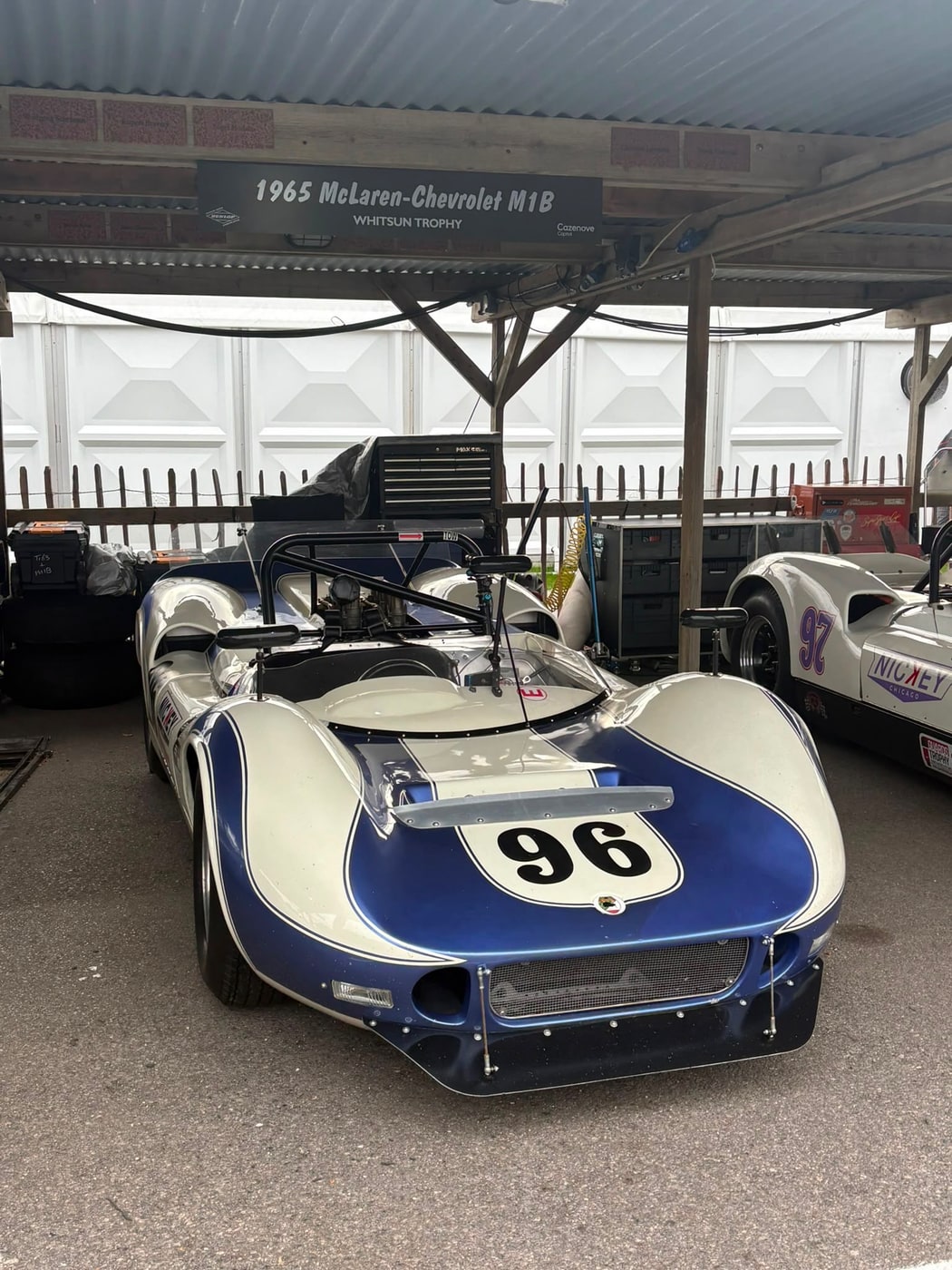
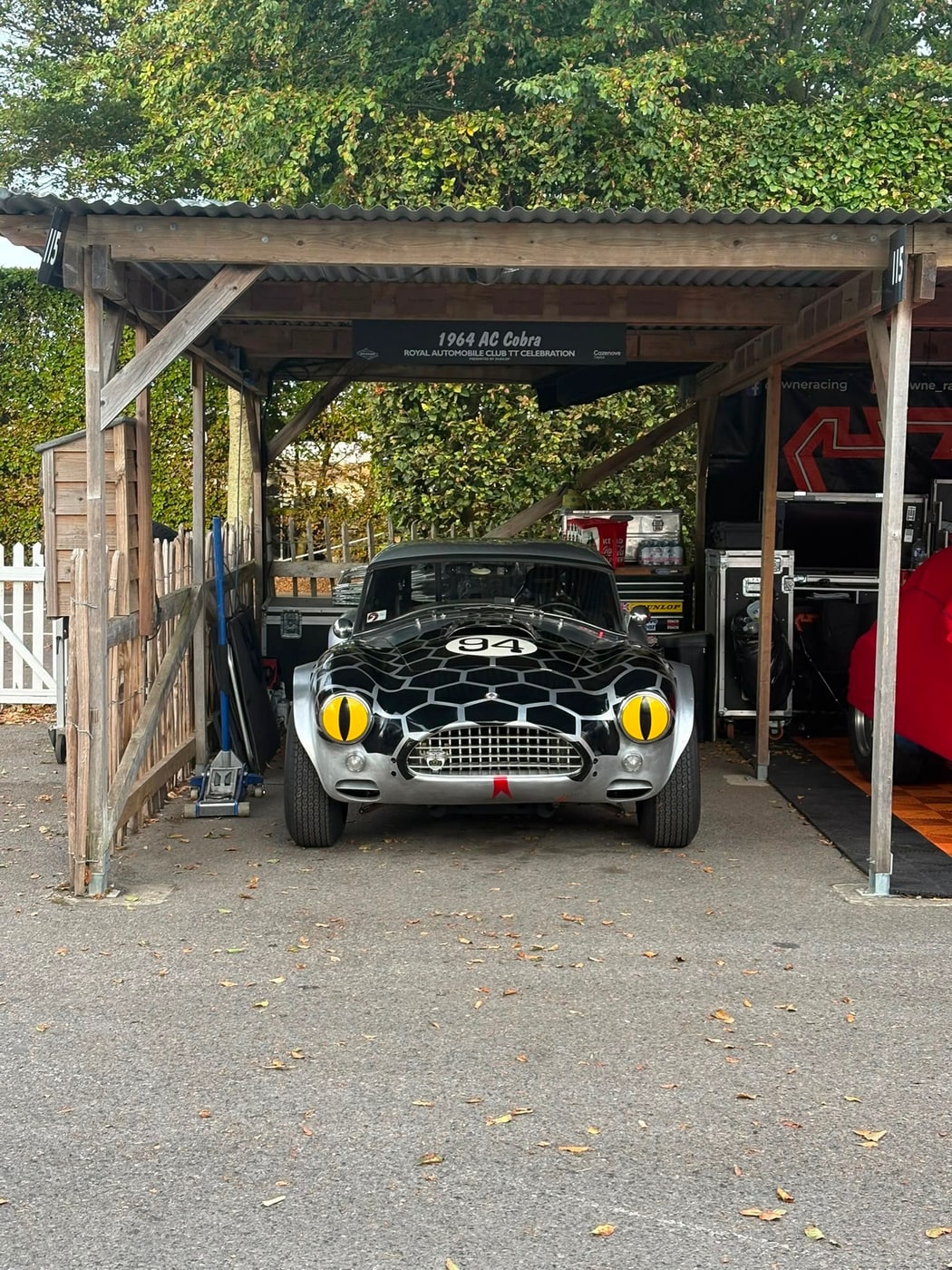
Cross the Atlantic and the habit hardens into a method. Carroll Shelby asked AC in September 1961 for a chassis that would take a V8, Chevrolet declined, Ford agreed, and the result was the AC Cobra, here with a snakeskin finish and yellow eyes over its grille. The McLaren-Chevrolet M1B, the Lola-Chevrolet T70 Spyder and the Lotus-Ford 30 follow the same logic: a specialist chassis, an American engine, and the engine's maker written into the name on the garage sign. John Surtees won the first Can-Am championship in a T70 in 1966. The Lotus 30 is remembered less kindly, for its handling.
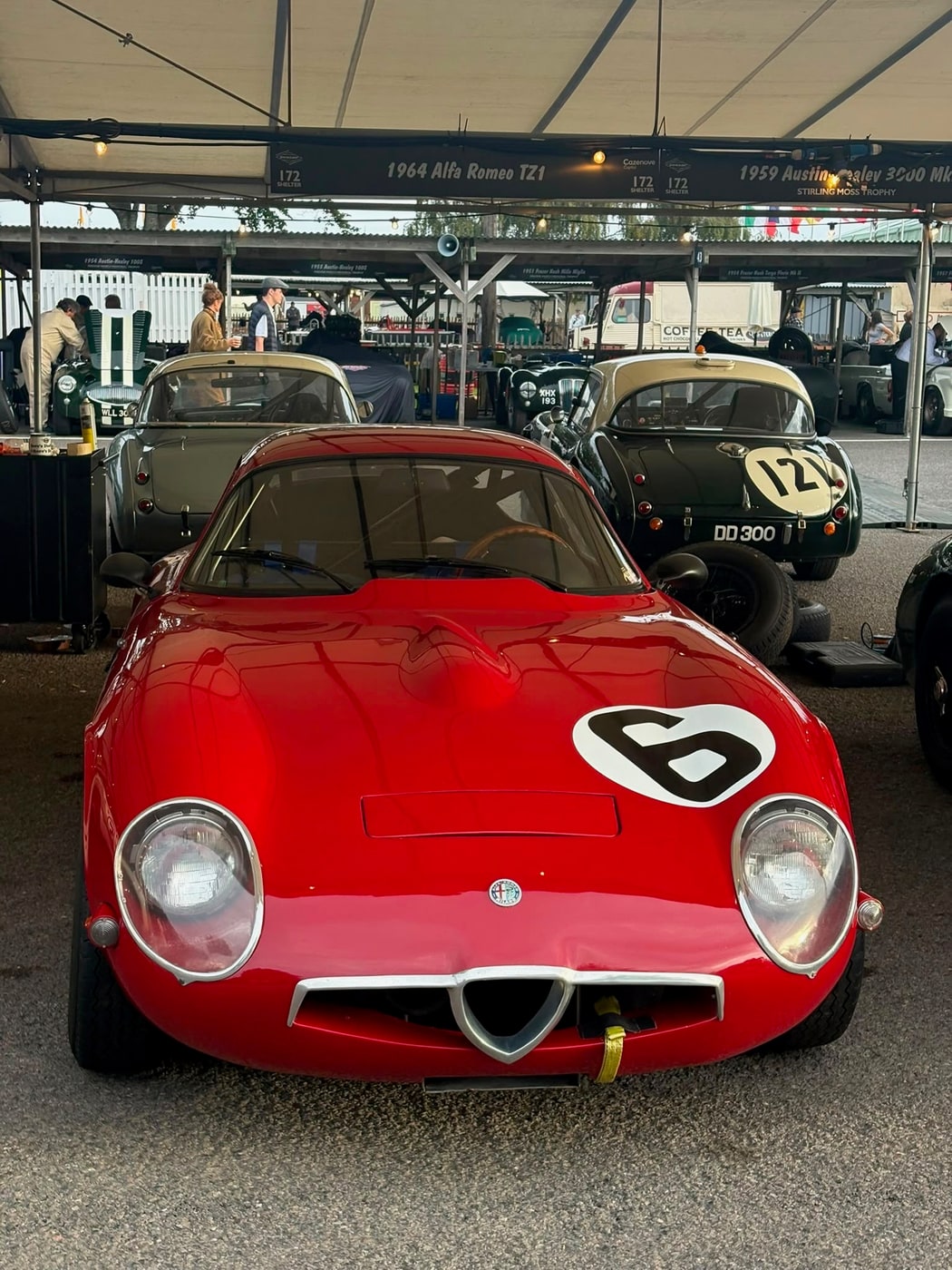
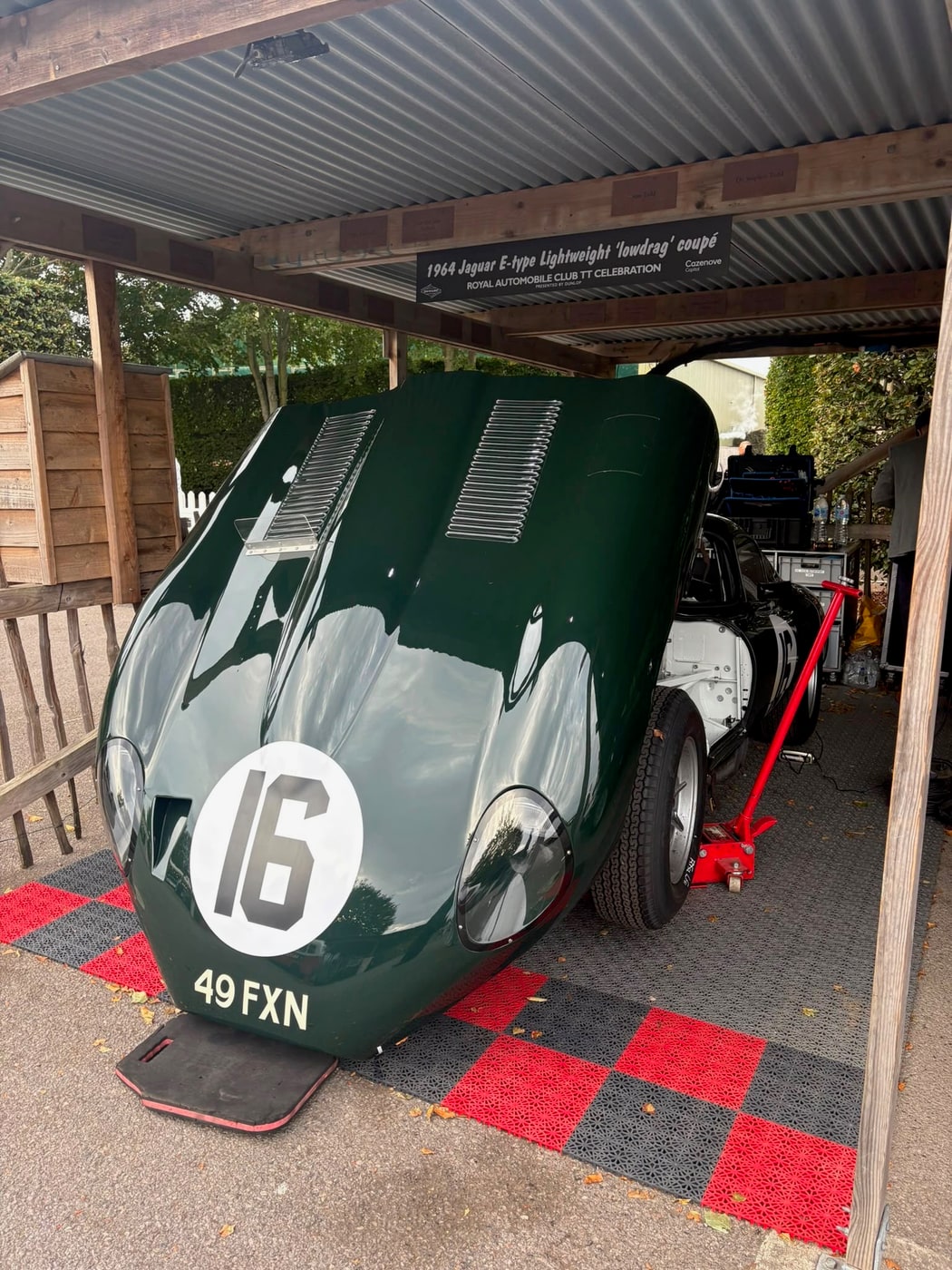
Not everything in the paddock is a hybrid. Jaguar planned eighteen Lightweight E-types and built twelve, and the two E-types under the Royal Automobile Club TT Celebration signs, one signed "semi-lightweight" and one "lowdrag", show the type being lightened and then streamlined, both with their bonnets raised so that the engine can be seen from the path. The 1964 Alfa Romeo TZ1 is the opposite case, a car designed to be homologated: the rules demanded a hundred, and 117 were built. Its tubular frame makes it look like a decision taken once and never reopened, and it won its class on its racing debut at Monza in November 1963.
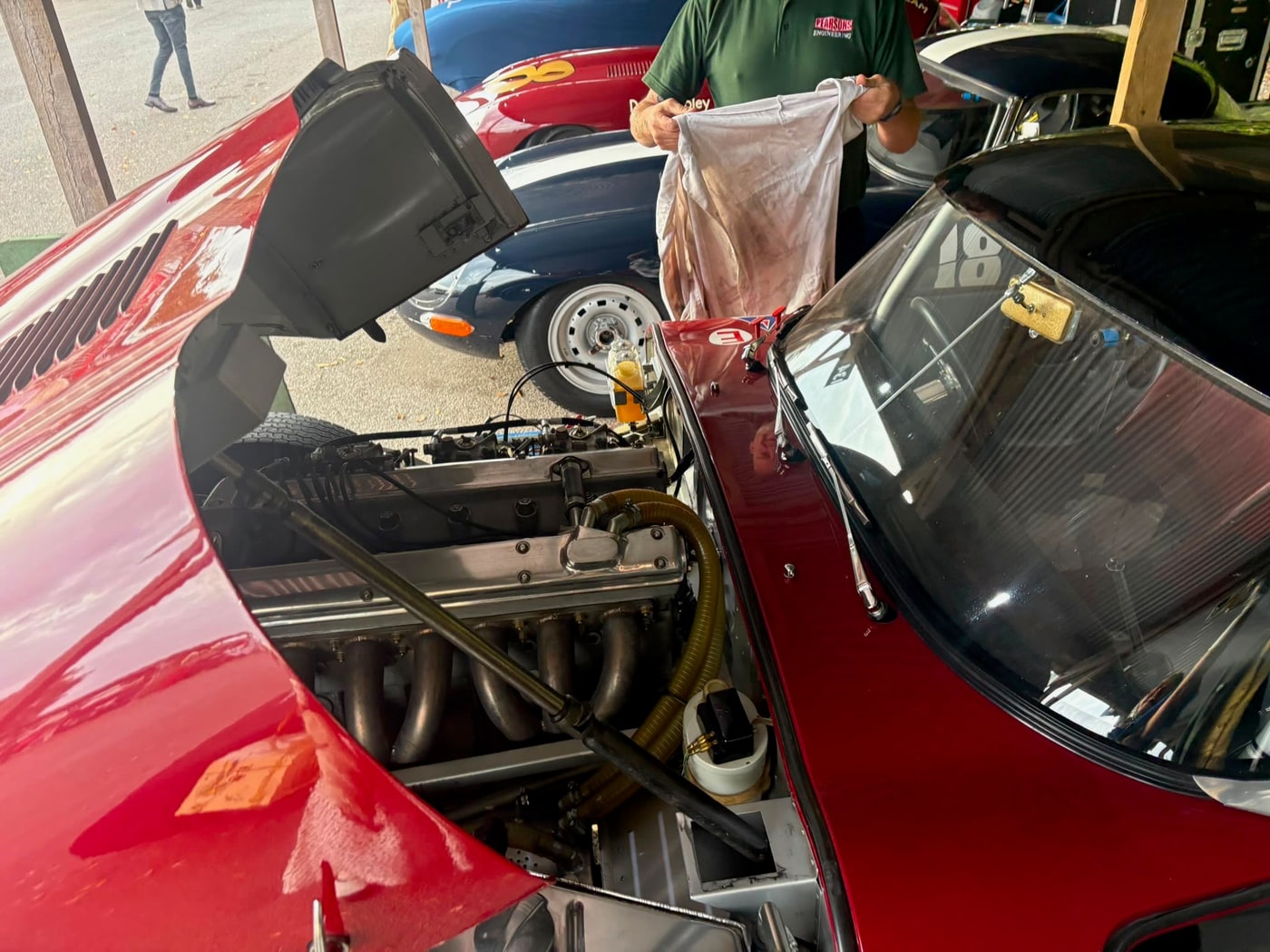
What the pictures keep returning to is not the cars at speed but the people attending them. A man in a tweed suit leans into an HWM. Another, in a green polo shirt printed with an engineering firm's name, shakes out a rag beside an open engine bay. Leaves lie on the tarmac, the bonnet labels say TOW, and the whole place runs on the assumption that a machine this old only stays alive if somebody keeps working on it. That is the argument of the Revival, quietly made. The circuit closed to racing in 1966, but these cars were never retired. They were kept, and the keeping is the work.
Responses.
Received. Thank you.