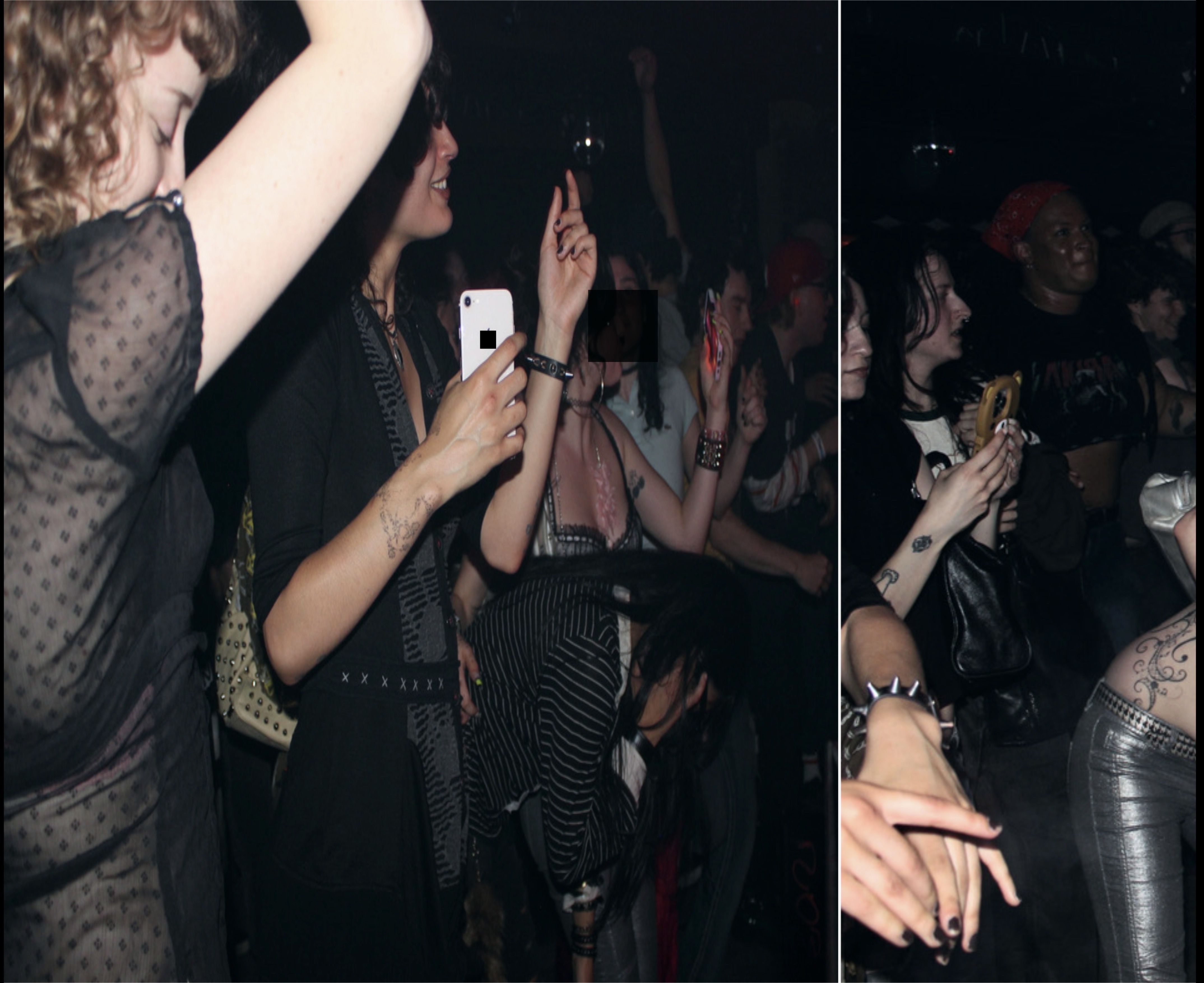
I've seen statements claiming Gen Z killed the underground. Did we? And how can we even define it in the digital era.
It's private and selective. The overuse of computer-generated everything sparked its own reaction. It sounds like electroclash and loud rooms, the embrace of imperfection and self-taught experience. Where does this come from? Fear of cringiness, filtered reality and social isolation. A generation that witnessed rapid optimisation and started aching for the opposite. It roots in human error, unfiltered communication, getting over overexplaining, and the glitch as the message.
It feels like meeting someone with no social media so you forget them faster. And yet there's something there, a reminder that not everything needs to be stored, indexed, found again. It understands impermanence better than anyone.
There's a nostalgia for something we don't entirely understand, an era we didn't fully live but somehow recognise. A hope for misfits in a world where everything is categorised, catalogued and two-day shipped.
Then there's the clothes. Satirical phrasing, ridiculous imagery, spiky accessories, faux leather and mismatched archetypes. This didn't come from nowhere. Cancel culture made sincerity dangerous, so it answered with irony.
I enjoy the dynamic, the people, the synergy. How clever it gets. The underground was never meant to be explained. It was meant to be found.
Was it ever that serious?
Responses.
Received. Thank you.
Amazing piece!
Anonymous ·
i think my concern is that the given description of underground is too general, hence, it can be attributed to every generation, not only gen z. this roots in its definition itself, since we tend to understand undeground as something opposed to mass culture. also, can anything be described as underground, really? especially now, when, as author puts it, everything is categorised, catalogued and shared through multiple mediums?
y ·