I

Food is no longer, if it ever was, just fuel or a bank of calories. It provides multiple layers of experience: sensory layers, visual layers, layers of taste, smell, and texture. As the art of cooking and plating evolves, so does the art of ingesting: food is expected to deliver, to make every bite count.
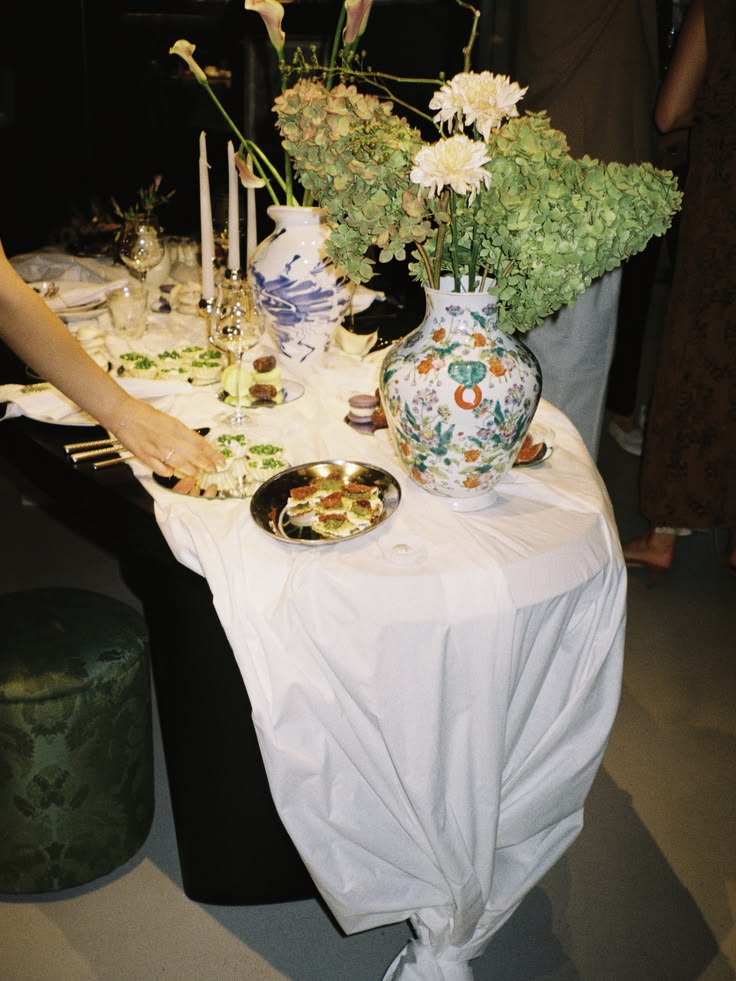
We eat with our eyes, and so we're constantly drawn to the idea of "eye-deliciousness" [Spence et al., 2016; Spence et al., 2022]. This notion of food being visually compelling, not only tasty, announces itself clearly within a relatively new direction of gastronomic culture, culinary set design, which implicates table arrangements, plating as craft, food styling, gastronomic scenography, and other creative ways of working with edible material.
Undeniably, playing with food is a new toy of late stage capitalism. Attention has become one of the most valuable resources, and economic agents know it; so does everyone competing for a place at the table, literally and otherwise. In an economy of endless scroll and shortening patience, the visual presentation of food has become one of the more reliable ways to stop someone mid-swipe. Eating with the eyes is no longer a metaphor: it is a scopic experience in the fullest sense, a form of looking that carries its own pleasure, independent of taste or hunger. The image of food arrives before the food does, and sometimes that image is the whole point.
This is the environment in which set design finds its commercial logic. Brands are looking for new ways to be seen, and customers, overstimulated and easily borrowed, are looking for reasons to stay. A well-composed table, an unexpected material, a color that shouldn't work but does: these become the new storefronts. In 2026, this language is spoken fluently by Laila Gohar, We Are One, FoFo, Balbosté, Cuhnja, Sienna Murdoch, and many others. Projects often borrow from each other, establishing trends and a shared visual vocabulary. Diversity drives competition: it sharpens what's distinctive in some and highlights mimicry in others. The conclusion seems clear enough: the contemporary culinary scene is now a fully-fledged artistic as well as commercially driven field that, like a rhizome, keeps expanding and absorbing new players.
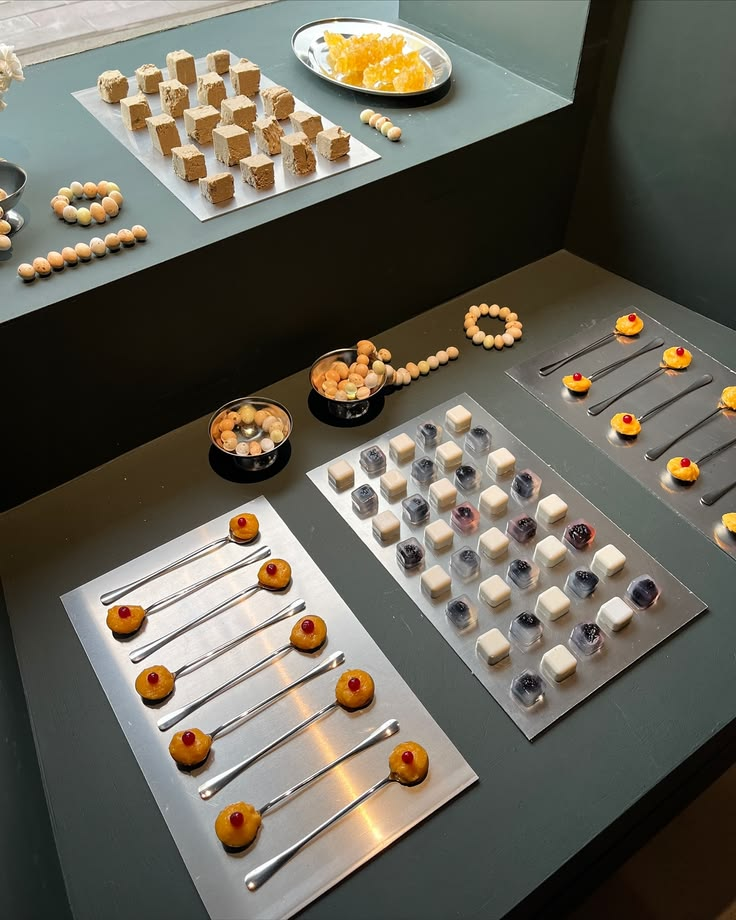
II
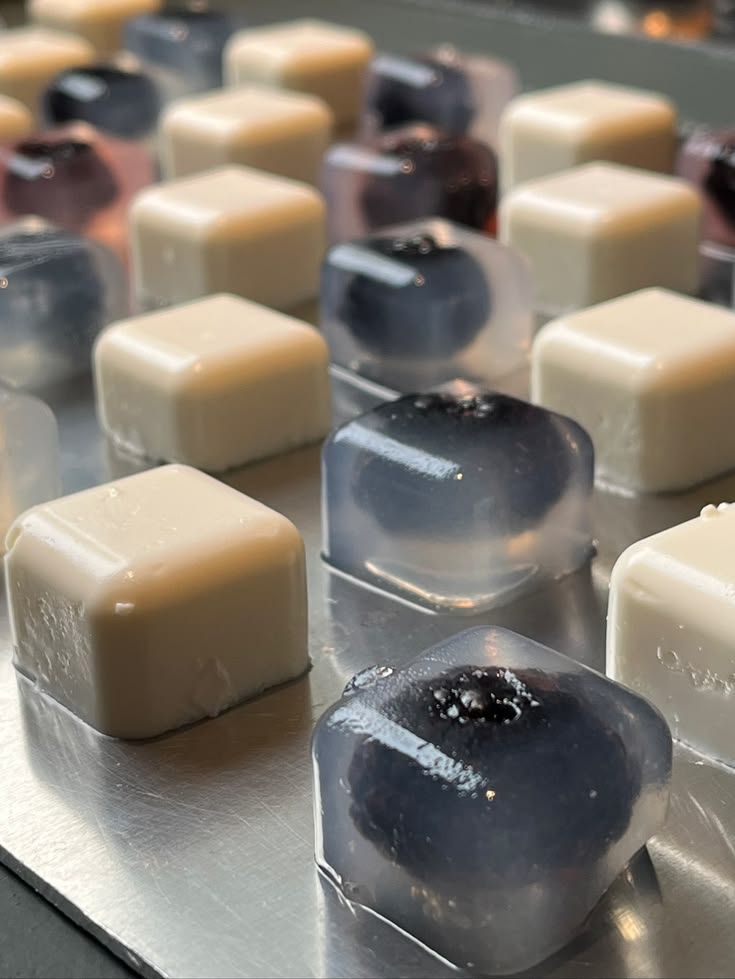
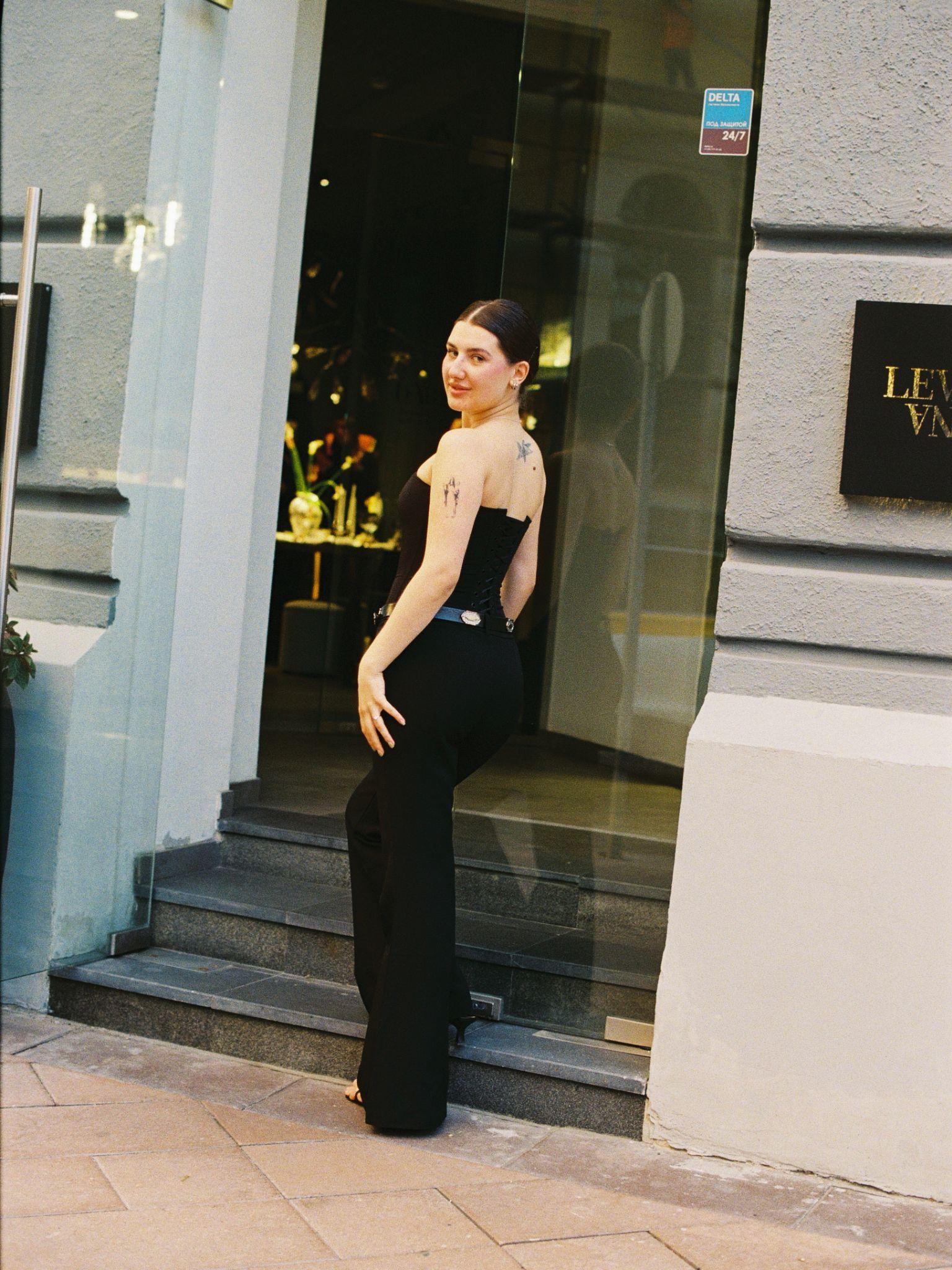
As someone who has been drawn to food for years (through texts and gastronomic discourse, through cooking and hosting dinners, through catering and set design), making something food-related of my own was always a matter of time. That something has a proper name: Setxdish, a project based in Barcelona and Moscow and curated by Katerina Arnautova and me, Yulia Vakula.
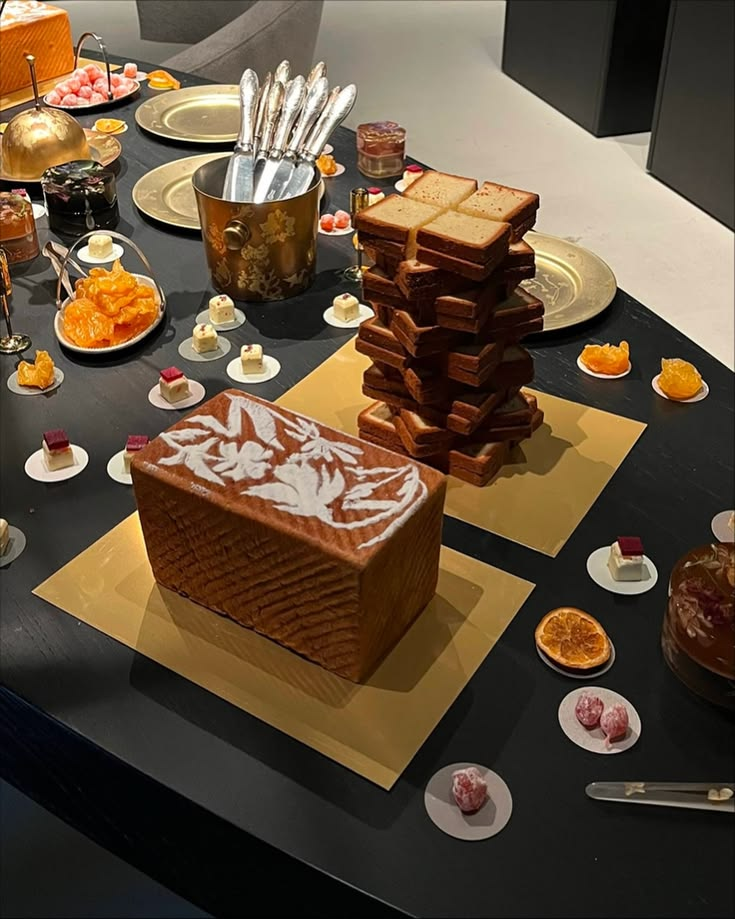
In the world Setxdish inhabits alongside other set design projects, food is material, product, means, a unit of visual information, a cultural medium, a source of pleasure and sensation. We don't only tell stories through food: a dish becomes a narrator, and the set itself becomes the narration.
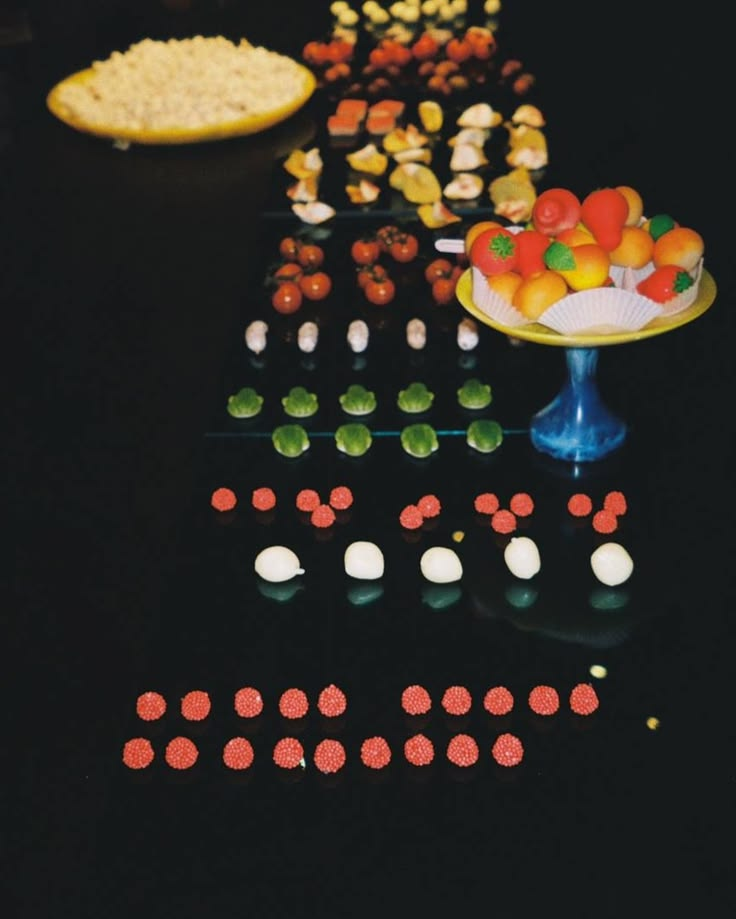
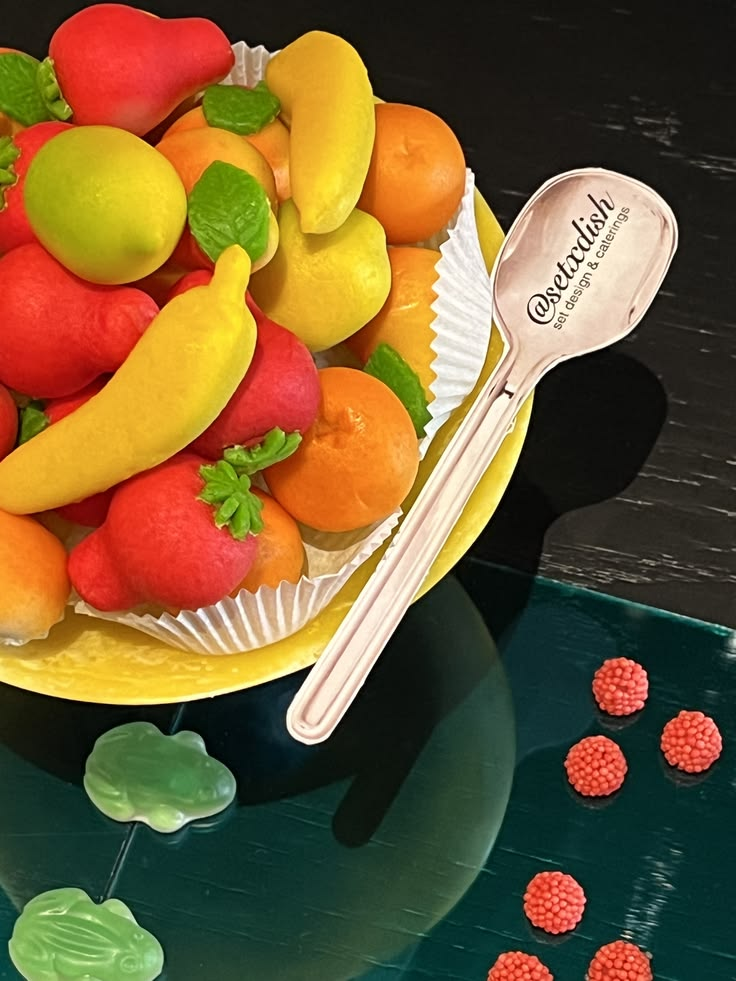
It's a fully rounded text written with marzipan fruits that imitate plasticine figurines; with glossy dried pears that echo the cold gleam of brass; with transparent jellies that answer back to shiny gems and jewelry; or with a floral pattern pressed in flour onto Hokkaido bread, rhyming with the arrangement of flowers on the table.
Set design, in this sense, operates on two registers at once. Firstly, it does, in fact, contribute to brand marketing strategies and creates the particular optics needed for the perception of a brand, a collection, or an event. Secondly, it exists as artistic practice in its own right: an edible sculpture, a product installation, a trompe-l'œil, a rhythm of forms and sizes.
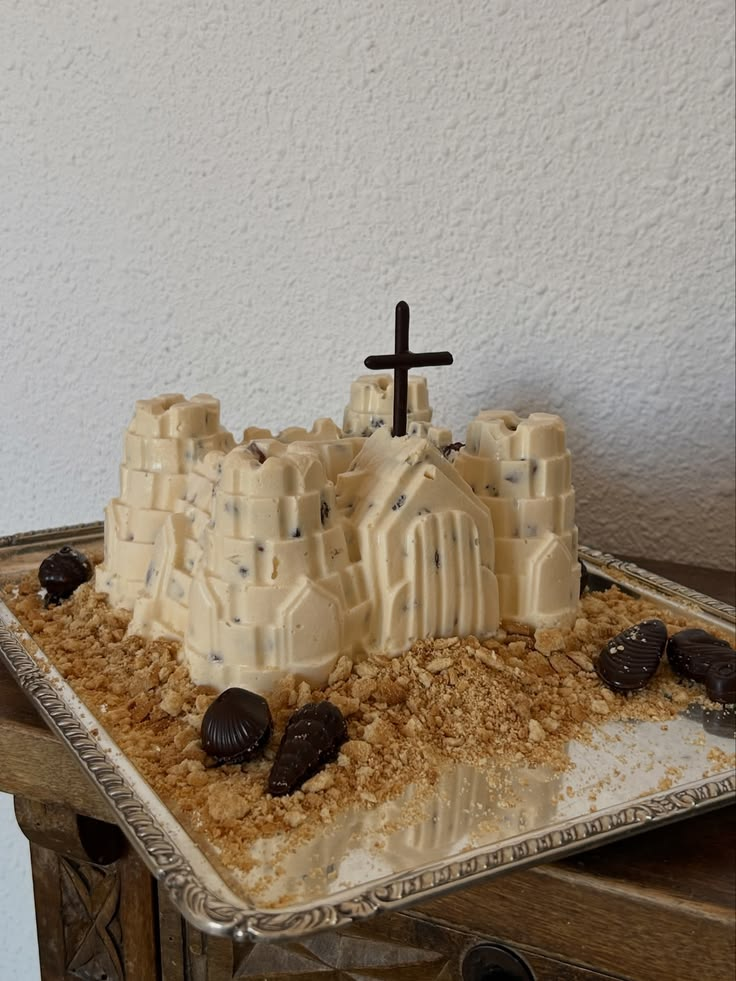
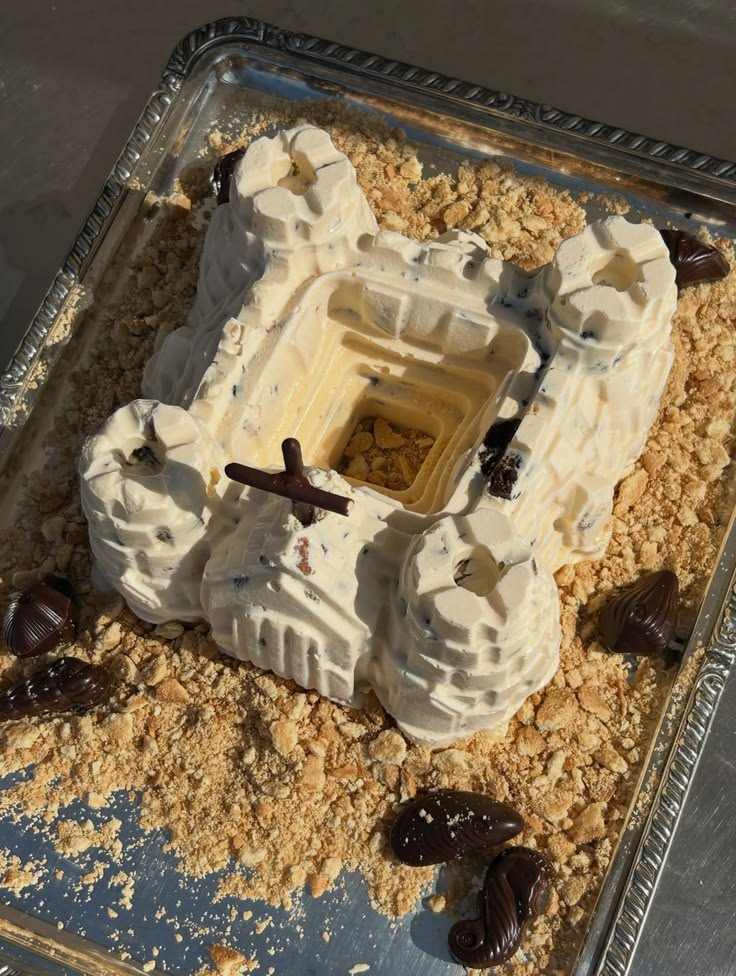
One of the brightest examples of the latter approach is the Paskha formed as a sandcastle, an artefact we created to celebrate Easter. Paskha is a traditional Slavic dish made of cottage cheese, butter, and candied fruit. Ours was decorated with chocolate shells: beautifully nostalgic sweets, precious treasures from the childhood of the 2000s.
This object says something that Setxdsih, more broadly, keeps returning to: food is functionally variable in ways we rarely fail to name. It reflects social structures and exerts pressure. It drives economies and refracts, like a shard of broken mosaic, cultural shifts and changes. It nourishes the body and establishes digestion.
But it is also, always, a space for creation, for communication, for play, for the kind of expression that doesn't need to justify itself beyond the pleasure of the thing made.
Lindenfeld L., Parasecoli F. (2017) Feasting Our Eyes. New York: Columbia University Press.
Spence C., Okajima K., Cheok A. D., Petit O., Michel C. (2016) Eating with our eyes: From visual hunger to digital satiation. // Brain and Cognition. Vol. 110 P. 53-63.
Spence C., Motoki K., Petit O. (2022) Factors influencing the visual deliciousness: eye-appeal of food. // Food Quality and Preference. Vol. 102 P. 1-16.
Responses.
Received. Thank you.