Art
The Sun, The Sea and Everything Passes: Wide Expanse at OMM
Ref. 000-ART-EXPANSE
The sun, the ocean, sand, blue skies. The smell of sunscreen, hair salty from a dip in the sea, a huge thing of pasta. 4 am sunrise, sounds of birds chirping on a summer morning, beach chairs, a dock, lovers, family, blue and pink, tanned skin, bikini lines, Mediterranean, an occasion, a celebration, coming together, Bathers, a garden, a gardener, citrus.
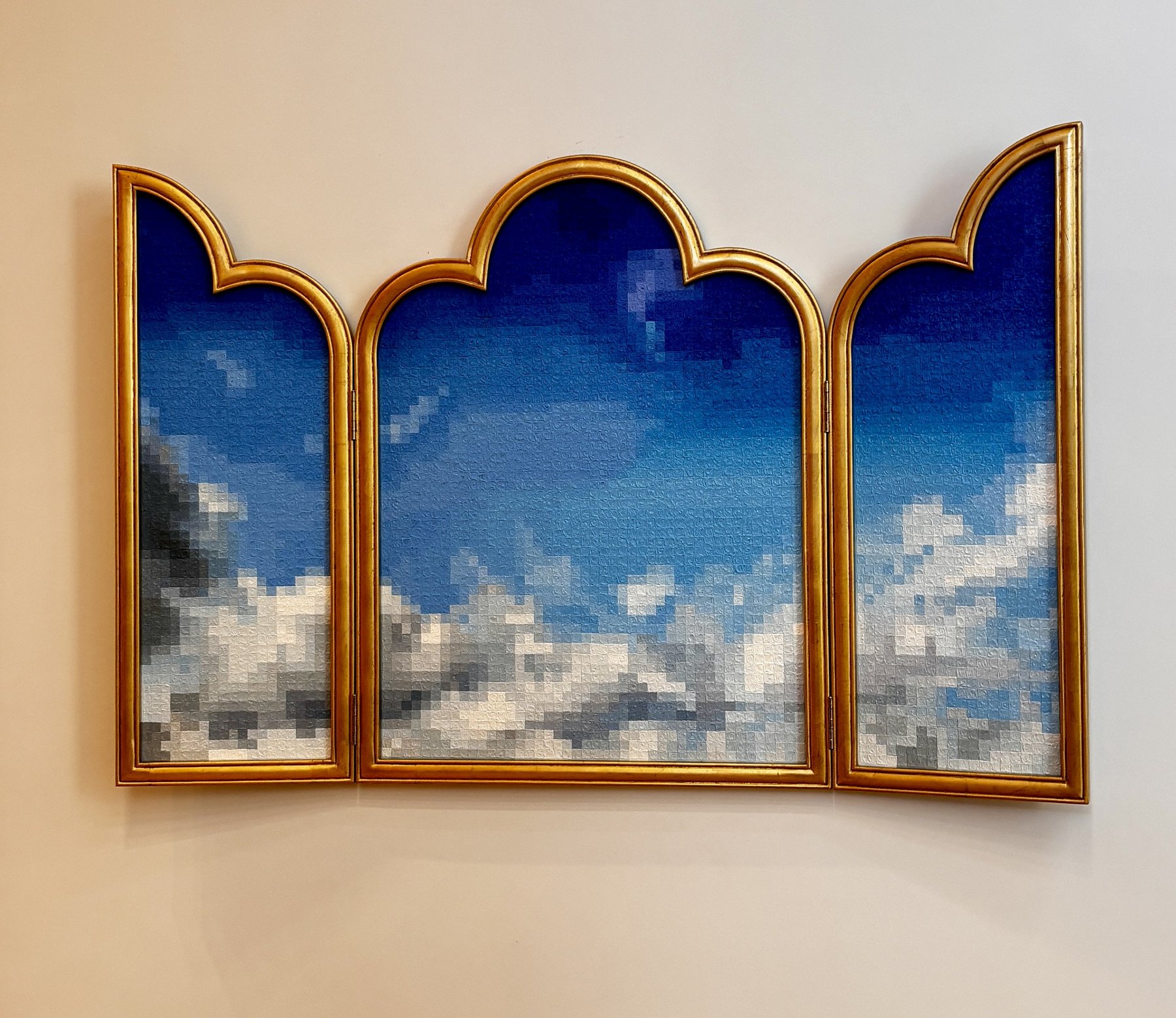
The exhibition opens bright and blue. Merve Şendil's Under The Same Sky, 2022 greets the visitor first. A gold-framed triptych of a cloudy sky that isn't one sky at all. Şendil shoots the sky from two different locations on the same day, two cameras angled toward each other, then she fuses the results into a single pixelated image. It's a "ceci n'est pas une pipe" move dressed as a landscape: the piece doesn't depict a shared sky so much as a manufactured one, constructed in post-production; the visible grain of its pixels is the story. Şendil's practice lives somewhere between myth, dream and plain fact and stitches poetry into imagery. In this painting, the sky becomes an all-encompassing canopy: the vast expanse beneath which everyone and everything supposedly stands.
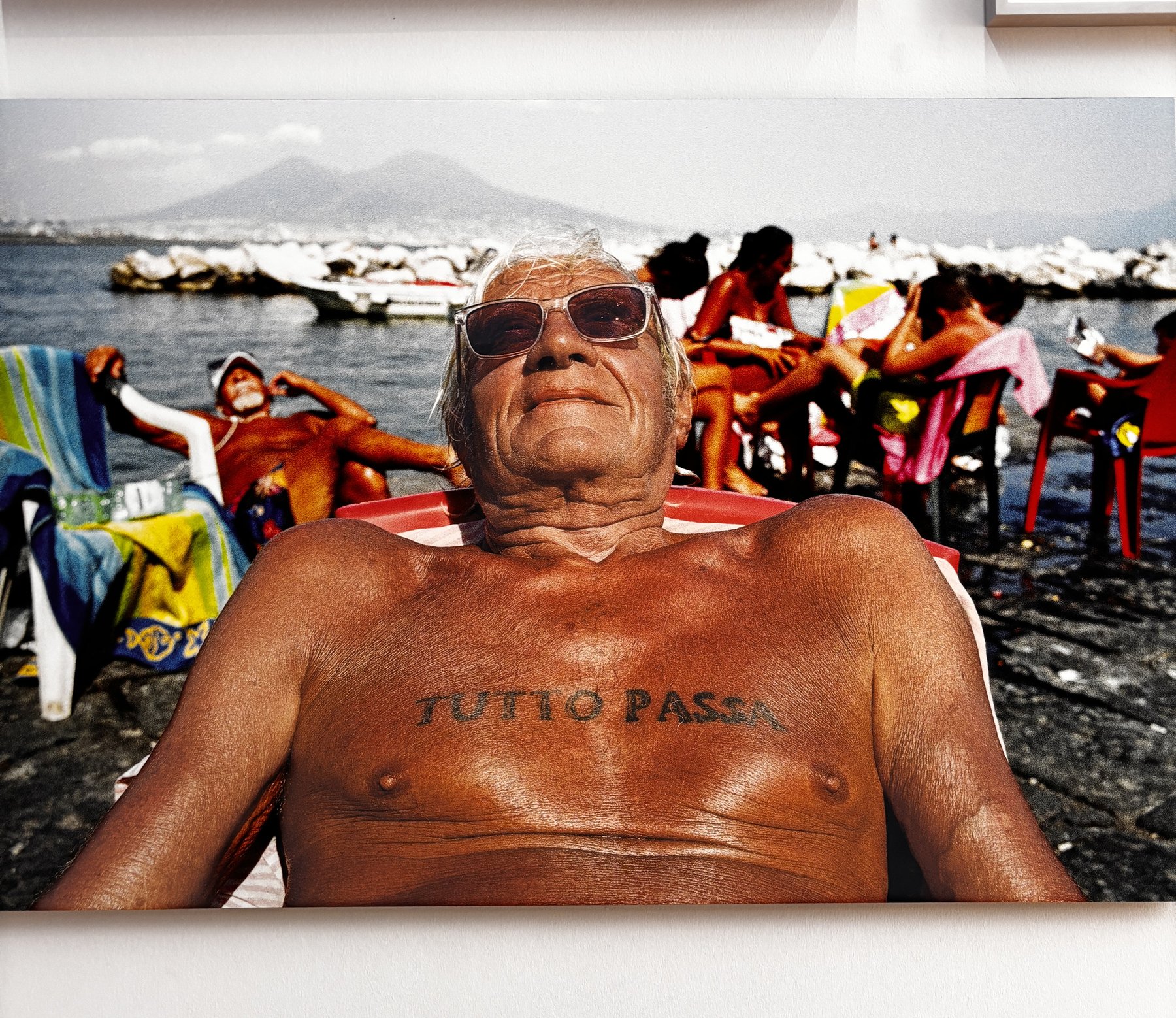
The eye follows the adjacent wall, painted indigo, to Robbie McIntosh's People Having Lunch, 2022. It is collective: a giant tray of pasta, tanned bodies, and at the centre of it all, a table. The table is a central motif throughout this exhibition, a gathering place. McIntosh's photograph stands out on the indigo wall: his subjects' sun-kissed skin set against a light-blue Mediterranean sky. McIntosh keeps returning to how Neapolitans live with the sea. Şendil's sky is vast, cosmic, impossible to stand outside of. McIntosh's table is one tray of pasta, a handful of people, one summer afternoon. What the sky held over everyone has narrowed into one moment at a table. The change in scale is explicit.
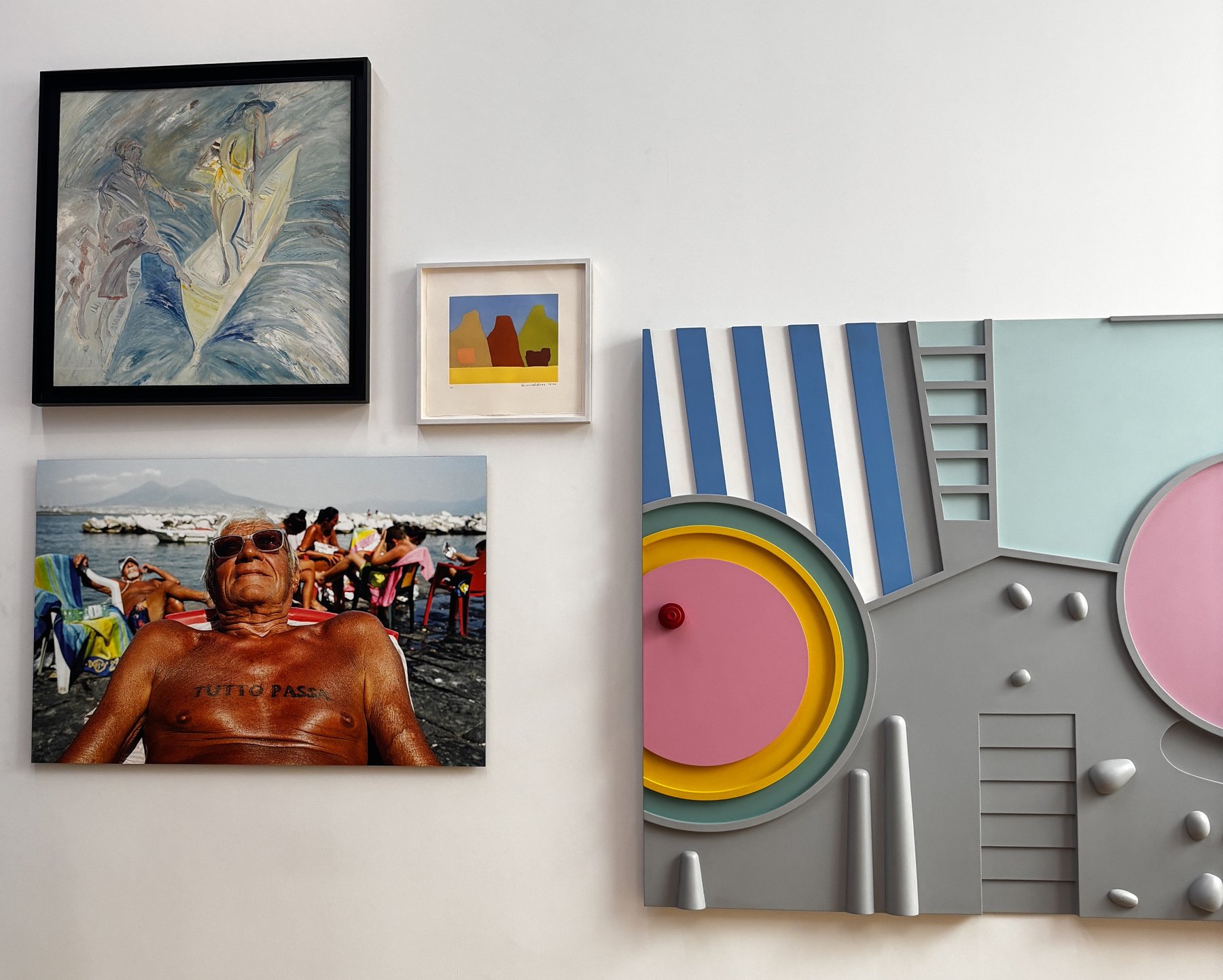
A Beautiful Day by the Seaside, 2013 is abstract; it is focused on the day and the spatial experience. The staircase and the water droplets on the artwork echo the presence of people. It is abstract with a ghost. It acts as the canopy here, the setting beneath which the rest of the story on this wall unfolds. Zoom in and you find Etel Adnan's Mountains, 2020 next to it, as if it belonged to the same imagined landscape the exhibition paints in the visitor's mind's eye. In the foreground, Tutto Passa, 2023 by Robbie McIntosh. If this entire display wall were a painting, Mr. Tutto Passa would be the protagonist while Nadide Akdeniz's couple in Untitled, 2009 would be the side characters, playing off it in contrast, against the beautiful seaside background. An old, bronze-skinned Italian man with the words "Tutto Passa" ("Everything Passes") tattooed on his chest, a couple in the middle of an ocean-side lunch left unfinished, while the sea and the mountains watch. Figurative Composition, 1986 continues to echo the side story; it depicts a man and a woman meeting on a boat, with contrasting colours nearly splitting the canvas between them, another search for connection through tension. The artworks on this wall assemble an entire story: five canvases locked into one continuous scene like puzzle pieces.
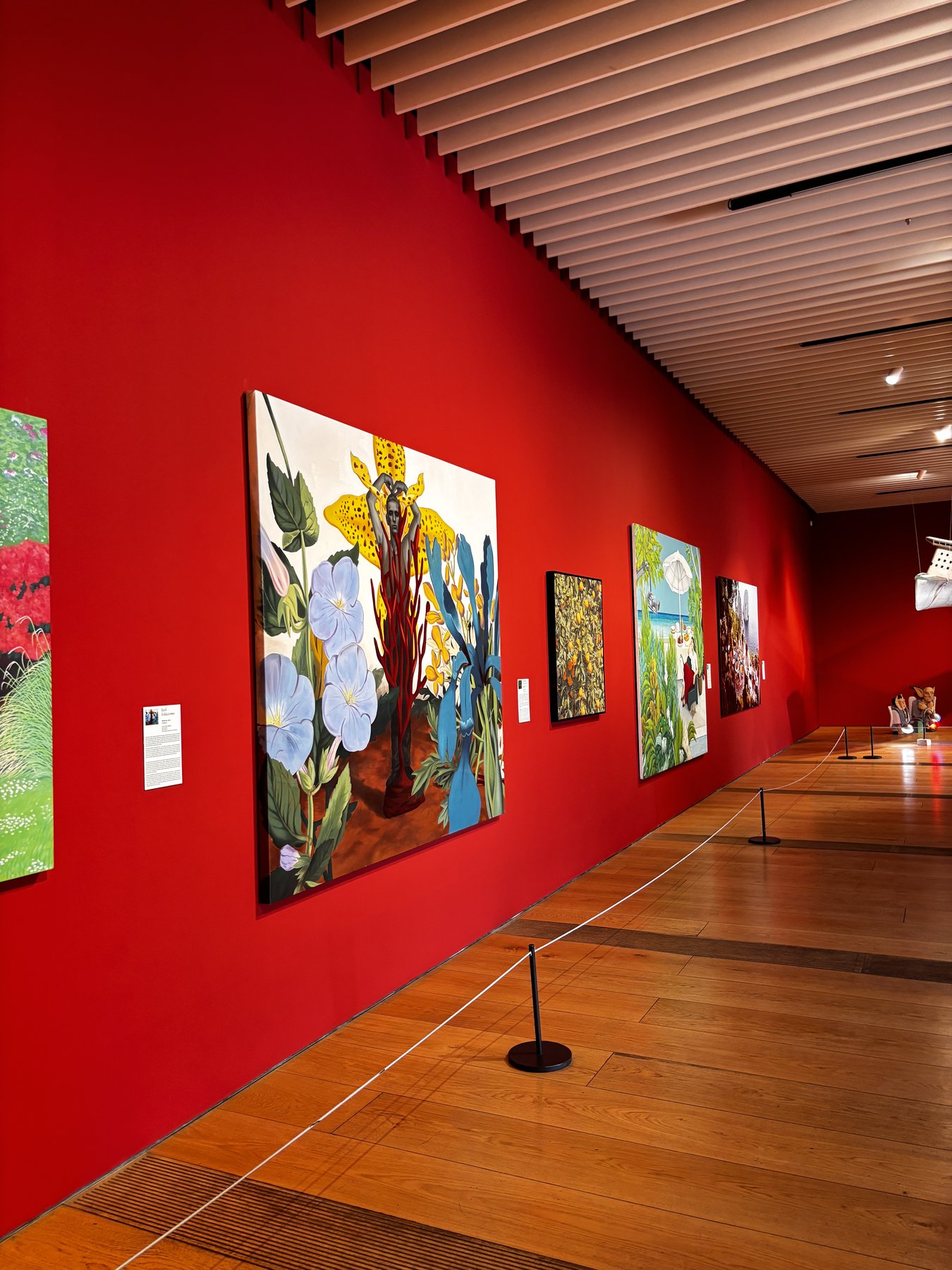
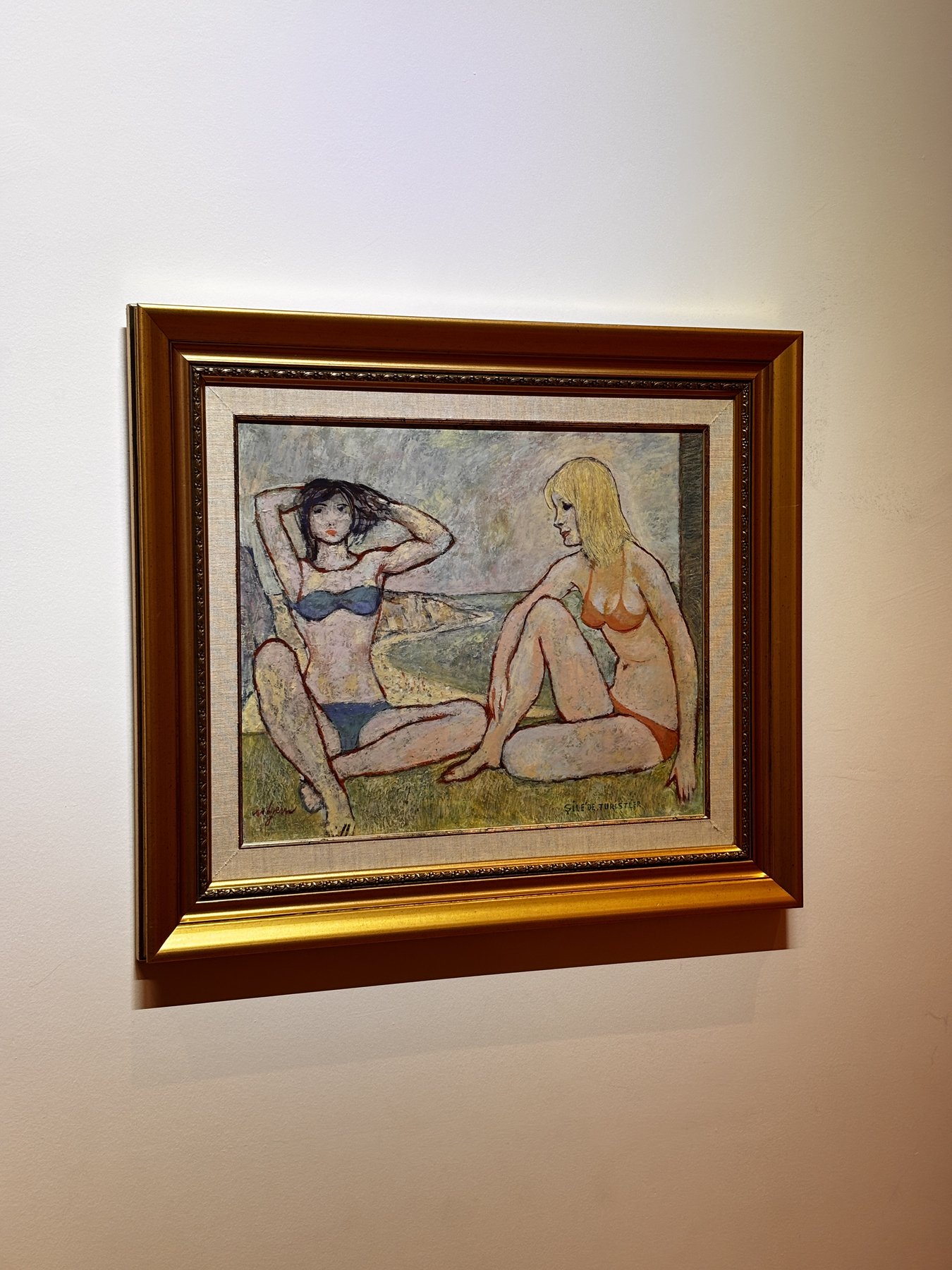
Nuri İyem's second work in this exhibition, Tourists in Şile, echoes a long tradition of bathers in art history. A pioneering figure in Turkish painting and the social-realist movement, İyem captures two women resting and talking along the shoreline of a Turkish summer town. It is a record of how, by the 1980s, the Turkish seaside had become less about swimming and more about leisure, conversation, and gathering. The wall colours carry the exhibition from blue and indigo to pink and red, and the subject follows, from the beach, to garden, to table, to celebration, to meeting. The second floor opens with İyem's tourists, and as you stroll, the eye meets Slim Aarons's Dining Al Fresco on Capri, 1980, elite jet-set figures dining on a private Capri cliffside, a notable duality. Same decade, two coastal leisure scenes, two different social classes. Aarons's photography is cinematic. It looks staged, yet insists on being pure documentary, the same trick Şendil's sky and McIntosh's beach have already pulled on us.
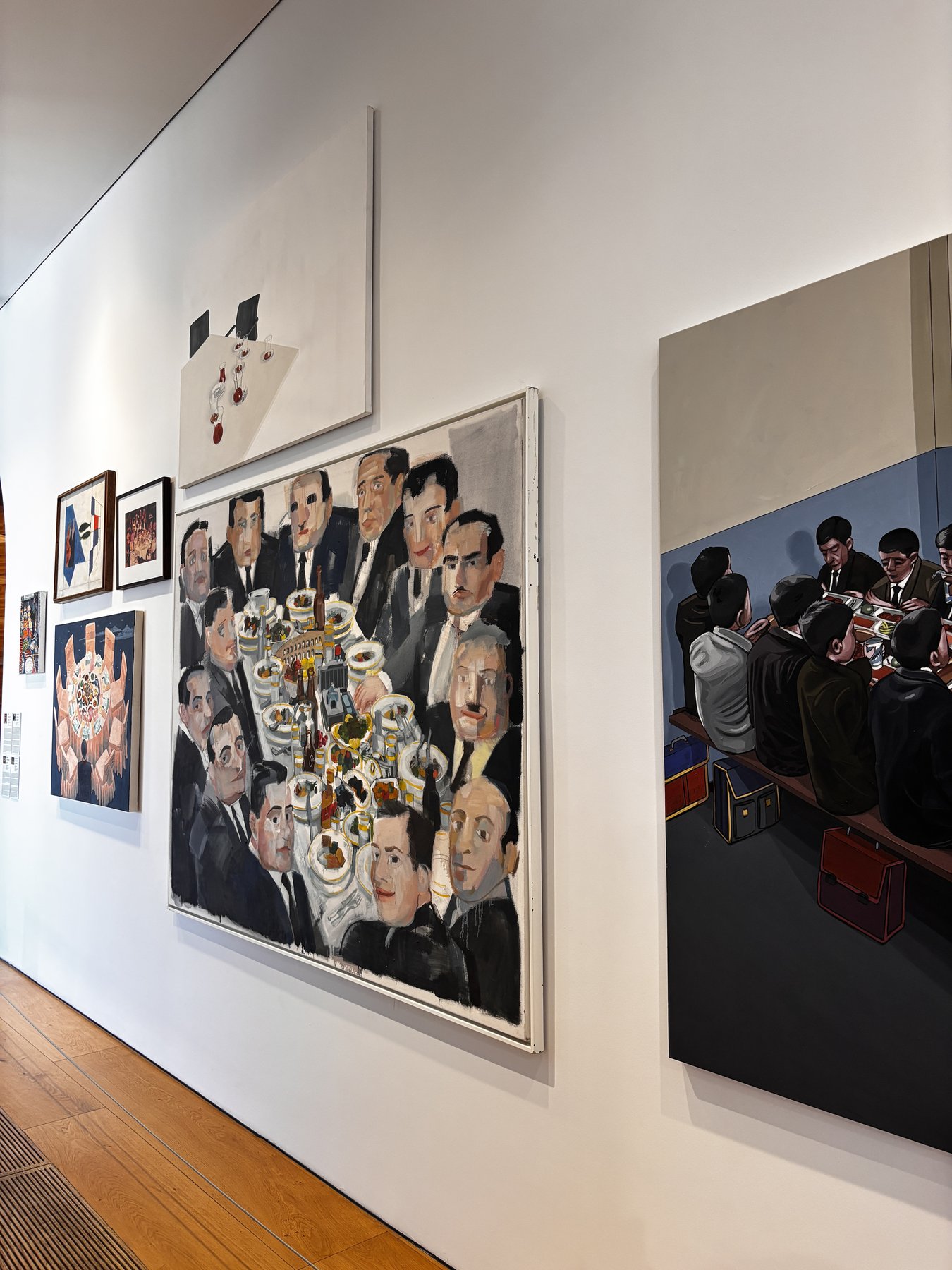
Another wall, another cluster, this time built entirely out of tables. Seven artworks, hung close enough to read as one long meal, from the first course to the last. Read in this order, the wall has an actual emotional arc. It opens warm and ritualistic, turns uncanny, goes abstract and contemplative, nostalgic, then curdles into political critique and ends cold and institutional. The table doesn't stay one thing across this wall. It shape-shifts and degrades, almost, from gathering into control. Uras's Sultan's Table, 2016 opens the "table wall" with the kind of abundance that reads as care until you notice it's also labour. Someone made all this, and the painting knows it. Sinan Orakçı's The Feast, 2023 sits close by, a table set for guests who never arrive, save one, standing with their back to the viewer; still generous, but something's gone wrong. Nuri İyem makes another appearance with Cubist Still Life. Three bottles, two fish, geometry instead of people. A reminder that a table is still a table before it's a social one. Then the narrative turns. Hilmi Can Özdemir's Fun Date, 2024 stages itself like an old restaurant photograph, the kind you'd keep after a night spent chattering away with your peers and enjoying a good meal, another ode to food and table as shared ritual. Except the night's already over. Hakan Gürsoytrak's Şehzadebaşı, 2010 seats a row of suited men around a table scattered with architectural models: not individuals but the machinery of a patriarchal city planning itself into being. Yaren Karakaş's Meeting Room empties the table completely. The table wall ends with İhsan Oturmak's Mess Hall, 2024 a boys' school cafeteria full of identical bodies repeated like a stamp. The same figure over and over, individualised yet with no separate identity. Seven tables, one wall, and gathering has curdled into something closer to surveillance.
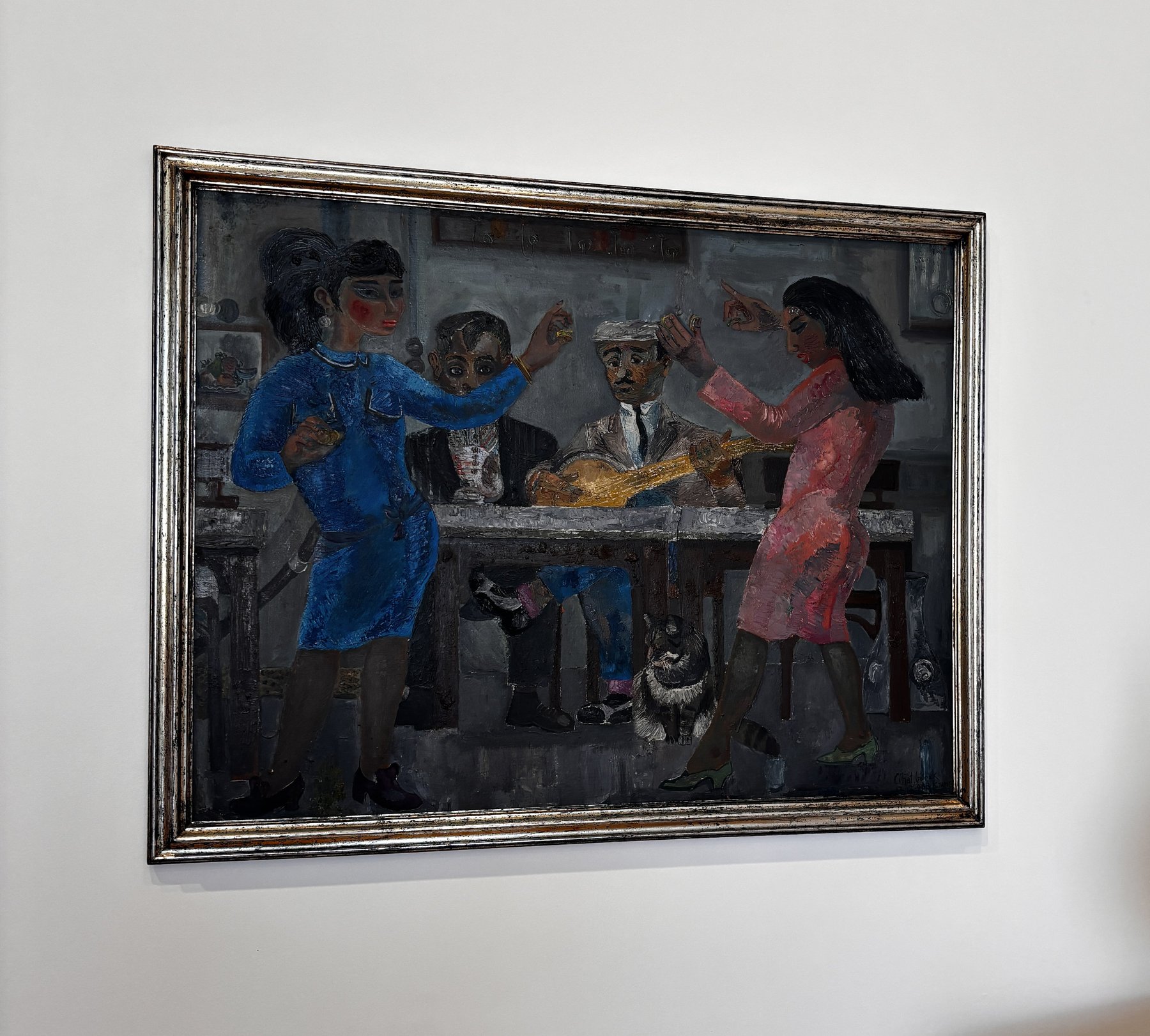
Three paintings by Cihat Burak make an appearance throughout this exhibition. Cumhuriyet Tavern, 1968 is the one that lingers. It belongs to the same lineage of tables, but doesn't behave like the others. Where the table wall curdled from ritual into surveillance, Burak's tavern is unapologetically alive: two women dancing to a "cümbüş" player, seated figures mid-conversation, and, tucked beneath it all, a cat. There's no manufactured stillness here, no staged documentary pretending at candour; Burak's theatricality is open, ironic and warm. Cumhuriyet Tavern reminds the viewer what a table was for in the first place.
As you move through the exhibition, you encounter fragments, less interested in gathering than in what gathering leaves behind. Gülsün Karamustafa's Istanbulites collages excavate the families displaced from the city after 1955; TUNCA sketches power figures mid-meal, equalised by hunger; Nezaket Ekici turns a communal "picnic" into performance; Cevdet Erek fills the room with the sound of glass bells drawing similarities between livestock bells and wine glasses. Consumption curdles further here too. Pınar Akkurt's milk churns are crushed flat in a scrap press, Eren Göktürk's overflowing bins stand in for a celebration nobody photographed. It ends, fittingly, on Neş'e Erdok's Flirt: two strangers at a tram stop, caught in a glance that might be intimacy or might be nothing at all. It is the smallest, most uncertain unit of togetherness the whole exhibition has to offer.
Wide Expanse is on view at OMM until September 13, 2026.
This week on 000.
Shared privately from 000. Want in? Request access at 000.gallery. Follow on Instagram. Questions: support@000.gallery.
Responses.
No responses yet.