Art
Zurbarán
Ref. 000-ART-ZURB
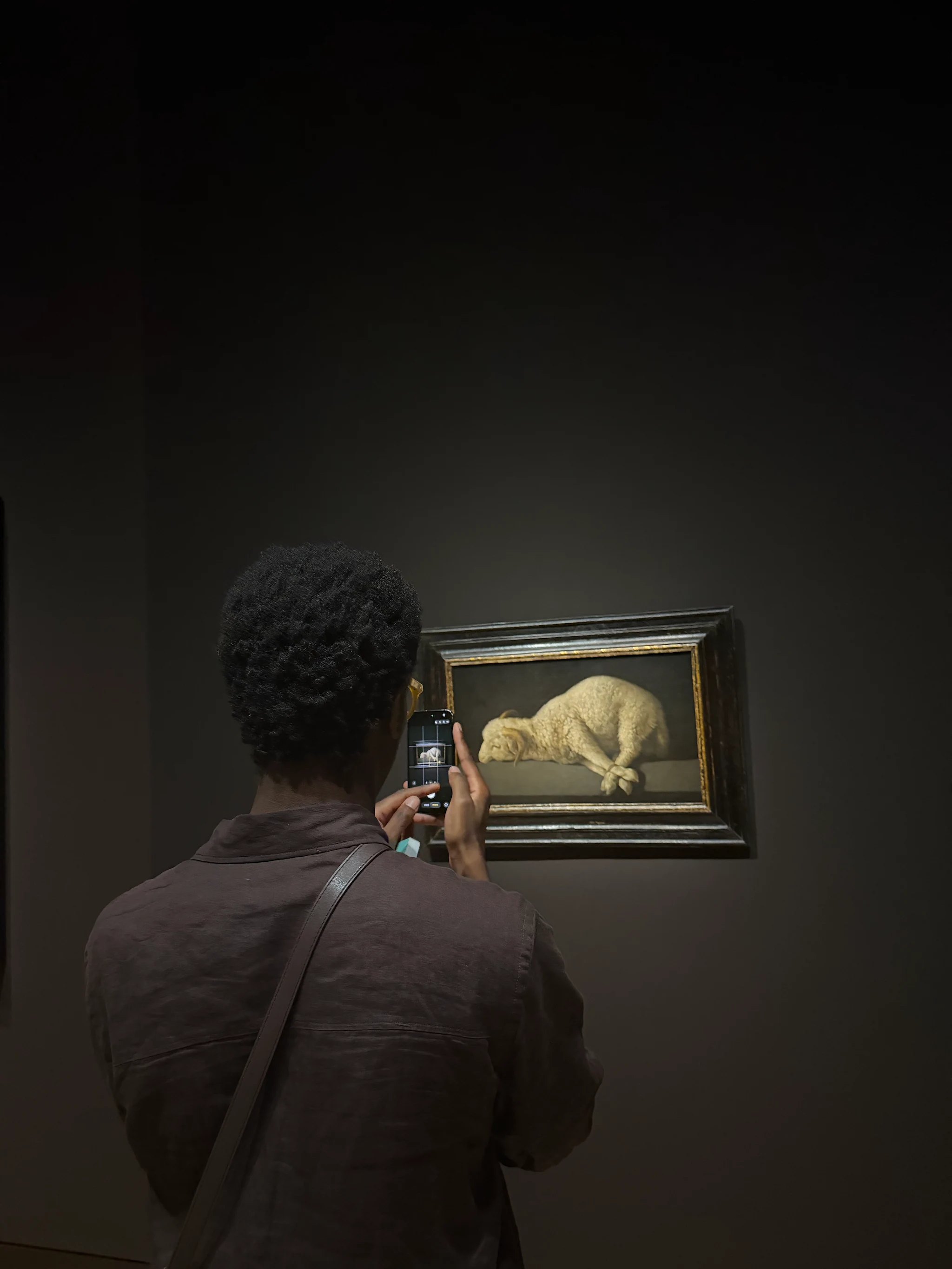
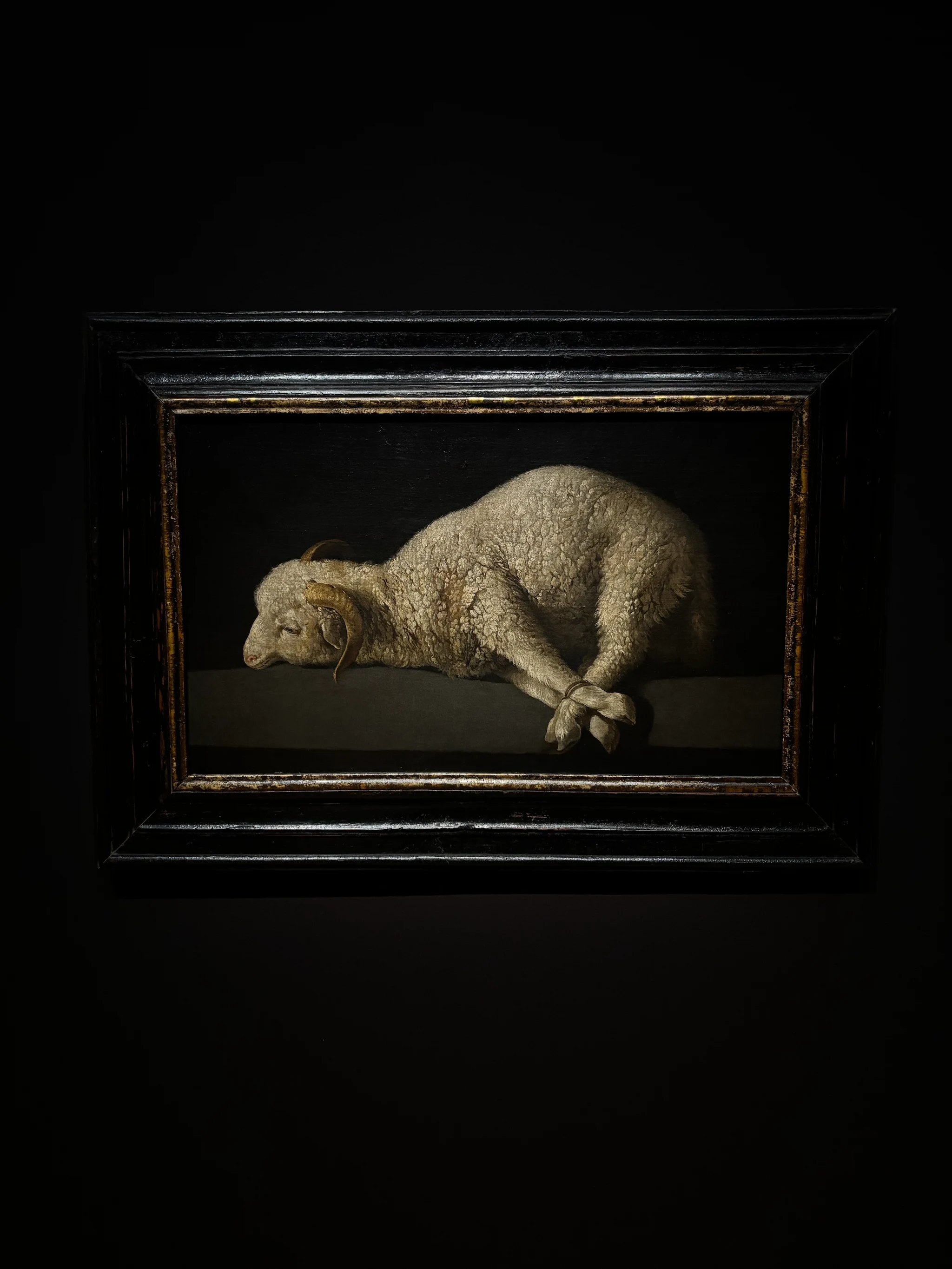
A lamb lies on a stone ledge with its legs bound. It is alive, in the only way paint allows. Zurbarán painted the fleece with a brush small enough to count the curls, then let the tied hooves project past the edge of the ledge into the room, which is the only trick in the picture and he uses it once. Agnus Dei, painted between about 1635 and 1640, was the quietest thing in the National Gallery's Zurbarán, the first major exhibition this country has given him on his own, and it was also the loudest. Everything around it had already been taken away.
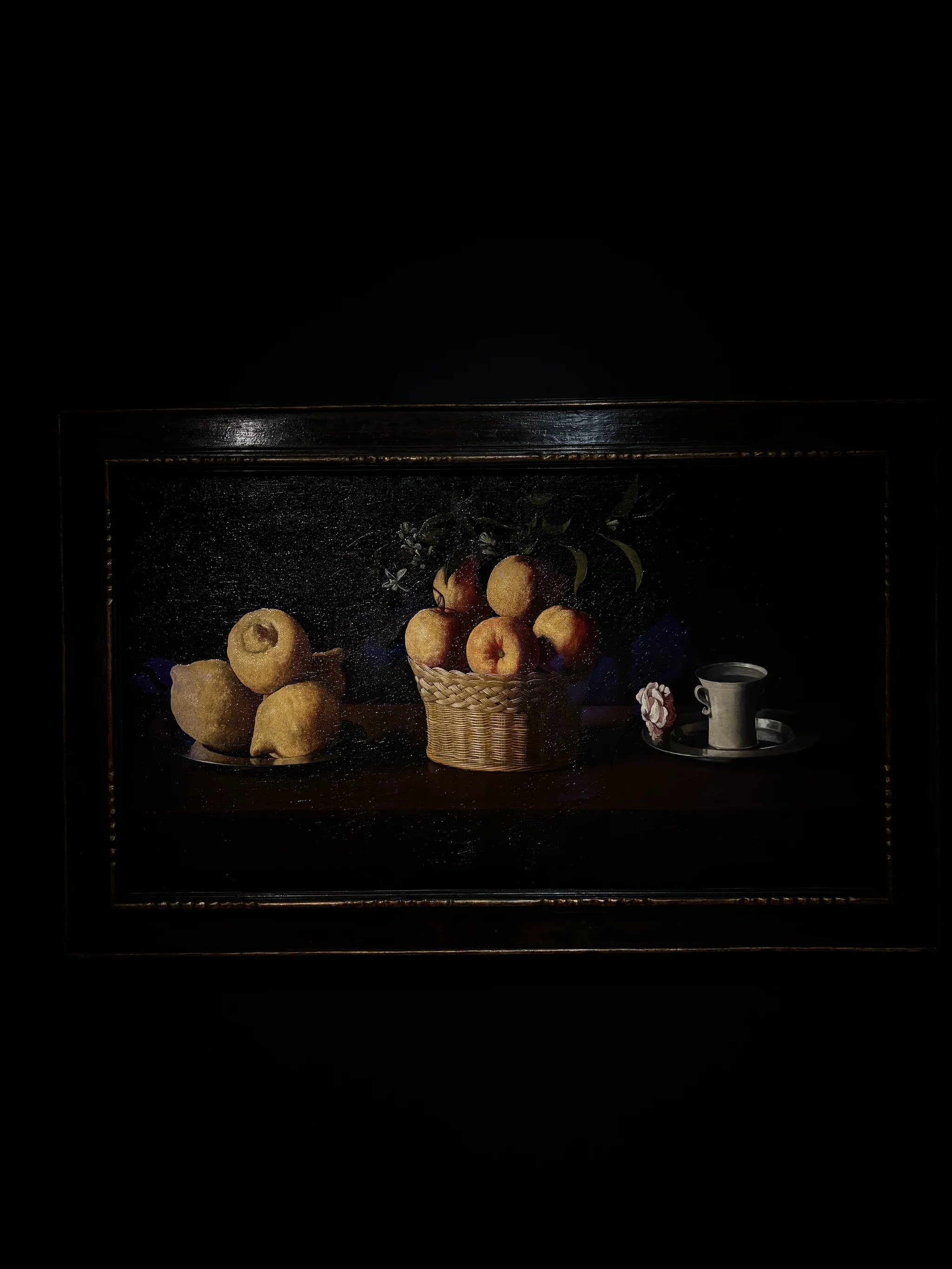
No more than ten of his still lifes are known, from a life of sixty-six years. Still Life with Lemons, Oranges and a Rose is the only one he signed and dated, in 1633, and it is the earliest signed and dated still life in Seville. A saucer of four citrons, a basket of oranges with blossom, a pewter plate holding a cup of water and a single rose, and nothing else at all. The cup and the rose are symbols of the Virgin, so the painting is a devotional object if you want one, and a demonstration of what paint can do if you do not. When it resurfaced about a century ago the people who found it saw Cézanne, and then Picasso. They were not wrong, and the resemblance is not hindsight: what all three understood is that an object gets larger the more you remove from around it.
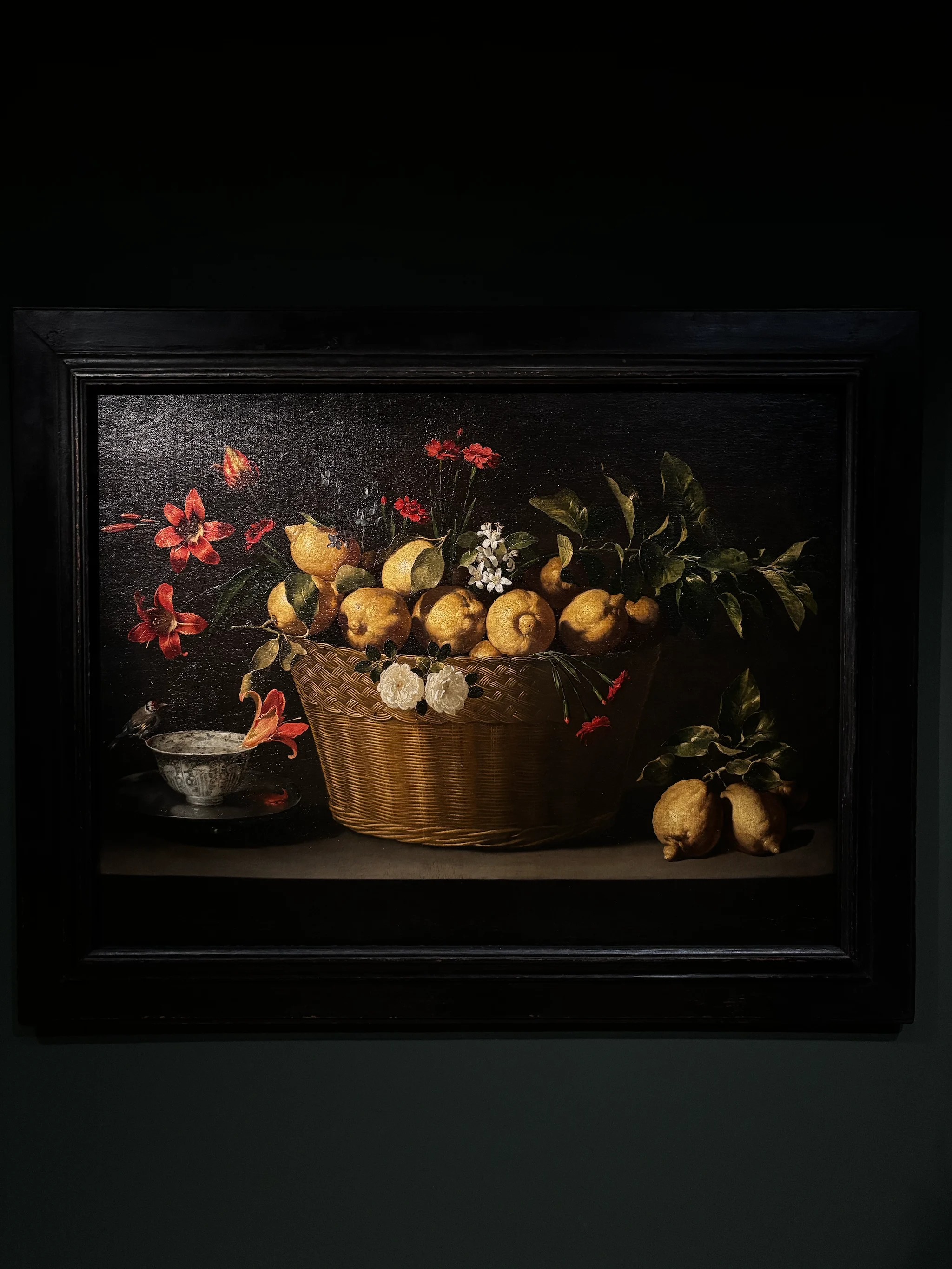
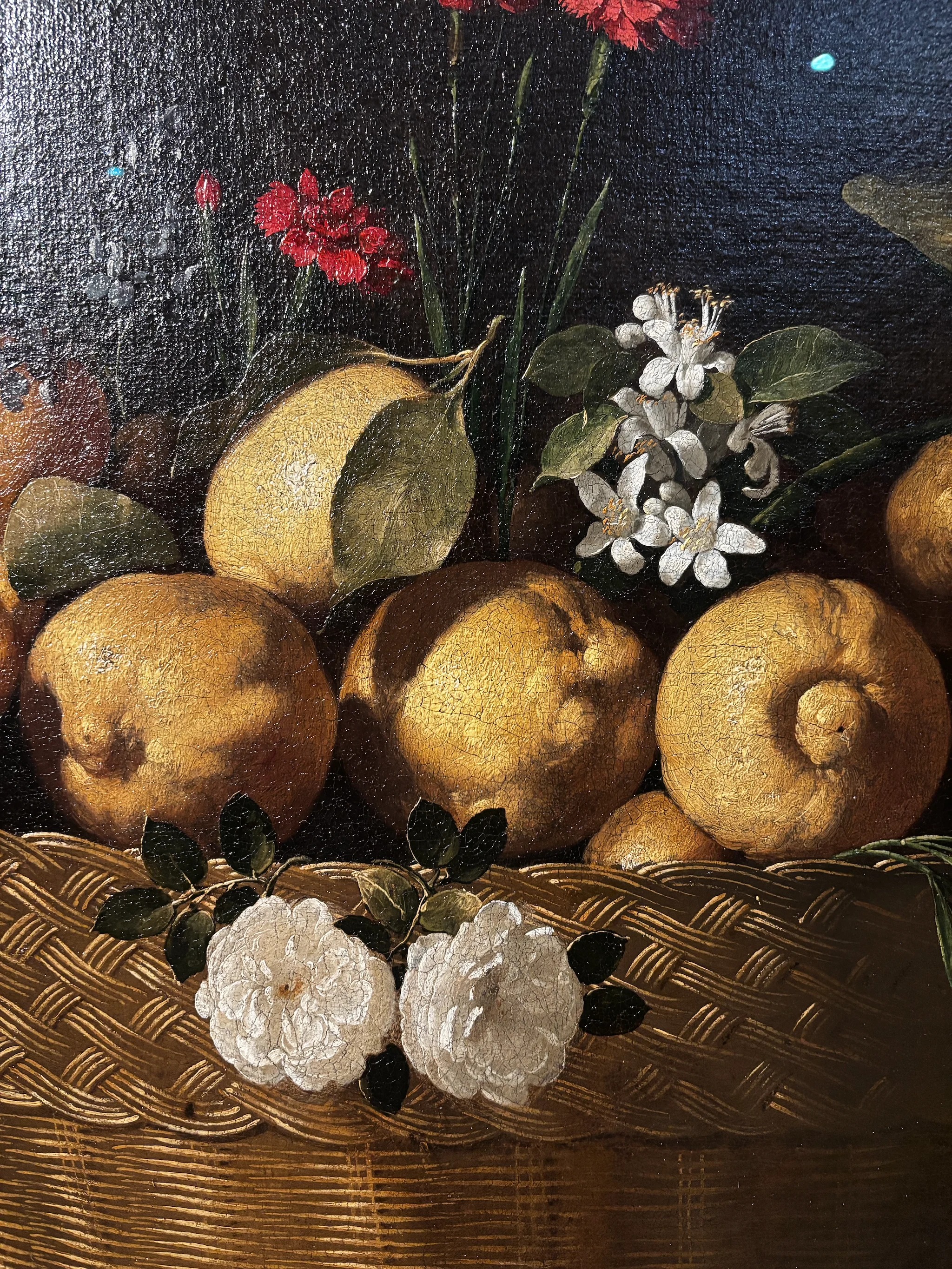
His son Juan made still life his entire career and did the opposite. Fruit heaped in wicker, branches breaking the frame, carnations and orange blossom, a goldfinch, a Chinese porcelain cup on a silver plate. A new decorative abundance, the wall text calls it, which is a generous way of saying he filled the space his father had spent a lifetime clearing. Juan was very good, and he was twenty-nine when the plague of 1649 took him along with close to half of Seville. It took the father differently. After 1649 the hard light that had made Zurbarán's name begins to go: contours soften, the brush loosens, and by 1658 he has left Seville for Madrid and is painting small pictures signed on trompe-l'oeil scraps of paper, insisting one last time that paint can imitate anything.
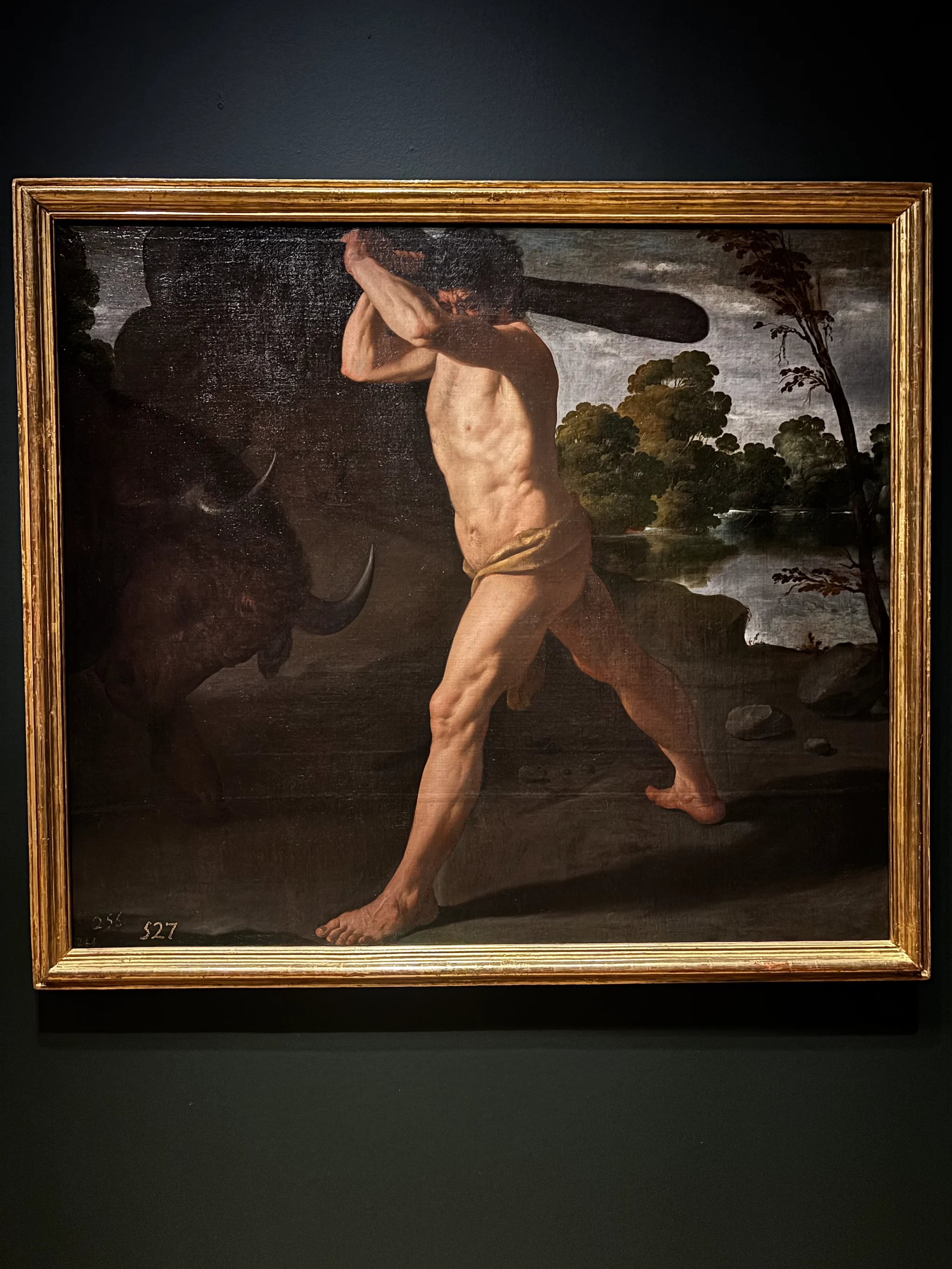
The exception hangs in another room and is worth the detour precisely because it is unlike him. In 1634 Philip IV commissioned him for the Hall of Realms at the Buen Retiro: the twelve labours of Hercules, cut to ten, one canvas set above each window. Hercules and the Cretan Bull and Hercules and Cerberus were both here, and they are all body. A torso lit like a lamp, a leg braced into the ground, an animal subdued in the dark at the edge of the frame. The series was an argument about the Spanish crown's power over its dominions, made in muscle, and Zurbarán, a painter of monks and lemons, took the commission and delivered it. That he could is the point.
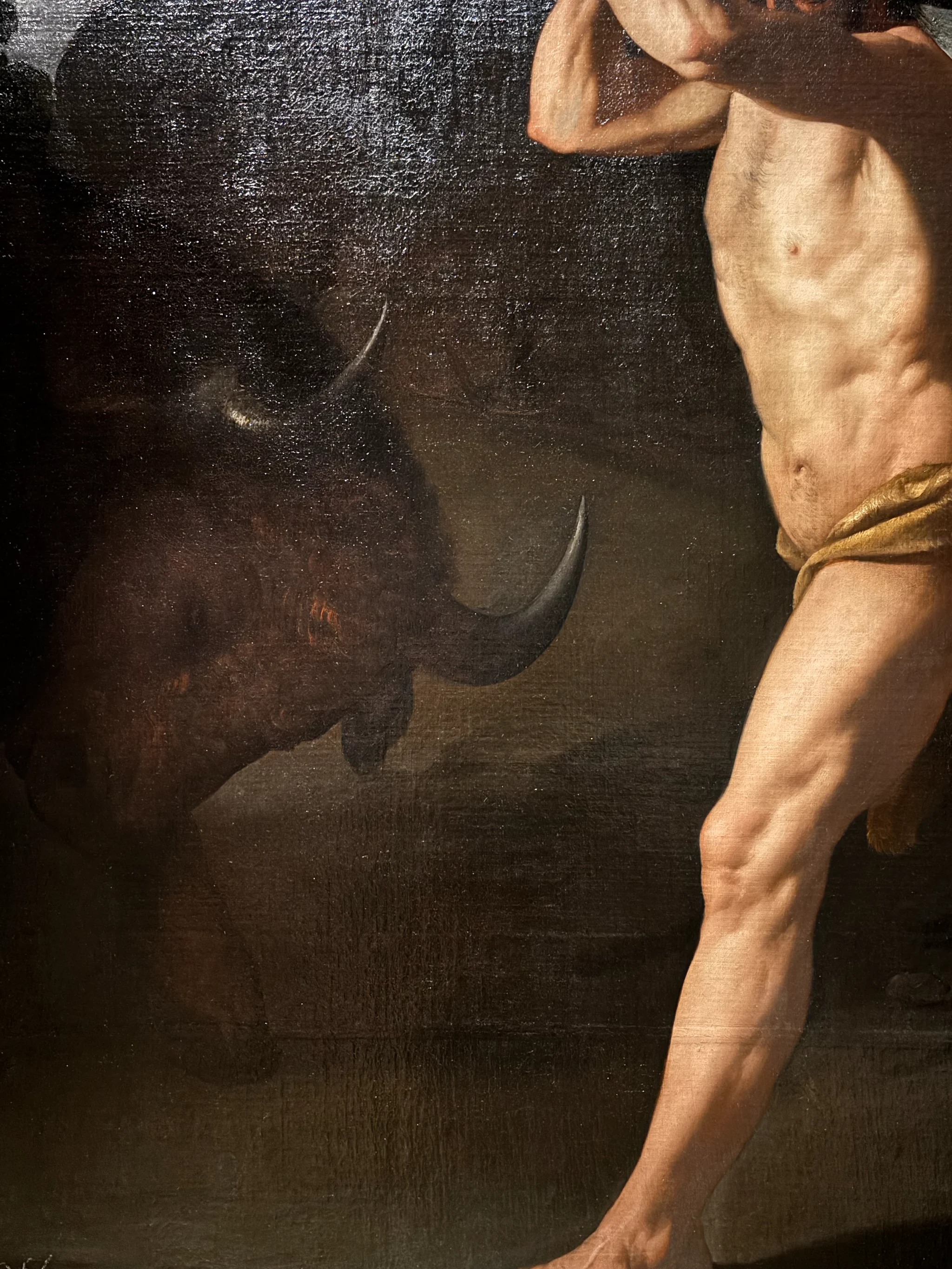
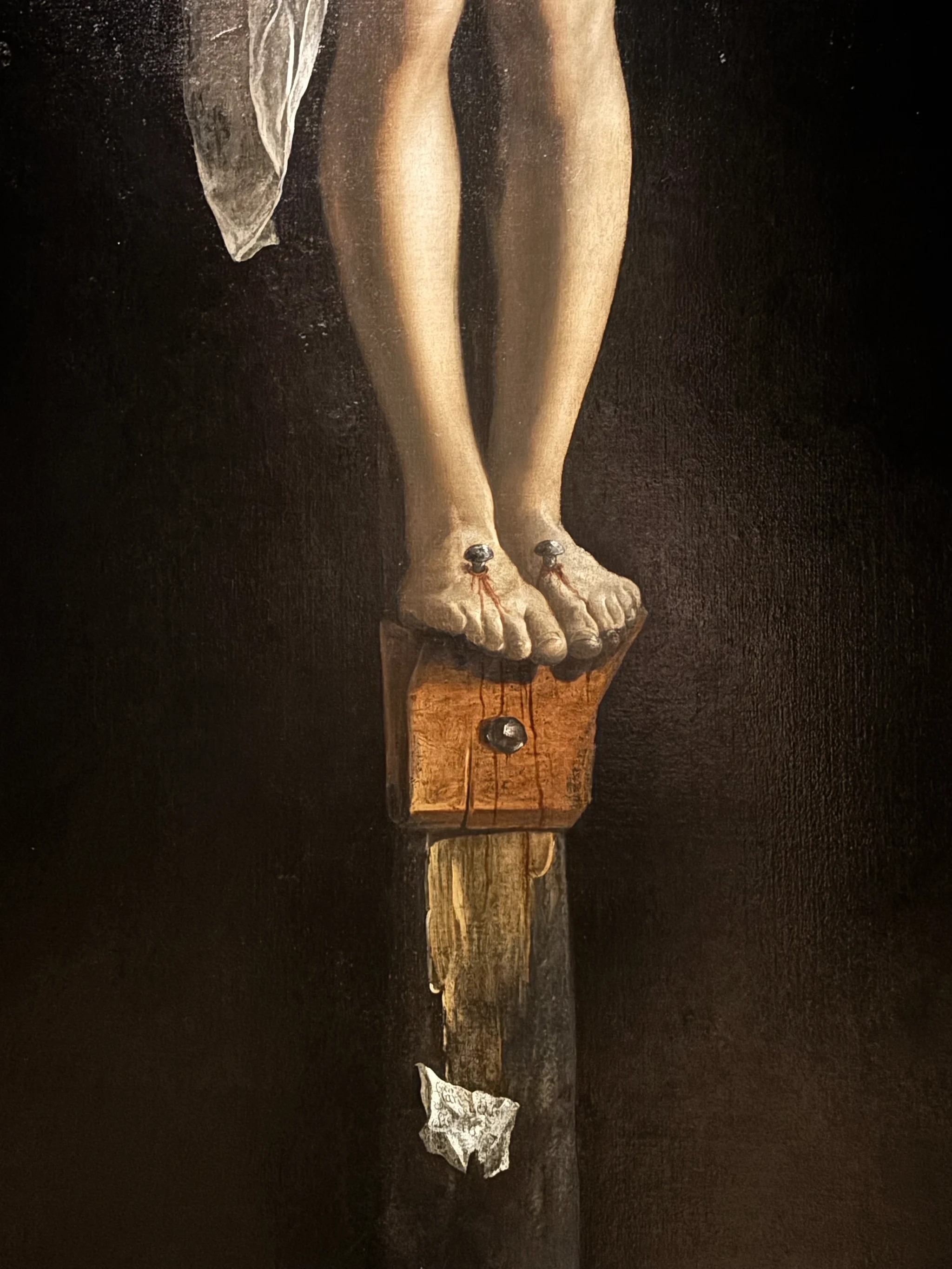
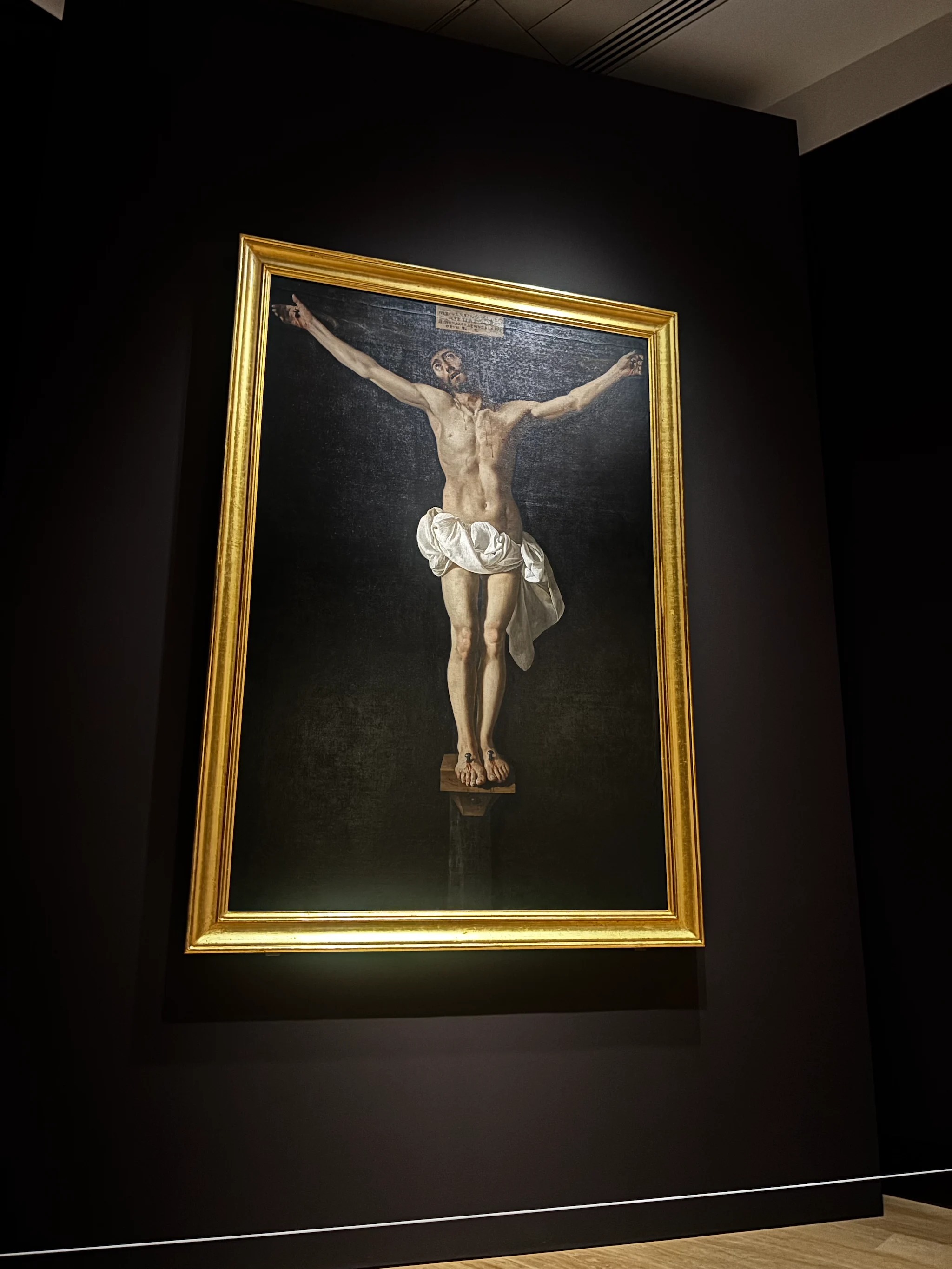
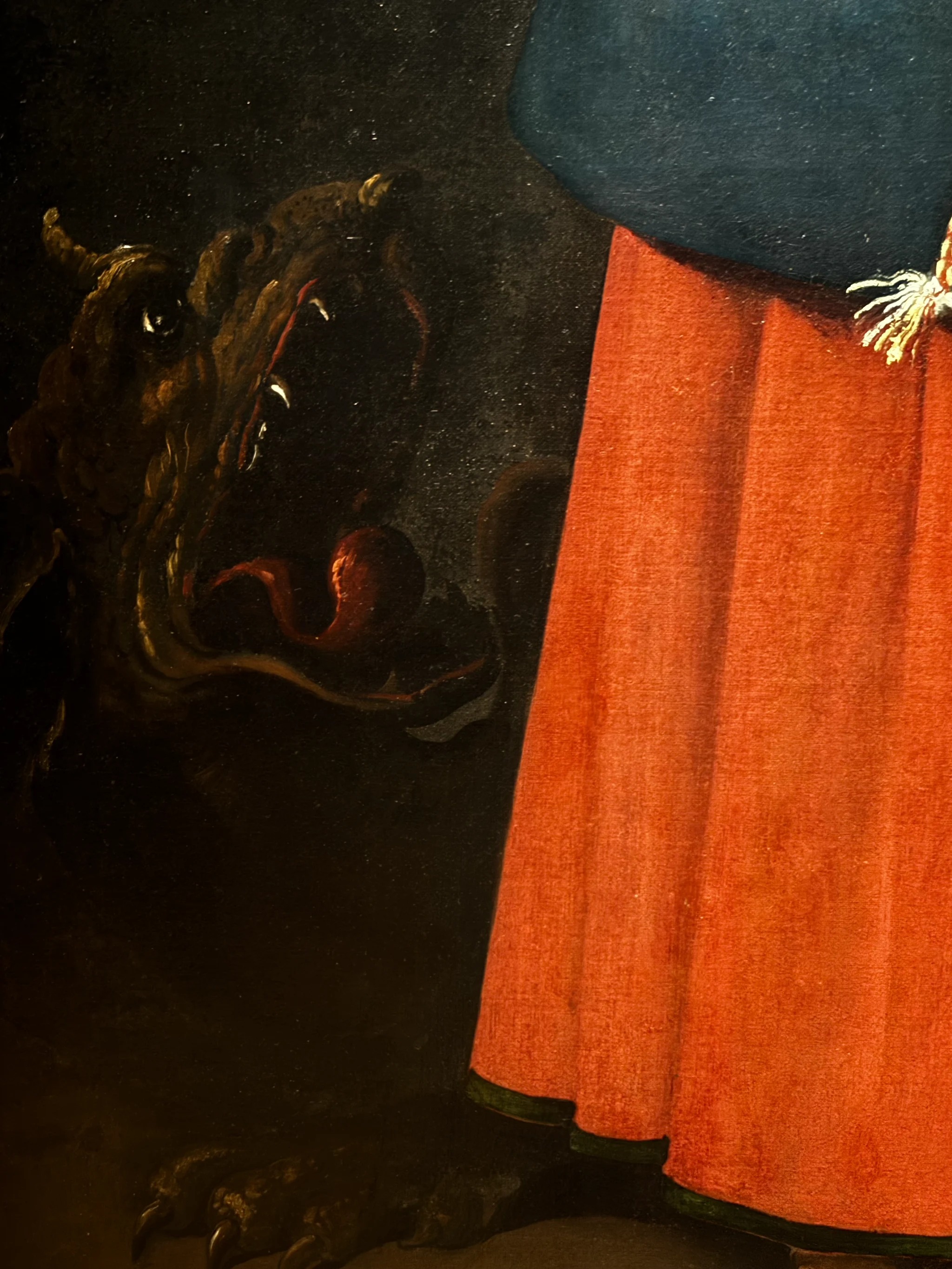
I spent most of the visit at about eighteen inches from the canvas, which is where he pays out: the bead of blood on a child's fingertip, the cartellino nailed to a cross, a dragon's jaw dissolving into the dark. The London run closed on 23 August. It opens at the Louvre on 7 October and reaches Chicago next February, and if you can reach either you should, because Zurbarán does not photograph. What no reproduction carries is the black, which is not a background but a substance: it absorbs the room, so the lit thing in front of it appears to have been lifted out of nothing and held there for you. He spent a career removing everything that was not the subject. Standing in front of the result, you understand that the removing was the subject.
This week on 000.
Shared privately from 000. Want in? Request access at 000.gallery. Follow on Instagram. Questions: support@000.gallery.
Responses.
No responses yet.